“The fine-grained, cream-colored limestone covers the houses; looking at them, one has the feeling of unfolding a color chart of whites (...) whose tones vary with textures, veining, and centuries. The Cognac region is an aggregate of micro-countries, stretching from north to south through the Borderies, the lowlands, the Charente valley, and the Grande and Petite Champagne. No one is surprised that in winter the sky takes on the color of birds, golden plovers or Montagu's harriers. Here, any color that is too bright, too cheerful, too ostensibly joyful is dissolved by the stone of time.”
Laurence Benaim, Un voyage à Cognac (Journey to Cognac)
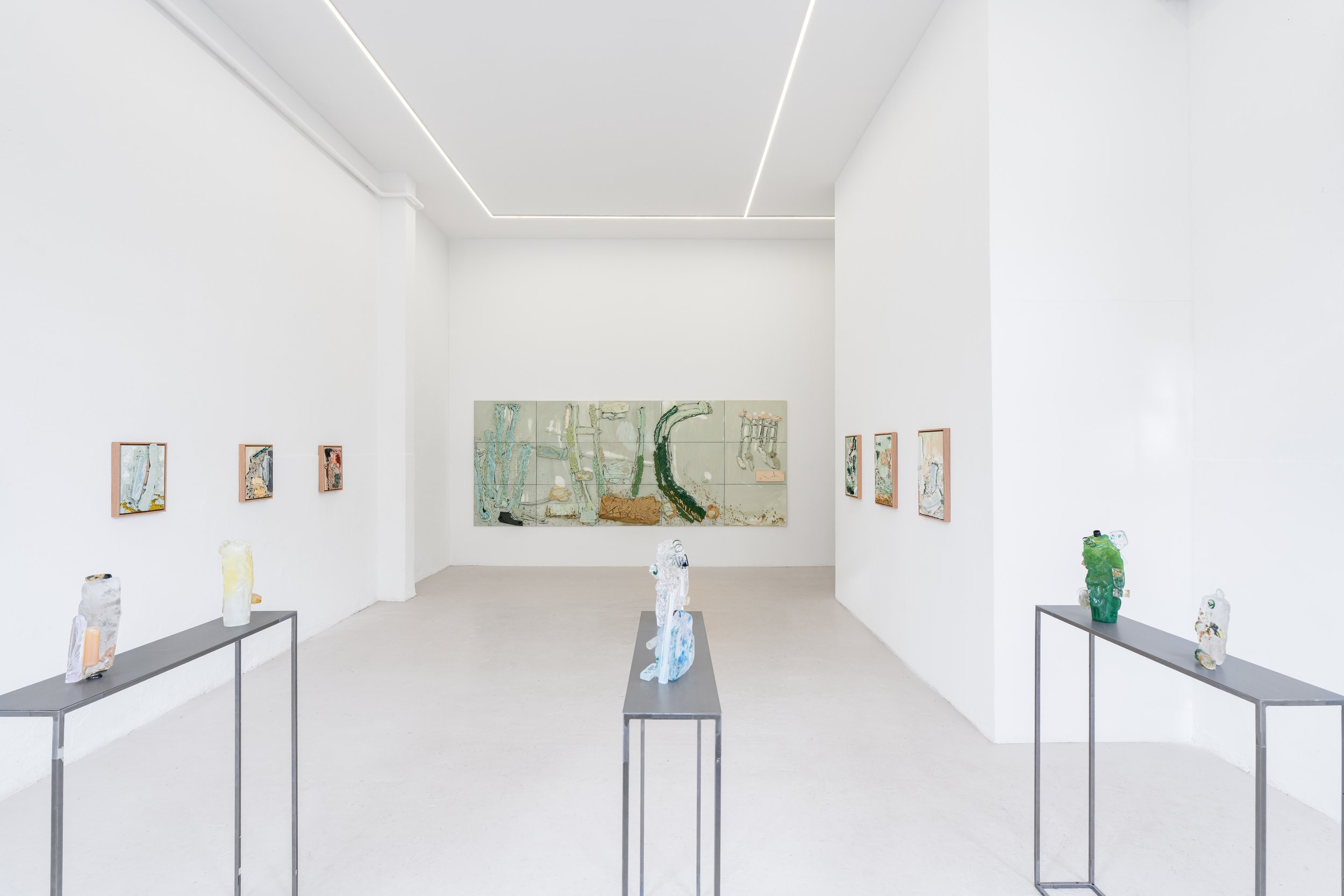
The exhibition Mother Rock unfolds as an origin story: a geological and personal excavation. During 2025, artist Natacha Mankowski (Paris, FR, 1986) traveled repeatedly across here native country France, tracing links between quarries as one might follow a memory embedded in stone. The exhibition moves through territories shaped by a common sedimentary parentage, a “roche mère,” a mother formation, linking sites separated by geography but united by geology.
Mother rock, roche mère or moedergesteente.
Mother rock as place of origin and matrix of development.
Mother land. Mother time.
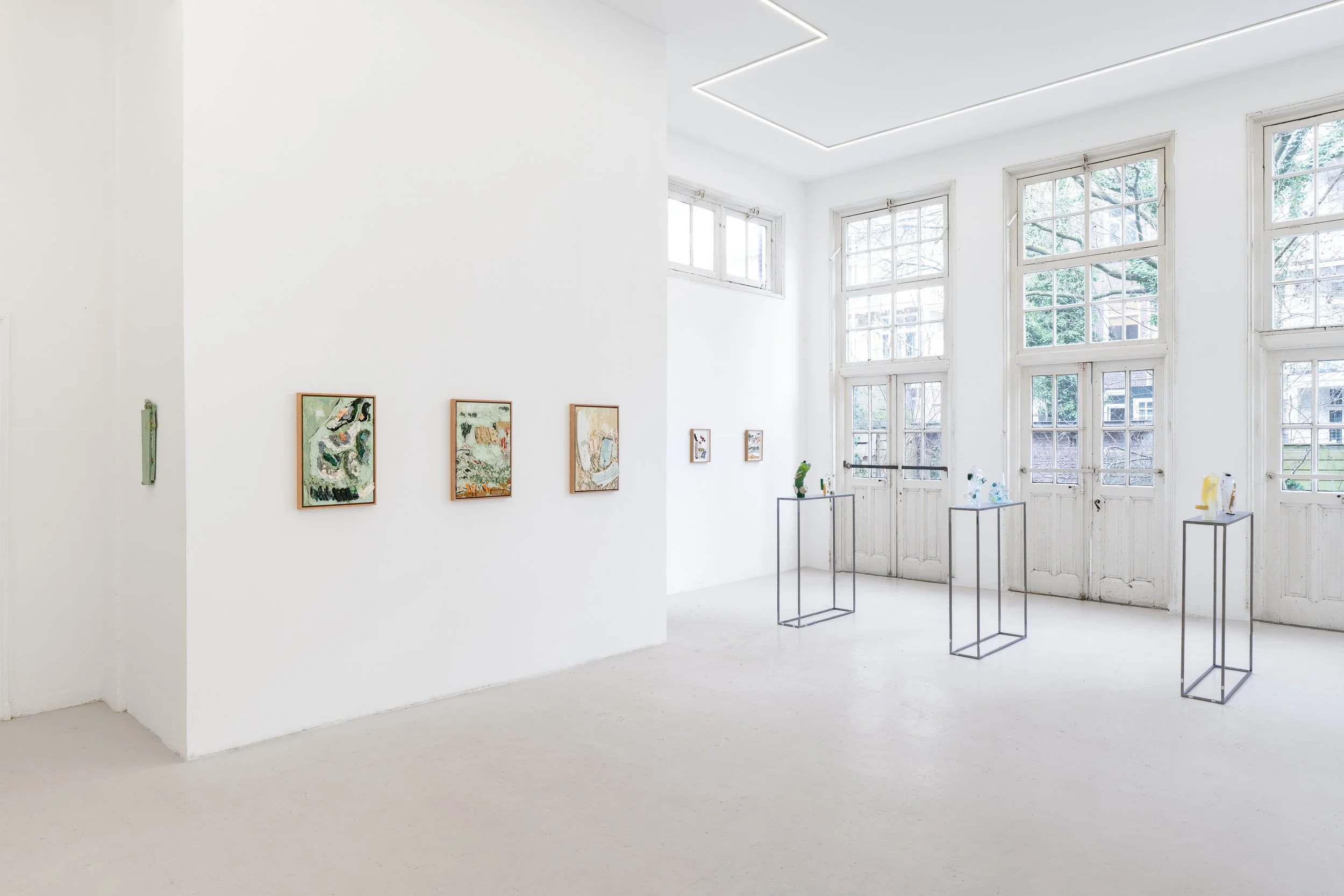
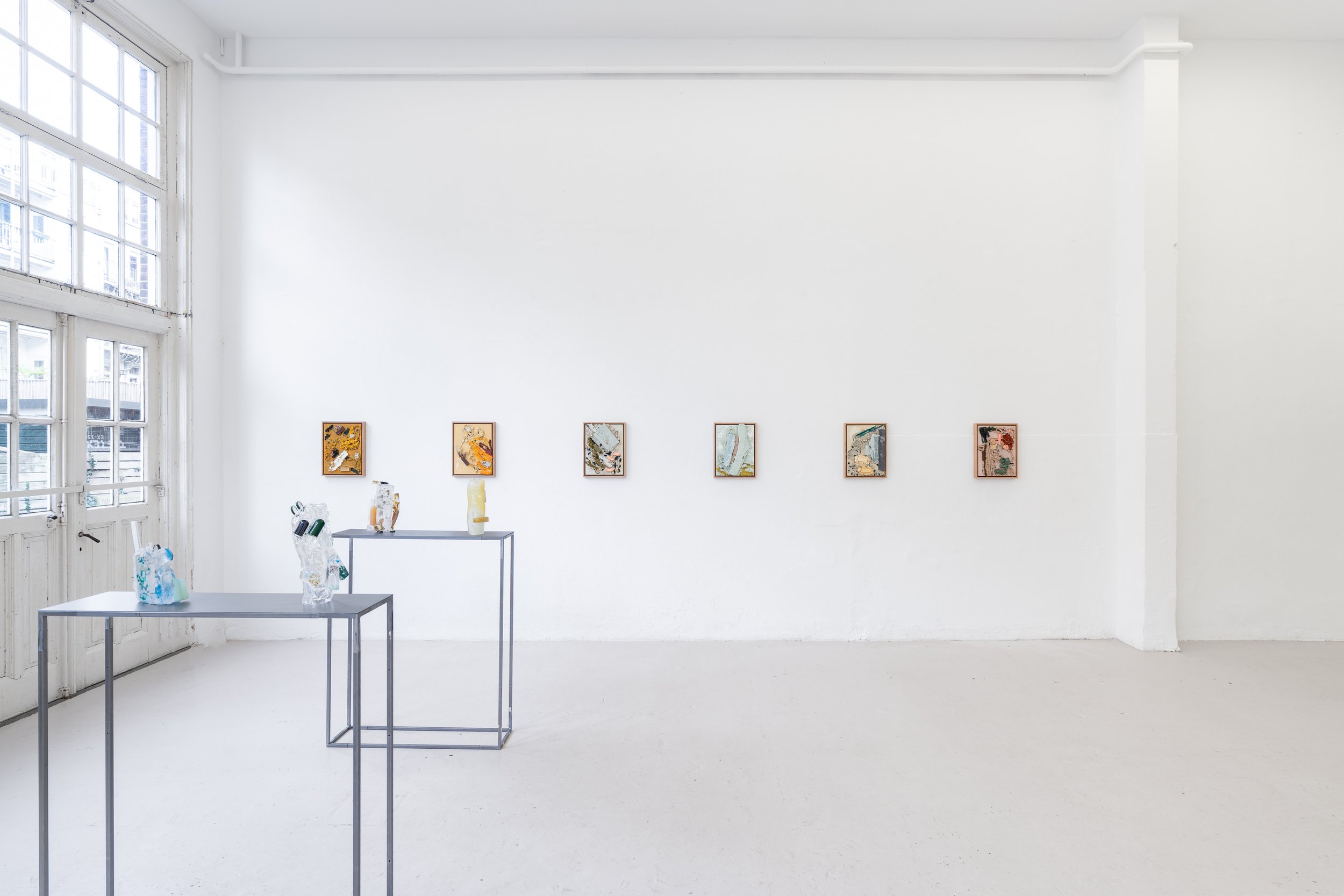
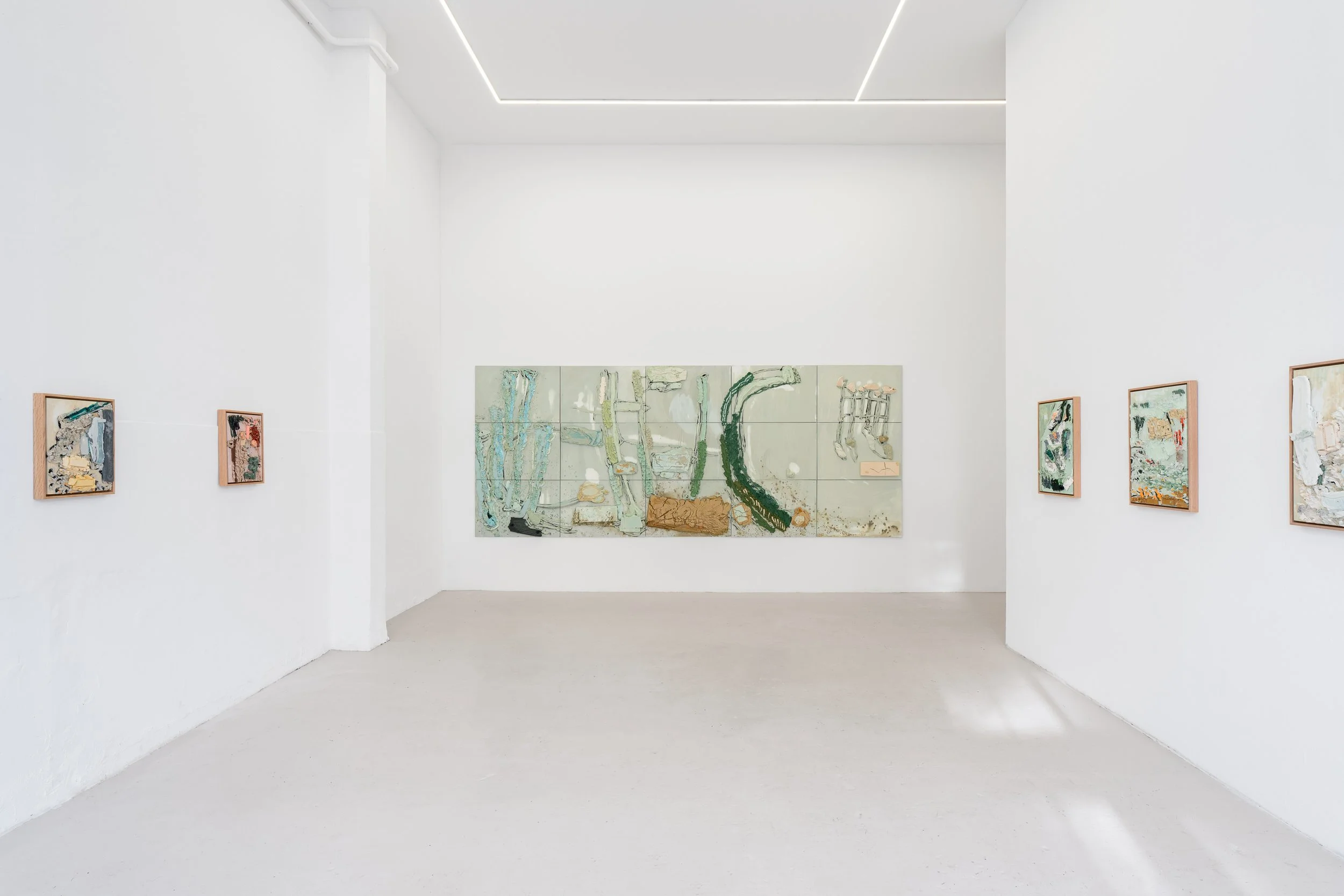
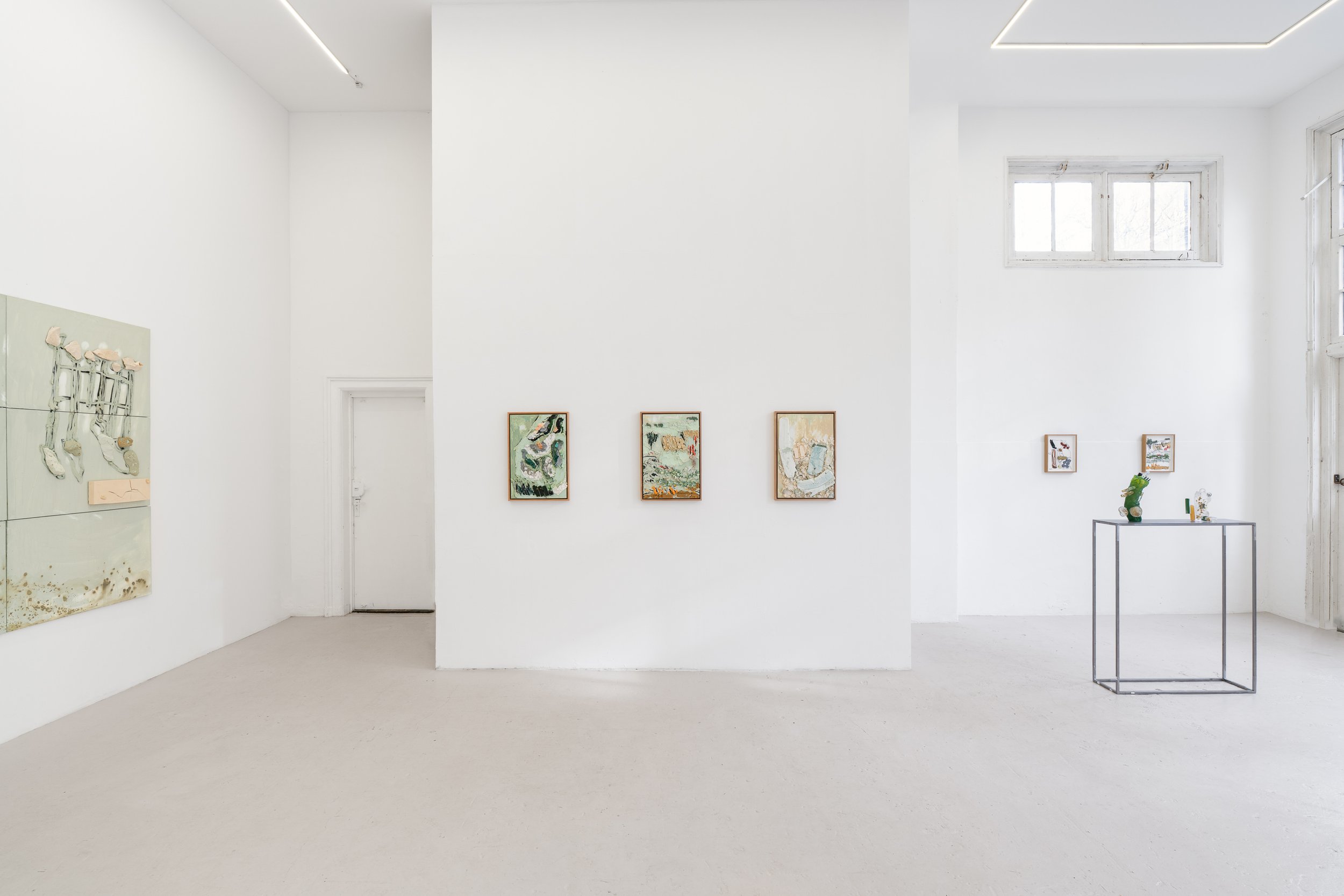
Two territories, one parent rock: an Upper Cretaceous substratum. A limestone formation, chalk-rich and interlayered with light yellow clays, born from the accumulation of marine sediments during a shared submersion of these regions 100 million years ago. The exhibition proposes a promenade across this geological continuity. A sequence of glass maquettes, paintings and sculptural gestures guide the viewer from the underground toward the surface.
Walking the earth, digging the ground and carving forward : from the quarries of Aquitaine in the West to the open grounds of Berry in central France. The artist gathers fragments of territory : beeswax, linseed oil, walnut oil, but mostly sand, clay, and various limestones. These last, collected from Cognac vineyards and Thénac Saintonge underground quarries, are translated into naïve geographies molded in oil pastels and glass. The sediments reappear as textured glass and paintings. They become a secondary sedimentation: a slow layering that mirrors geological accumulation. The use of glass is a first for the artist. It recalls the historical emergence of glassmaking in Aquitaine, where sandy soils enabled a craft essential to storing and transporting Cognac. The amber liquor used to circulate through European trade routes via the Dutch Navy. This knowledge of glass will forever stay inseparable from the Charente landscape as industry grows directly from geology.
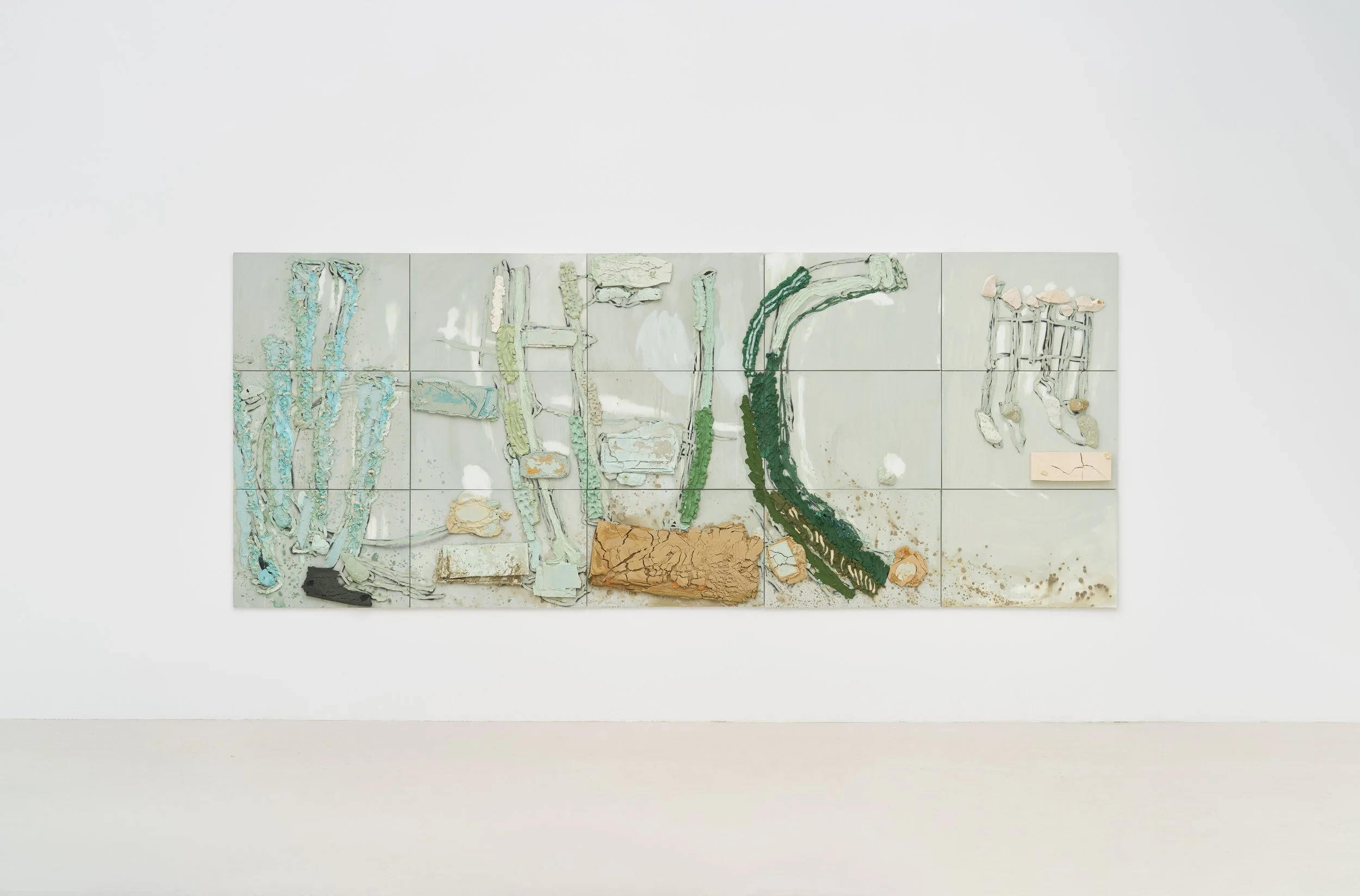
The journey then leads inward, toward the center of France, to La Celle quarry and the garden of Notre Dame d’Orsan — a thousand-year-old priory built on limestone and clay. From this visit, a giant panoptique is created as a walking meditation. A painted surface where excavation resolves into quiet.
The palette of the show is restrained and mineral. A camaïeu of greige unfolds — from grey to beige — echoing the pale stone of Cognac and Orsan. The paintings hold a diffused, soft luminosity. Light celadon and yellow clay backgrounds with hints of sea green, turquoise blue, vermillion red like small windows opened within thick walls. Light appears filtered through sediment: compacted, estuarine, ancient.
In an era defined by speed, extraction, and excess productivity, Mother Rock invites a return to geological time as a critical lens. To look closely at stone is to acknowledge durations that far exceed human economies, and to question how we inhabit, use, and exhaust. Through slowness, and material attention as necessary counter-gestures, geology becomes not only a subject, but a way of inhabiting the present.