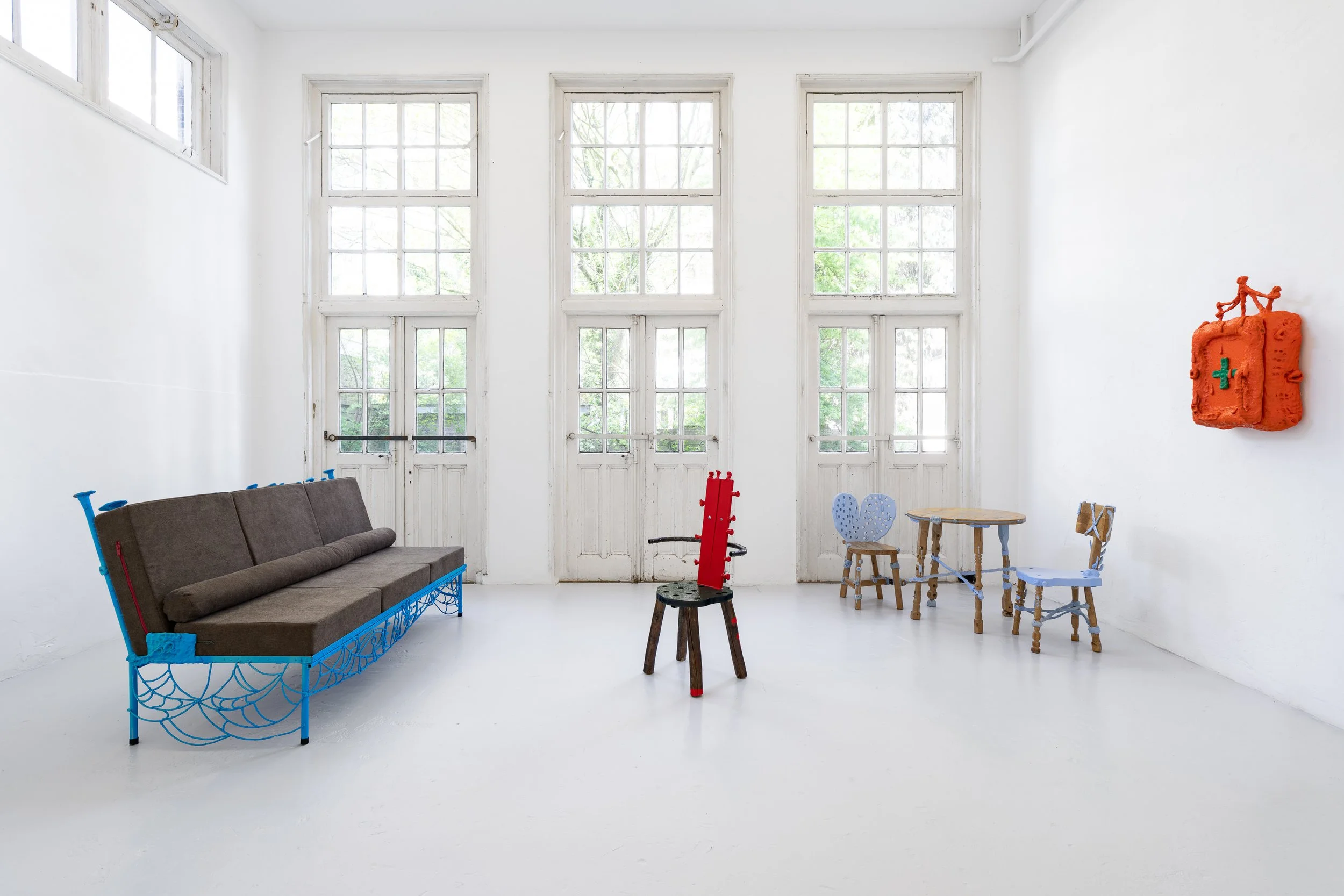
Tom Volkaert (Antwerp, Belgium, 1989) first made his appearance on the Antwerp art scene ten years ago with sculptures in the form of steering wheels, heart-shaped medicine cabinets and rings that adorn the fingers of a young generation. His work stands out for its recognisable, distorted, organic and deliberately naive style, combined with deep, saturated colours. He works with synthetic materials such as epoxy, steel and PUR, which reflect a zeitgeist in which malleability plays a significant role.
Thematically, Volkaert focuses on human vulnerability. His work draws on the vanitas genre of 16th- and 17th-century Western art, but translates this into the present day. He draws inspiration from everyday objects, such as the medicine cabinet, which takes on an allegorical significance in his work. They refer to our fragility and mortality, and to the ambiguous role of medicines and drugs in society: both harmful and life-saving.
Aesthetically, he develops a visual language entirely of his own. His sculptures function as totems: symbolic, organic objects reminiscent of artefacts from an unknown world. They often appear in circular forms that read as portals to another dimension, something that contrasts with the human existence to which they relate. The forms appear lumpy and alien, evoking something both familiar and alienating.
Around 2023, something begins to feel out of place in the artist’s practice. Volkaert becomes increasingly alienated from the context in which his work is placed: white spaces, detached presentations, objects that are mainly viewed but rarely used. The idea that his sculptures hover somewhere between art and utility, yet never truly become either, begins to bother him. He withdraws from Antwerp, without much explanation, and gradually fades from view. His name lingers for a while, but soon falls silent. Only the rings still worn here and there serve as a reminder of his presence.
A few years later, a message reaches his Amsterdam gallery. A vague tip, passed on by someone who had sought him out but preferred not to reveal his whereabouts. Yet it is enough to point the way. In Como, in a run-down flat, it turns out that Volkaert has re-established himself.
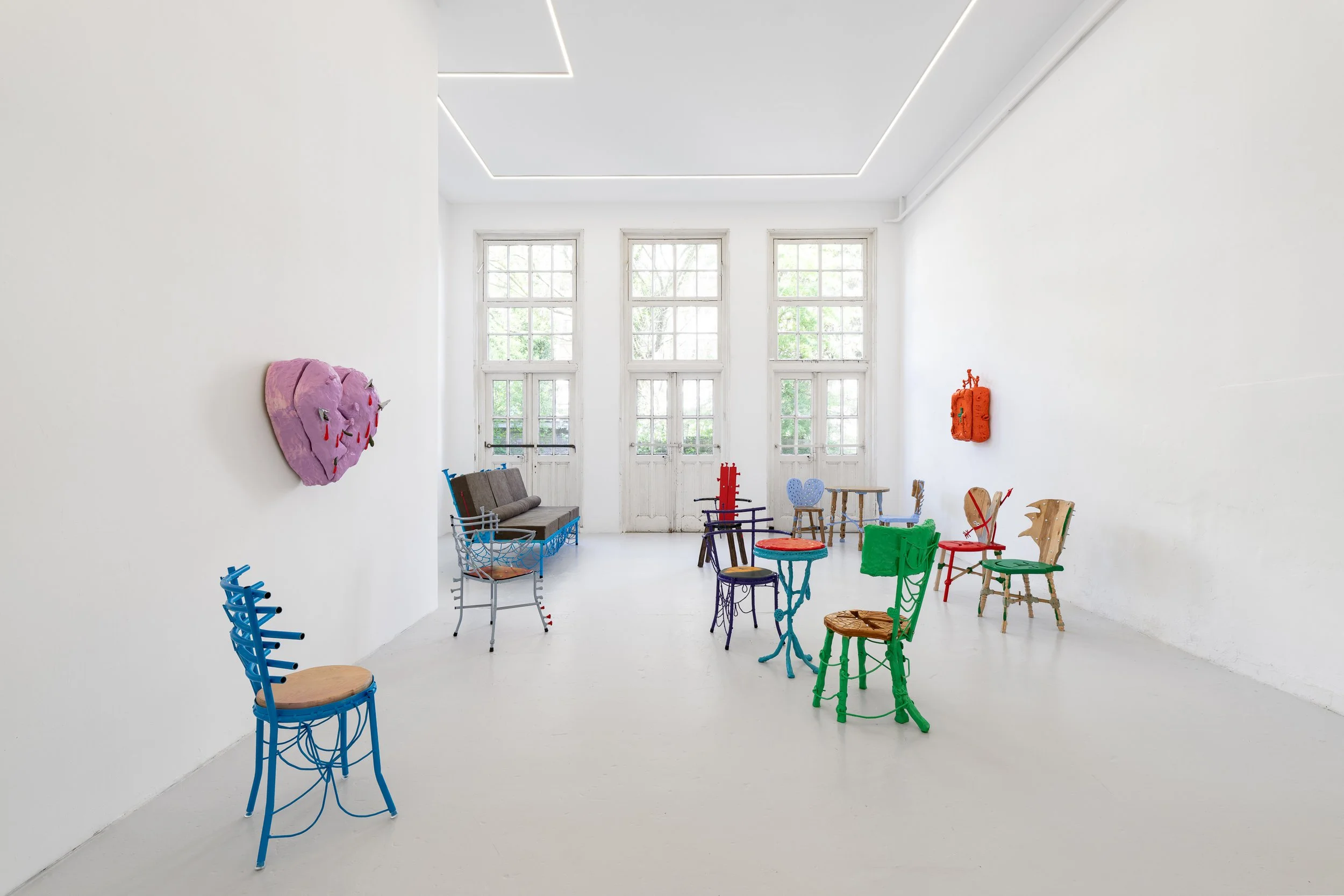
What he is doing there resembles less a traditional studio and more a living space that is slowly being taken over entirely by him. Furniture, objects, structures – everything bears his signature. The whole is evolving into a kind of ongoing experiment in which living and making coincide. Chairs, in particular, pop up everywhere, in a variety of forms: angular, organic, sometimes almost unusable, sometimes surprisingly inviting.
In this environment, he rediscovers a direct relationship with his work. Not as a standalone object, but as something that can be used, touched and lived in.
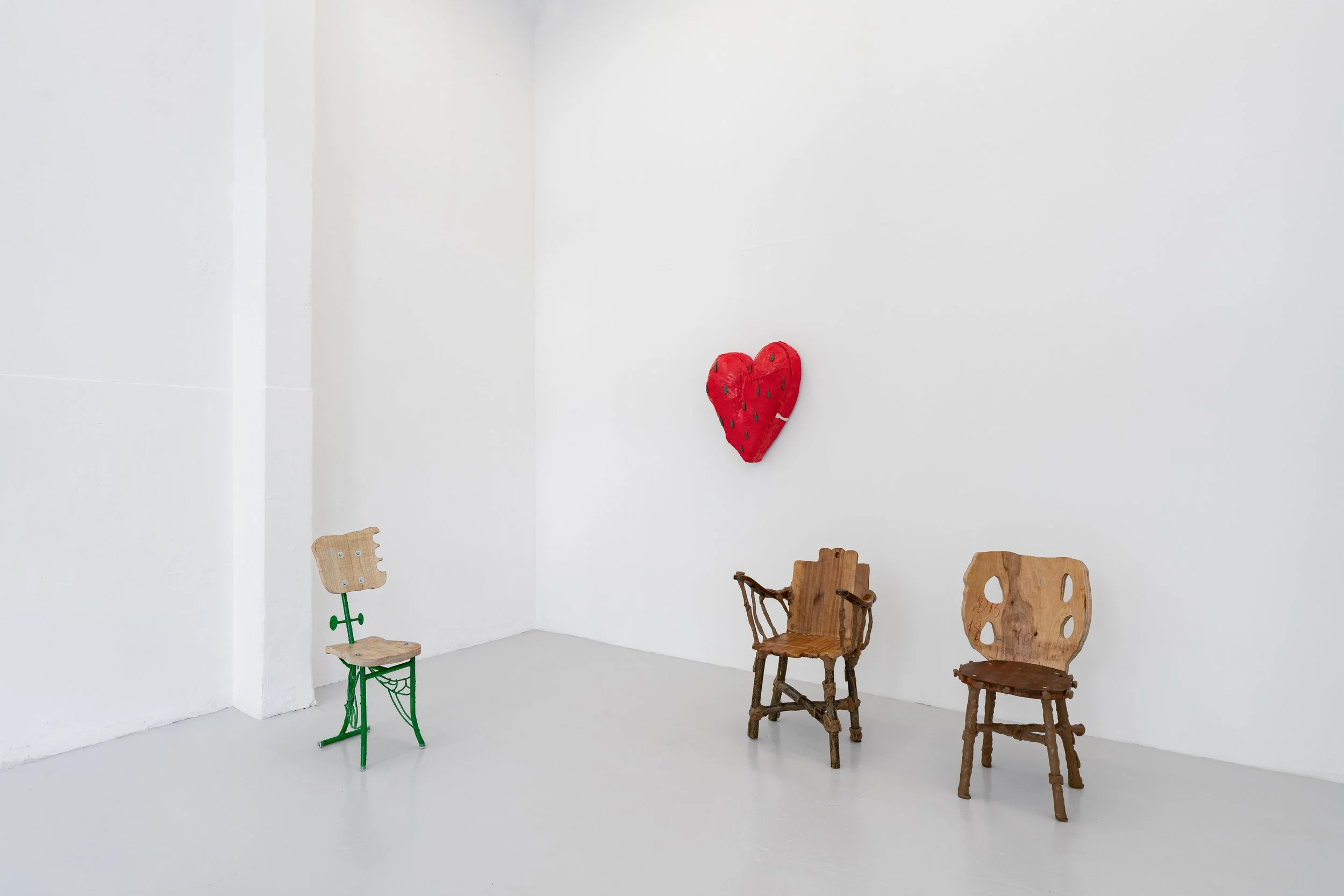
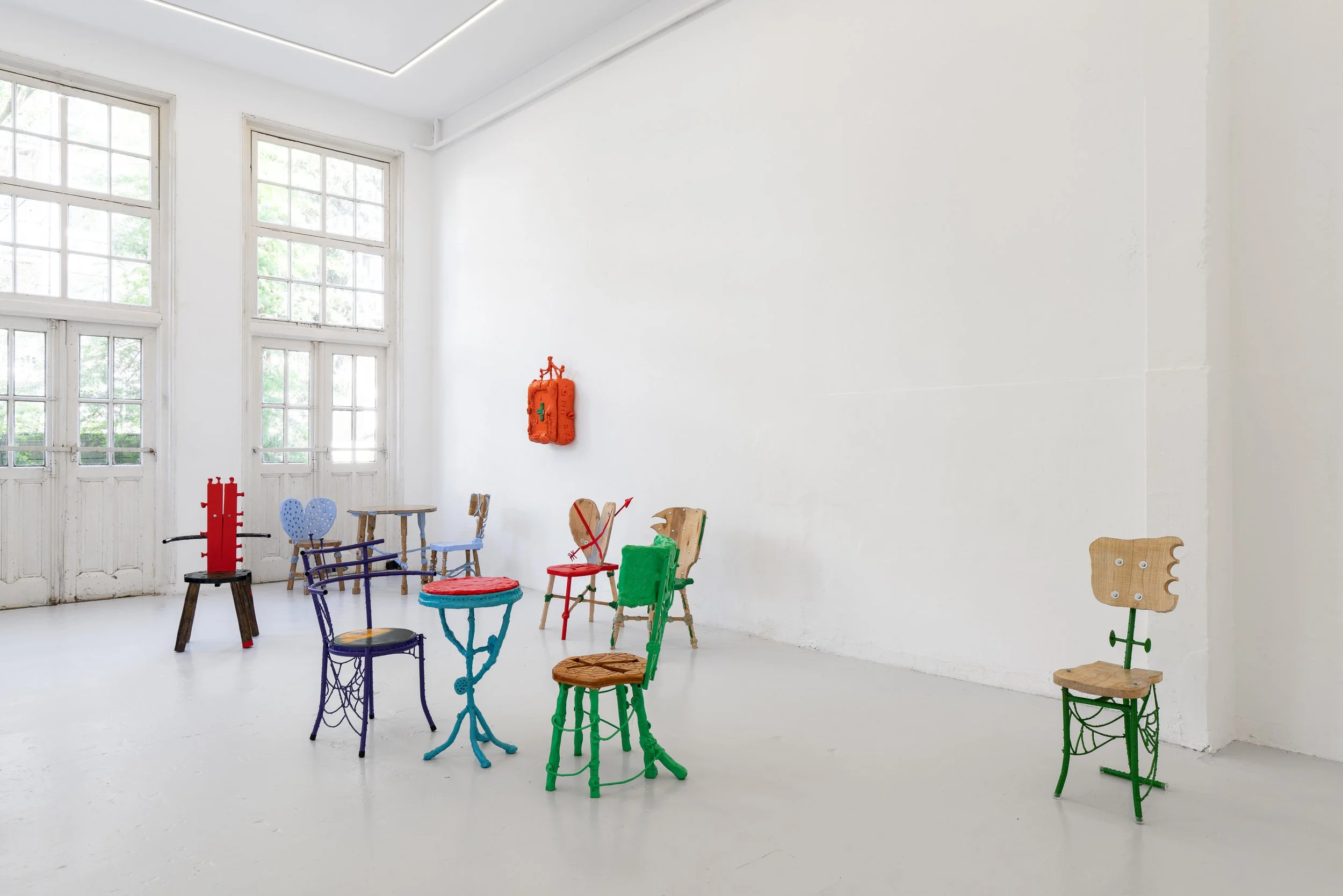
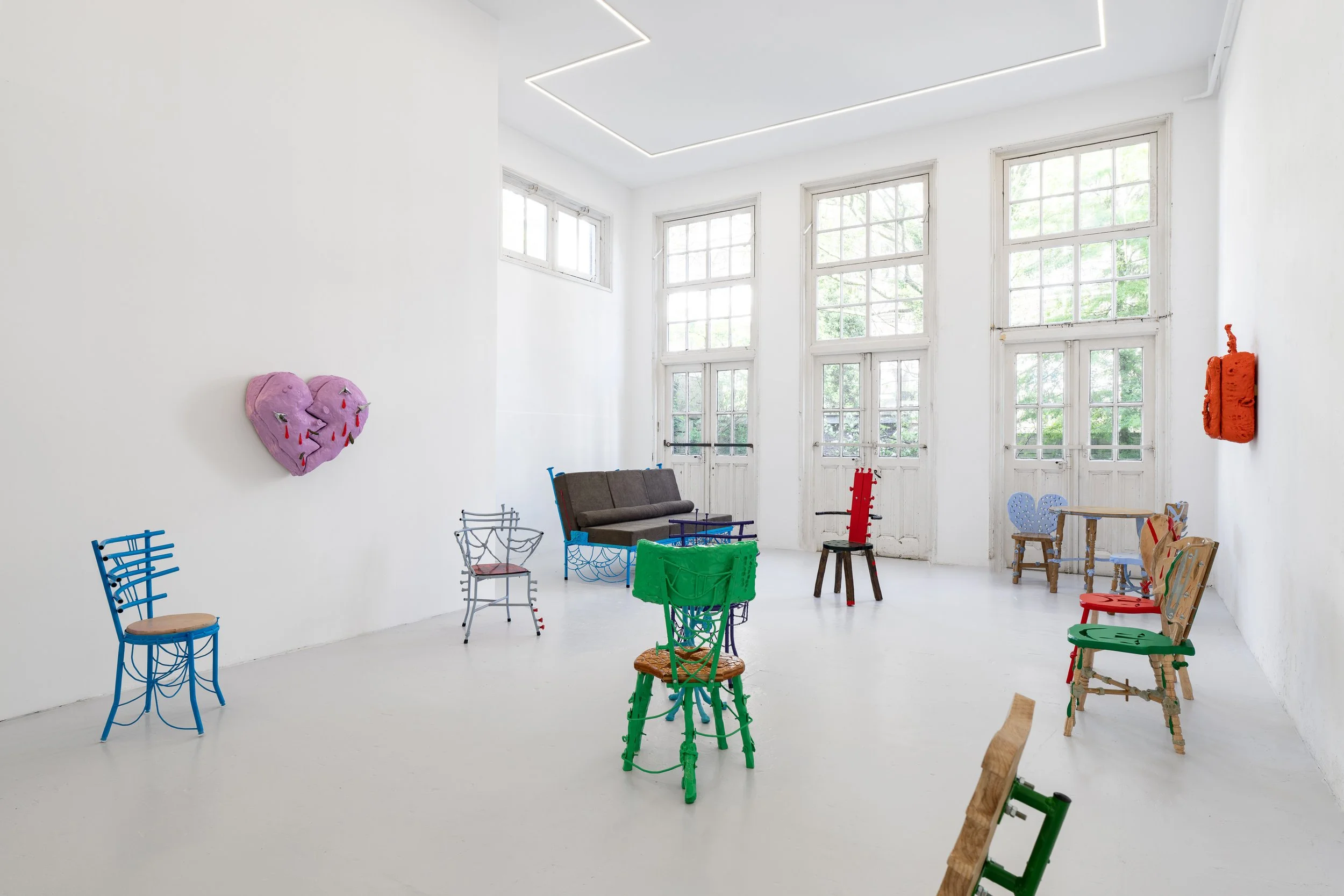
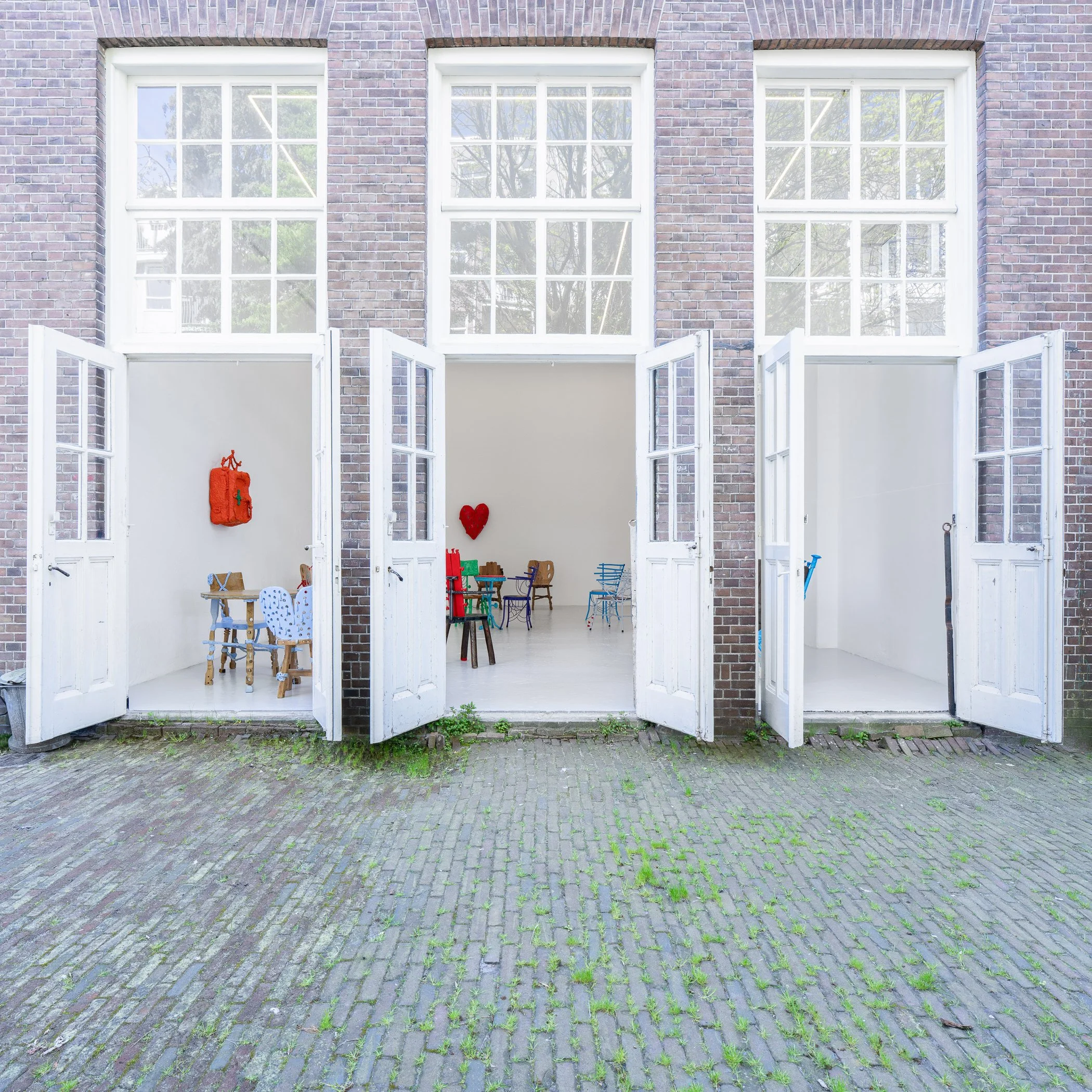
A selection of these pieces will eventually be exhibited in Amsterdam in Galerie Fleur & Wouter, on one clear condition: that the public not only view them, but also use them. The exhibition consists of a series of chairs that evoke landscapes, bodies and more indefinable, almost otherworldly forms. They are constructed from wood, steel, epoxy and PUR, and retain that characteristic, ragged and slightly clumsy visual language.
Two chairs in particular stand out within the presentation. They reference the work of the Belgian artist Daan Gielis, who died at a young age from an autoimmune disease. His well-known ‘happy/sad’ smileys, often rendered in neon, form the starting point. Volkaert translates this into two seats: one with a ‘happy’ face, one with a ‘sad’ face. Together, they bring a simple yet poignant tension into focus, in which joy and loss are not opposites, but constantly merge into one another.