5 June – 5 July 2026
Alexandra Phillips, William Ludwig Lutgens
Cascade of Failures
Two artists make their debut at Galerie Fleur & Wouter this summer. From June 5 until July 5, new works by Alexandra Phillips and William Ludwig Lutgens will be on view.
The exhibition departs from the idea of the cascade of failures: a situation in which one component of a system breaks down, after which other components attempt to fill the void, until eventually the entire system collapses. Normally, such a chain reaction is seen as something catastrophic, a defect that must be prevented. But what happens when a system no longer has a clear function? When its purpose is not efficiency or stability, but rather to make the mechanisms of the system itself visible? In that case, failure becomes not an accident, but a method, not an endpoint, but an opening.
The artists in this exhibition approach art as a form of inquiry: a practice that produces knowledge by generating confusion within cognitive systems. Art resists fixed functions and utilitarian logic. It is unstable, resistant, and elusive. A work of art is made with technique, craft, and intention, yet escapes any clear application. The success of art lies in its ability to undermine expectation.
Failure thus becomes a rupture in how things are supposed to unfold. That rupture opens a space in which systems become visible at the very moment they begin to derail. In this exhibition, the artworks occupy that space as echoes of one another: copies without an original, structures that endlessly repeat themselves.
In the period leading up to the exhibition, William Ludwig Lutgens became intrigued by Alexandra Phillips’ analysis of American McMansion-like villas, that she describes in her publication Time a Tell. These are hyper-kitsch homes that imitate Western architectural styles — French, British, German, Belgian, Danish — without ever fully belonging to a single tradition. Everything the client could possibly want. They are not copies, but accumulations of misunderstandings, aspirations, and historical remnants: a cascade of aesthetic failures in which each imitation reinforces the previous one. What remains is an architecture of excess and derailment, in which the desire for status becomes visible as structural instability.
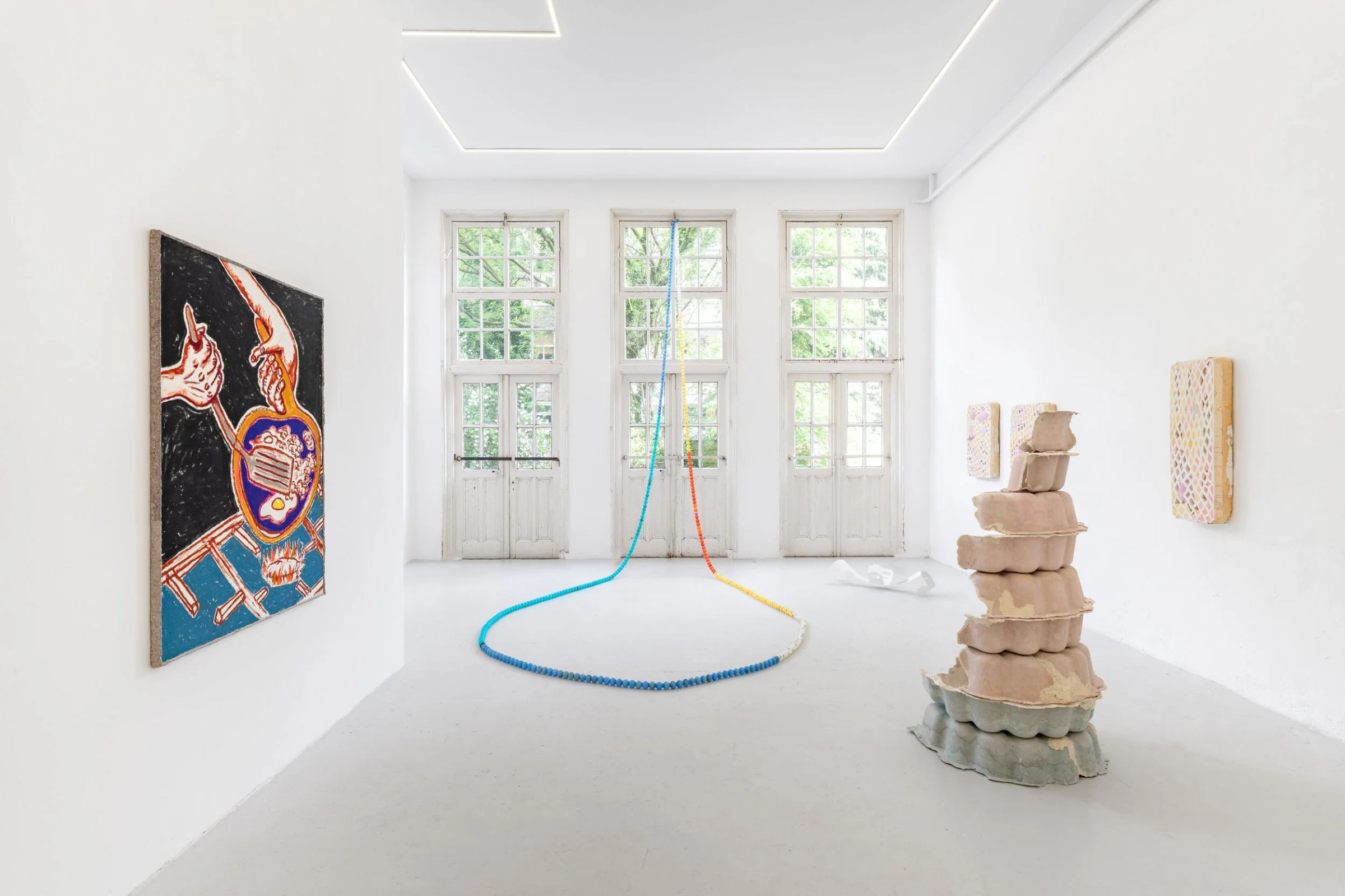
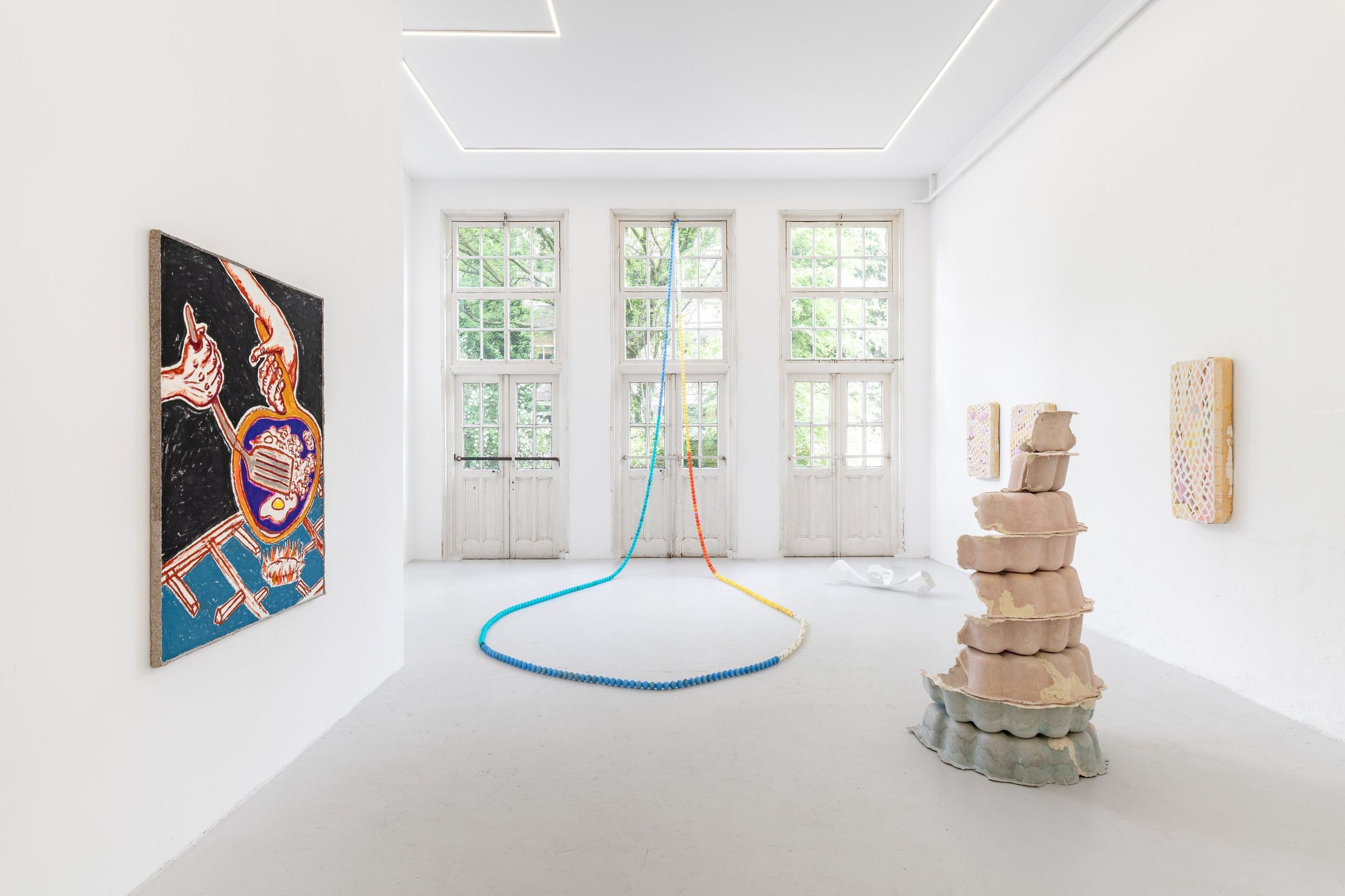
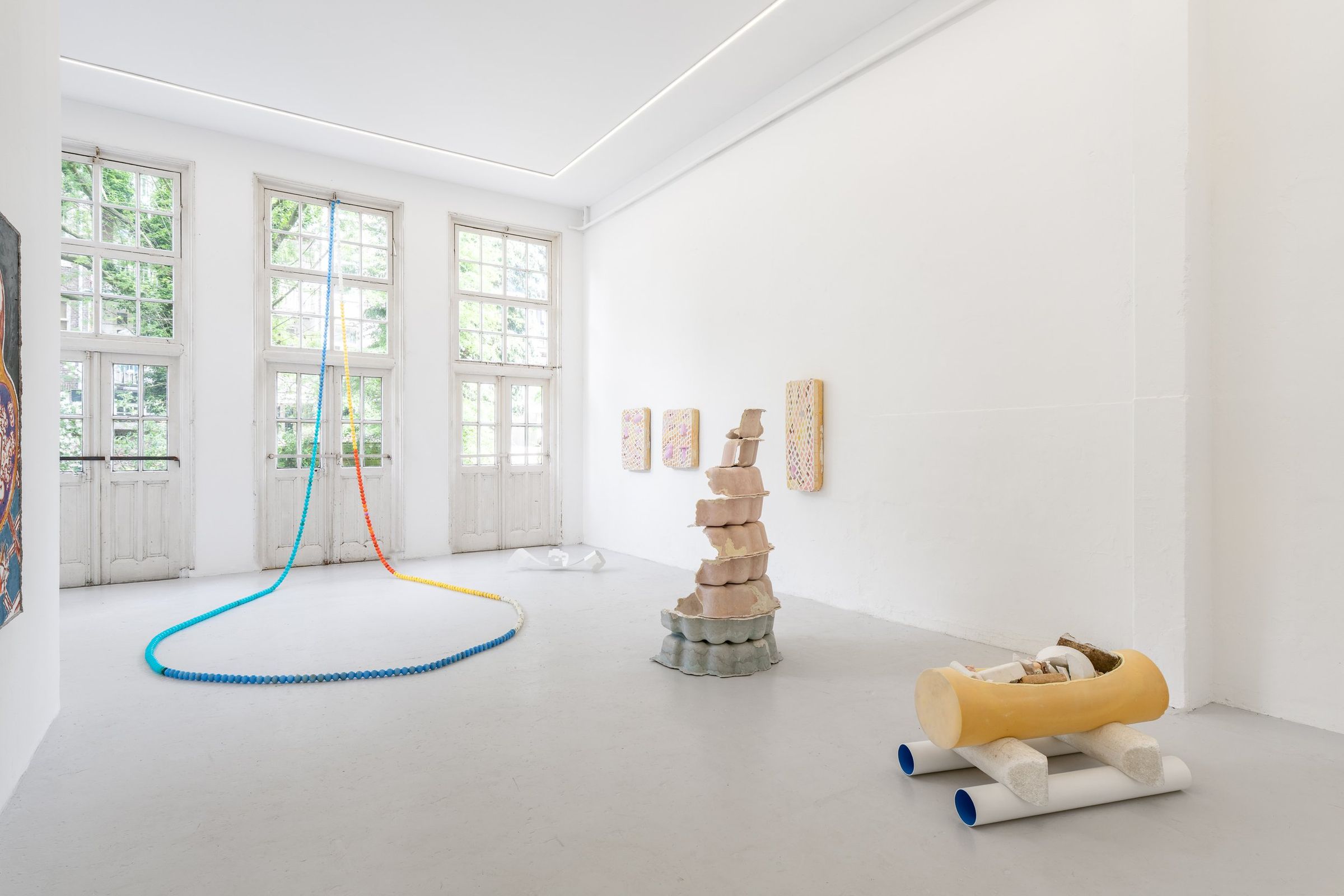
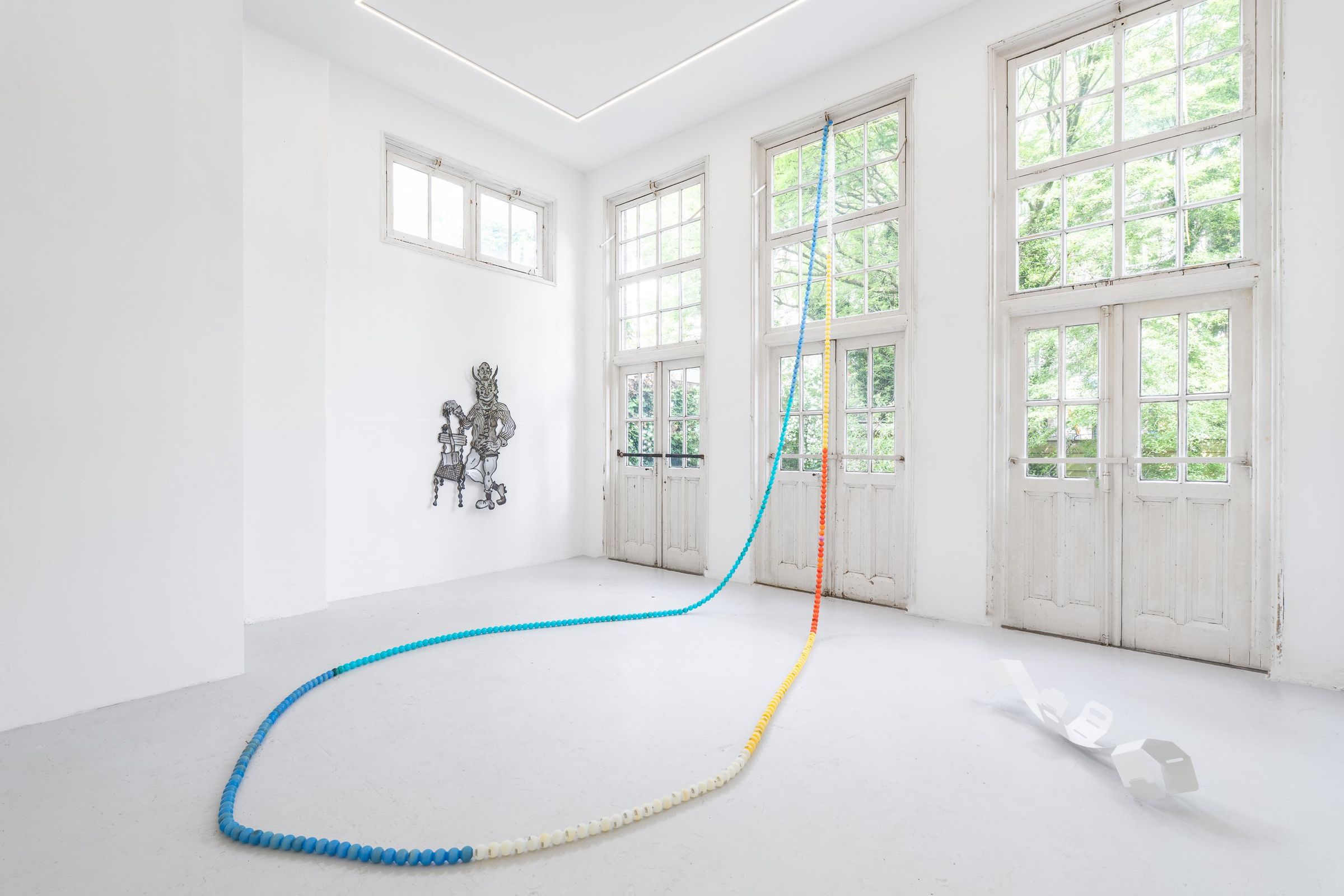
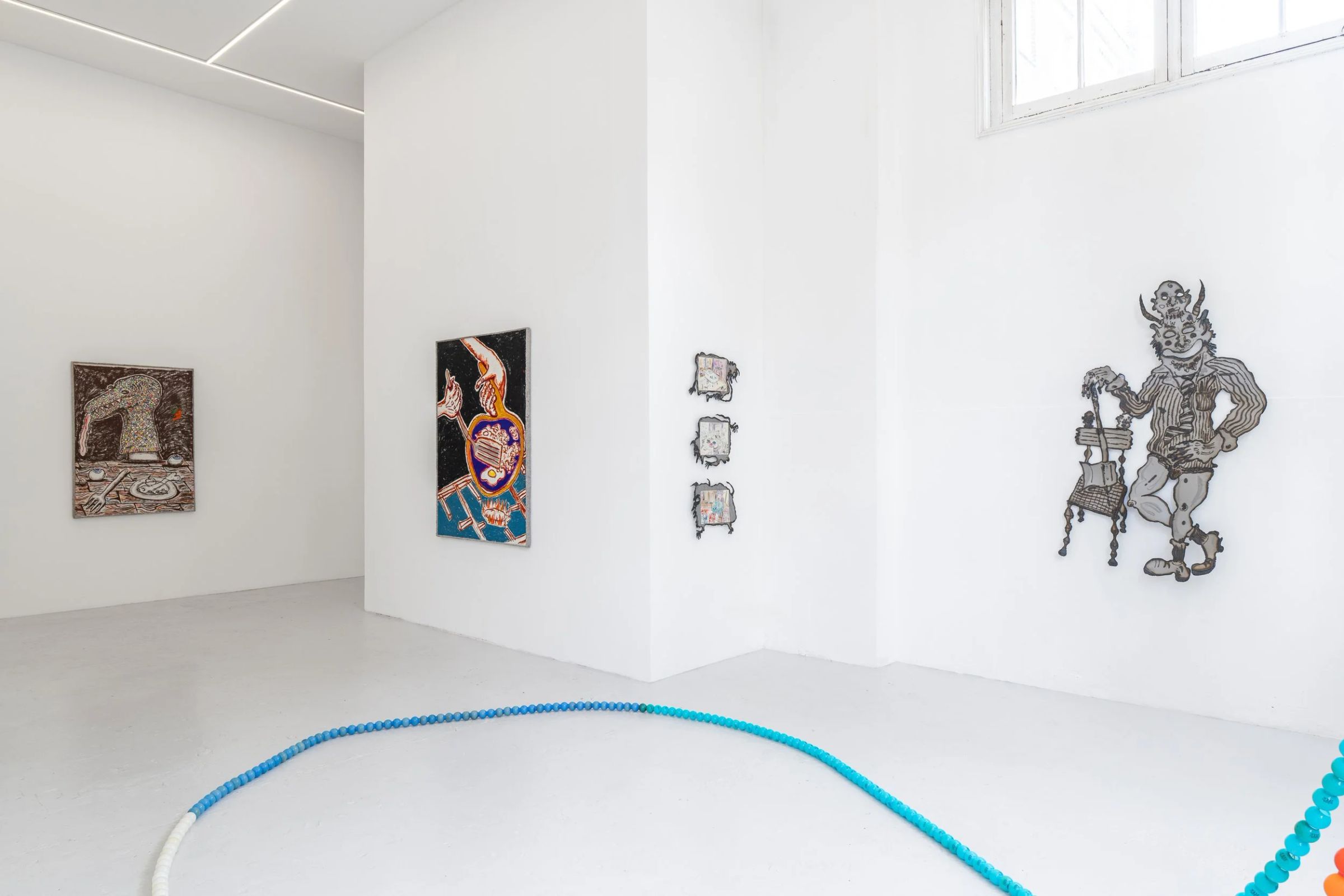
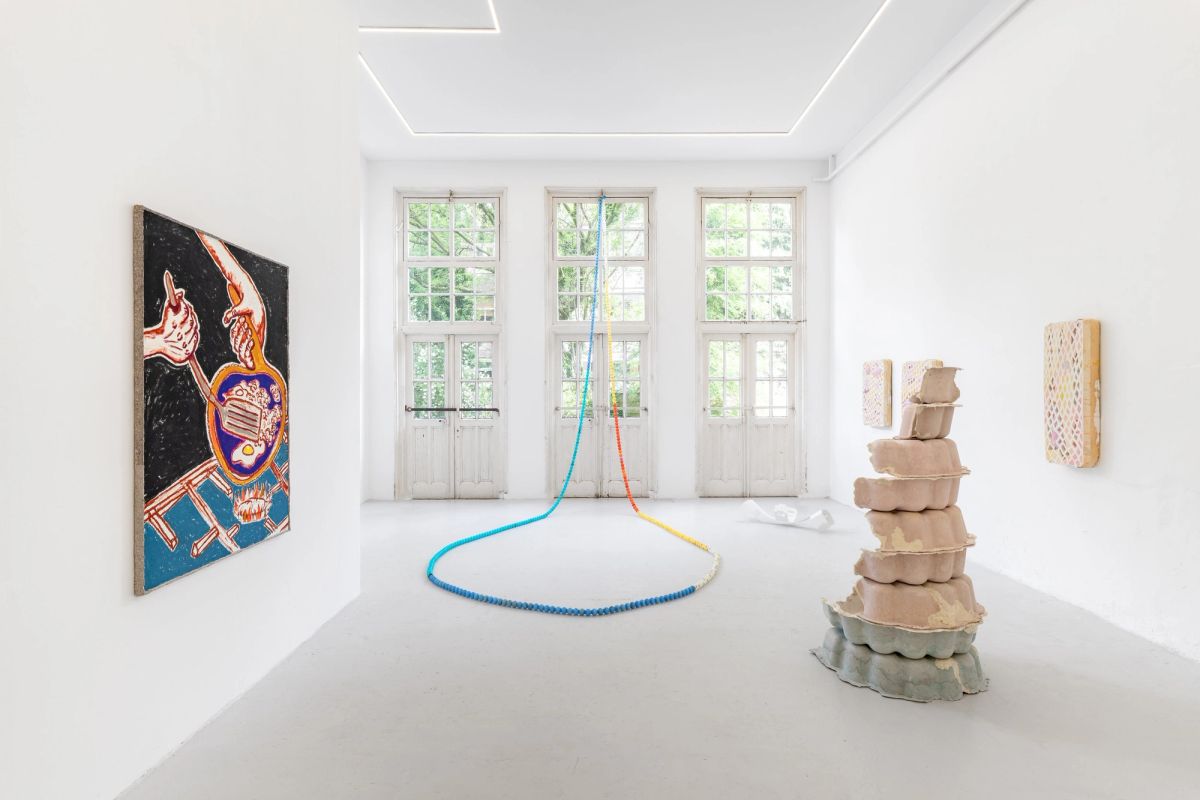
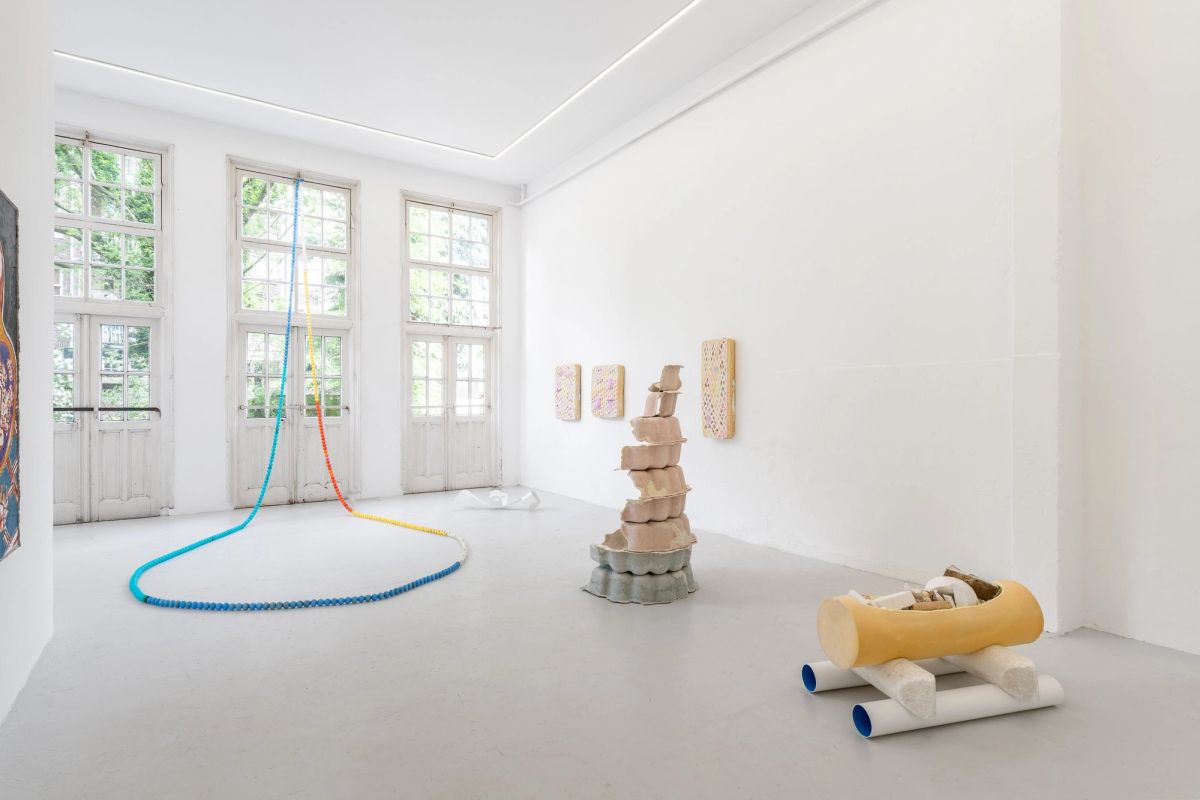
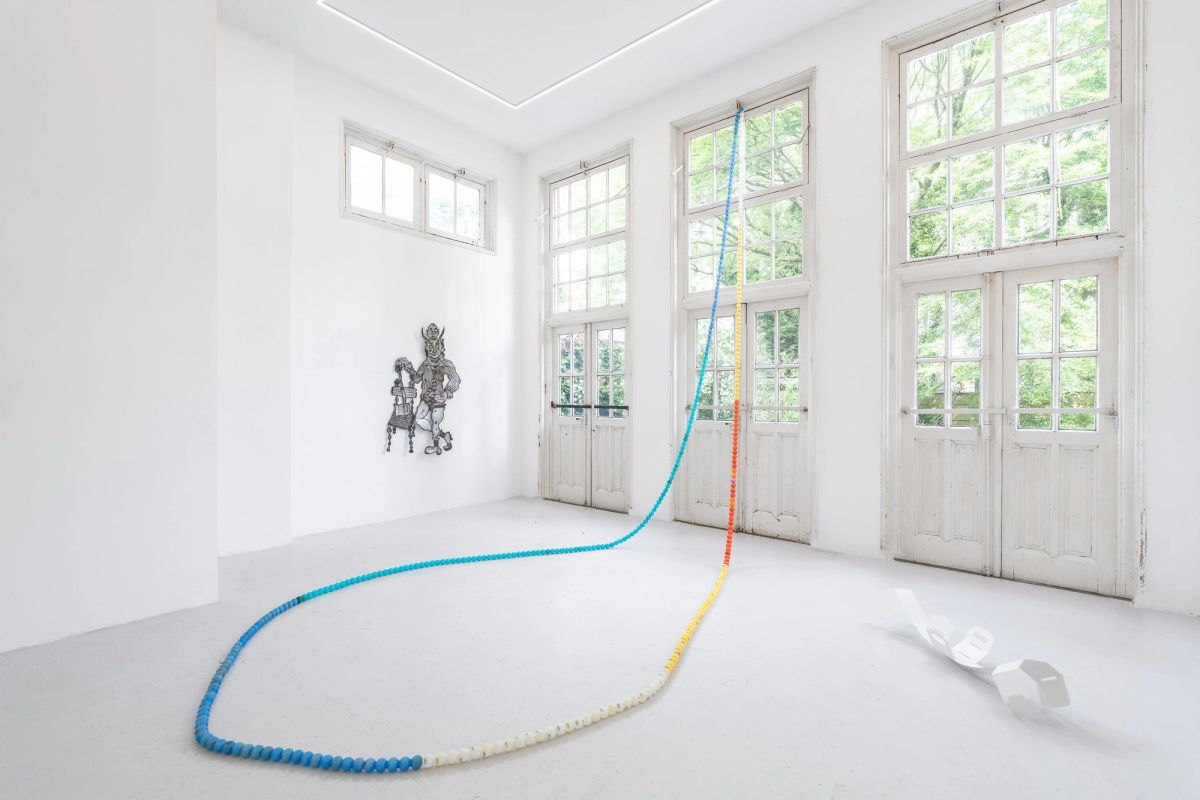
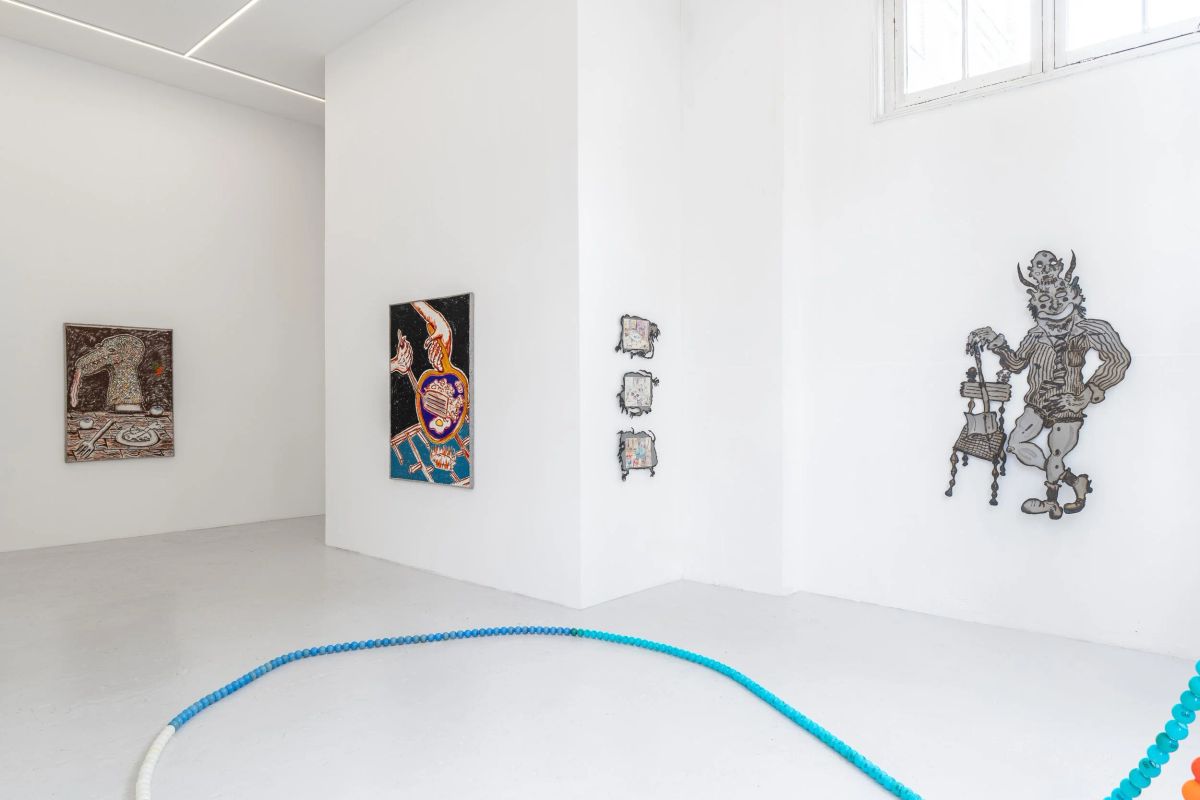
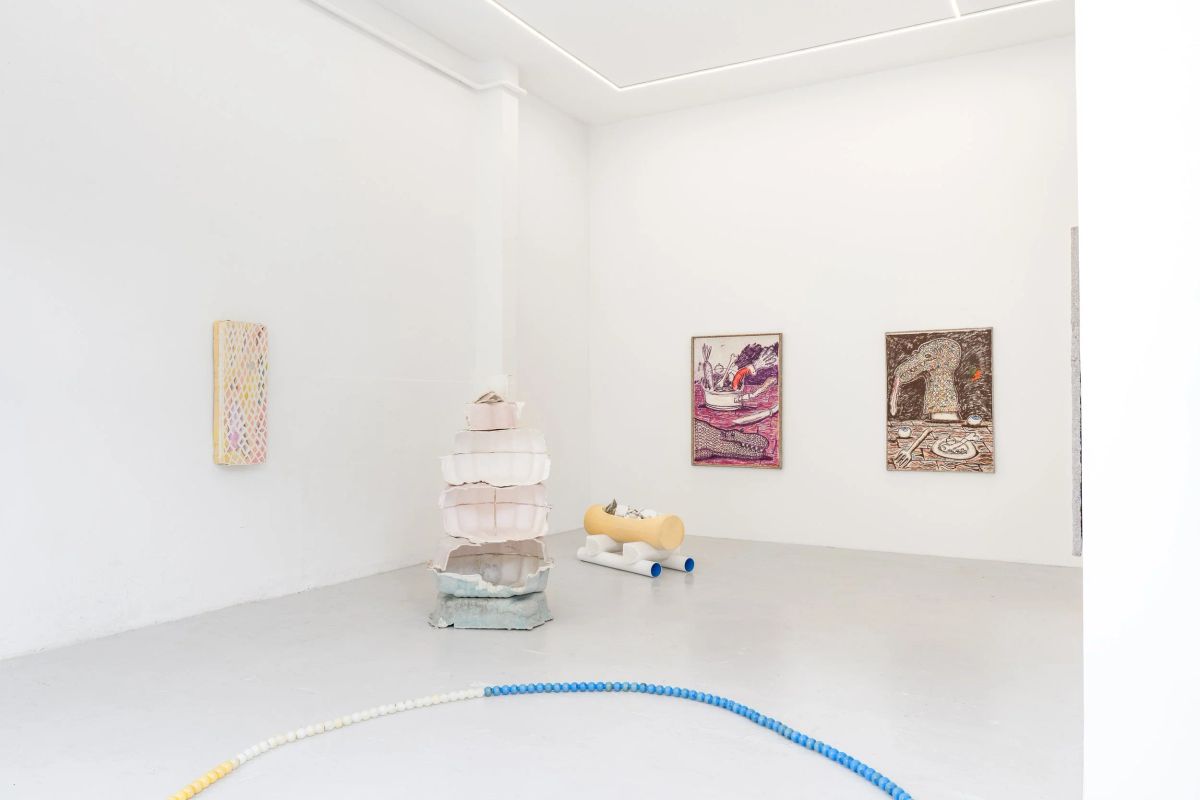
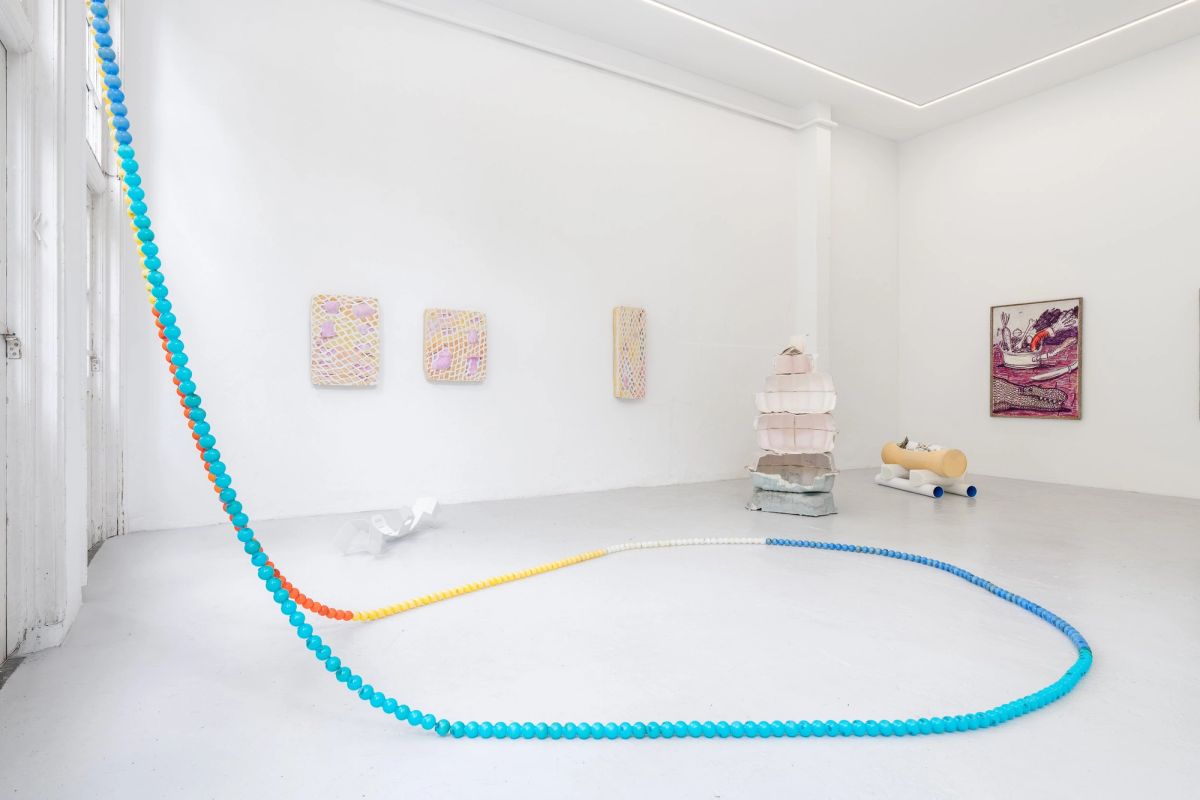
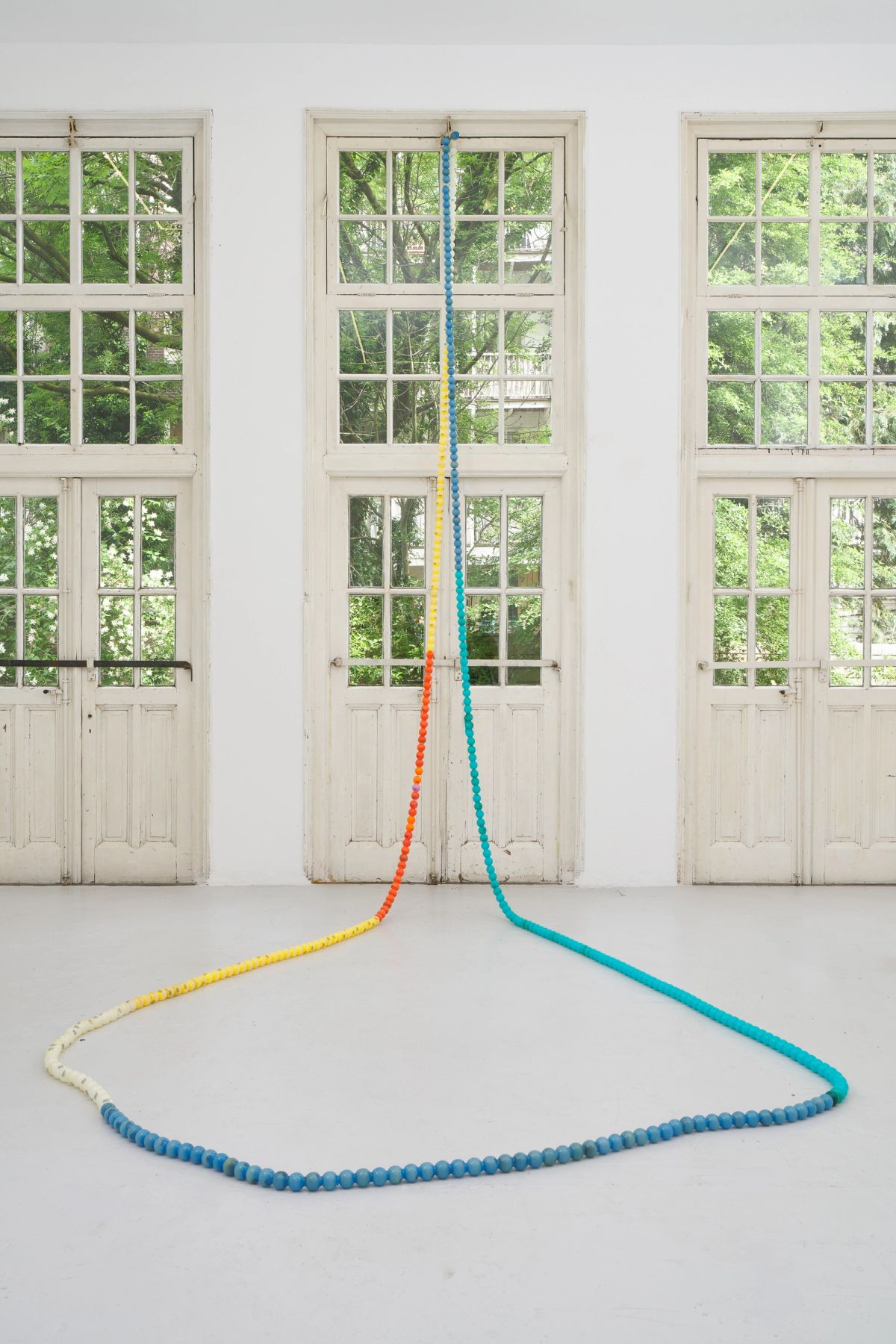
This analysis is characteristic of Alexandra Phillips’ (USA, 1988, lives and works in Rotterdam) practice. In her work, materials are continually detached from their fixed meanings and reorganized into unstable systems. This is evident in the works on show, for example, in Accessory (2025), where she assembles a chain of discarded market lamps sourced from Rotterdam. What is normally replaced as a whole once it fails is here dismantled and reconnected into a fragile network that stretches through space like infrastructure. The work reveals not only the object itself, but also the system of replacement and waste that underlies it.
In Exposed Brick 1, 2 & 3 (2026), Phillips works with scagliola, a historical technique used to make plaster resemble marble, as seen in decorative objects in the Rijksmuseum. She combines this with leftover materials and insulation foam from earlier works. What appears to be brick or architecture is in fact a layered system of imitation, reuse, and displacement. The works oscillate between construction and simulation, between stability and leakage. In her practice, nothing is what it seems: materials constantly shift roles, making failure not an exception but an inherent part of construction itself.
The work of William Ludwig Lutgens (BE, 1991, lives and works in Antwerp) also operates within systems of behavior, representation, and collapse. His multidisciplinary practice investigates the ego and social structures within a late-neoliberal context, in which alter ego-like figures become trapped in circuits of competition and control. The grotesque plays a central role, where humor and estrangement converge to destabilize societal systems.
A recurring figure in his practice is The Piper, a character based on the Pied Piper of Hamelin. He functions as a metaphor for manipulation and collective hypnosis: a force that leads individuals and groups through invisible structures such as algorithms, ideologies, and economic systems. The Piper thus embodies the tension between autonomy and behavioral steering, between choice and unseen influence.
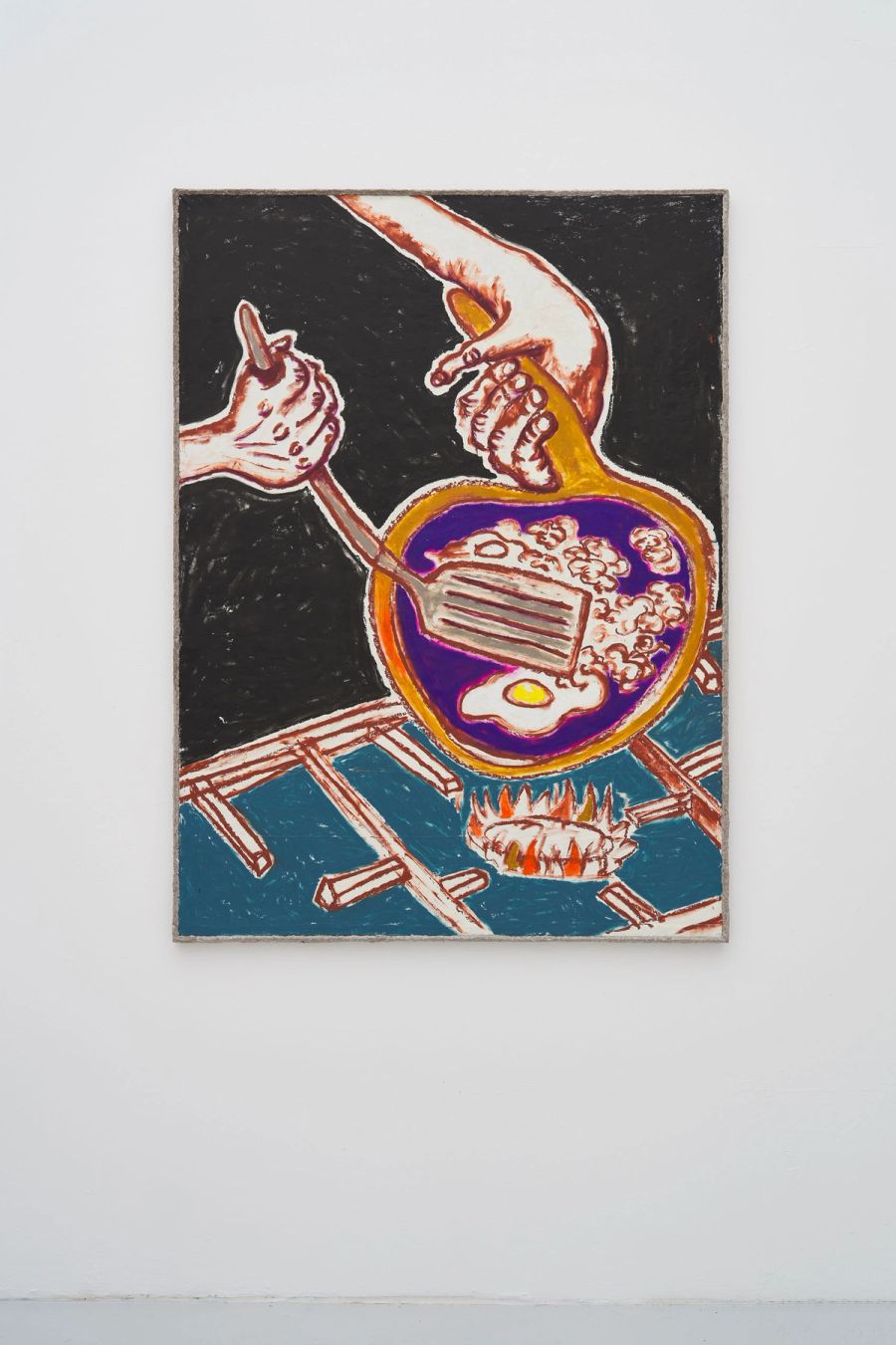
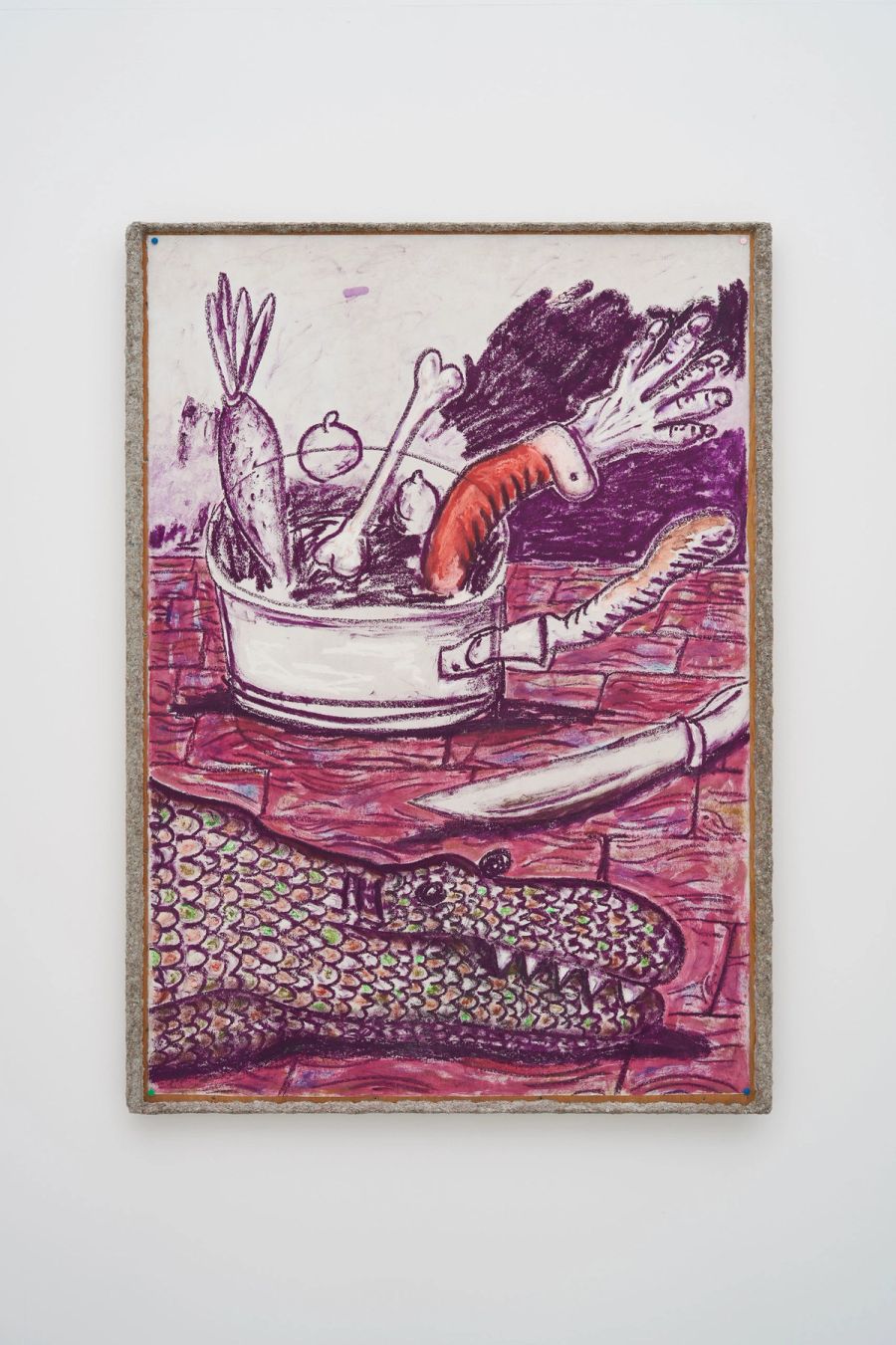
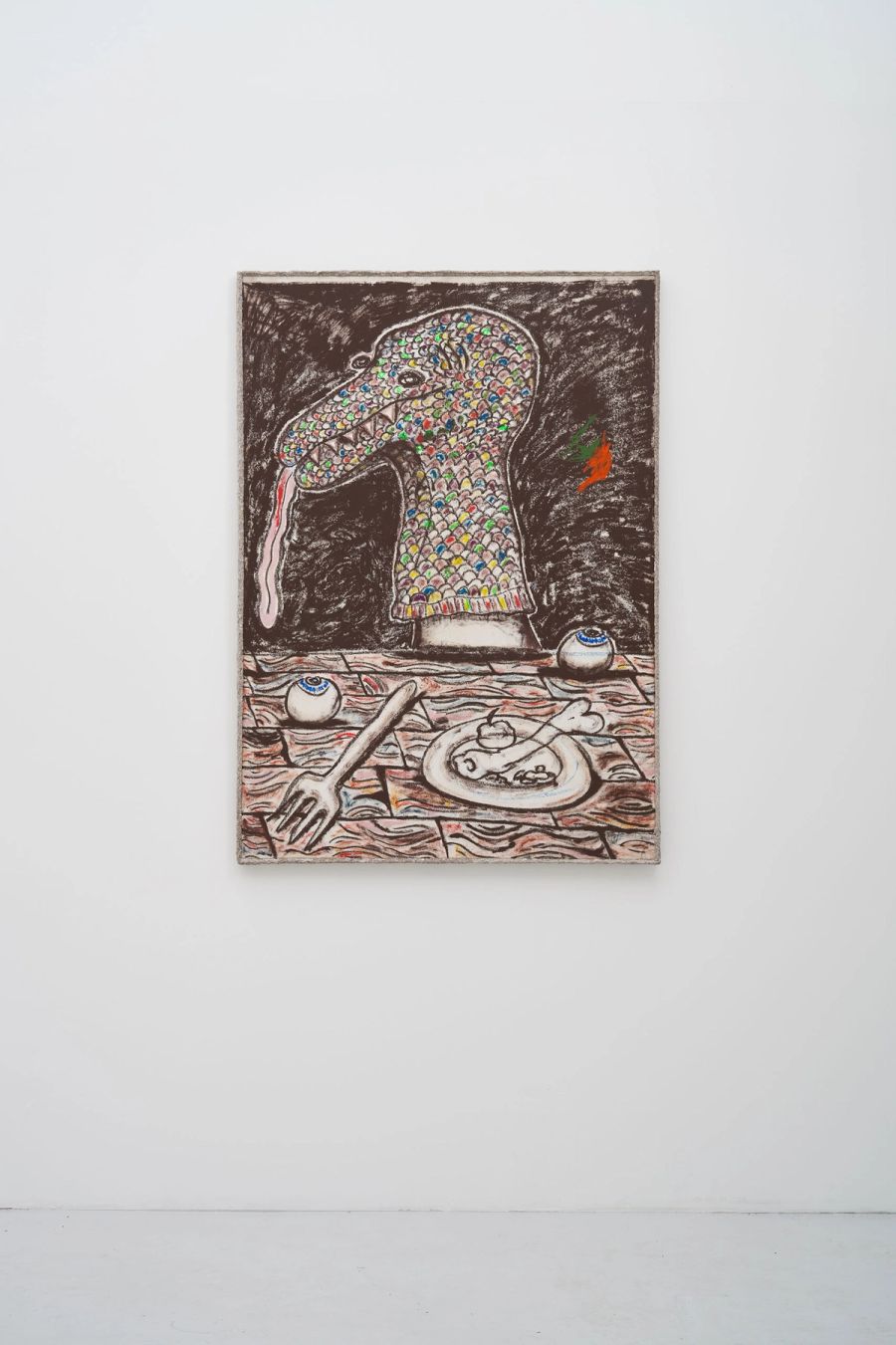
In the exhibition, The Piper appears in works on paper and steel, moving through McMansion-like interiors that evoke an idealized bourgeois past. Lutgens transforms the McMansion villa into a stage filled with traps and theatrical mechanisms, in which systems repeat themselves until they begin to leak. This logic of derailment connects to slapstick and early cartoons in which failure drives the narrative forward. Failure is not an exception but a structure.
Ultimately, the exhibition presents failure not as deficiency, but as a productive condition. A method of collapse in which systems become visible precisely at the moment they fall apart. In that rupture, works, objects, and figures emerge that continuously oscillate between function and malfunction — an architecture in which every failure generates new meaning.
Works


Alexandra Phillips
plastic from disassembled market lights, waxed cord, 20 m, dimensions vary


William Ludwig Lutgens
oil stick on Japanese Kitakata paper mounted on canvas, with hardened artist-made papier-mâché frame, 152, 5 x 113 cm
William Ludwig Lutgens
oil stick on Japanese mulberry paper, mounted on wood, with an artist- made hardened papier-mâché frame, 144 x 104, 5 cm
William Ludwig Lutgens
oil stick on Japanese Mulberry paper, mounted on canvas, with artist-made hardened papier-mâché frame, 137, 5 x 98 cm

William Ludwig Lutgens
welded line drawing on steel, with lacquer finish
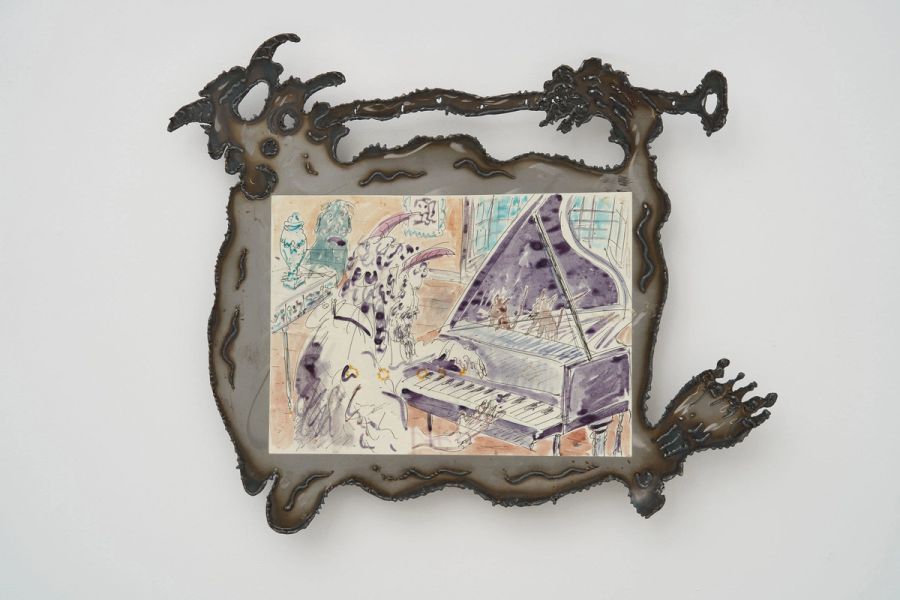
William Ludwig Lutgens
shellac ink and Japanese ballpoint on hemp paper, mounted on steel, with lacquer finish
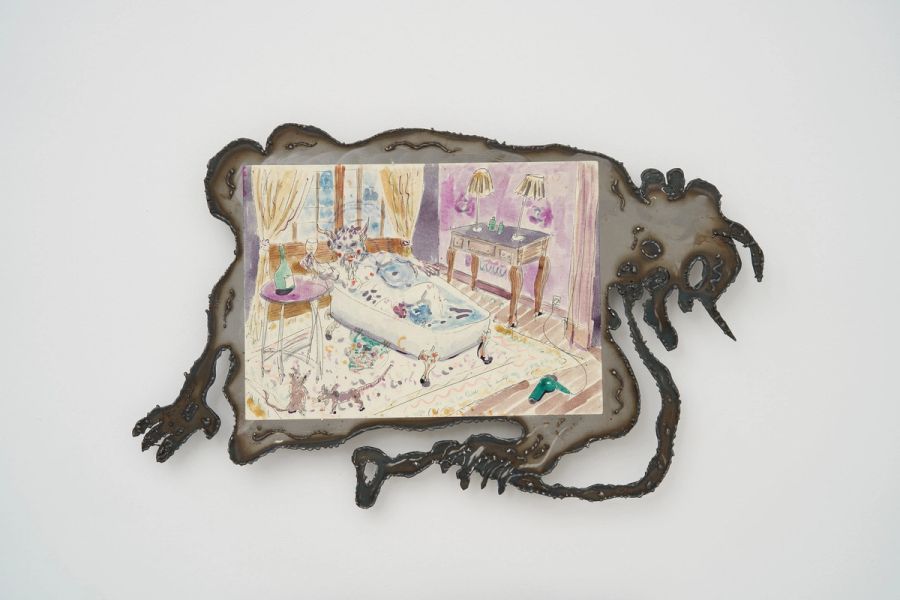
William Ludwig Lutgens
shellac ink and Japanese ballpoint on hemp paper, mounted on steel, with lacquer finish
Sold
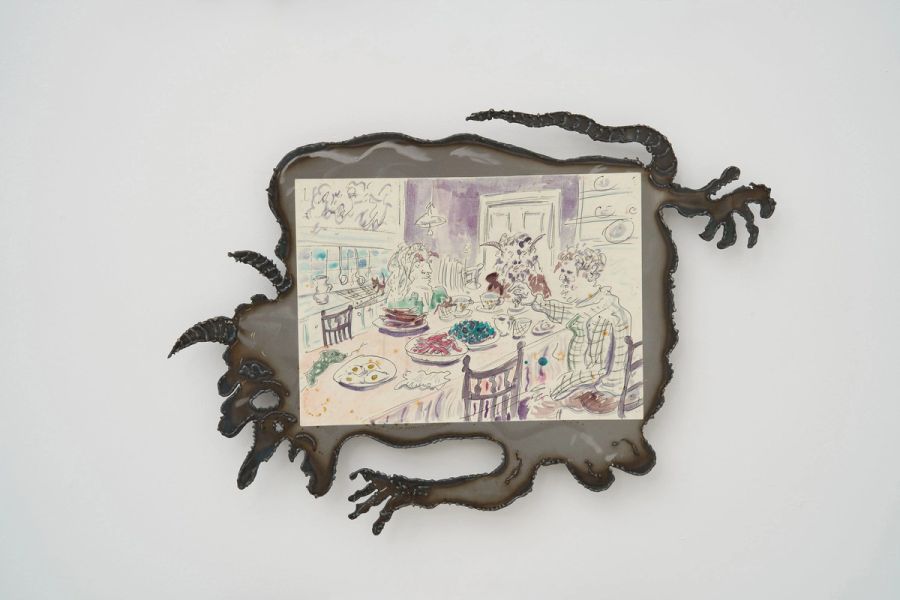
William Ludwig Lutgens
shellac ink and Japanese ballpoint on hemp paper, mounted on steel, with lacquer finish
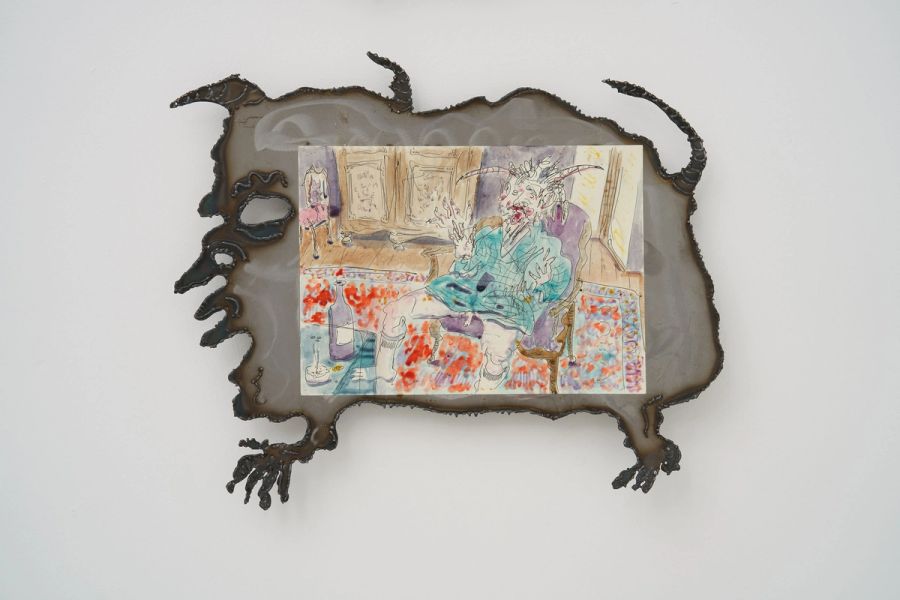
William Ludwig Lutgens
shellac ink and Japanese ballpoint on hemp paper, mounted on steel, with lacquer finish
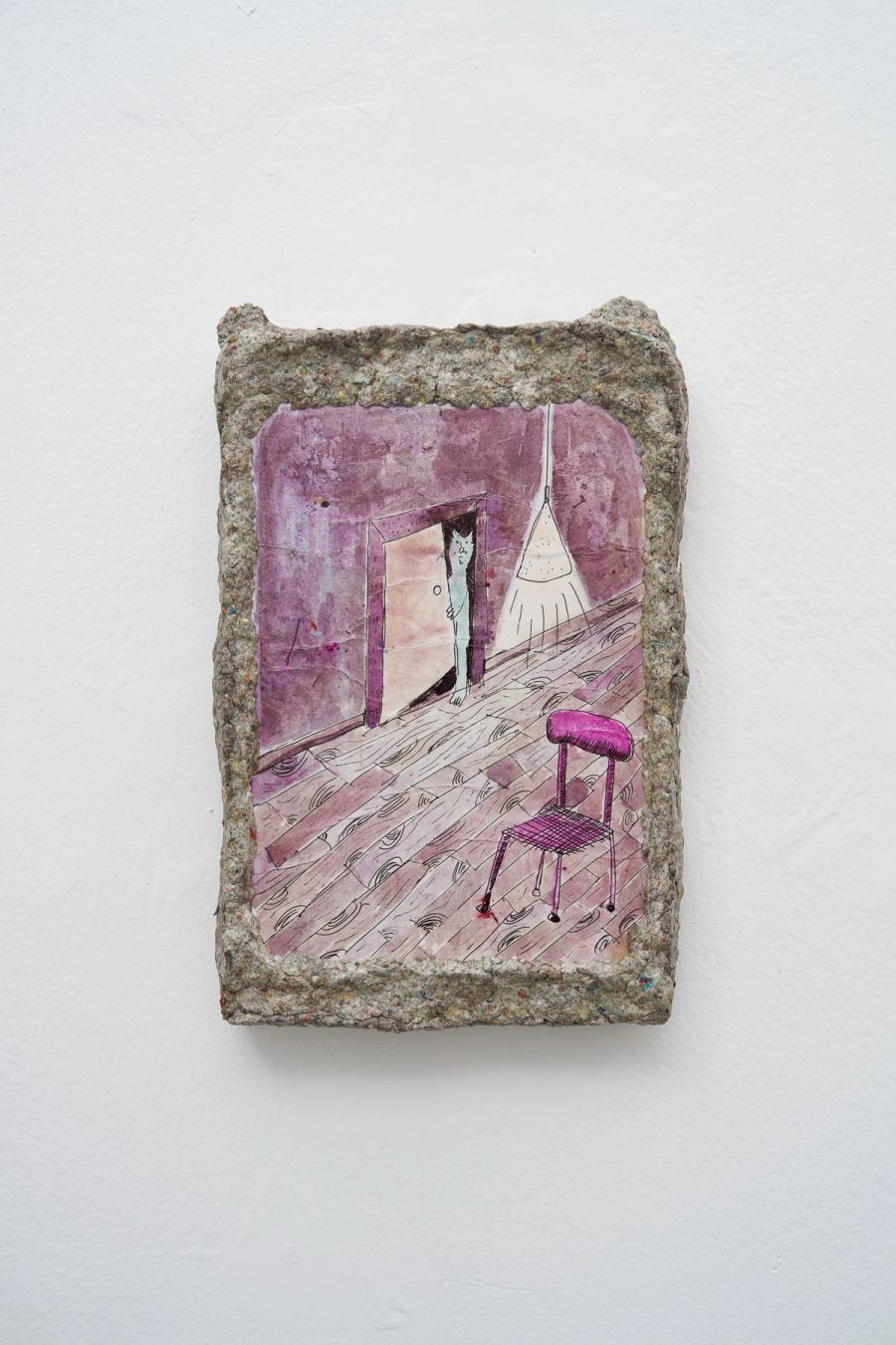
William Ludwig Lutgens
doink doink doink!, shellac ink and Japanese ballpoint on hemp paper, mounted on wood, with artist-made hardened papier-mâché frame

William Ludwig Lutgens
oil pastel on hemp paper, mounted on wood with artist-made papier-mâché frame
Installation views
Artists
Alexandra Phillips
Alexandra Phillips (Port Chester NY, 1988) is an American artist currently working in Rotterdam. She spent much of her educational years in North Carolina, where she attended an art-oriented high school programme at the University of North Carolina School of the Arts. She holds a Bachelor of Fine Arts in painting and a Bachelor of Art History from the Kansas City Art Institute. Her work comments on our fleeting and insatiable existence with a light touch and a witty sense of humour. She works with the intrinsic but often overlooked properties of everyday materials, showing us their unforeseen potential and appeal. Phillips attended the Penland School of Crafts (2006), received a Van Lier Fellowship (2013), was resident artist at Atelier Mondial in Basel, Switzerland (2016) and attended the Jan van Eyck Academy in 2017. In 2020, she received a research and development grant from the CBK of Rotterdam. Her work was nominated for the 2021 Royal Prize for Modern Painting. She has received support from Stichting Droom en Daad and Mondriaan Fonds. In 2011, Phillips co-founded Purepropaganda.org Magazine with artist Jan Henderikse (born 1932 Delft NL), an absurdist design agency that continues to operate in various forms today.
More about Alexandra Phillips →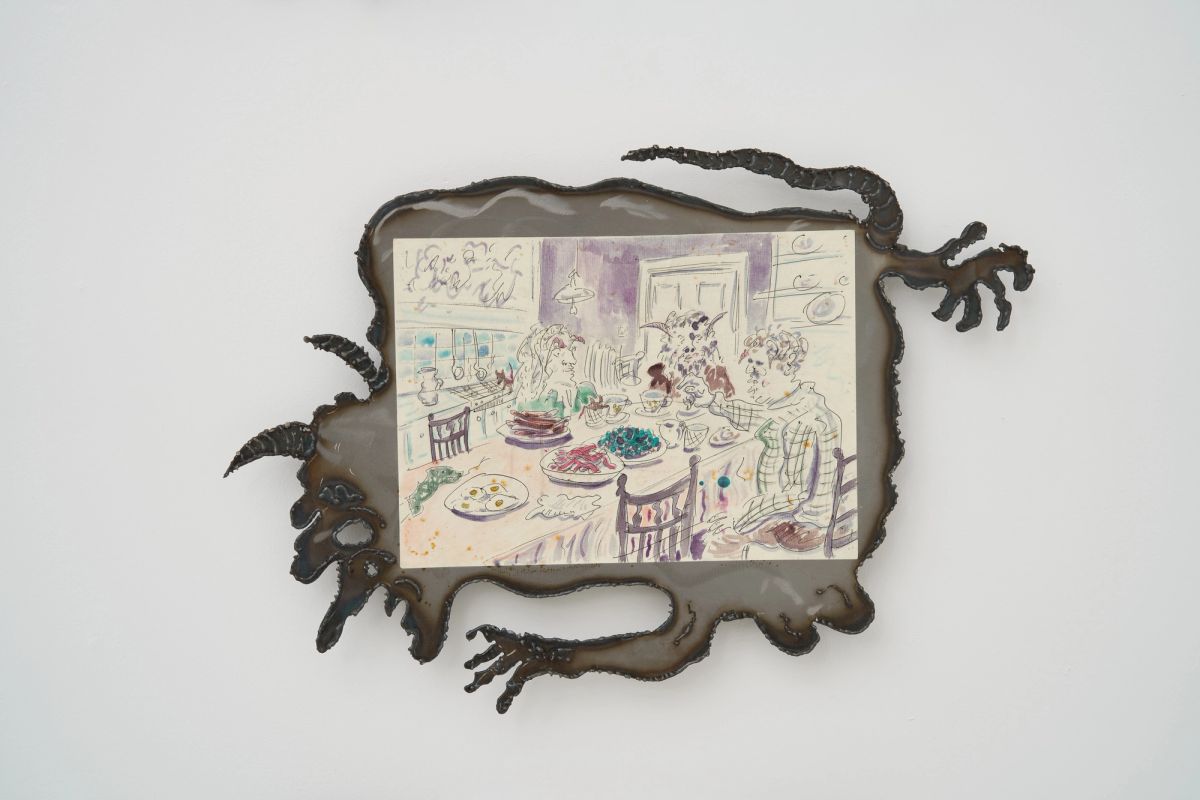
William Ludwig Lutgens
William Ludwig Lutgens (1991, Turnhout, BE) works with painting, drawing, sculpture, performance, and film. In his multidisciplinary practice, he explores the human ego and the influence of media and societal systems within a performance-driven, late-neoliberal society. Playful, alter-ego-like characters often appear in his work, seemingly trapped within rigid social structures. The grotesque plays an important role in his work: a space where humor and horror, or attraction and repulsion, overlap. Through absurdity, satire, and estrangement, Lutgens offers social commentary on themes such as economic competition, artistic practice, labor, and authority, inviting audiences to reflect on the images, expectations, and structures that shape contemporary life. Lives and works in Antwerp, Belgium.
More about William Ludwig Lutgens →