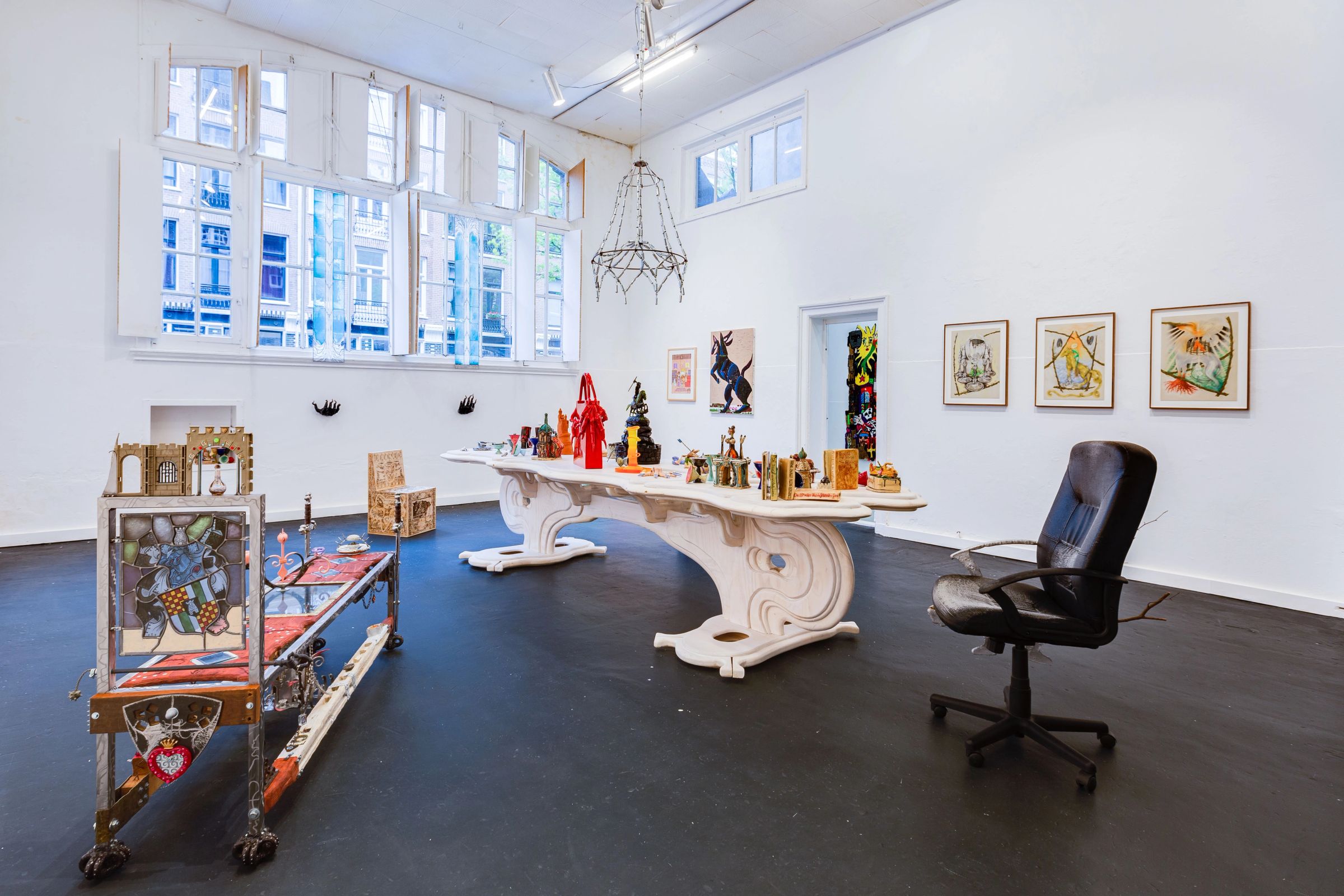
13 April – 12 May 2024
Erik Mattijssen, Mai van Oers, Saar Scheerlings
Castlemania
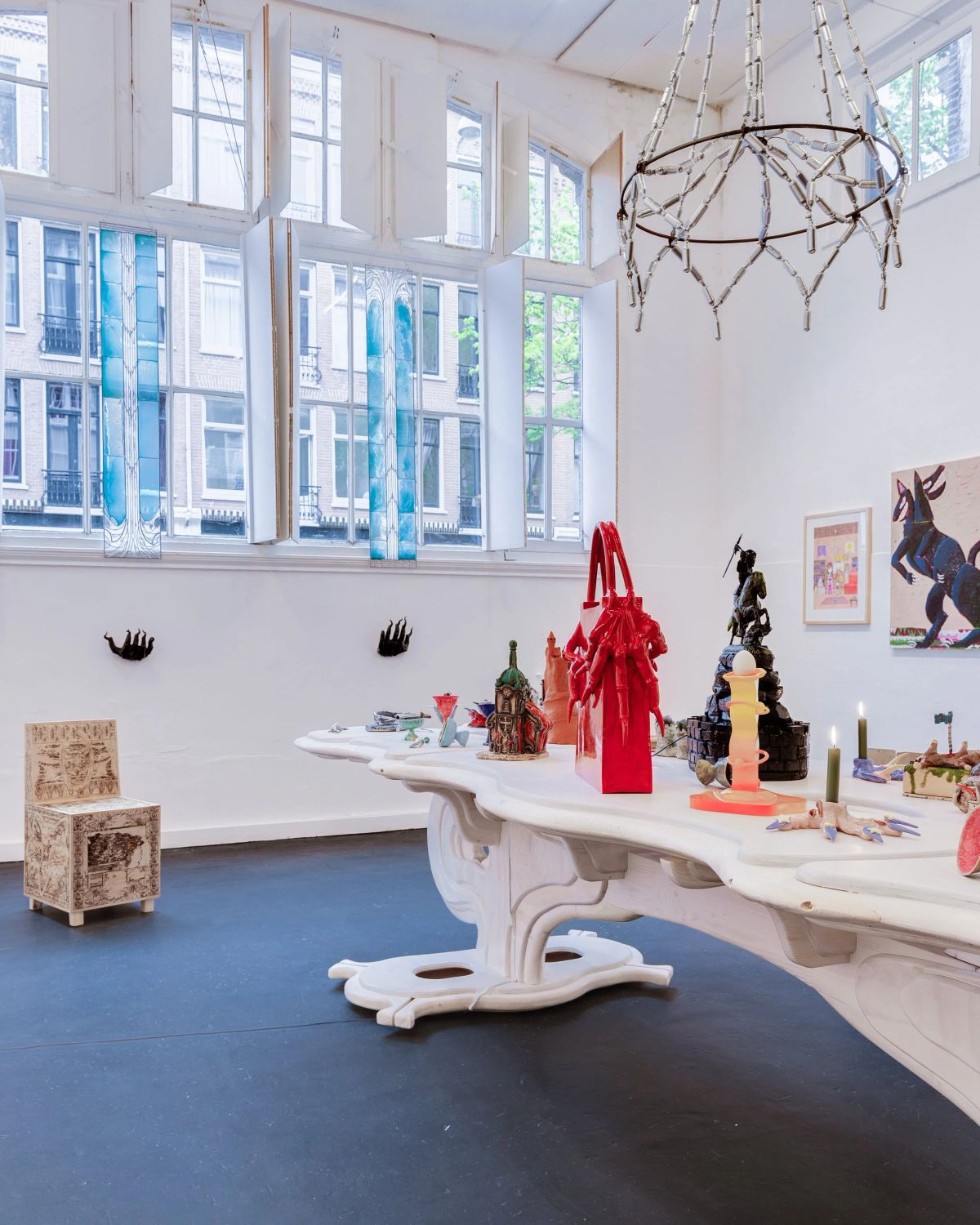
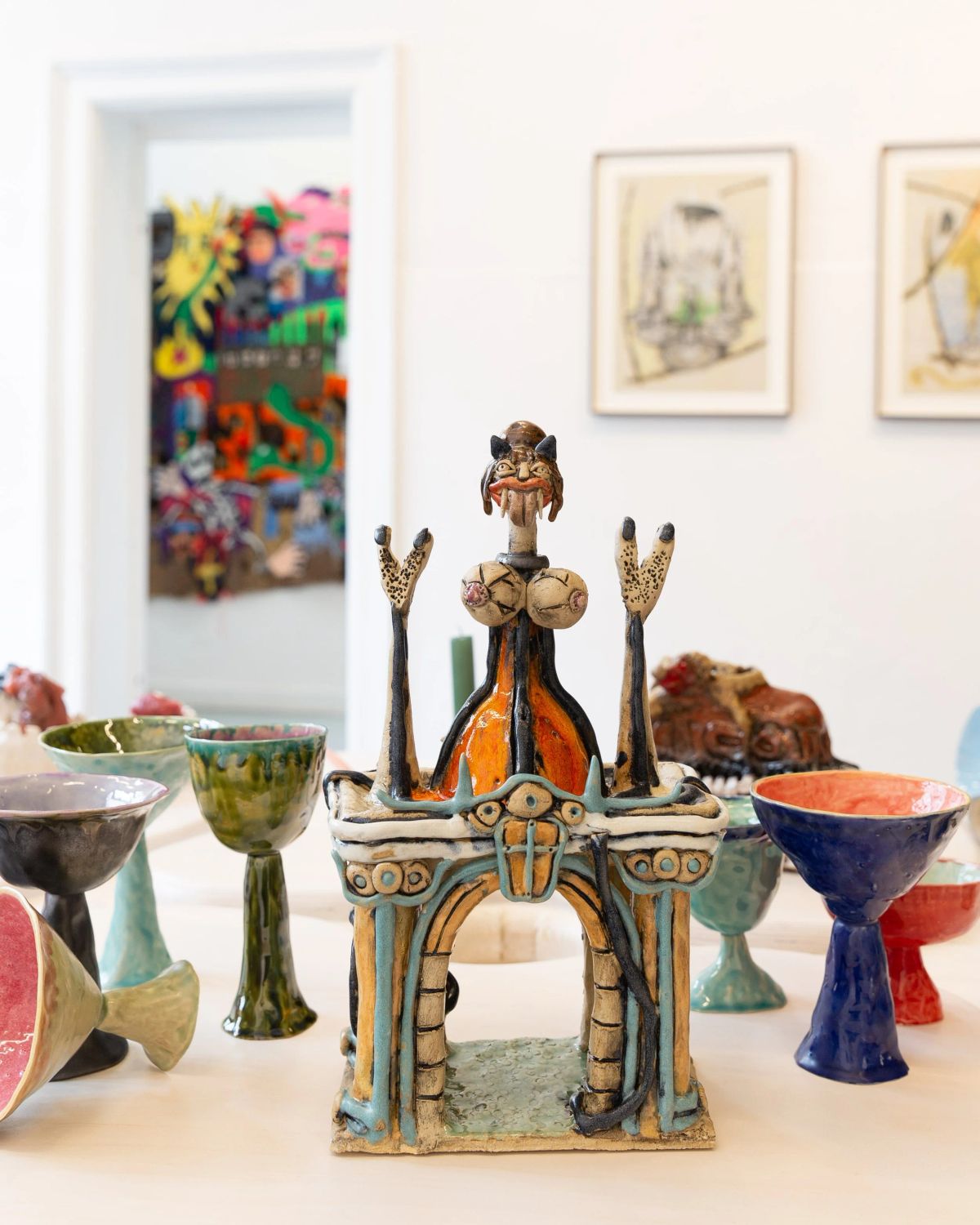
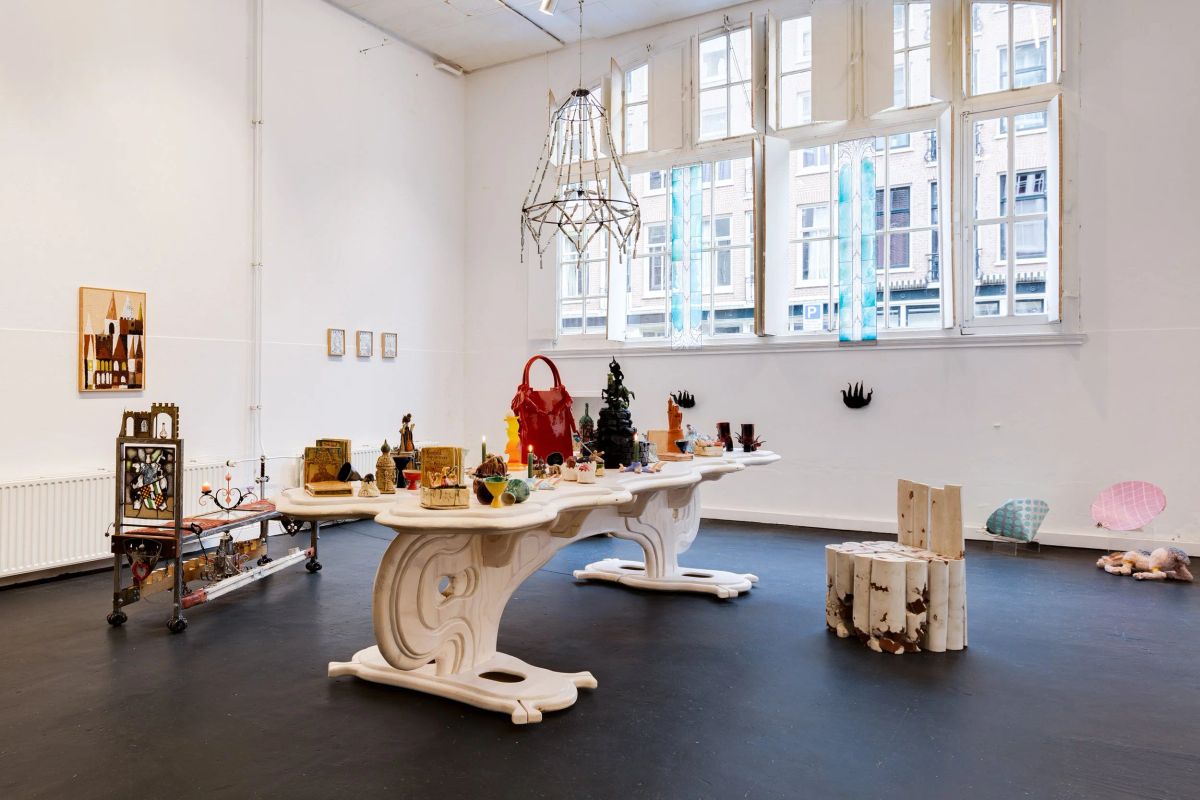
Castlemania is a shared project between Galerie Fleur & Wouter and No Limits! Art Castle. One exhibition at two locations, created in collaboration with co-curator Simon Marsiglia. For the chapter in our gallery Open the Gates!, the gallery transforms into the interior of a castle of the future with contributions from a large number of artists:
aeoi + Anima, Maikel Baas, August Bällgren, Joey Bocciardo, Alexis Bondoux, Youssef Boucenna, Jeroen Bouwmeester, Koos Buster, Noah Cohen, Chai Dienn, Oskar Frere-Smith, Ori van Gelderen, Naomi Gilon, Carl Johan Jacobsen, Danielle Karlikoff, Bin Koh, Ralf Kokke, Susan Kooi, Lokidolor, Jessica Magnin, Simon Marsiglia, Erik Mattijssen, Mai van Oers, Baby Reni (Irene Ha), Saar Scheerlings, Janne Schimmel, Tomasz Skibicki, Lukas Sluiter x No Limits! Art Castle, Anke Stoel, Noa Verkeyn & Peer Vink.
In No Limits! Art Castle chapters two and three are on view: Less is Bore by Johan Vanderschelden and Burn them All by Jordan R̶o̶g̶e̶r̶. All chapters open on Saturday 13 April (14.00 - 18.00 hrs at Galerie Fleur & Wouter and 18.00 - 03.00 at No Limits! Art Castle) This is also where the afterparty will take place, themed of course, in collaboration with SEXYLAND World and The Special Social Club.
On the designated day, they all arrived upon the precise coordinates (52.351930 4.888740) to unravel the mystery of their invitation.
They journeyed from the farthest reaches of our world (and beyond), spanning perhaps a million years apart in the timeline, with some arriving before the place ever saw human habitation and others long after it had vanished. Each attendee brought with them the contents of their received invite as stated below:
- A strand of code displayed digitally, an intricate pattern woven from numbers, letters, and symbols on a backdrop of various colours.
- A bronze dice, made from an endless pattern resembling a twisted ouroboros, coiling upon itself.
- A crumpled piece of paper bearing instructions.
Guided by the scrunched paper's directives, they all positioned their code displays at the coordinates and rolled the dice.
The heavy pieces of bronze clattered upon the ground in their respective realities, producing a range of sounds from a deep, resonant "klonk" to a vibrant, humming "swiiiiingggg," echoing the different surfaces they encountered. Yet, a common result emerged as the dices all ended up balanced on the same edge, merging two of the sides into a sideways figure-eight.
In an instant, a swirl of air was set in motion around them. When the sudden wind subsided, their realities intertwined, projected upon particles of dust stirred up by the gust of wind.
Across different worlds, they glimpsed each other's code fragments, forming a mosaic.
When assembled, the code transcended mere symbols and colours, unveiling an image.
Gathering in one place, yet spanning worlds apart, their codes fused into a multiverse depiction: a towering high-rise castle, fashioned from the very earth beneath their feet.
This was no ordinary fortress, but a structure assembled from fragments spanning across time and space. Similar to a crushed cartoon character being inflated back to life, the castle on their screens burgeoned into three-dimensional reality, encasing them within its ever-expanding walls. With each additional piece of code, the castle's walls grew, mirroring the collective contributions of its creators.
Upon completion, they found themselves within a grand hall at the castle's core, now able to perceive one another.
The castle seemed to have merged multiple realities into a singular space, adorned with items from their respective worlds.
Unbeknownst to them, they had breathed life into this patchwork castle—a testament to the crossroads of their stories.
(Simon Marsiglia, 2024)
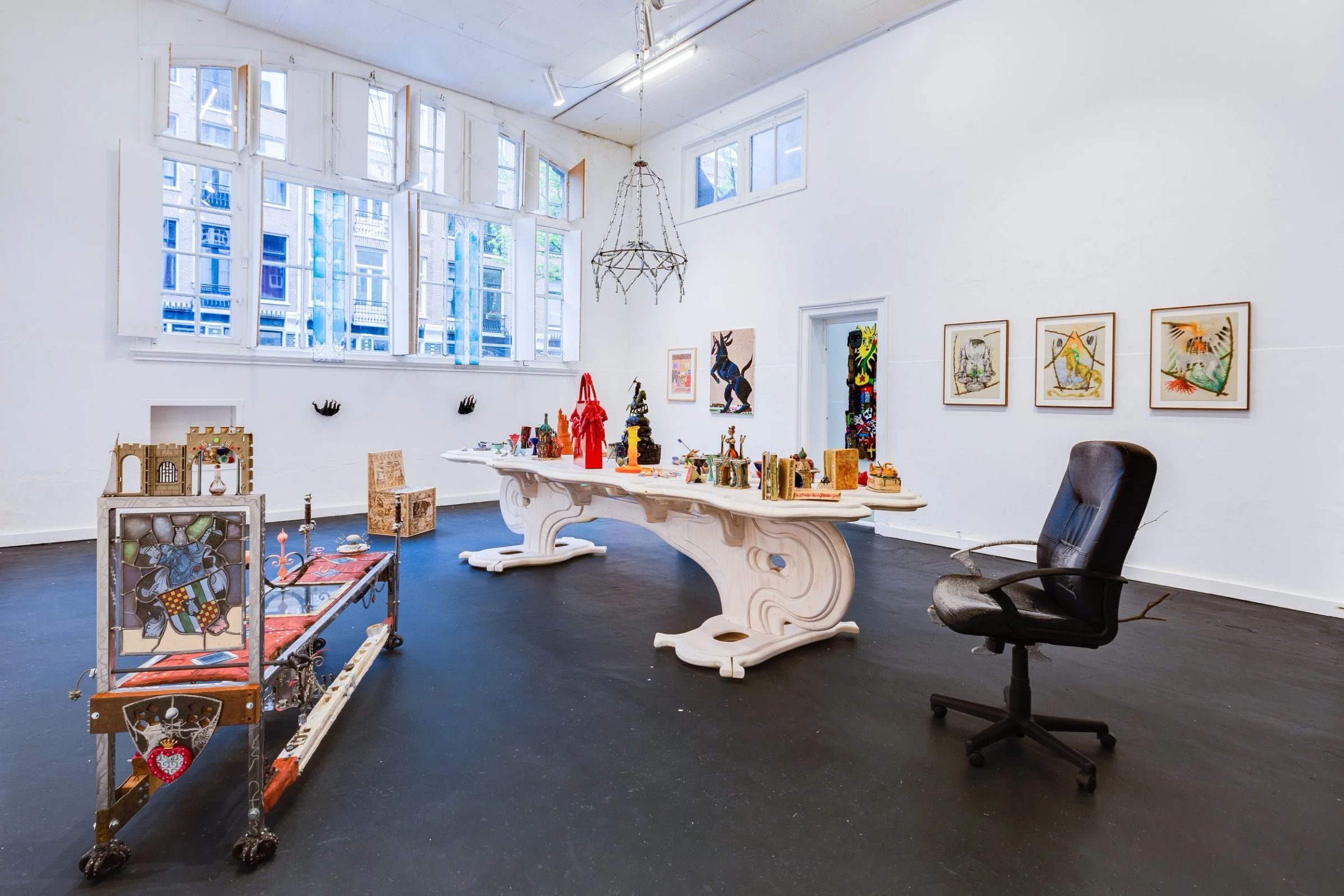
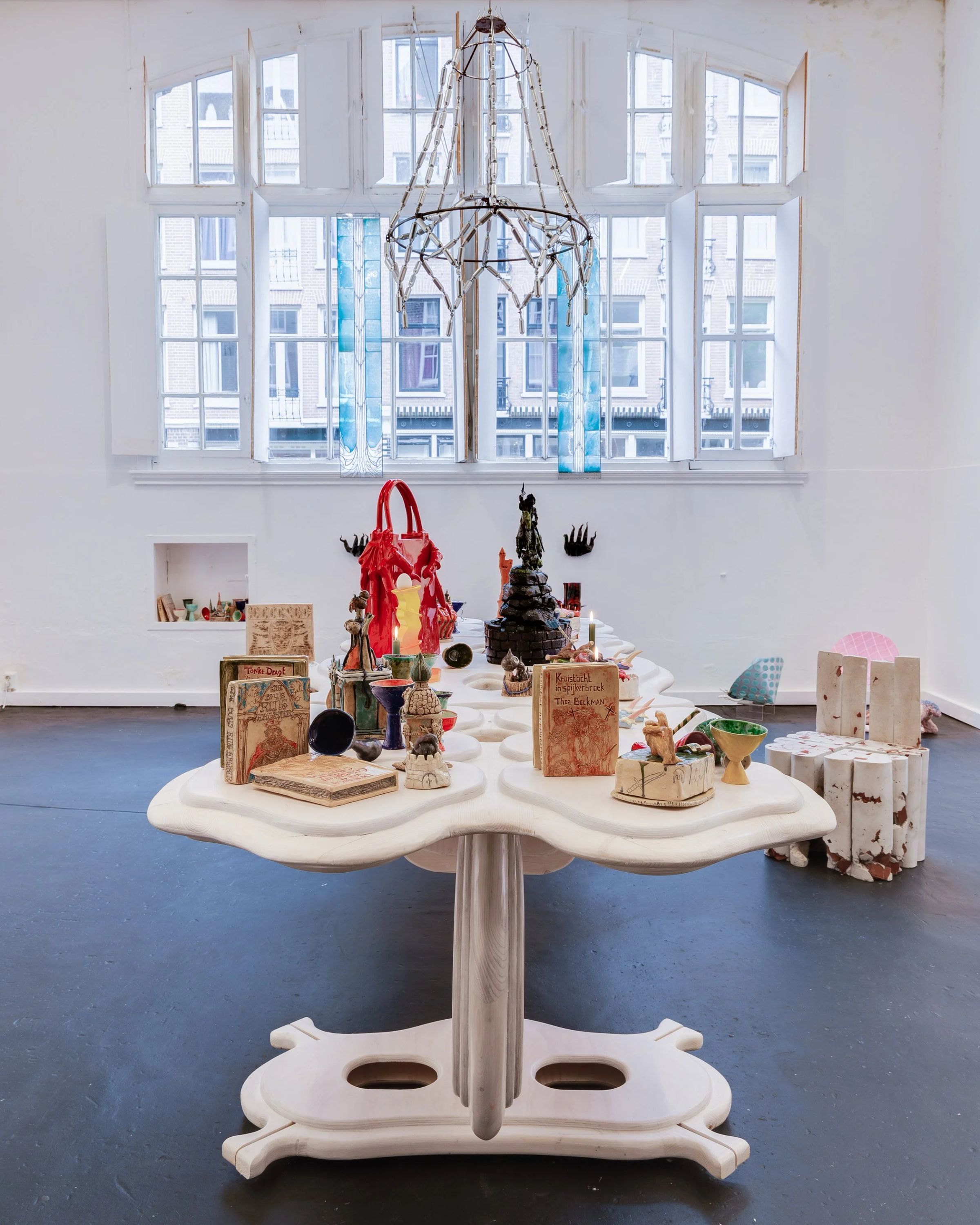
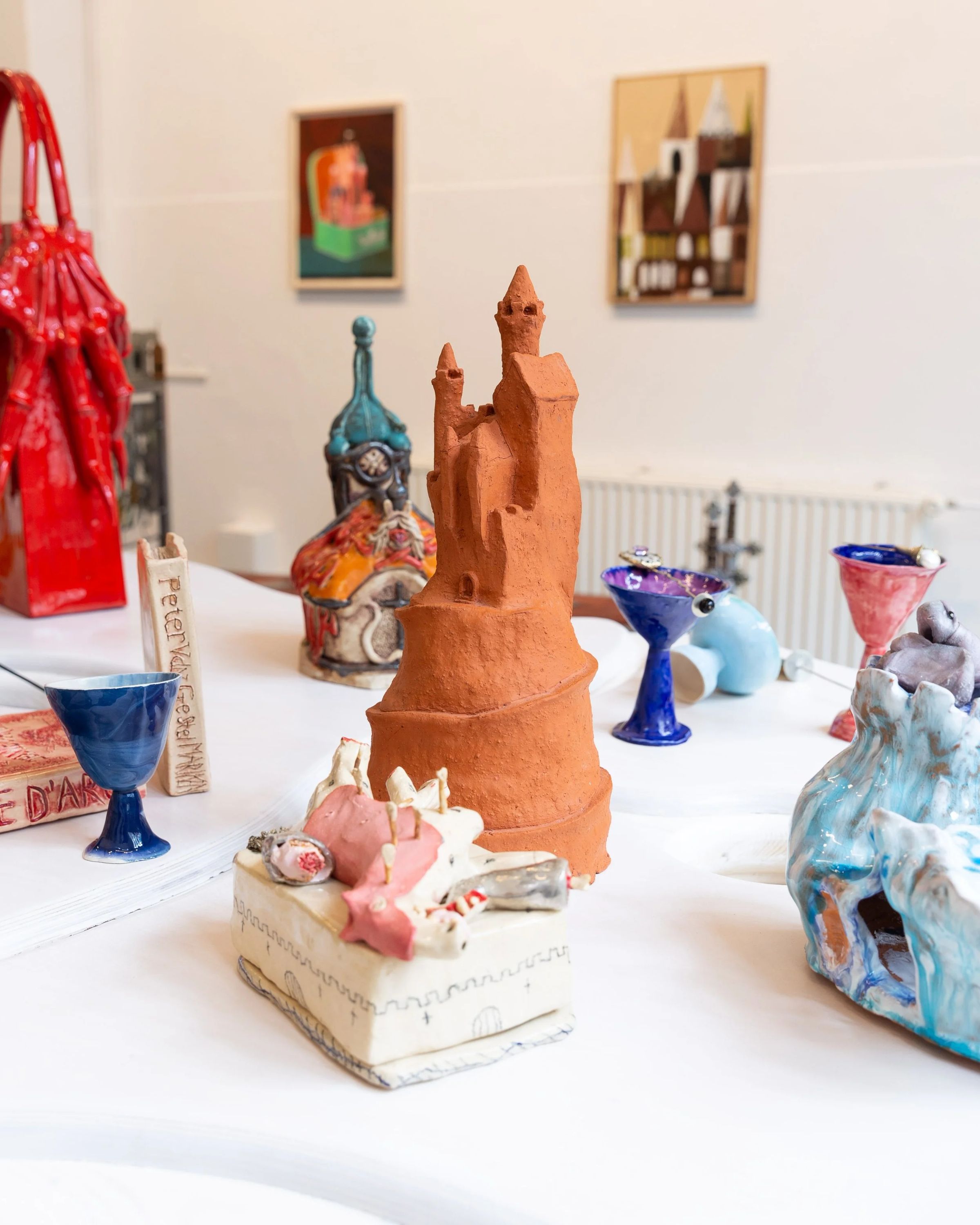
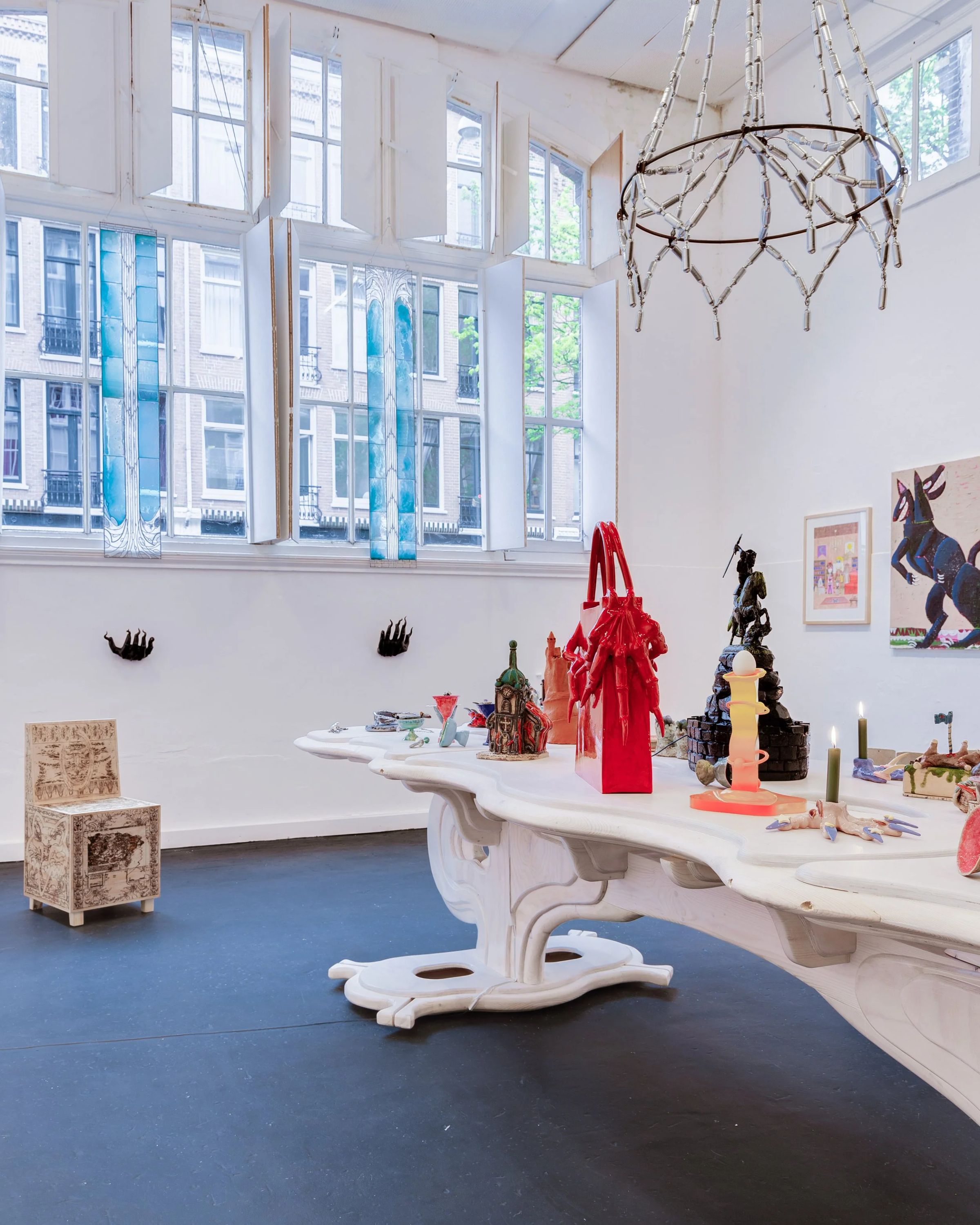
Installation views
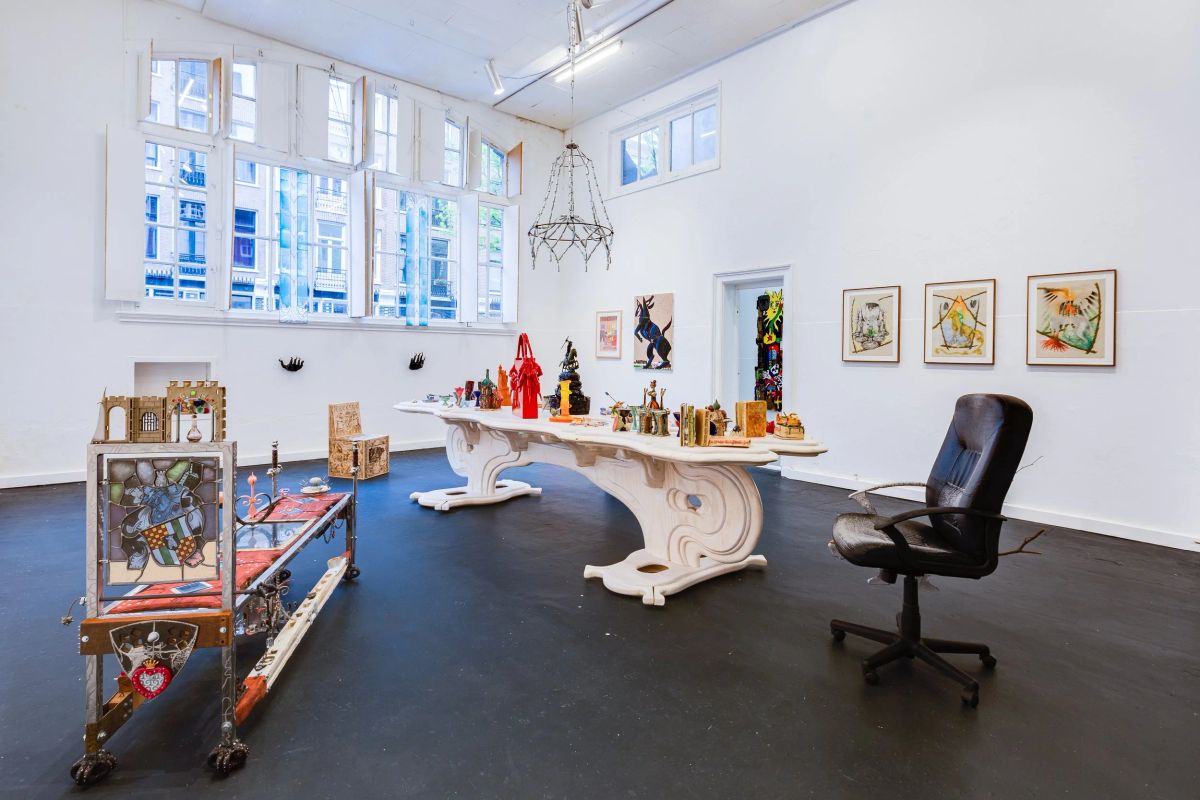
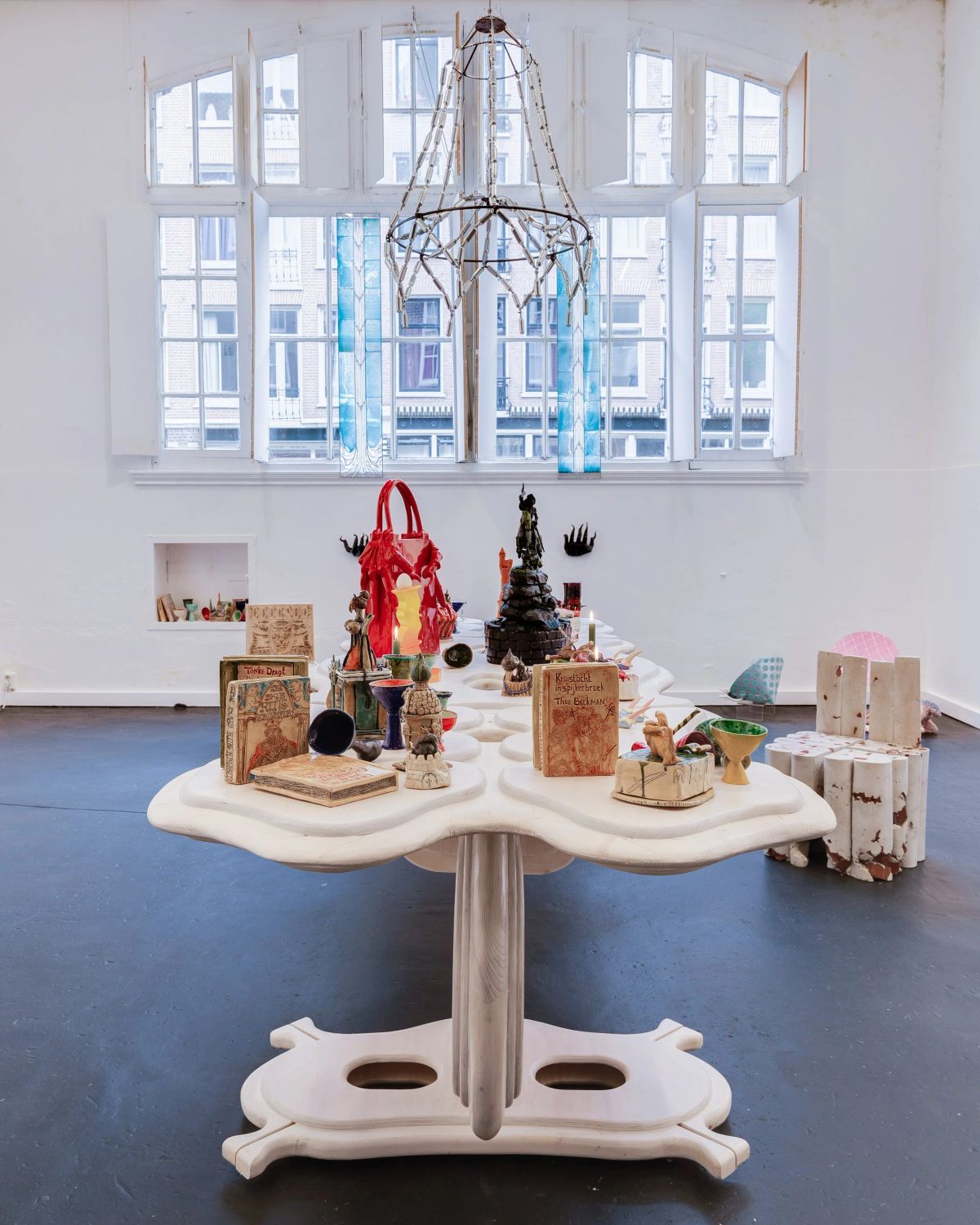
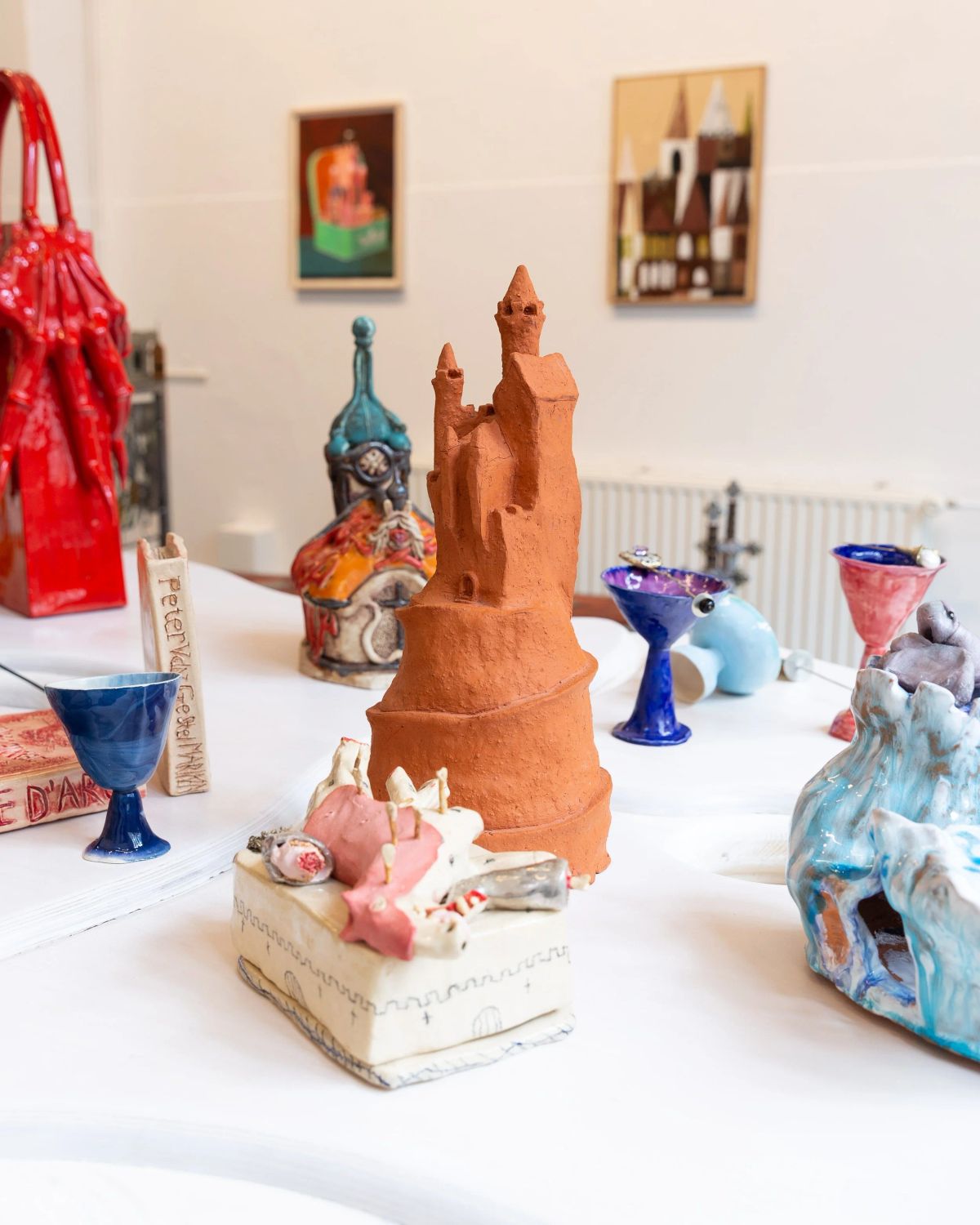
Artists
Erik Mattijssen
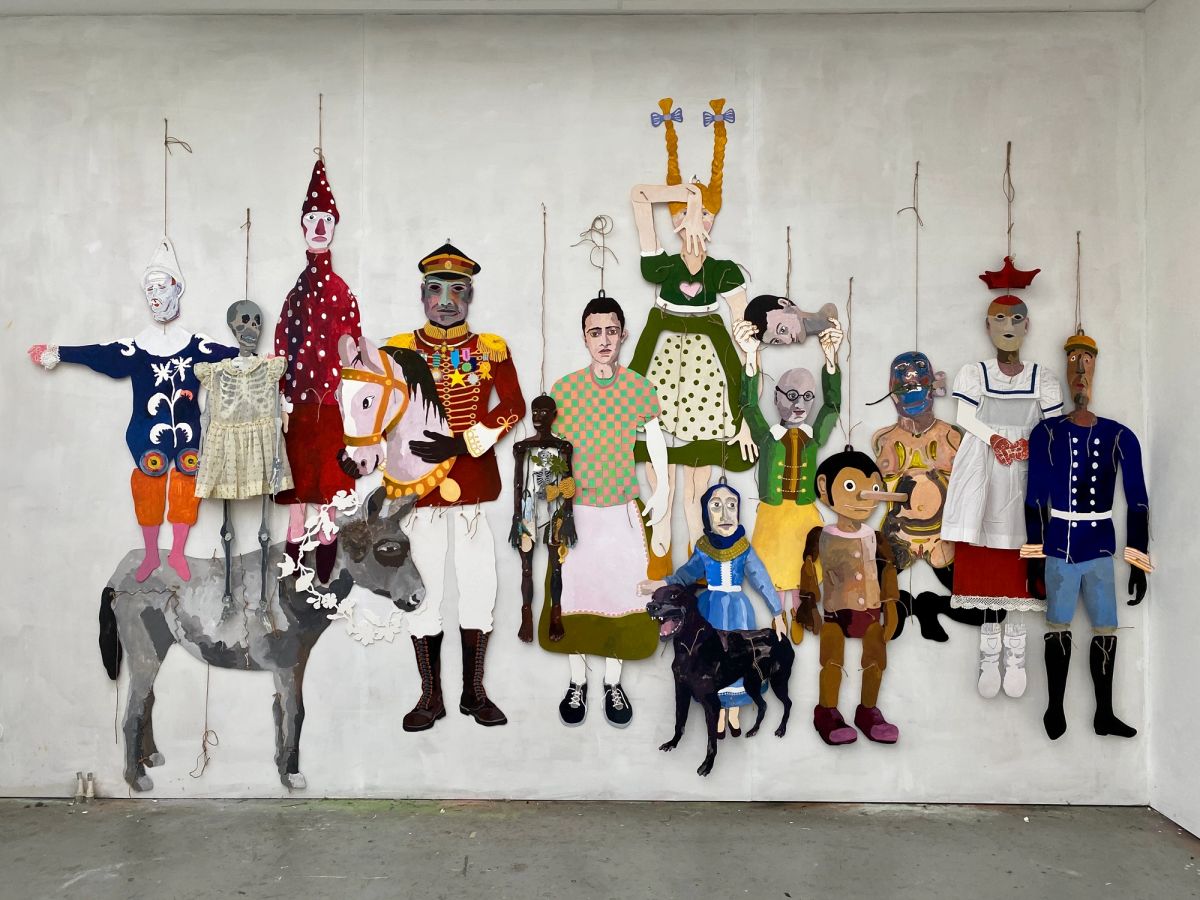
Plastic buckets, dolls, tin cans and furniture. They populate the scenes that artist Erik Mattijssen (Veenendaal, NL, 1957) builds in his drawings of pencil, gouache and pastel crayon. Like in a theatre, he tells stories, often set in interiors in which things take the leading role. People are absent. What happened there, the solidified life stories, thoughts and memories, are told in these tableaux vivants with props. The artist fills his scenes - with great attention to detail - with objects, in an intuitive, collage-like manner. He works from an image archive he collected over the years. He owns folders full of images of flowers, toys, patterns and the canned goods his father sold as a salesman. Experiences from the many foreign residences where he stays also end up in his work. The colours of Kolkata, façade advertisements, tin cans with plants in Suriname and a grocery shop in Paris enrich his subjects and style. The work conveys layered, sometimes contradictory feelings to the viewer, supported by his striking use of colour. Sometimes cheerful, sometimes melancholic; for a wooden stool or suitcase can conceal a faltering ambition. Loneliness is also an important theme, reflected in abandoned beds, cuddly toys and dolls that don't get love (anymore). Mattijssen keeps memories alive and taps into layers of our subconscious. Like the smell of madeleines Marcel Proust wrote about, that triggered a flow of memories. Painted and drawn on paper, his objects take you back to a lost time. Mattijssen cradles us back and forth between recognition and alienation. Through abrupt cuts and playful perspective, bold colour combinations and through what we see. For why is that hippo hanging on a string above the mantelpiece? While looking at his work, you are left wondering. According to him, the highest achievement. Erik Mattijssen has had solo exhibitions at museums such as Kunsthal Rotterdam, Stedelijk Museum Schiedam, Jan Cunen Oss and in 2025 at Museum More. His work is included in prestigious international museum, corporate and private collections, including those of the Stedelijk Museum Amsterdam, AkzoNobel, the DELA, the UMC-Utrecht and the VandenBroek Foundation. He made in situ work for public places such as the Antoni van Leeuwenhoek Hospital, Amsterdam and won the NN Art Award. A committed and passionate teacher at the Gerrit Rietveld Academy, Mattijssen trained a generation of young artists.
More about Erik Mattijssen →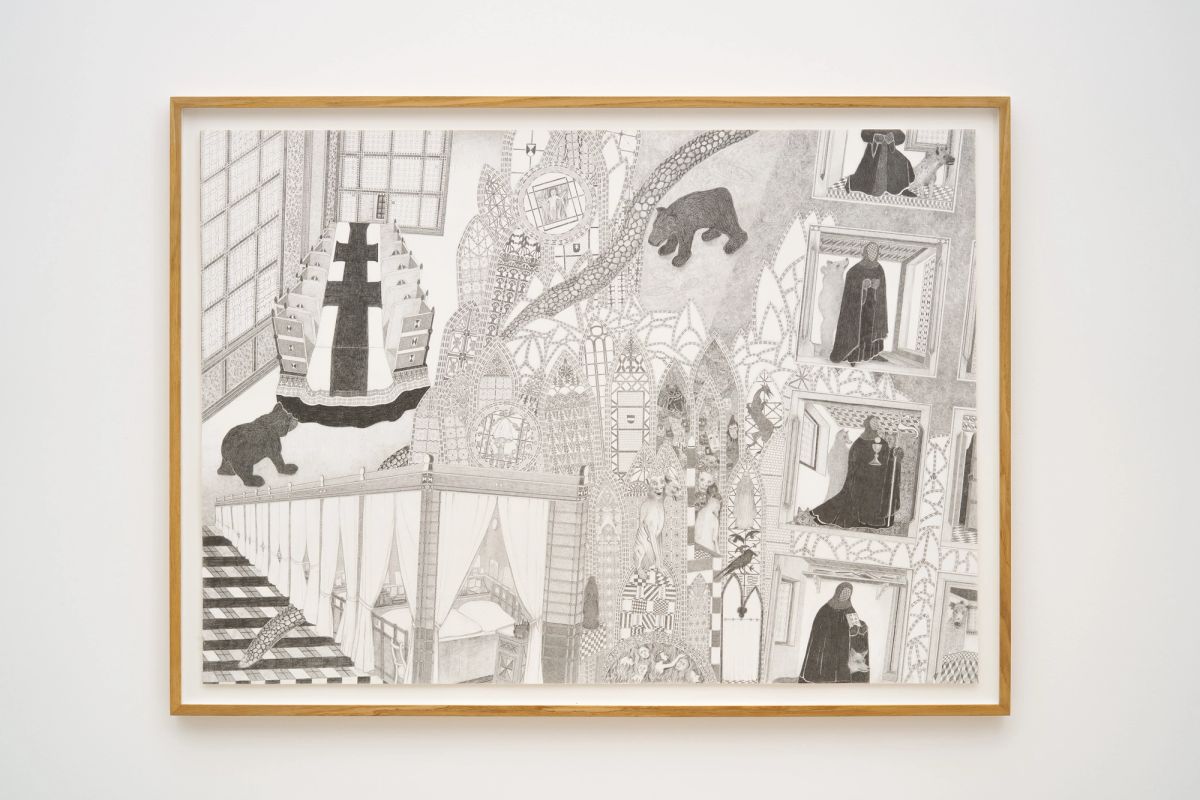
Mai van Oers
Mai van Oers' (Uden, NL, 1953) oeuvre consists of drawings and paintings, not a special duo, until you see the works. It is a unusual combination of almost abstract paintings and often very realistic drawings. What they have in common is the resemblance to a sort of landscape and the perfect mastery of technique. The paintings of Mai are worlds of their own, simultaneously recognizable and alienating. They balances on a thin line between figuration and abstraction. Mai uses a wide range of painting techniques. This can vary from delicately painted forms to raw brush strokes, like blobs of paint almost directly squirted from the tube onto the canvas that add sculptural elements to her work. Her paintings emerge slowly, during a process that grows towards a final result. It is a contemplative search for the right composition, colors and paint skin. Yet the labor intensity is not the first thing that stands out in the paintings. They are elegant images: it seems as if it was no effort at all to create them. Her drawings, too, are worlds in which familiar elements together form an alienating image. Cathedrals, tombs, fairytale figures and animals live in environments full of structures that can sometimes be traced back to reality and sometimes follow their own logic. Mai starts her drawings without a preconceived plan, during the process references arise, such as her childhood with the nuns, art historical sources of inspiration are integrated, such as the Tres Riches Heures of the Duc de Berry, but also what influences her life at that moment finds a place on the paper. Mai van Oers’ work is included in several corporate and museum collections, for example Kennedy van der Laan, Amsterdam Bouwfonds Kunstcollectie, Museum Boijmans van Beuningen, Teylers Museum and Centraal Museum Utrecht, among others. In 2000 she was awarded the Jeanne Oosting Prijs voor de schilderkunst. For the last years Mai van Oers has worked with Galerie Rob de Vries in Haarlem and with Galerie Fleur & Wouter in Amsterdam.
More about Mai van Oers →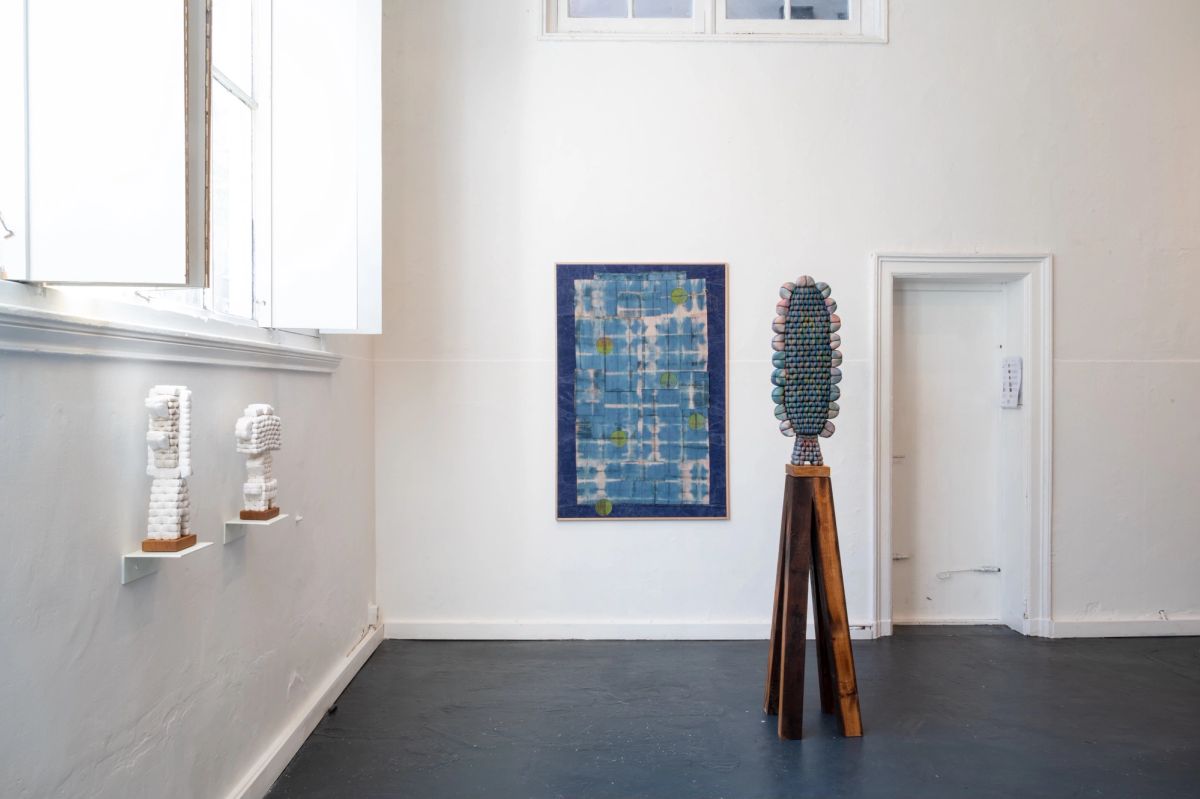
Saar Scheerlings
Born in Eindhoven in 1990, Saar Scheerlings embarked on her artistic journey after studying at the Design Academy Eindhoven and gaining experience as a chef and theater designer. Scheerlings mixes the disciplines of art, design and craft to find processes that give rise to new types and expressions. Her work includes large ceramic vessels that serve as painted maps, decanters that seem unwilling to pour, paintings that resemble fabrics and soft monumental sculptures. For her, a medium is not defined: she prefers to create her own playing field and associated rules. A great interest in daily life probably comes from her education in design, but she is not very interested in the way products are industrially designed, made and used. She prefers to see forms as intermediate phases of a creative process, a game, a tradition, a ritual, a culinary dish. It is the commitment to this process that gives objects meaning. Saars work is often triggered by the beauty and dedication of old materials like the antique linens she finds at garage sales in the French countryside where she lives. With a laborious process of sculpting, cutting, sewing and weaving she breathes new life into these materials, transforming them into her monumental talisman sculptures. Weaving is not only a technique for Saar, it is a metaphor for her entire work. She sees her oeuvre as an expanding structure. She not only creates work, she works on her own culture. The work of Saar Scheerlings has been shown in various international galleries and museums including CoBrA Museum, Design Museum Gent, Hanwha Galleria Seoul, Tripostal Lille, Galerie Fleur & Wouter, Valerius Gallery, HAGD Contemporary, De Nederlandsche Bank, Garage Rotterdam and at Palais de Tokyo, Paris, as a finalist for the prestigious Loewe Foundation Craft Prize.
More about Saar Scheerlings →