12 September – 26 October 2025
Alexxx, Fiona Lutjenhuis, Mai van Oers
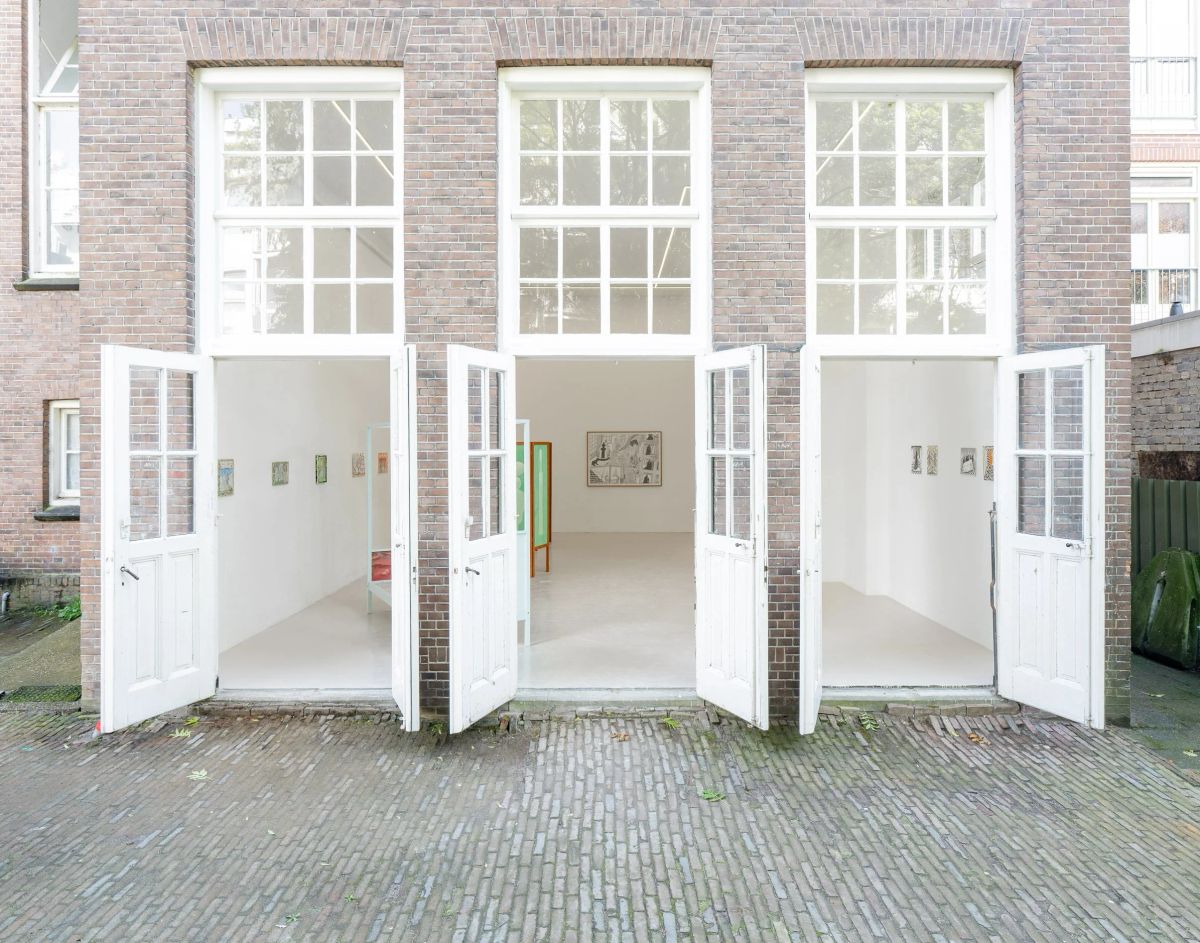
Opening New Gallery Space
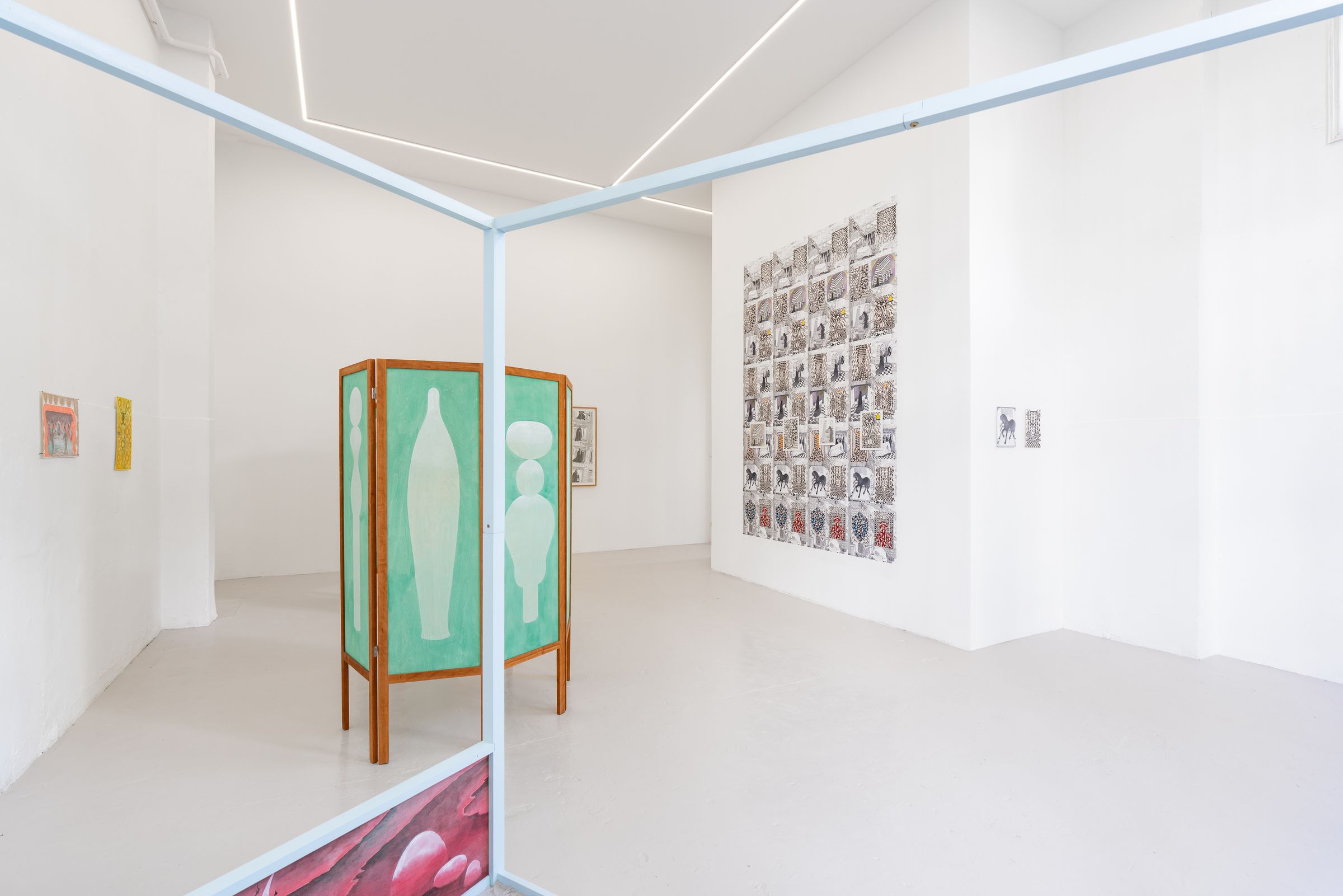
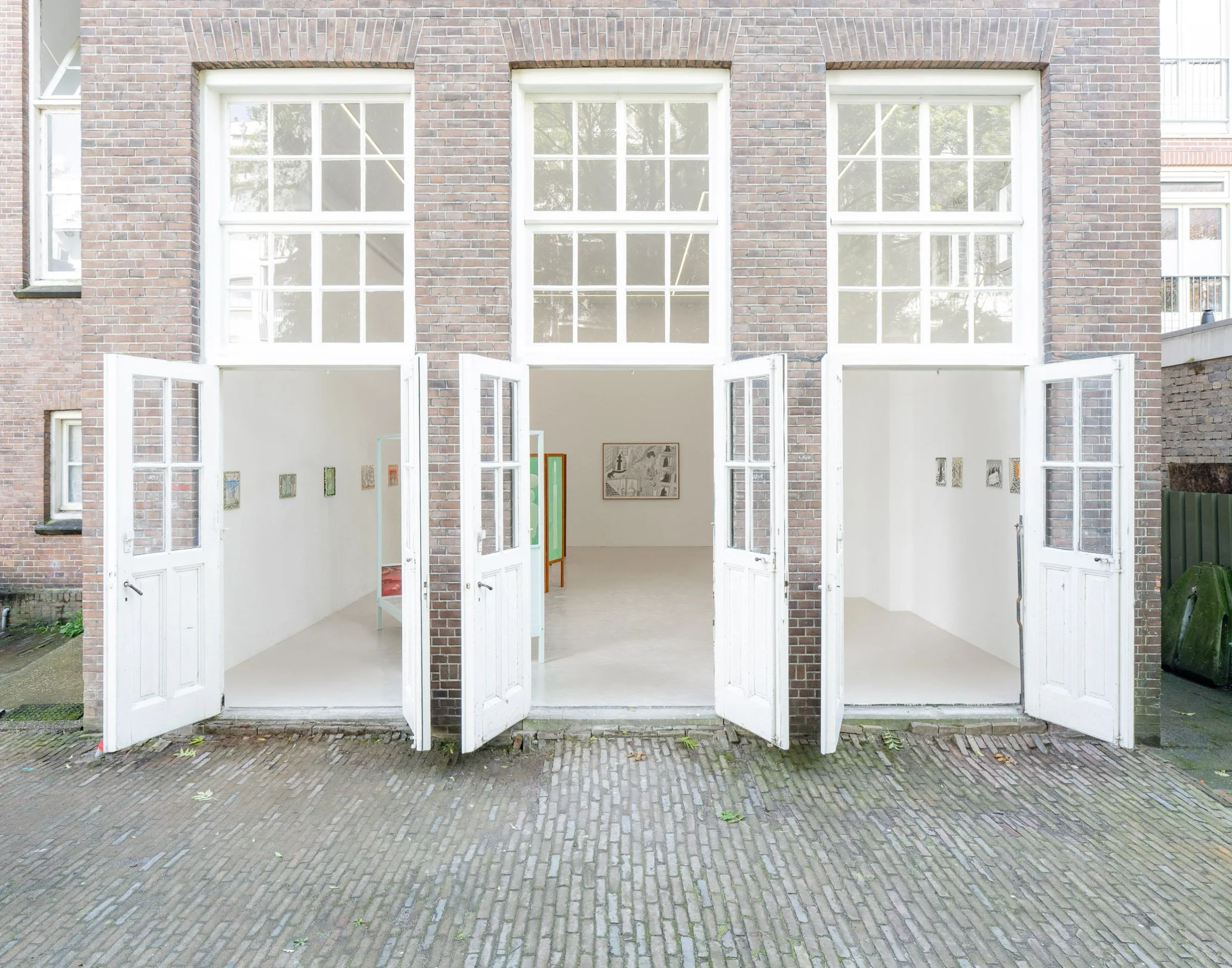
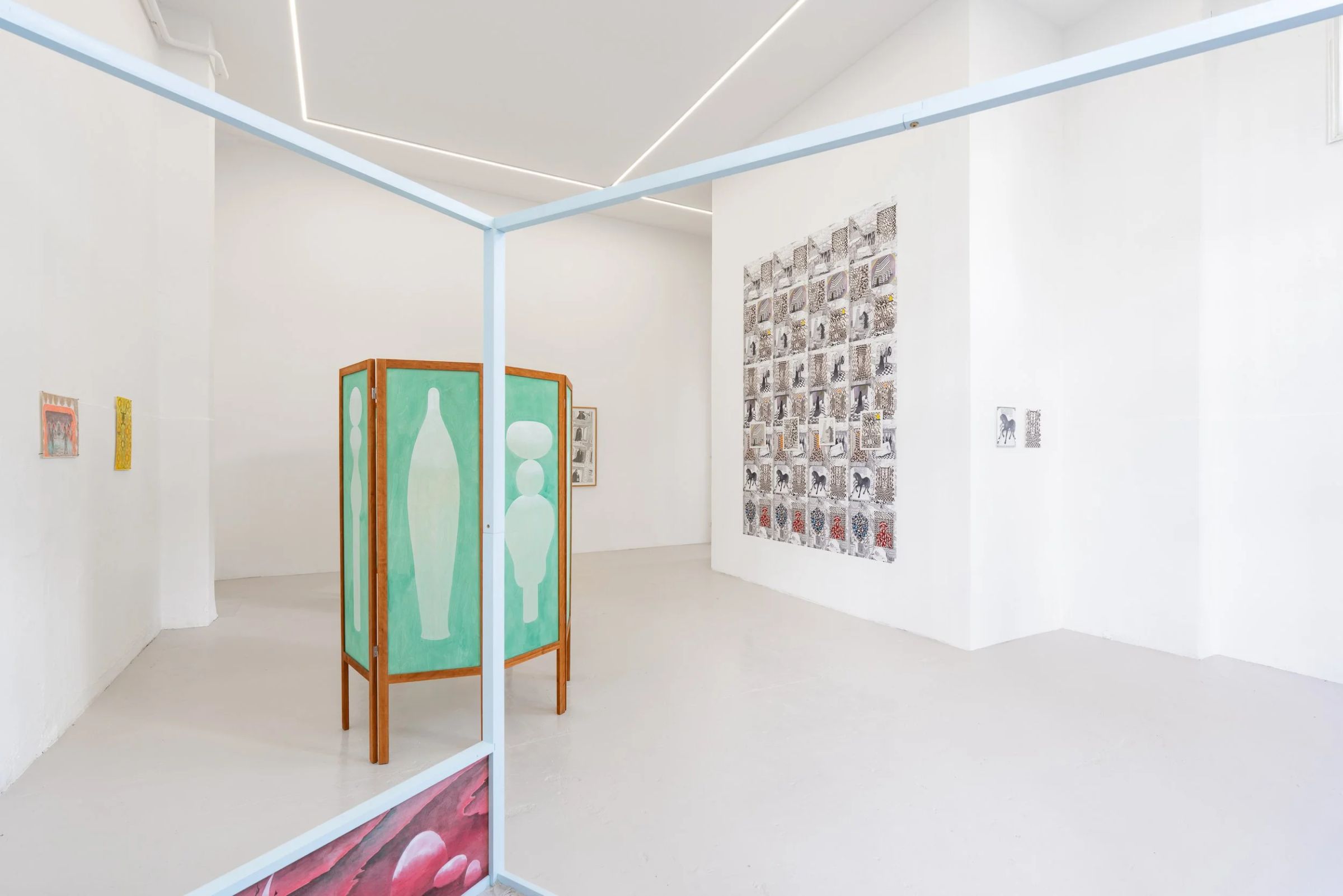
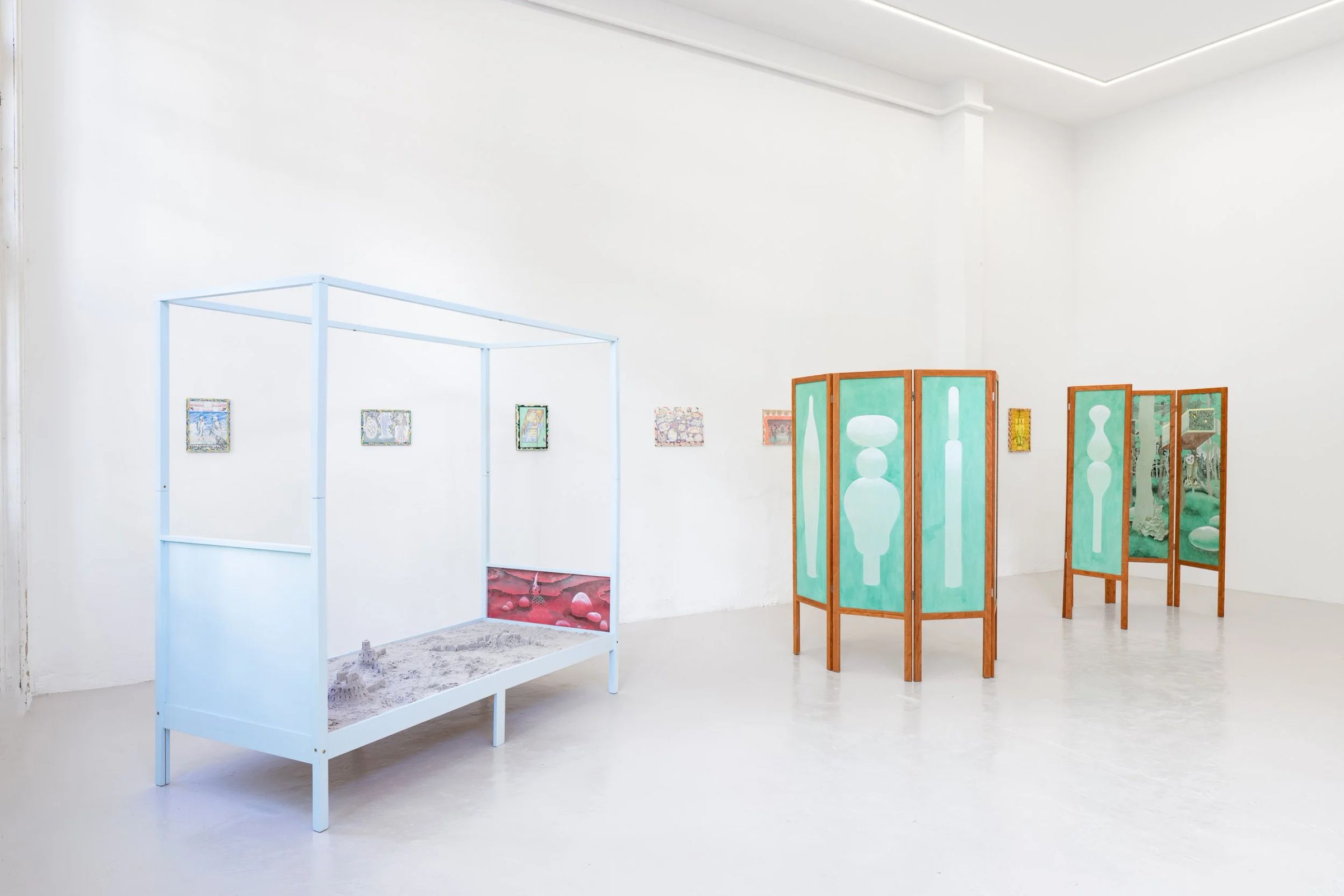
We are opening the first exhibition in our new permanent gallery space with an exhibition of three artists who draw on their unique personal histories: Fiona Lutjenhuis, Mai van Oers and Alexxx. All three use a highly individual, almost hallucinatory visual language.
The work of Fiona Lutjenhuis (NL, 1991) revolves around depicting and reinterpreting the religious ideologies she grew up with. During her childhood, she lived with her family in a village in North Brabant, where her parents joined a sect based on a mixture of theosophical ideas, esoteric cosmologies, stories about extraterrestrial life and the existence of supernatural life forms. Drawing on personal memories and archival material, she explores and transforms the ideological legacy of her childhood. Rather than a literal reconstruction, her work offers a poetic retelling: an attempt to make the unknown tangible, without the intention of judgement.
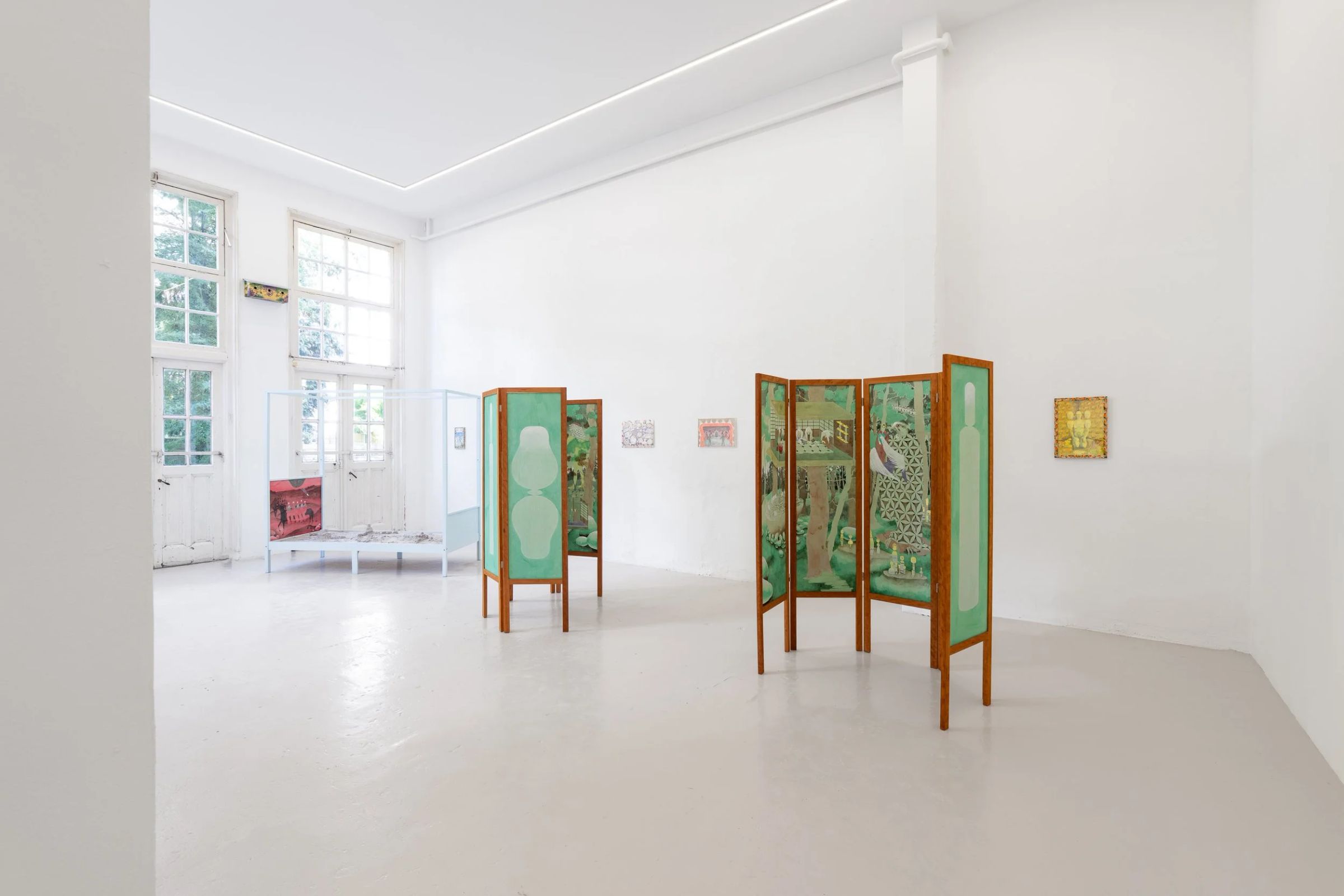
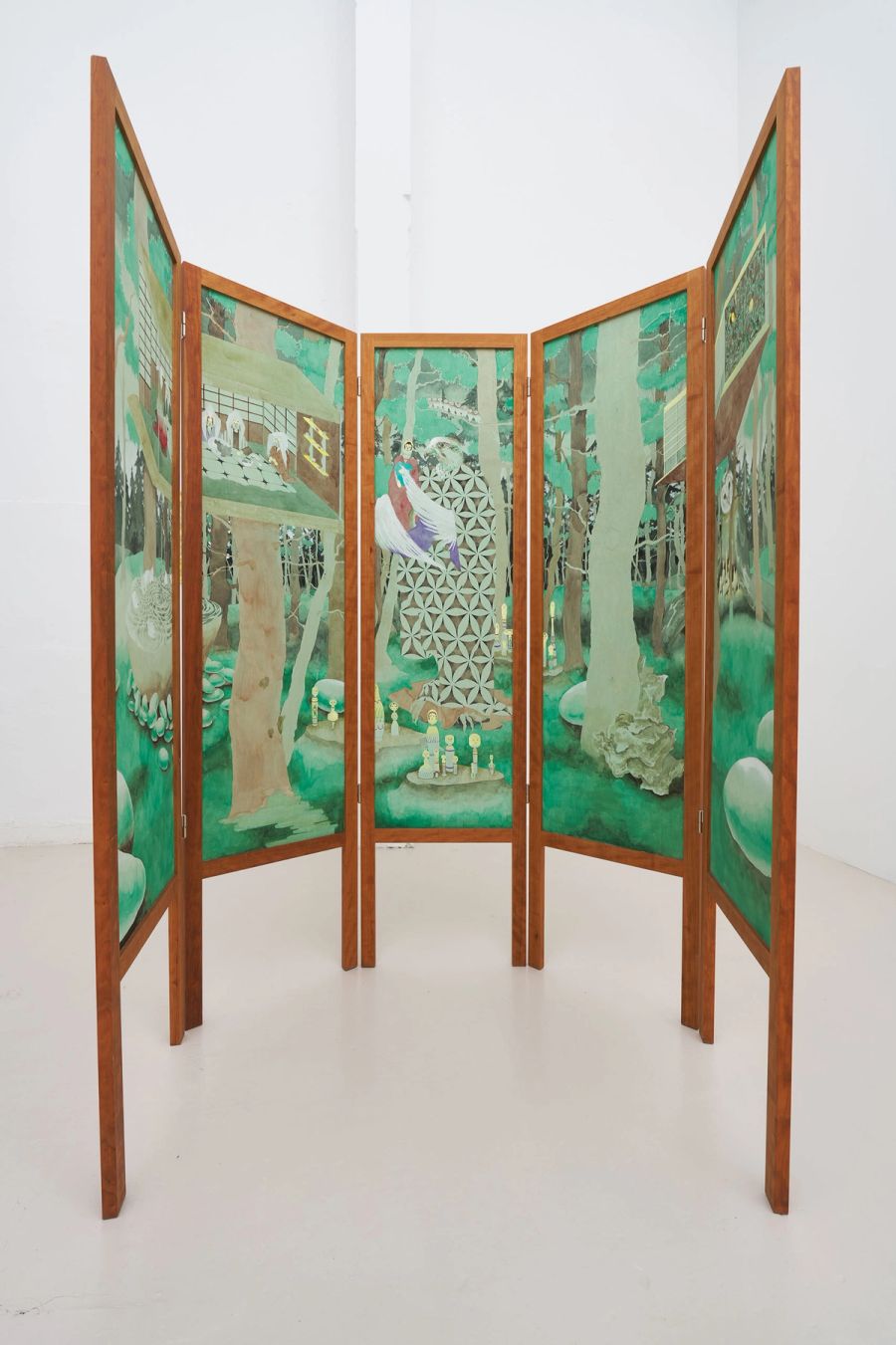
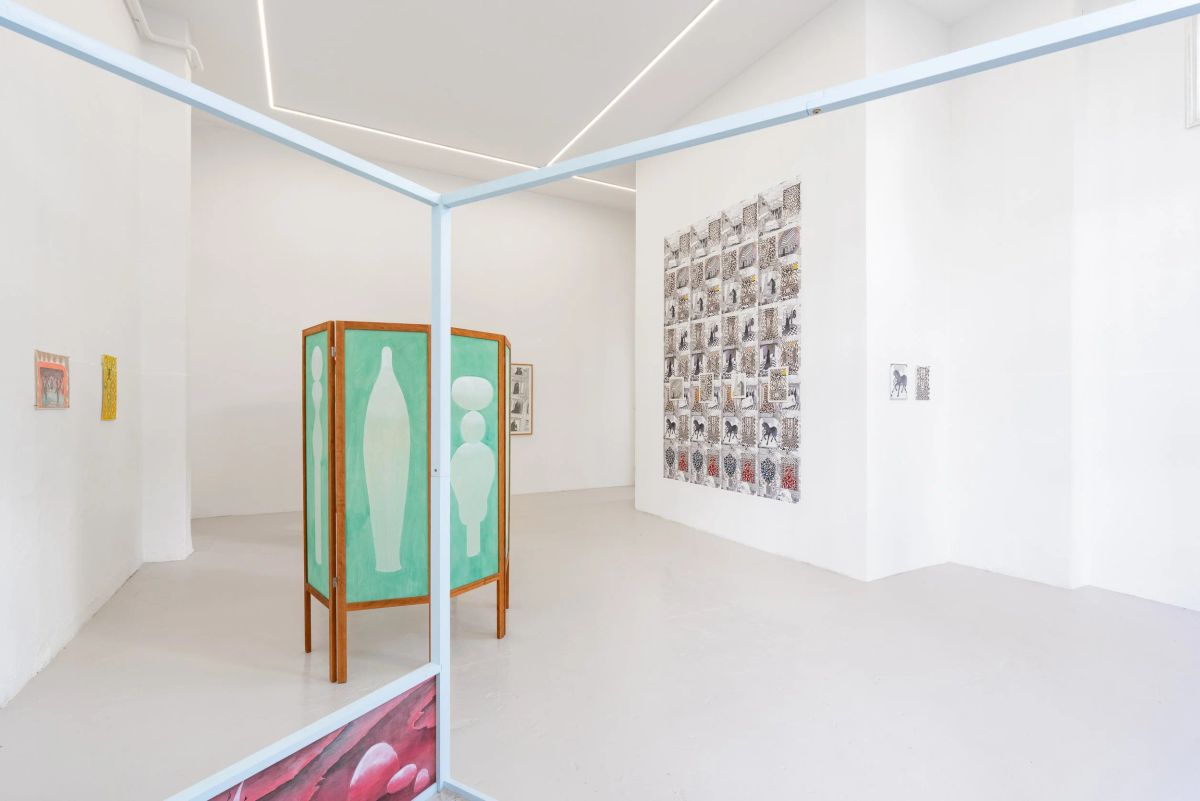
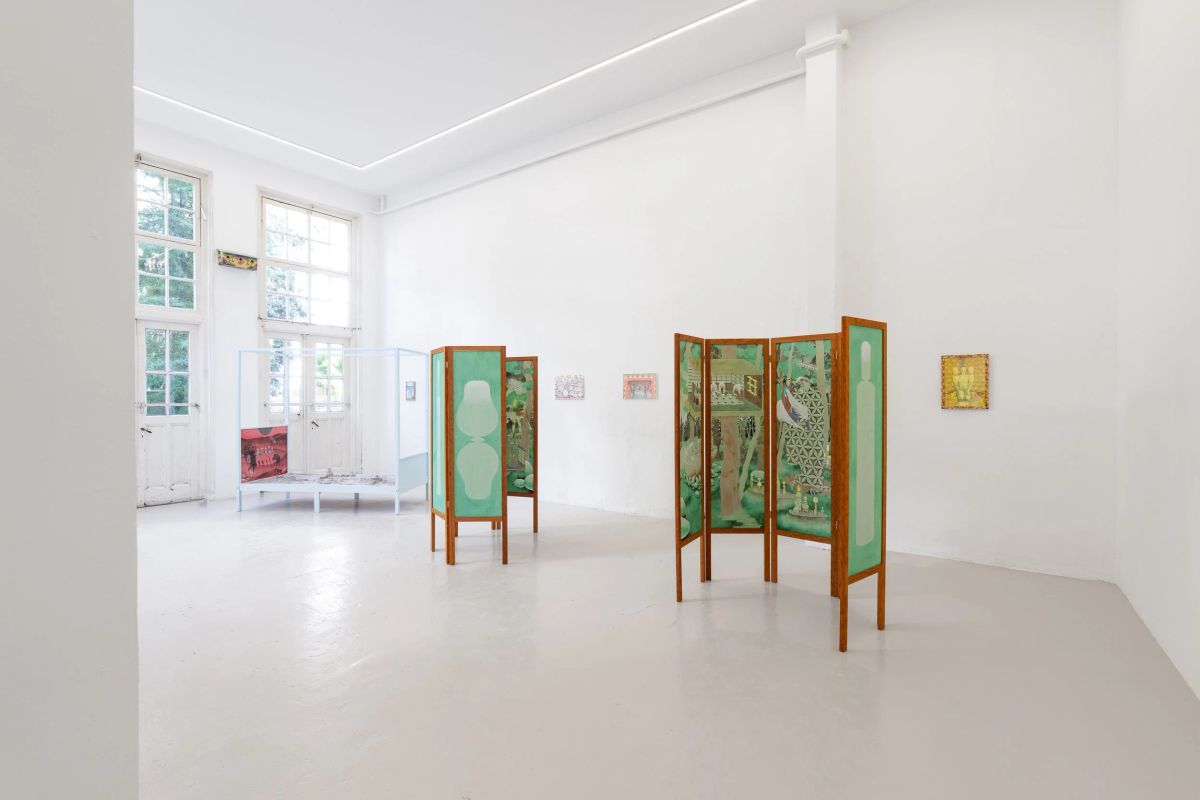
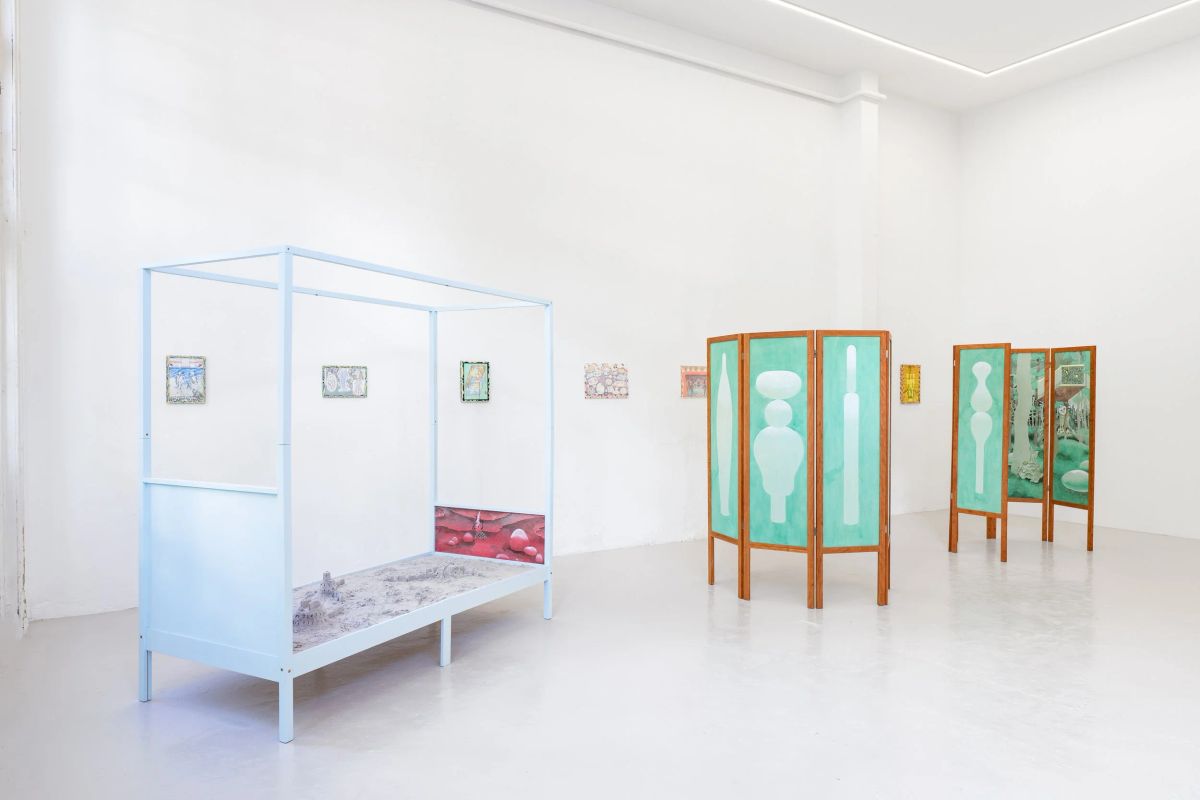
Lutjenhuis is exhibiting two room dividers, an installation and a series of drawings, among other things. During this exhibition, her solo exhibition at Het Noord Brabants Museum will also open, and as icing on the cake she has been nominated for the Prix de Rome.
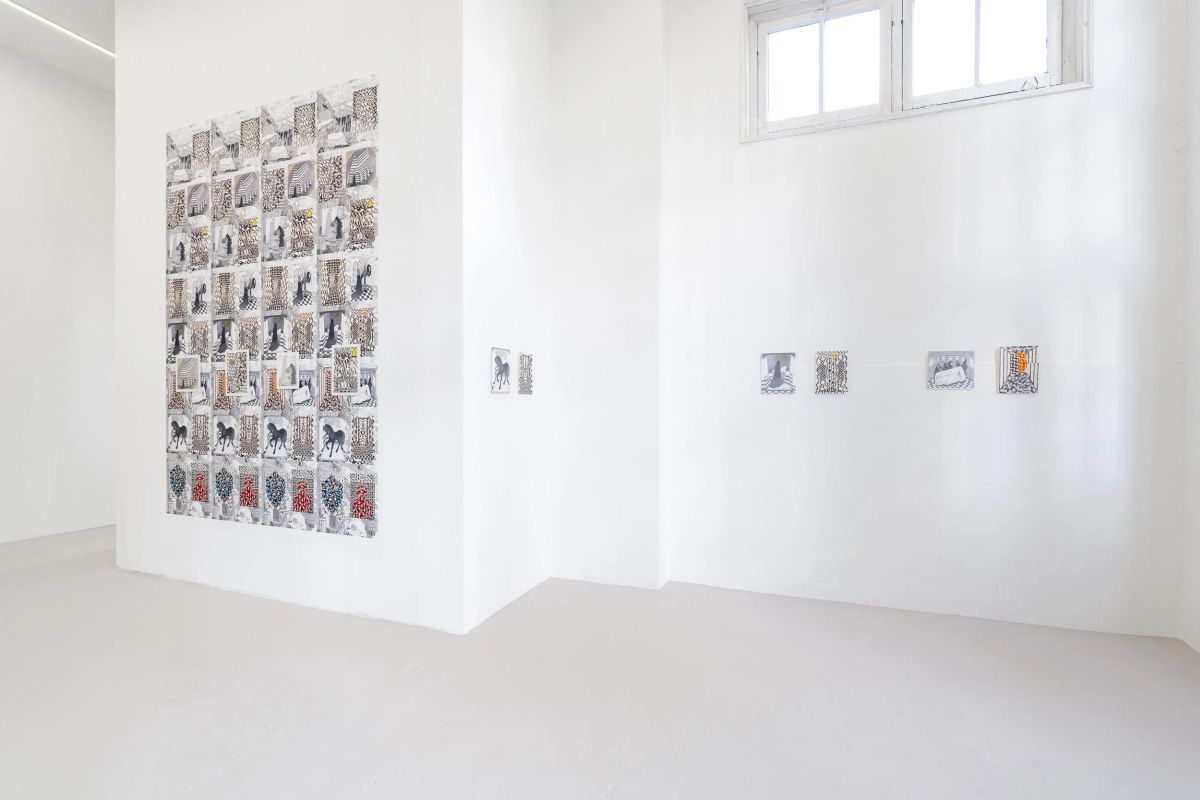
Mai van Oers (NL, 1953) and Alexxx (BLR) are presenting a joint project. Wallpaper they created for the presentation of No Limits! Art Castle in Centraal Museum Utrecht, consisting of a combination of different drawings. Original works of art are presented on the wallpaper in the gallery.
In this series of drawings, Alexxx processed his history of addiction, his experiences with the IND (Immigration and Naturalisation Service) and the changing view on migrants in Dutch society. He works in an intense, highly detailed manner with ballpoint pen on paper.
Van Oers’ drawings are based on fairy tales such as Snow White and Cinderella. They depict strange worlds in which cathedrals, tombs, fairy-tale characters and animals live in environments full of structures that can sometimes be traced back to reality and sometimes follow their own logic. She also refers to her own past, such as her childhood with the nuns.
Works
Fiona Lutjenhuis
Two room dividers in cherry wood. Total of ten multiplex panels, painted with pigmented casein. 183 x 200 x 2, 5 cm each, supported by 1646
Sold

Fiona Lutjenhuis
wood frame with varnish, wood panels painted with pigmented casein, sand


Fiona Lutjenhuis
coloured pencil and graphite on cotton paper, 30, 5 x 45, 5 cm
Sold


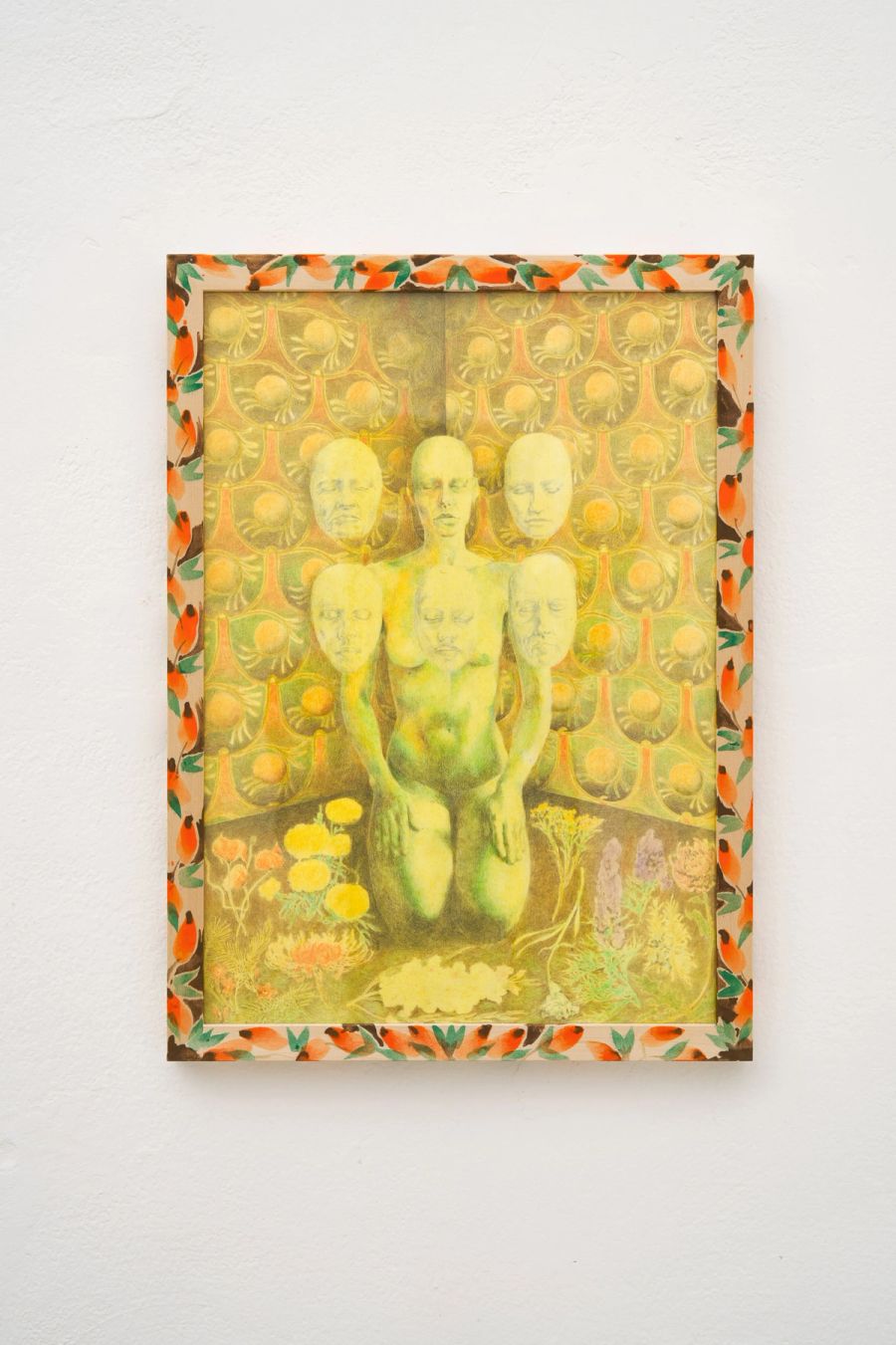
Fiona Lutjenhuis
colour pencil on cotton paper, casein and pigment wash, 42 x 29, 7 cm
Sold


Installation views
Artists
Alexxx
More about Alexxx →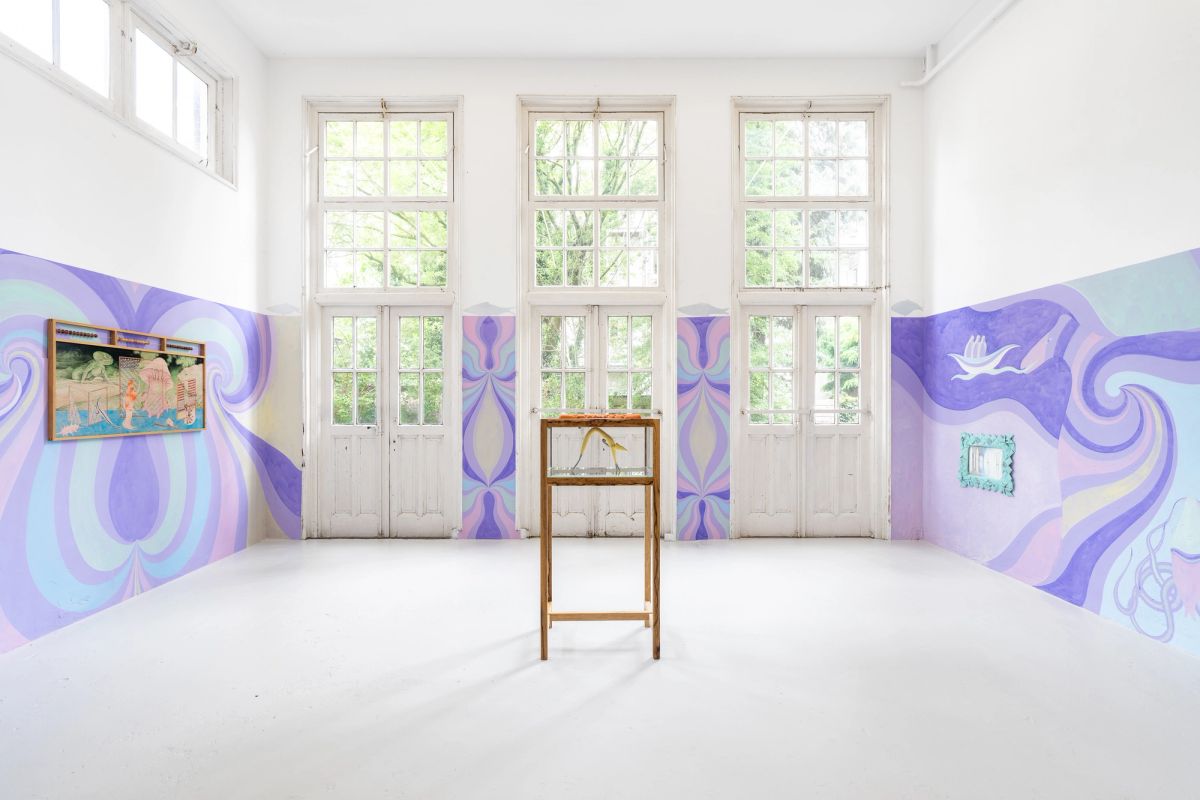
Fiona Lutjenhuis
The work of Fiona Lutjenhuis (Zevenaar, NL, 1991) revolves around depicting and reinterpreting the religious ideologies she grew up with. During her childhood, she lived with her family in a village in North Brabant, where her parents joined a sect based on a mixture of theosophical ideas, esoteric cosmologies, stories about extraterrestrial life and the existence of supernatural life forms. Drawing on personal memories and archival material, she explores and transforms the ideological legacy of her childhood. Rather than a literal reconstruction, her work offers a poetic retelling: an attempt to make the unknown tangible, without the intention of judgement. Fascinated by religious art, Lutjenhuis builds and paints folding screens as carriers of stories: mobile, vision-like paintings that function both sculpturally and narratively. She also bakes bread in various shapes, a ritual that makes her feel secure but also has religious connotations: bread is the symbol of life, sacrifice and providence. She also makes dolls that represent the entities that regularly appeared in the sect, whose visual language is borrowed from Eastern cultures. Other recurring elements in her presentations, which often resemble installations, are murals and wind chimes. The stories Lutjenhuis tells are full of references that touch the viewer on different levels. She also uses humour in her work, a component that has helped her to cope with her demagogic upbringing. Lutjenhuis uses her unusual childhood to view contemporary discourse through a theosophical lens. In recent years, she has immersed herself in the archives of the sect she grew up with, as well as in the broader religious movements that have been blended or distorted in that group's ideology. These are far removed from the Western world, which in its pursuit of rationality has distanced itself from nature. The individual reigns supreme: humans have placed themselves above all else, with the inevitable consequence of abusing the life around us. Lutjenhuis makes a plea for opening up our psyche, so that we can allow the magical elements of nature to enter and become part of our human actions. This is by no means in the context of proselytising: it is simply a matter of thinking in a deeper, more empathetic layer of consciousness. Lutjenhuis's starting position is unique: the artist possesses a rare knowledge and lived experience of spiritual and supernatural thinking, framed by a self-taught, balanced, autonomous view of the world around her. Art is a gateway to another reality for her, offering her joy and new perspectives. She wants to offer this to her audience as well. With her art, Lutjenhuis takes the viewer into a world that makes the invisible visible. Fiona Lutjenhuis lives and works in Amsterdam. She studied at ArtEZ University of the Arts, Arnhem (2010-2014) and was a resident at the Rijksakademie in Amsterdam from 2022 to 2024. In 2024, she was nominated for the Scheffer Art Prize, in 2025 for the Prix de Rome and she won the NN Art Award in 2026. She has exhibited in various Biennales, museums and project spaces, such as Stedelijk Museum Amsterdam, Gwangjung Biennale, 1646, H3H Biennale, Drawing Centre Diepenheim, Noordbrabants Museum and Kunsthal Rotterdam.
More about Fiona Lutjenhuis →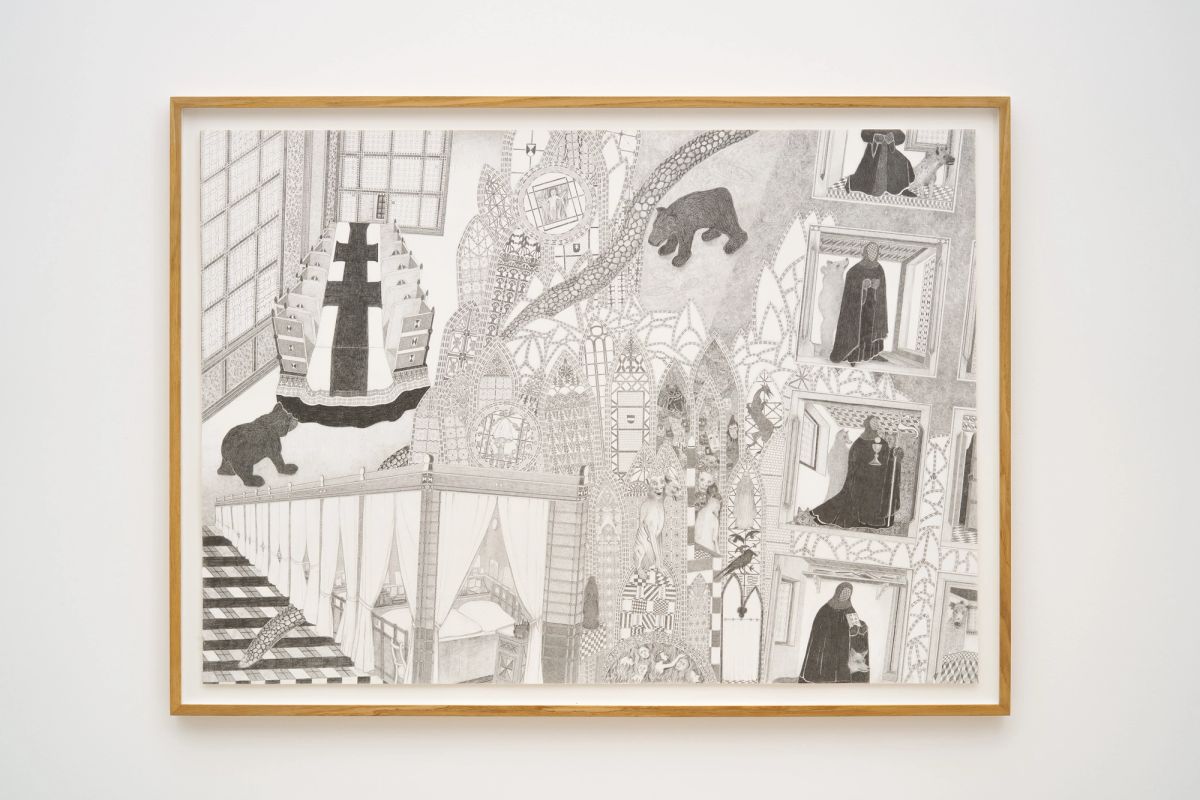
Mai van Oers
Mai van Oers' (Uden, NL, 1953) oeuvre consists of drawings and paintings, not a special duo, until you see the works. It is a unusual combination of almost abstract paintings and often very realistic drawings. What they have in common is the resemblance to a sort of landscape and the perfect mastery of technique. The paintings of Mai are worlds of their own, simultaneously recognizable and alienating. They balances on a thin line between figuration and abstraction. Mai uses a wide range of painting techniques. This can vary from delicately painted forms to raw brush strokes, like blobs of paint almost directly squirted from the tube onto the canvas that add sculptural elements to her work. Her paintings emerge slowly, during a process that grows towards a final result. It is a contemplative search for the right composition, colors and paint skin. Yet the labor intensity is not the first thing that stands out in the paintings. They are elegant images: it seems as if it was no effort at all to create them. Her drawings, too, are worlds in which familiar elements together form an alienating image. Cathedrals, tombs, fairytale figures and animals live in environments full of structures that can sometimes be traced back to reality and sometimes follow their own logic. Mai starts her drawings without a preconceived plan, during the process references arise, such as her childhood with the nuns, art historical sources of inspiration are integrated, such as the Tres Riches Heures of the Duc de Berry, but also what influences her life at that moment finds a place on the paper. Mai van Oers’ work is included in several corporate and museum collections, for example Kennedy van der Laan, Amsterdam Bouwfonds Kunstcollectie, Museum Boijmans van Beuningen, Teylers Museum and Centraal Museum Utrecht, among others. In 2000 she was awarded the Jeanne Oosting Prijs voor de schilderkunst. For the last years Mai van Oers has worked with Galerie Rob de Vries in Haarlem and with Galerie Fleur & Wouter in Amsterdam.
More about Mai van Oers →