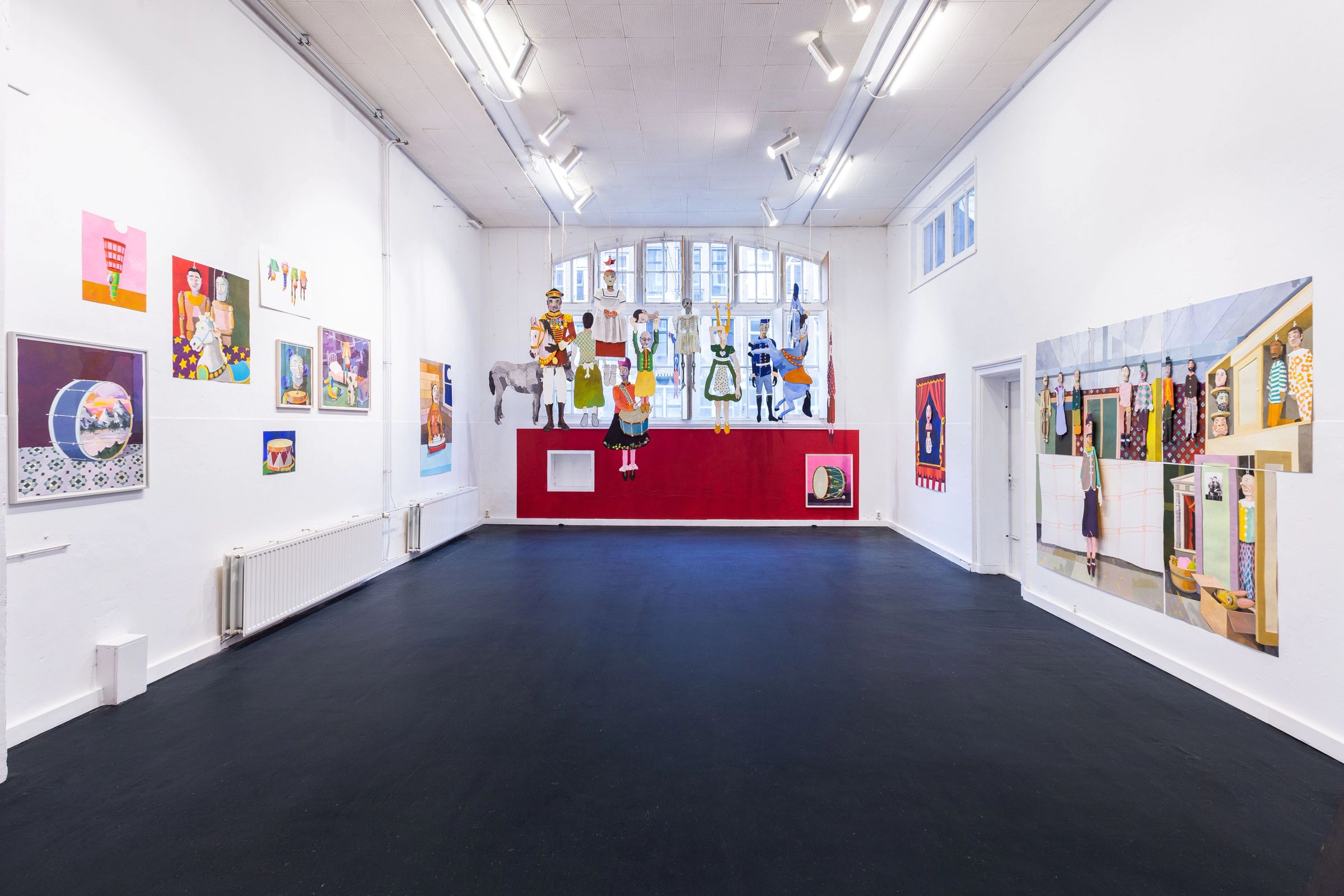
10 February – 3 March 2024
Paper Moon
On February 10 from 12.00 - 18.00 we open the first solo exhibition by Erik Mattijssen in the gallery: Paper Moon. We hope to see you then, the exhibition runs until March 3.
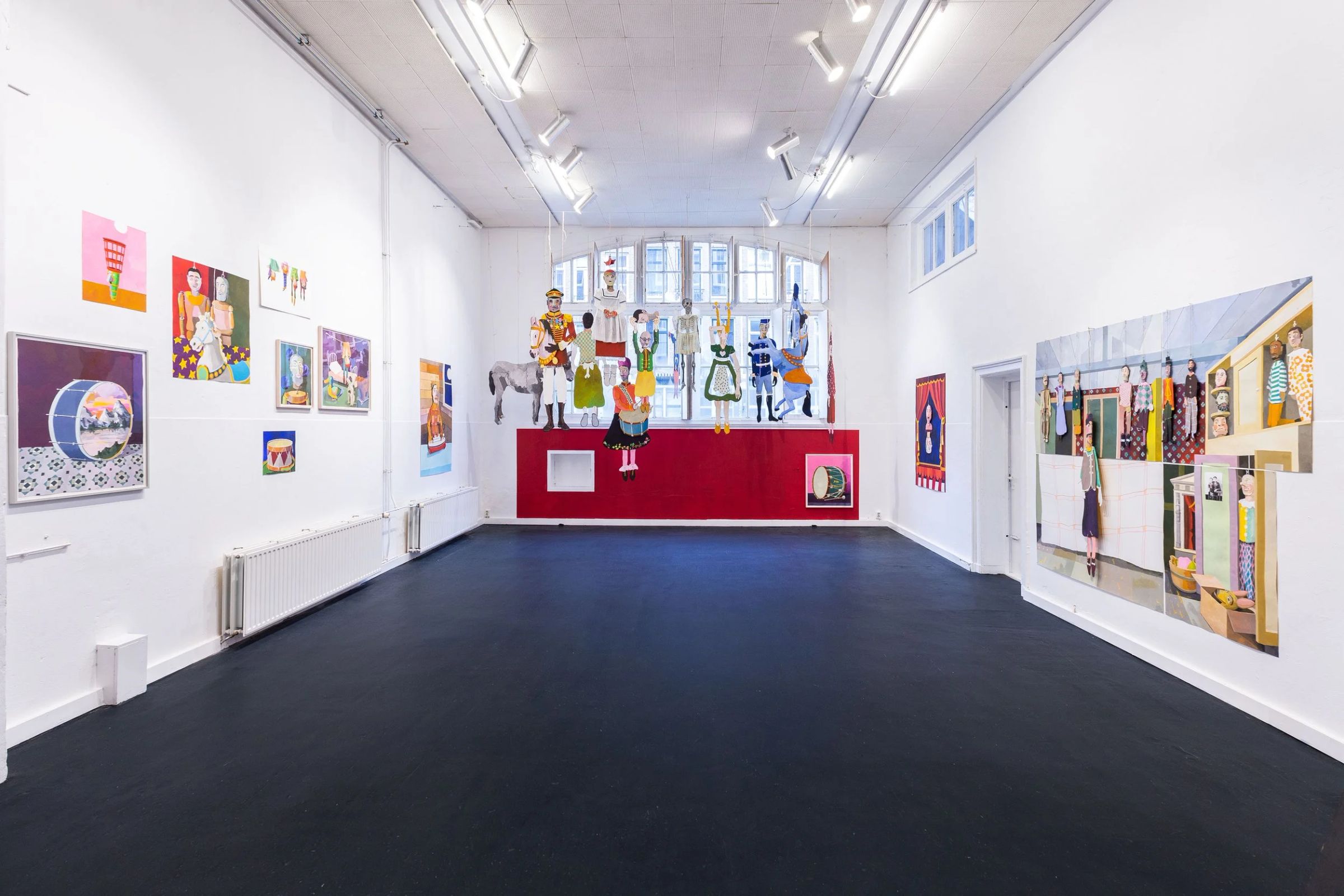
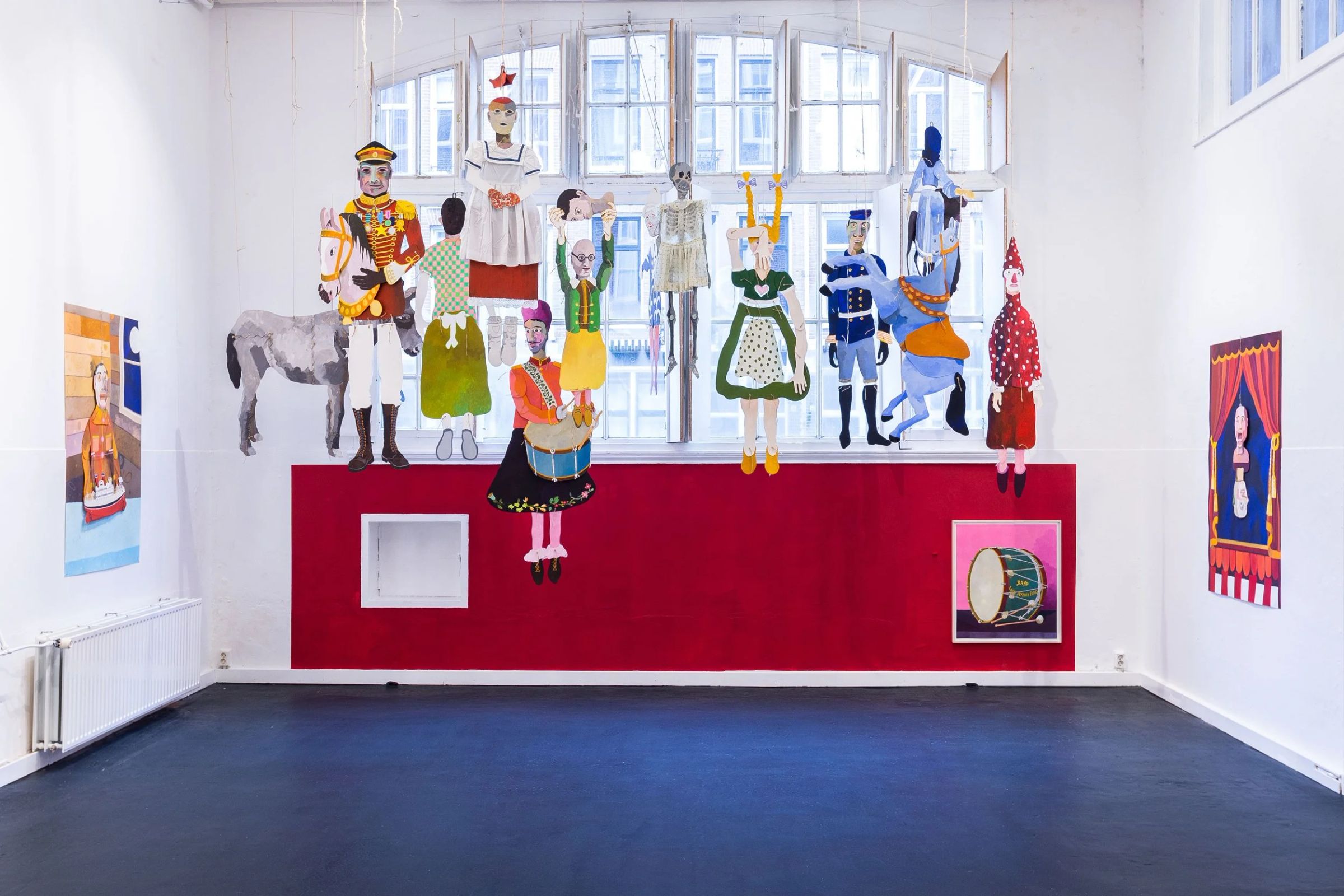
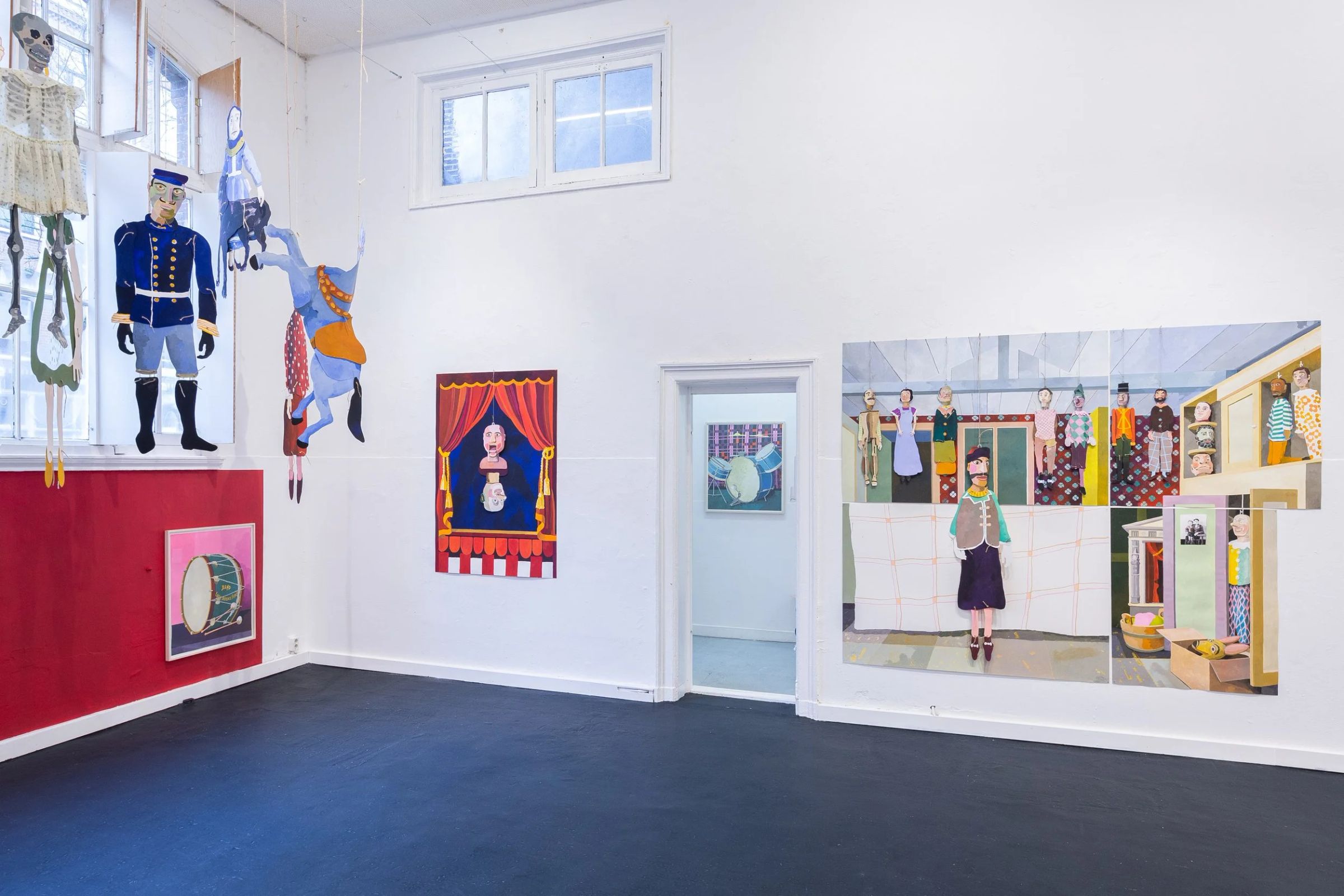
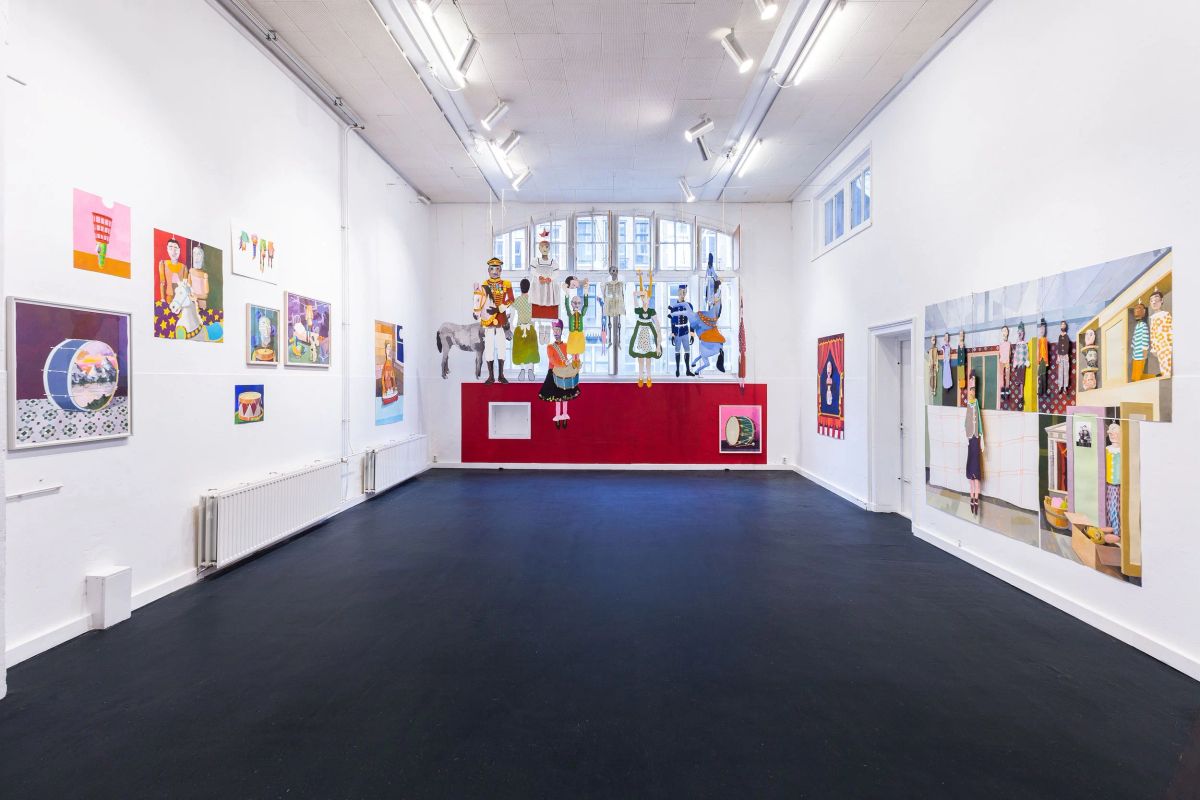
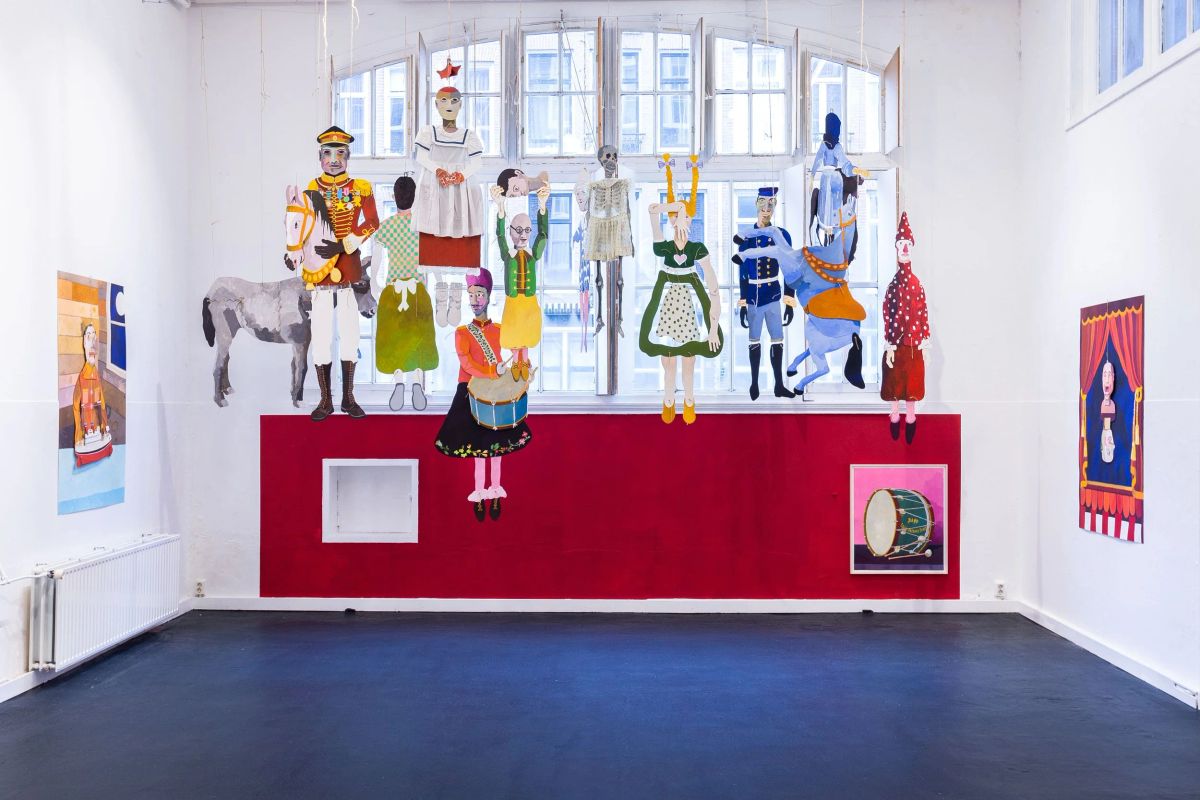
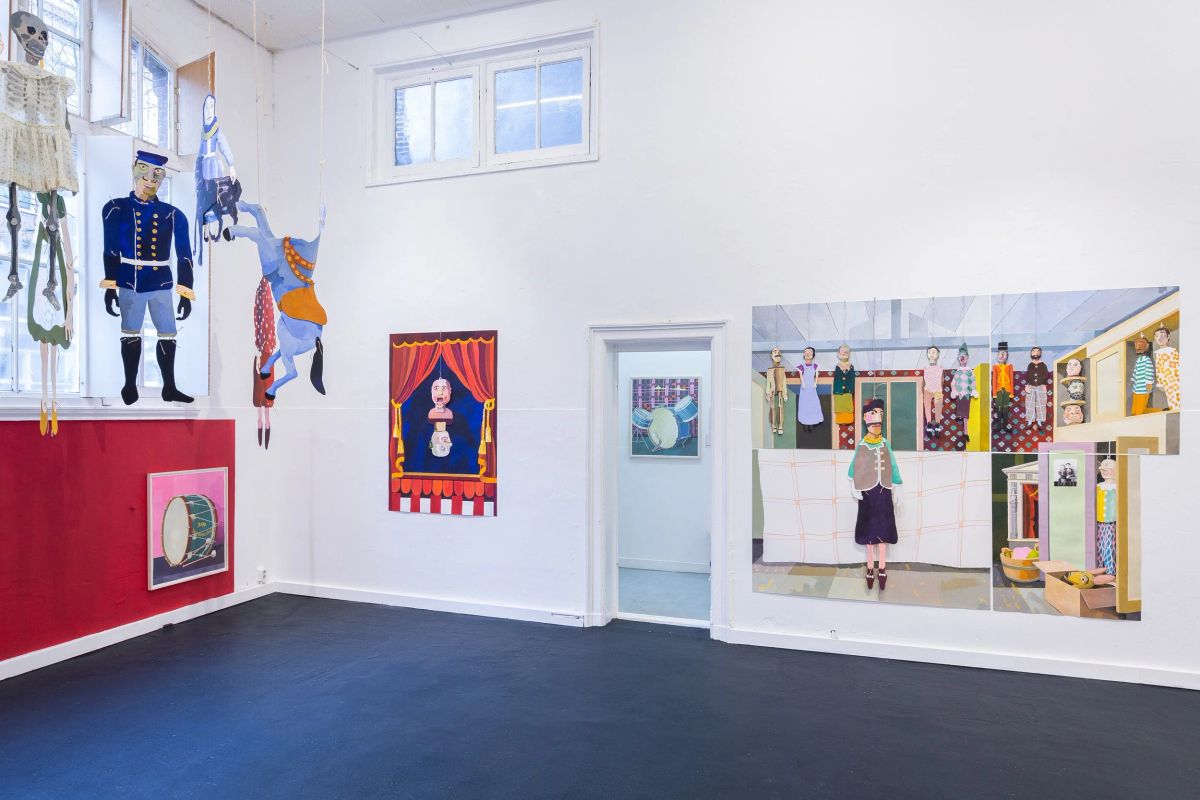
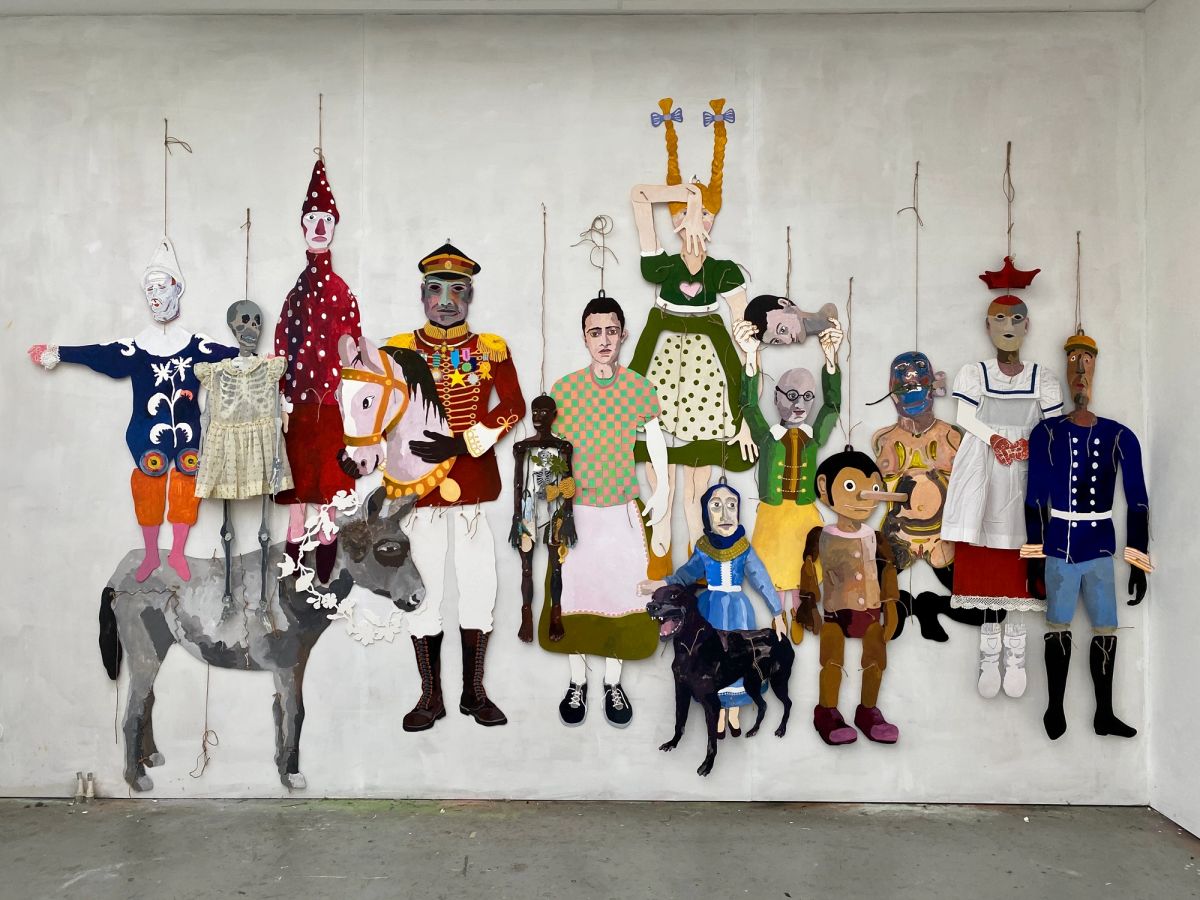
You will encounter few people in Erik Mattijssen's (NL, 1957) oeuvre, which has now spanned forty years. Once there was one floating in a kitchen, hanging from strings, and there was a man dressed up on a horse. But as a derivative, portrayed as a doll, they are there, and in this exhibition they play a leading role. The gallery shows a group of works that originated in the Munich City Museum, where an entire floor is dedicated to the history of the Bavarian Puppet Theater. A Valhalla for the artist. Hundreds of puppet theater figures, marionettes, heads, sets and entire theaters can be seen there.
Mattijssen uses these theater figures to depict moods, differently and more directly than in his works of objects, but with the same sense of melancholy. The exhibition emphasizes theatrical spaces where the cardboard, flat puppets seem to neatly wait their turn.
Like most topics that Mattijssen touches upon, nothing is what it seems in this series. Foods are not there to sink your teeth into, flowers are clearly not real, they rather look like props like you find in a theater performance. Mattijssen collects his images. Sometimes this leads to an extensive still life, sometimes to an extensive interior. These are scenes that stimulate the imagination and are real if you believe in them.
Say, it's only a paper moon
Sailing over a cardboard sea
But it wouldn't be make-believe
If you believed in me
Arlen, Harburg en Rose, It’s only a paper moon
Works
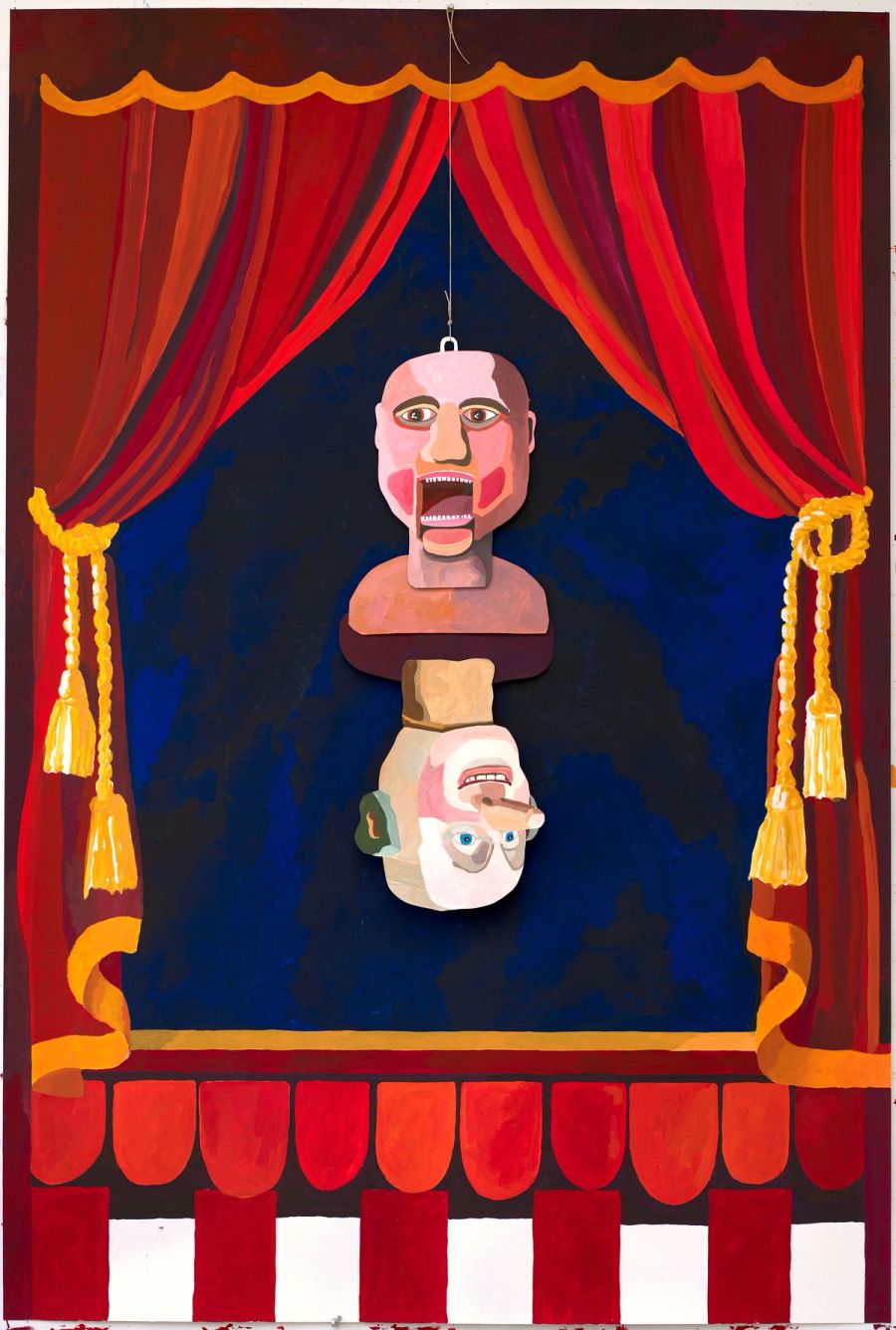
gouache on paper with sisal rope

gouache, soft pastel, pencil, sisal rope, on paper
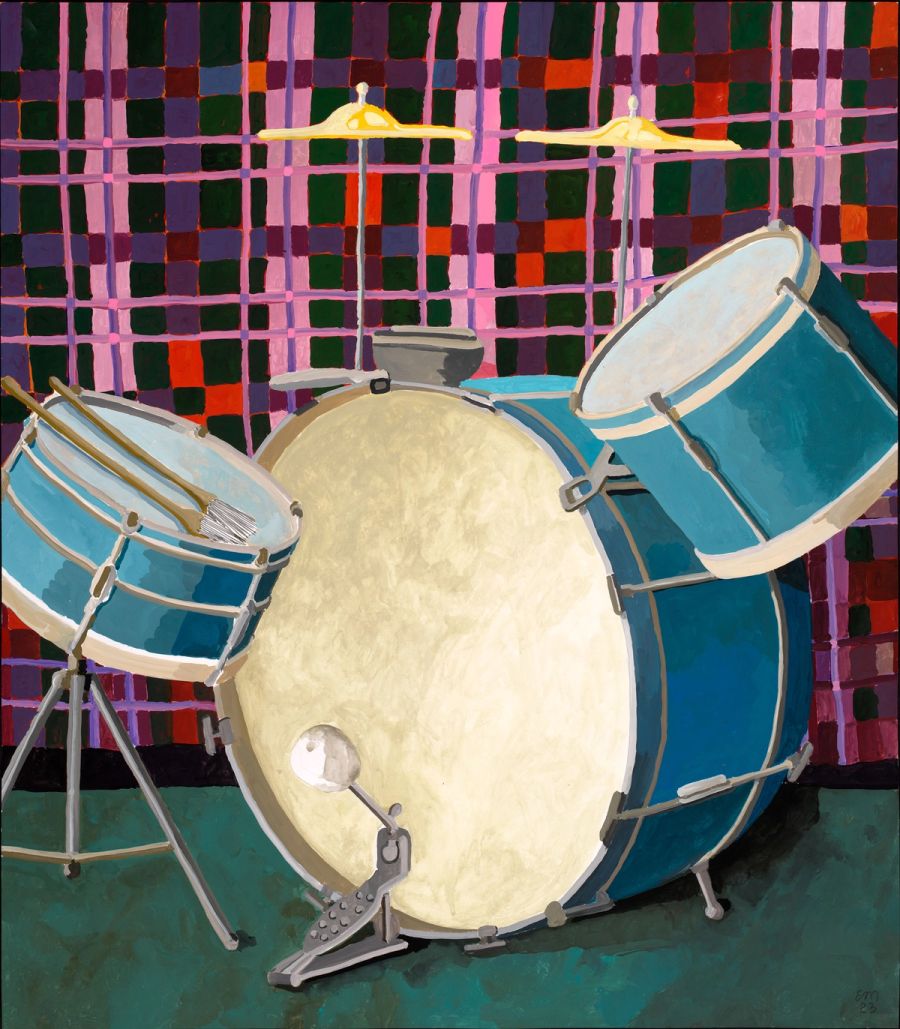
gouache on paper

gouache on paper

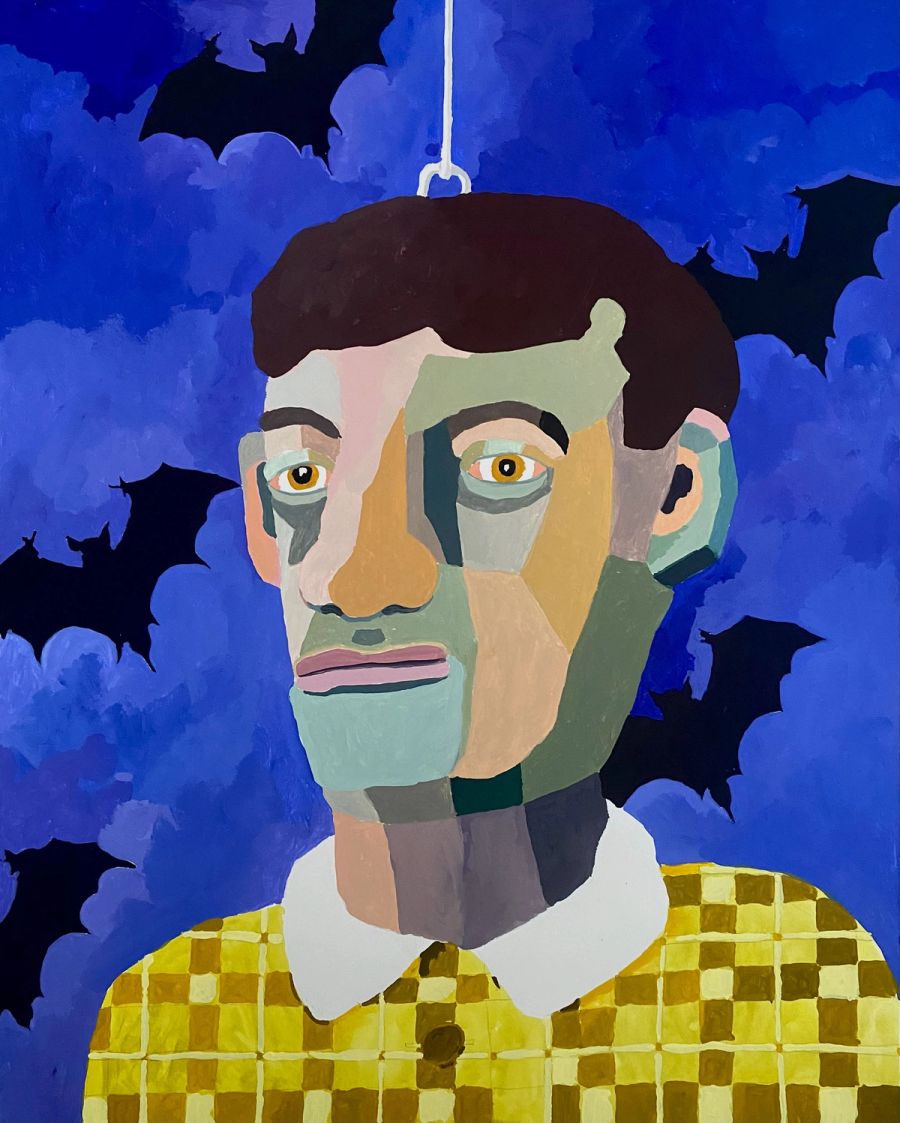
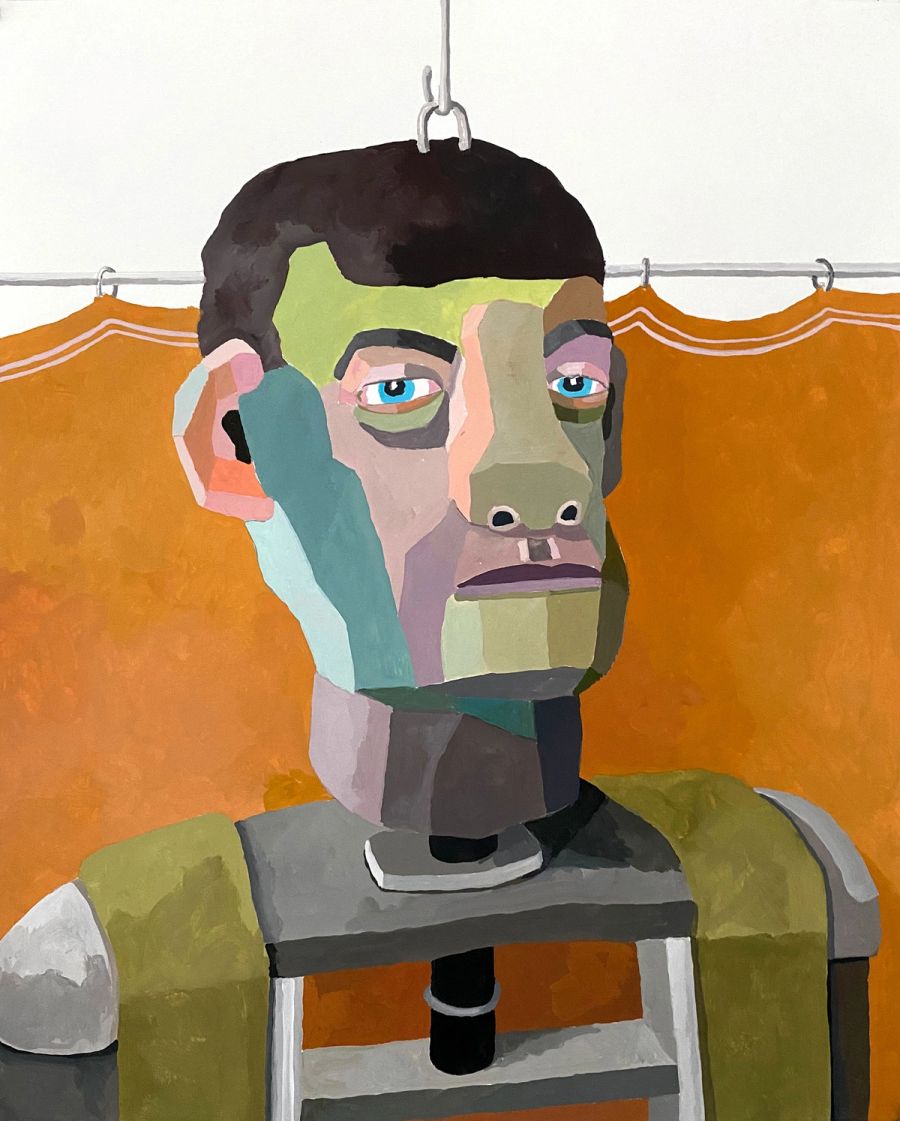
gouache on paper
Installation views
Artist
Erik Mattijssen
Plastic buckets, dolls, tin cans and furniture. They populate the scenes that artist Erik Mattijssen (Veenendaal, NL, 1957) builds in his drawings of pencil, gouache and pastel crayon. Like in a theatre, he tells stories, often set in interiors in which things take the leading role. People are absent. What happened there, the solidified life stories, thoughts and memories, are told in these tableaux vivants with props. The artist fills his scenes - with great attention to detail - with objects, in an intuitive, collage-like manner. He works from an image archive he collected over the years. He owns folders full of images of flowers, toys, patterns and the canned goods his father sold as a salesman. Experiences from the many foreign residences where he stays also end up in his work. The colours of Kolkata, façade advertisements, tin cans with plants in Suriname and a grocery shop in Paris enrich his subjects and style. The work conveys layered, sometimes contradictory feelings to the viewer, supported by his striking use of colour. Sometimes cheerful, sometimes melancholic; for a wooden stool or suitcase can conceal a faltering ambition. Loneliness is also an important theme, reflected in abandoned beds, cuddly toys and dolls that don't get love (anymore). Mattijssen keeps memories alive and taps into layers of our subconscious. Like the smell of madeleines Marcel Proust wrote about, that triggered a flow of memories. Painted and drawn on paper, his objects take you back to a lost time. Mattijssen cradles us back and forth between recognition and alienation. Through abrupt cuts and playful perspective, bold colour combinations and through what we see. For why is that hippo hanging on a string above the mantelpiece? While looking at his work, you are left wondering. According to him, the highest achievement. Erik Mattijssen has had solo exhibitions at museums such as Kunsthal Rotterdam, Stedelijk Museum Schiedam, Jan Cunen Oss and in 2025 at Museum More. His work is included in prestigious international museum, corporate and private collections, including those of the Stedelijk Museum Amsterdam, AkzoNobel, the DELA, the UMC-Utrecht and the VandenBroek Foundation. He made in situ work for public places such as the Antoni van Leeuwenhoek Hospital, Amsterdam and won the NN Art Award. A committed and passionate teacher at the Gerrit Rietveld Academy, Mattijssen trained a generation of young artists.
More about Erik Mattijssen →