1 November – 7 December 2025
Timmerik Dubbelklik
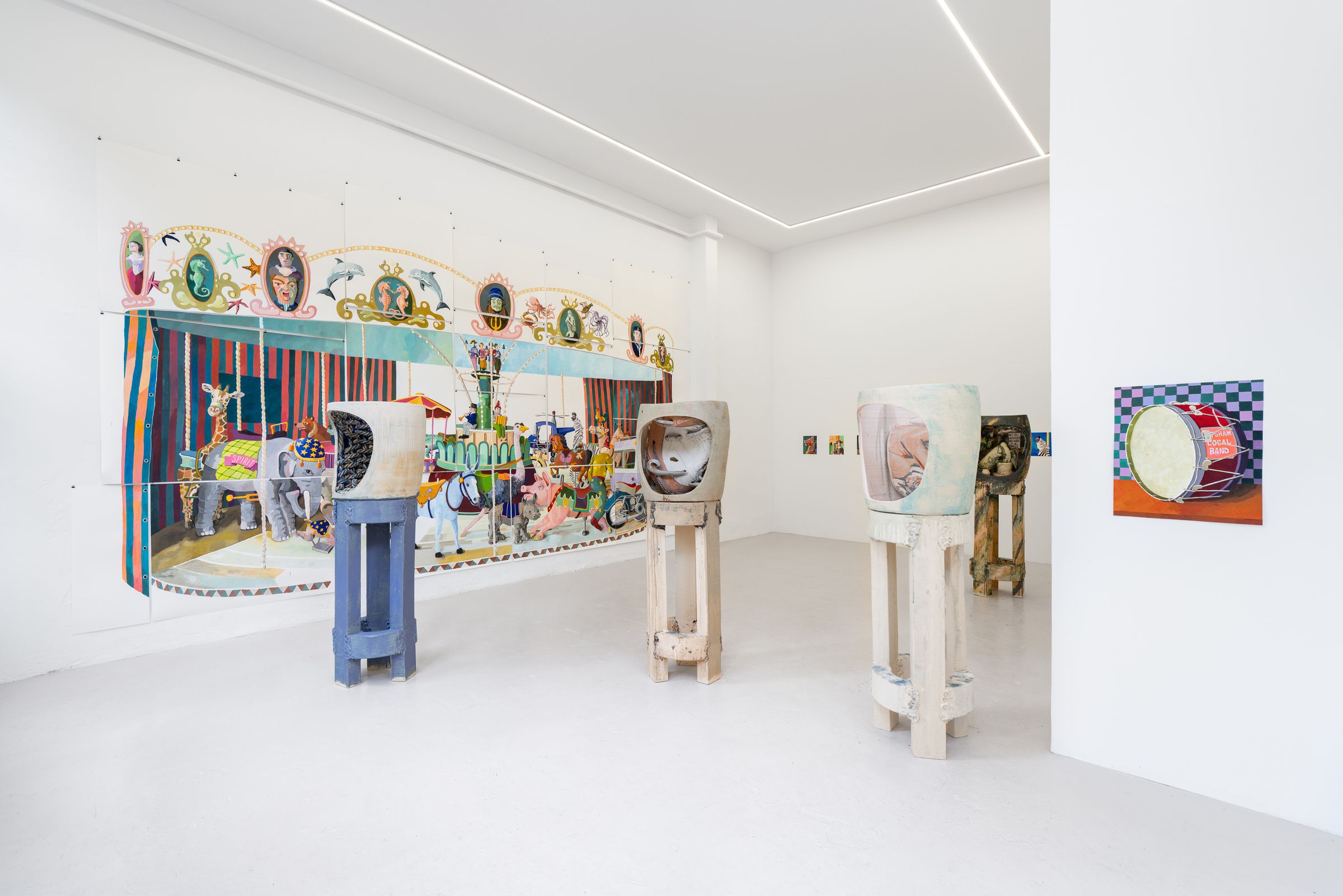
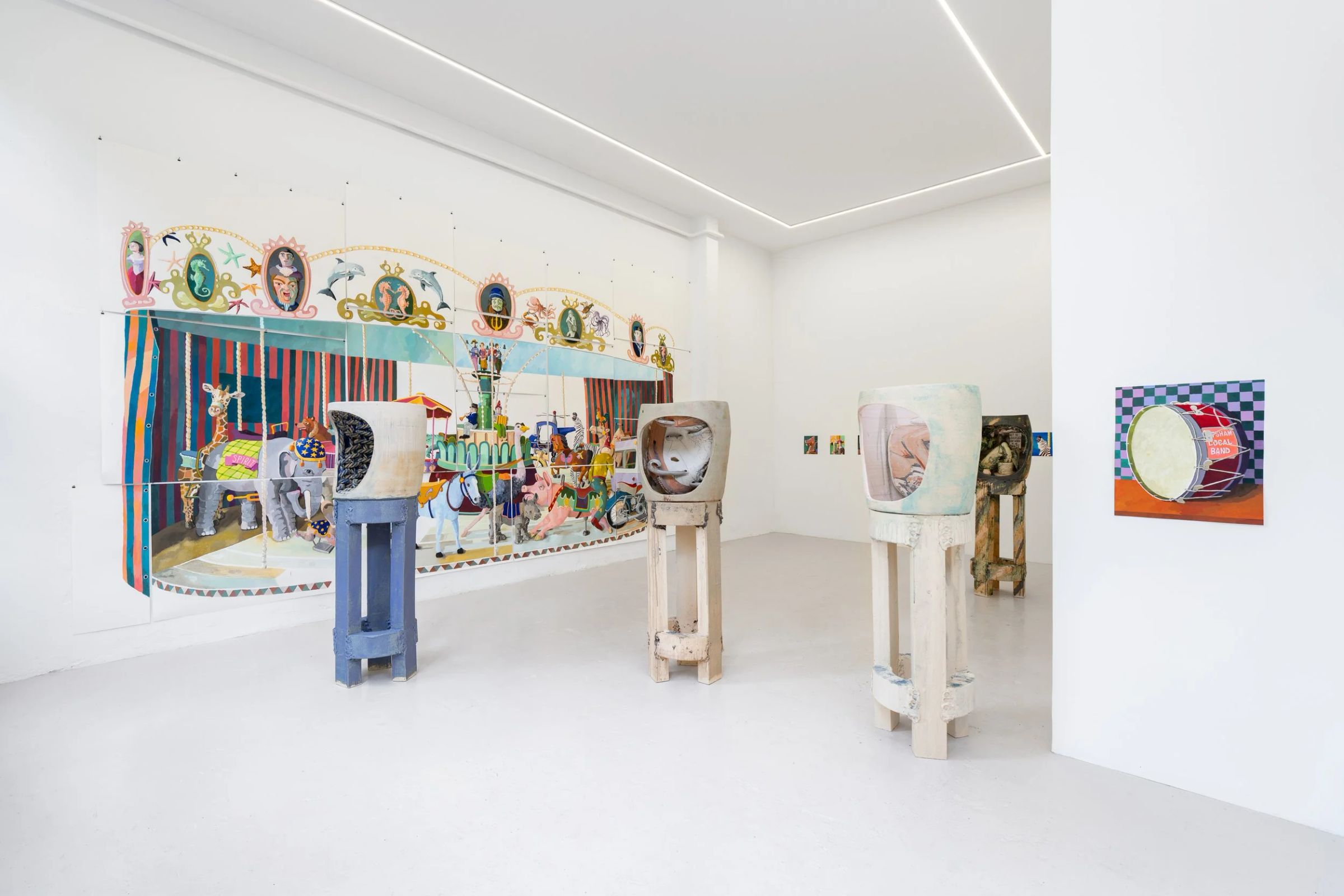
The works on paper by Erik Mattijssen and sculptures by Tim Breukers in this exhibition demonstrate how intimate stories can be told in a grand manner. From a personal perspective, their works express universal emotions.
Life and art come together in the sculptures of Tim Breukers (NL, 1985). Scale, humor, narrative, and sculptural techniques versus clumsy solutions play important roles. Things like his daughter, collaborating in ceramic studios, and the neighborhood where he lives influence the process and subject matter of his work.
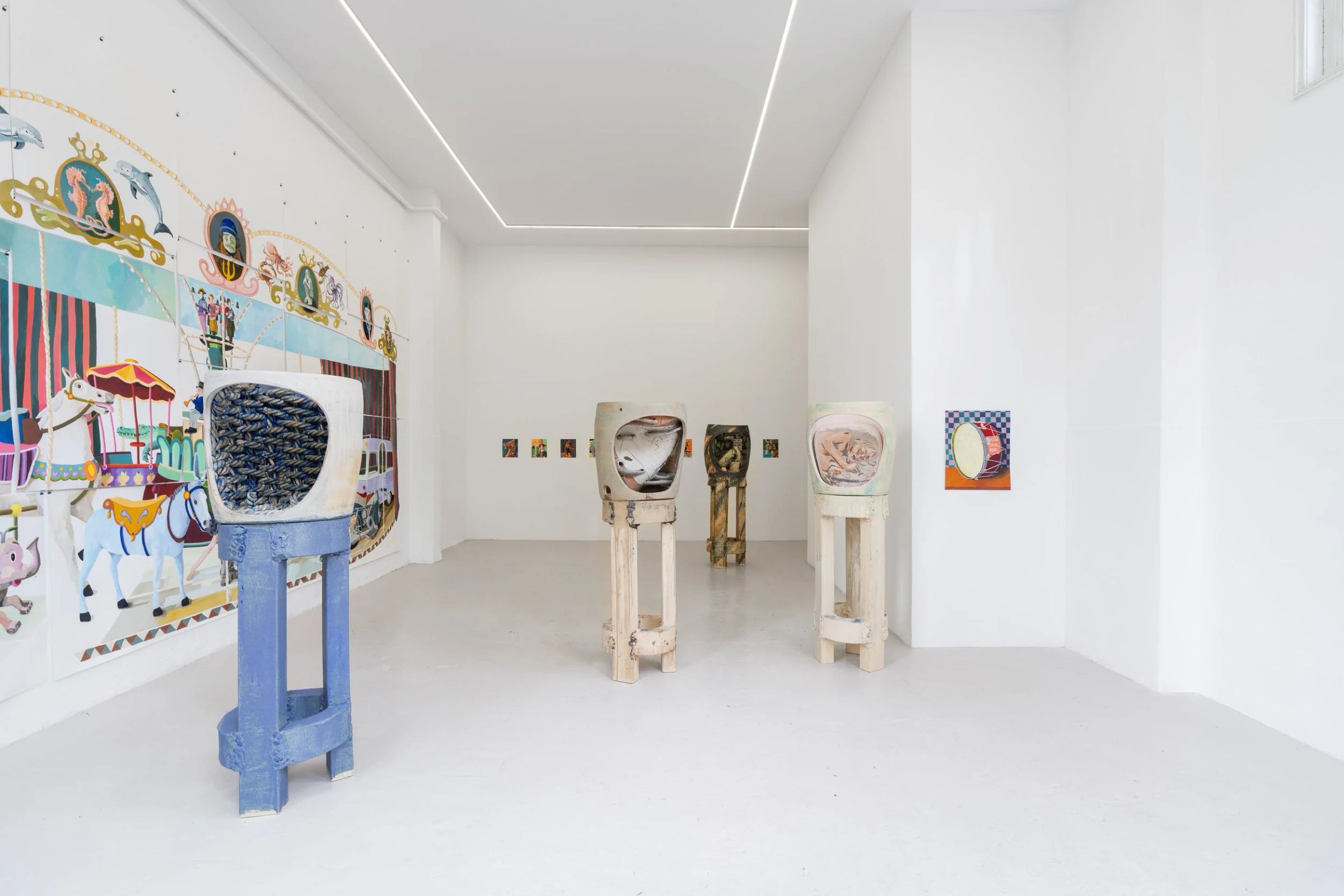
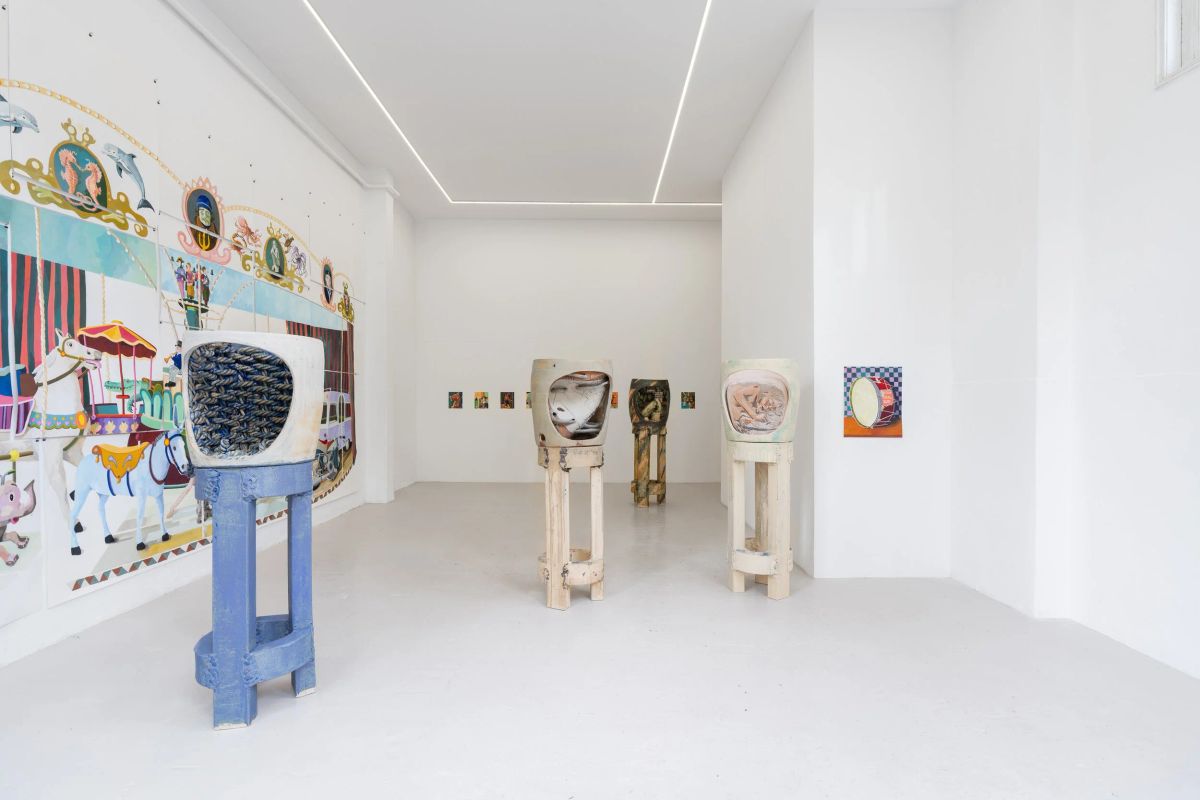
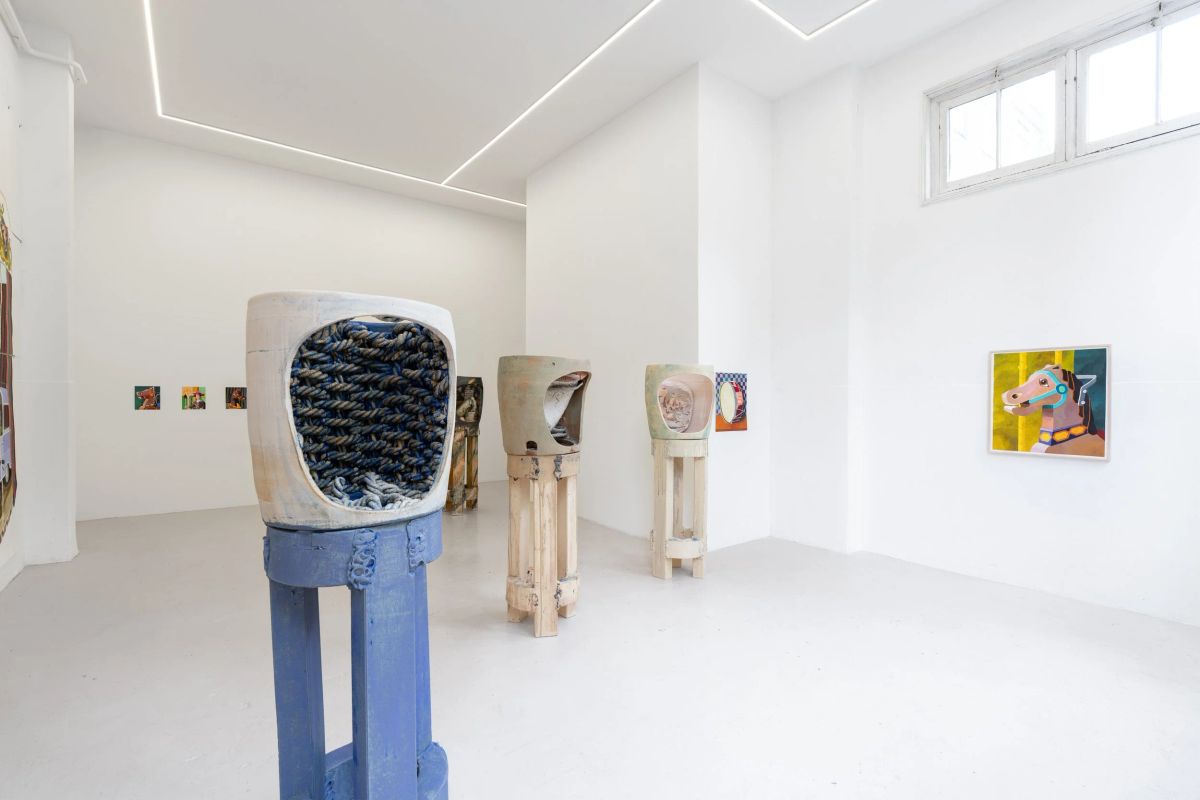
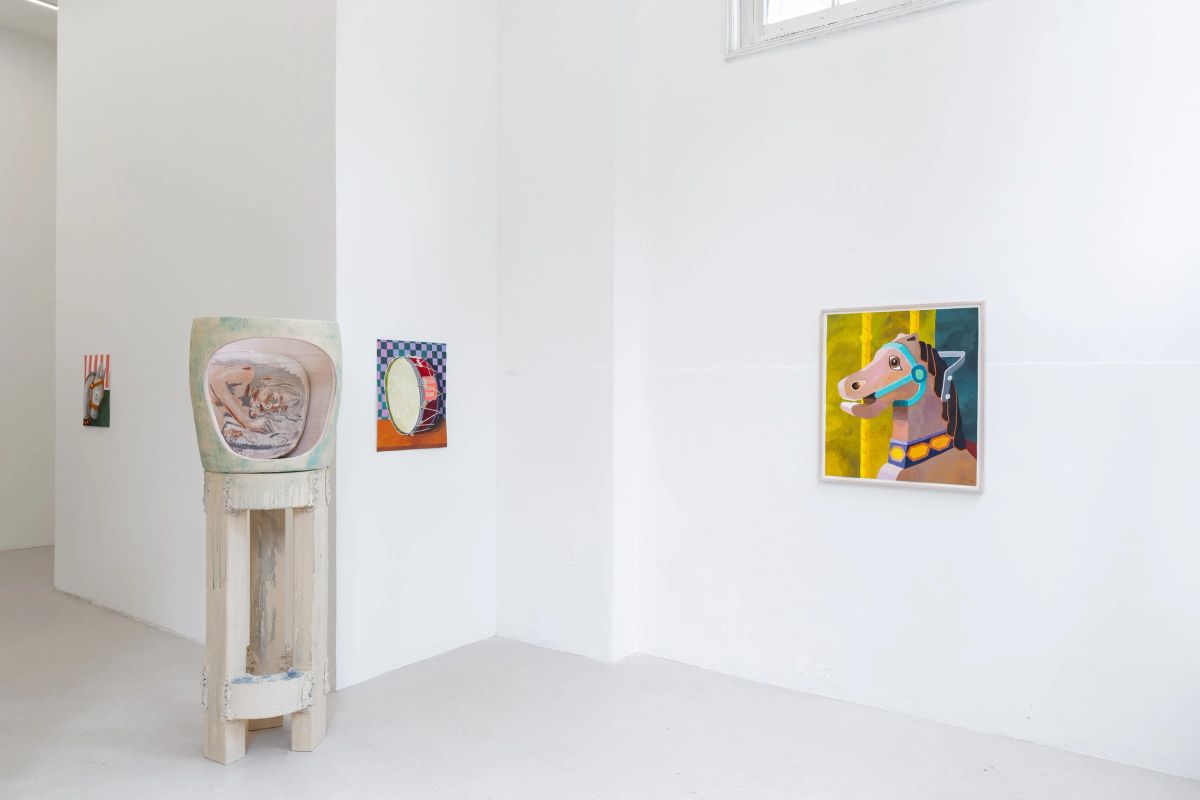
Dioramas formed the starting point for the series of works that Breukers is exhibiting in the gallery. They took on the form of vases, based on the two-thirds wine barrels with an olive tree in them that he saw on Beukenplein in Amsterdam. The artist made the giant vases together with Norman Trapman, a ceramics expert with an idyllic studio outside Amsterdam:
“When he starts spinning the vases on his wheel, I'm softer than the clay. Wow, this is so beautiful, I exclaim. Norman asks, should it be turned out a little more? ‘I don't know, I think it's so beautiful.’” Tim Breukers
The first story that ended up in one of the vases presented itself while Norman was spinning. Breukers saw him sitting with his elbows in his sides, looking over the vase with his head, and thought he resembled a praying mantis. So he modeled a praying mantis in one of the vases, which wants to know what it is like to be human by performing human crafts. The title of the vase came about when Breukers saw the word mantis, with which he could create a nice portmanteau word: Norman + Mantis = Normantis.
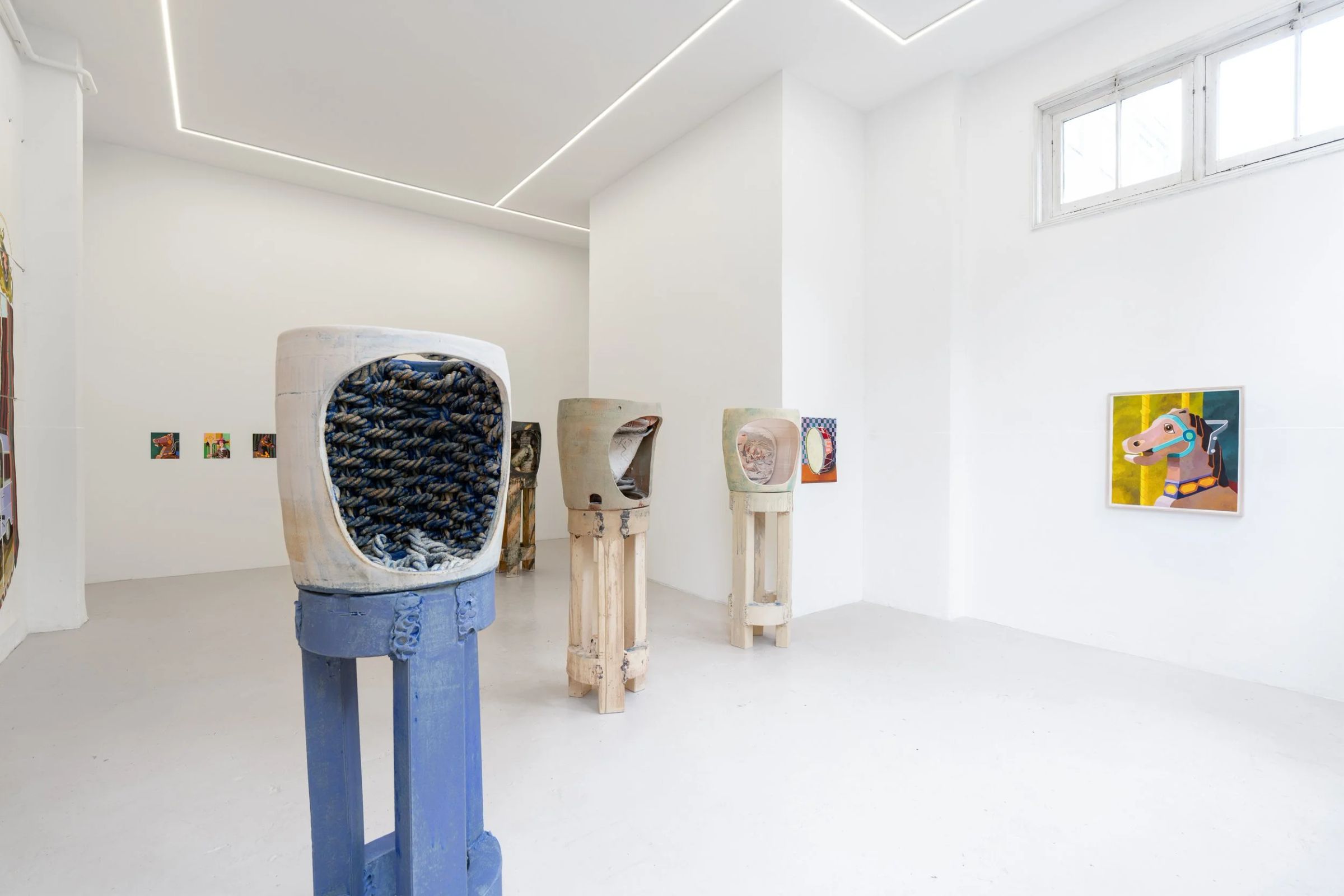
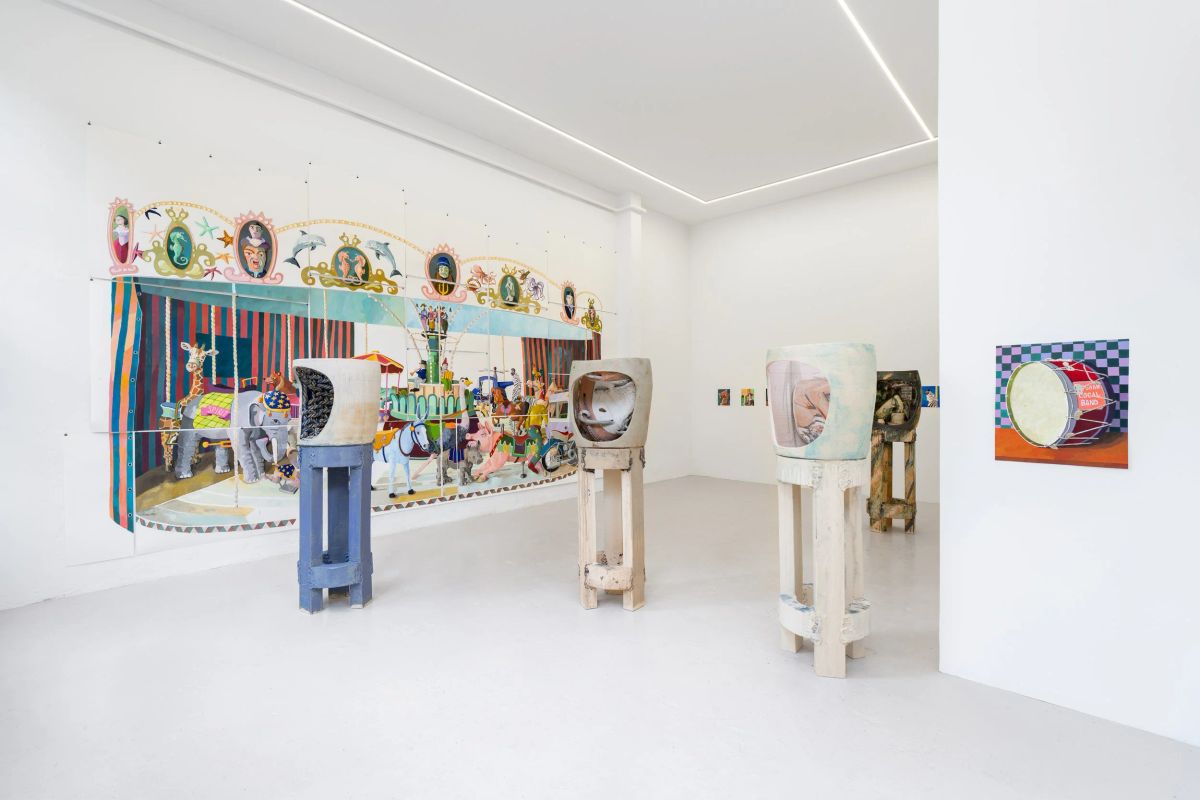
He made a total of eight vases, four of which are on display in the gallery. They are filled with a marble run, his sleeping daughter, or an inner wall of rope. They are presented on ceramic pedestals that merge with their load.
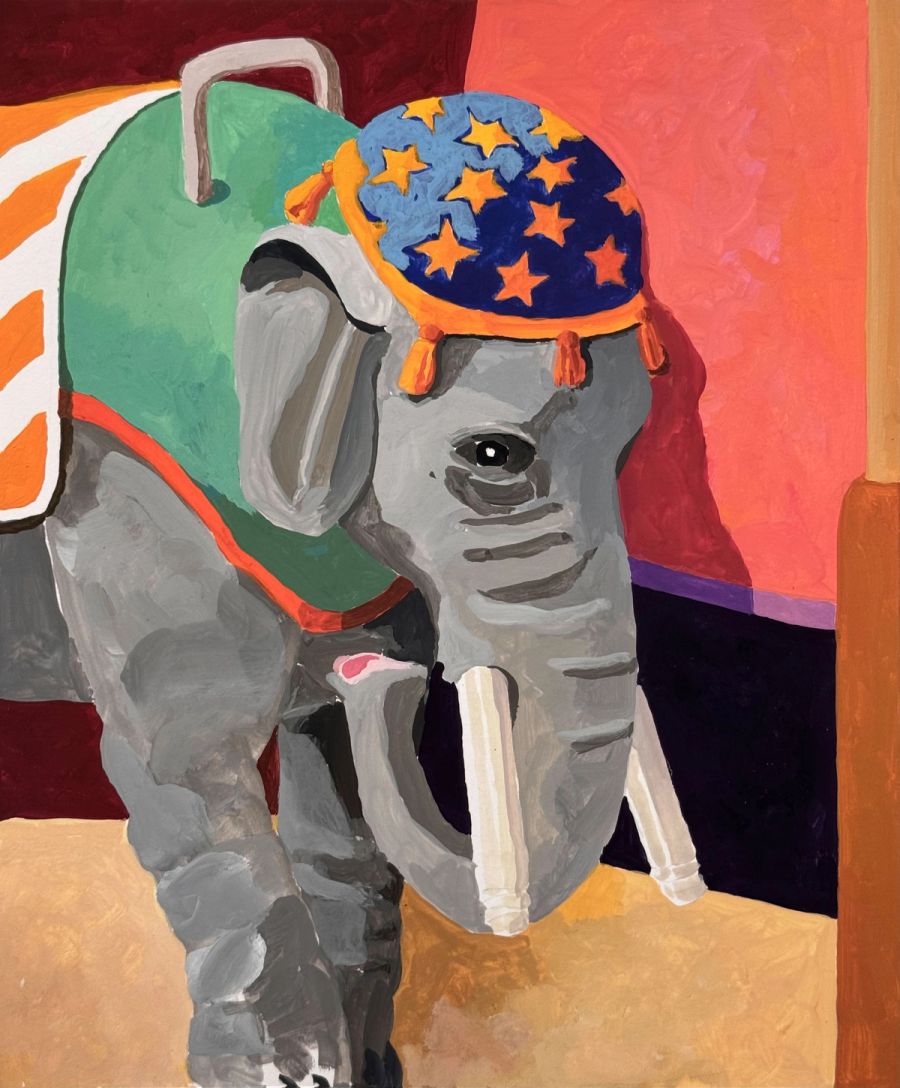
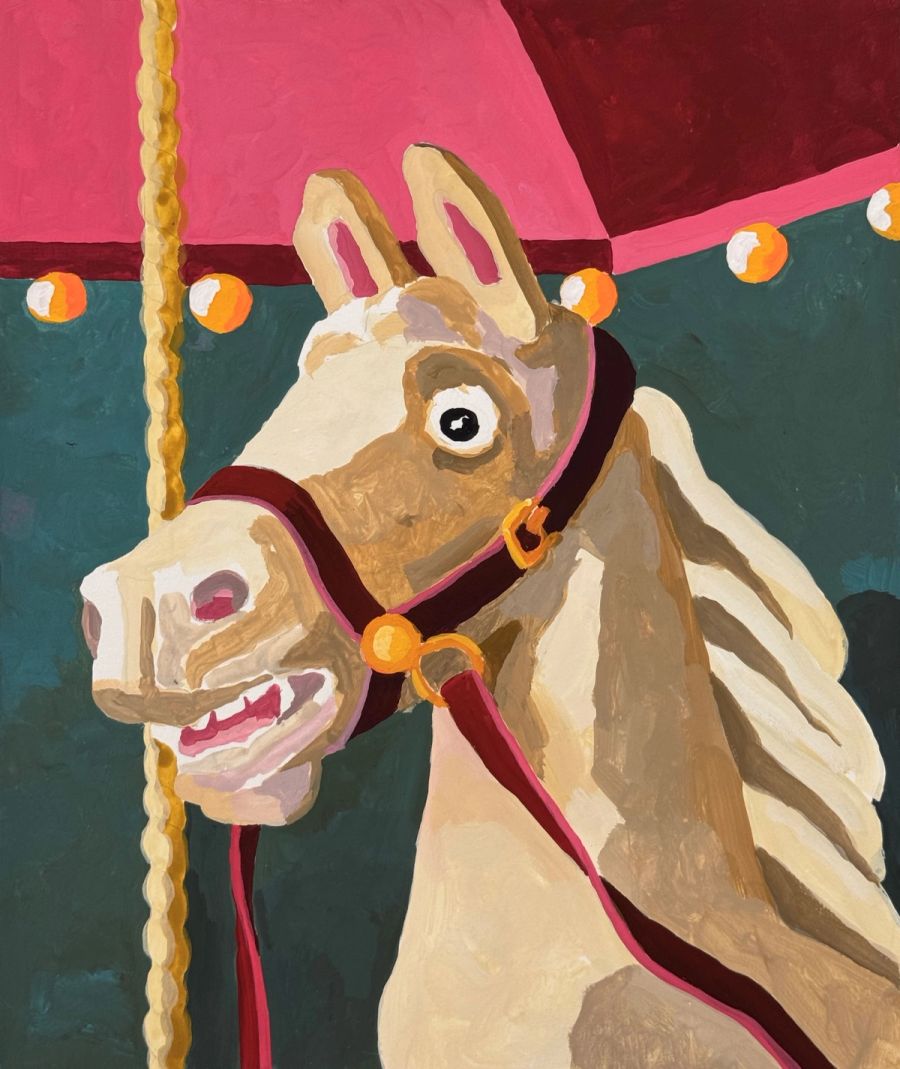
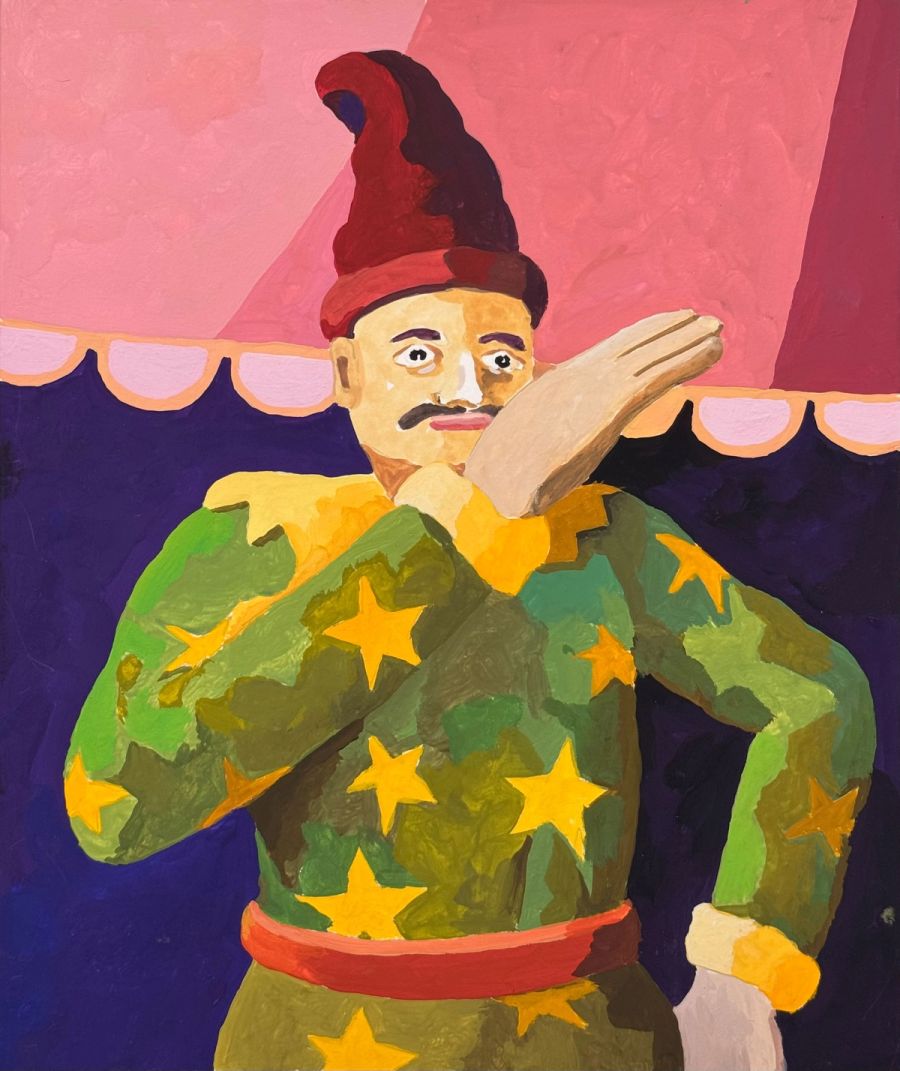
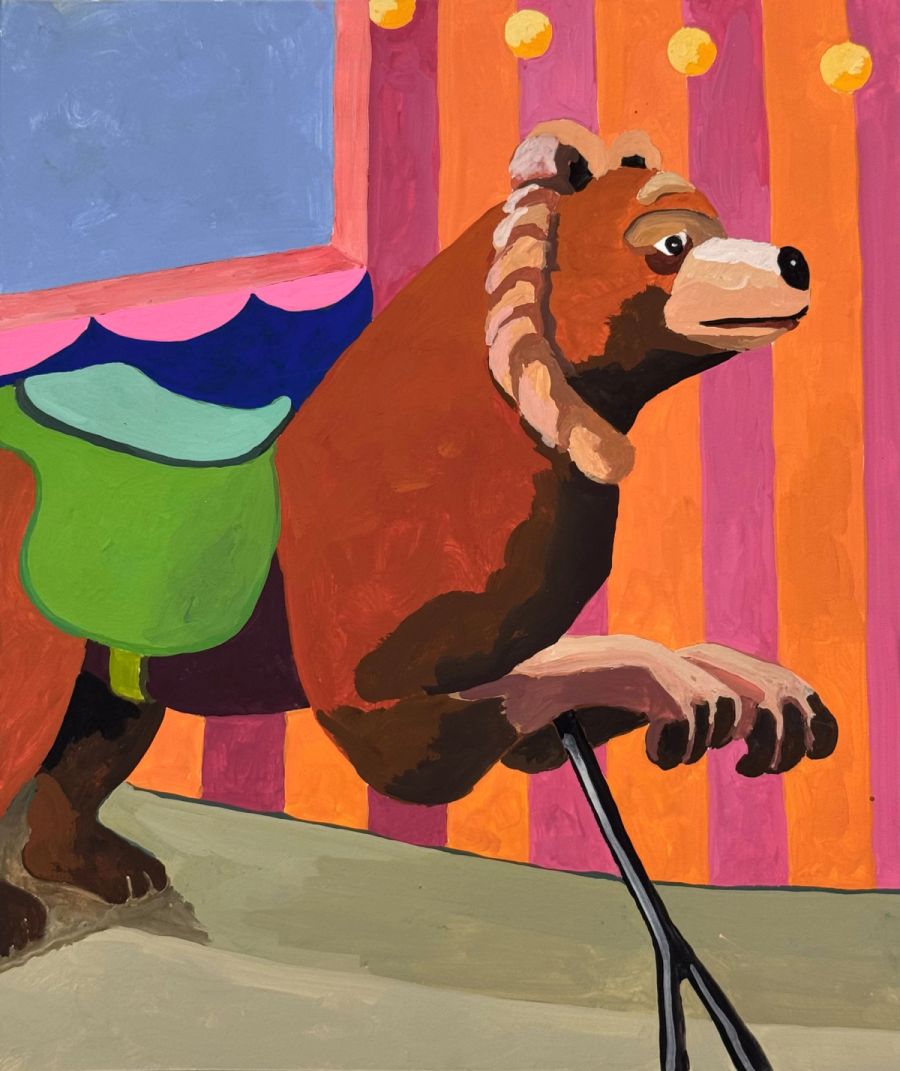
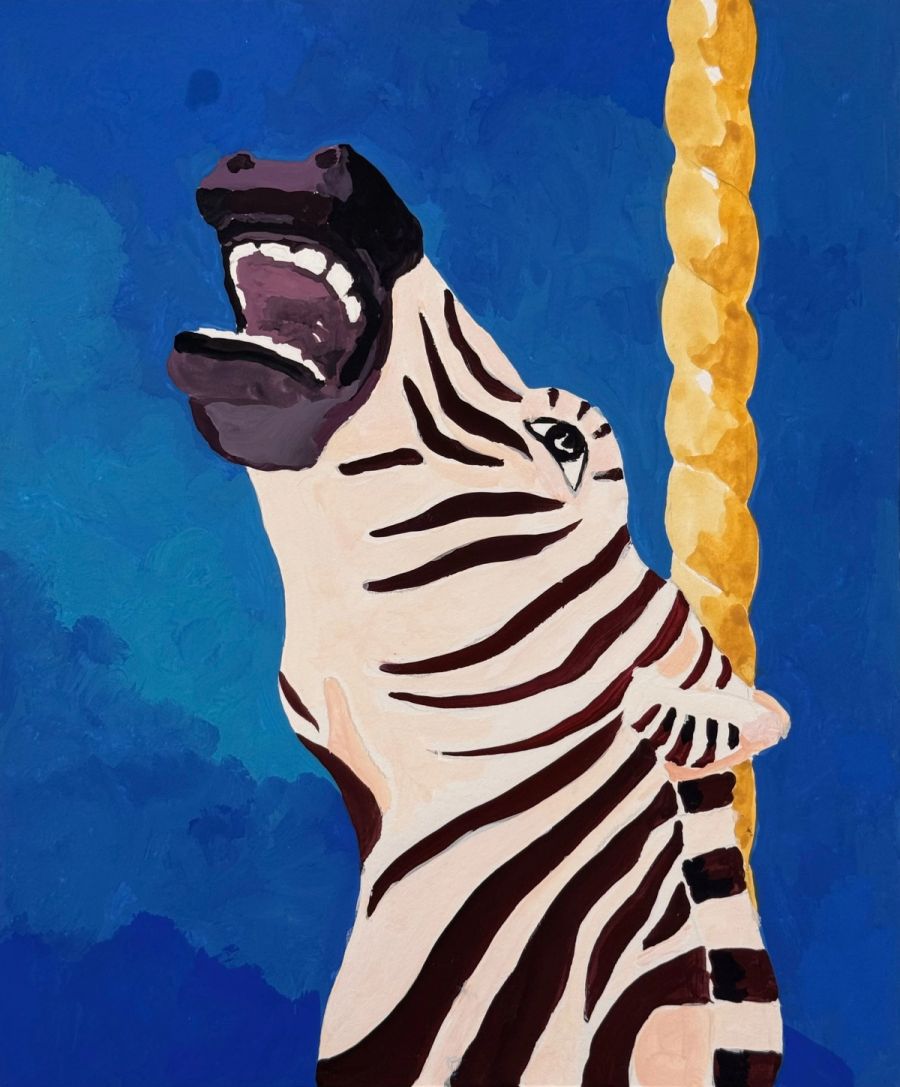
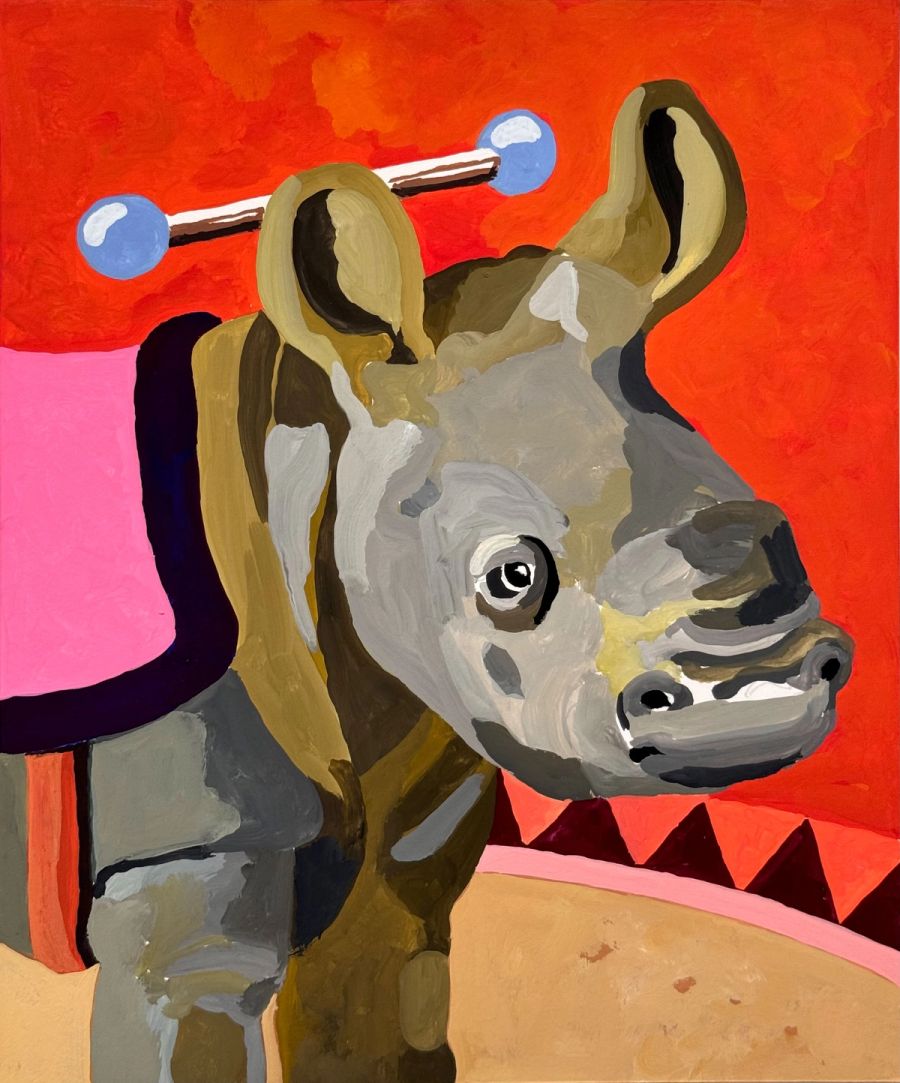
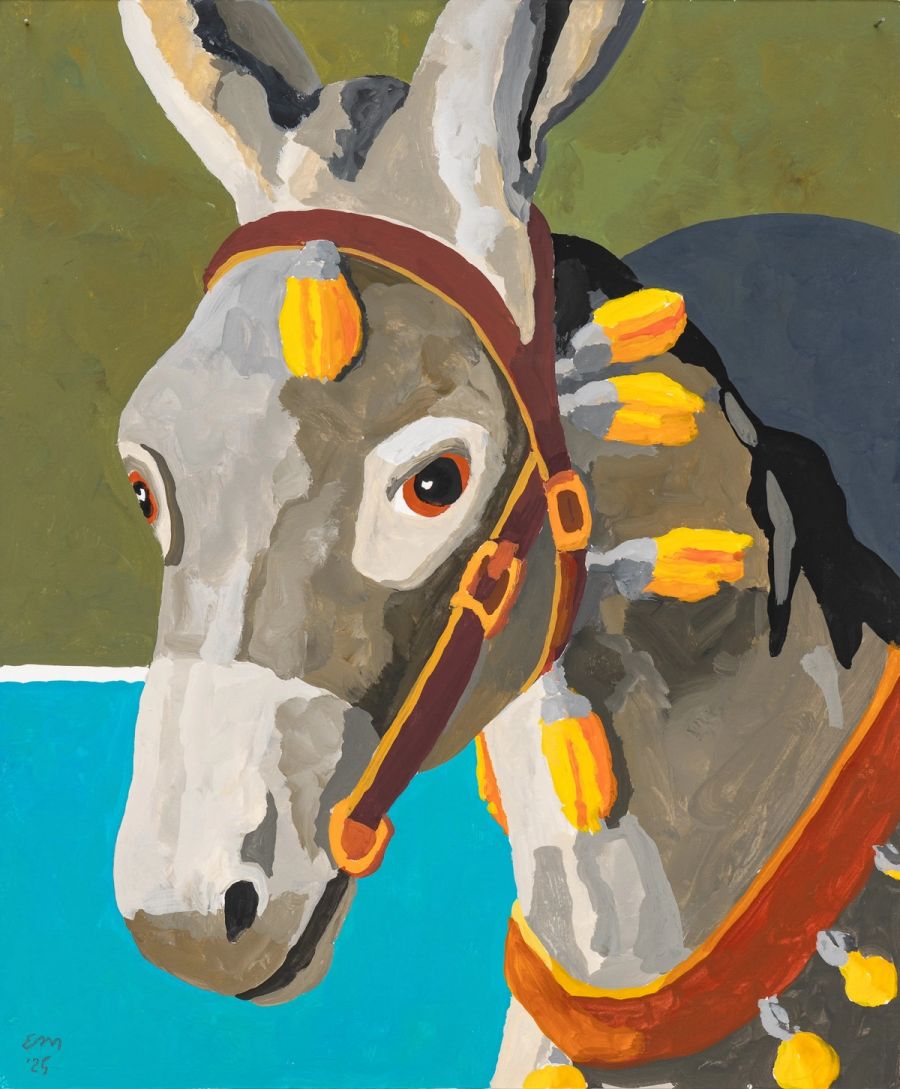
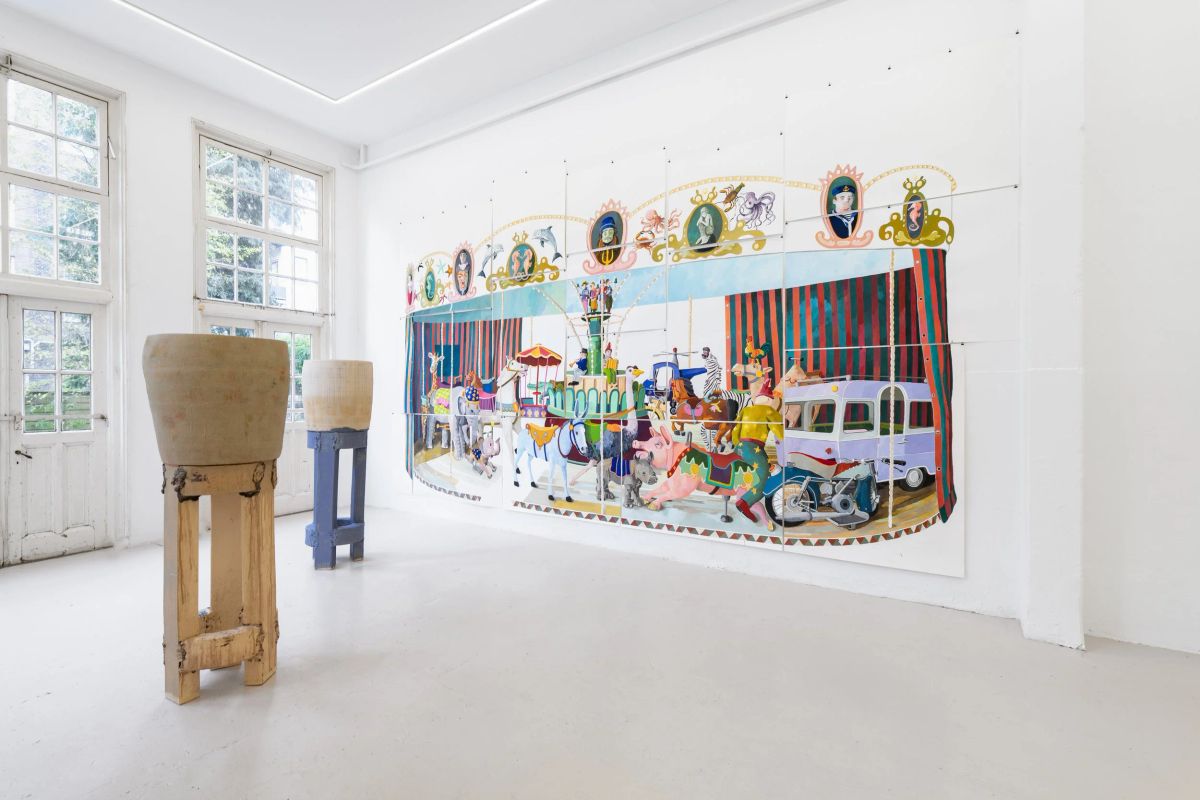
For Erik Mattijssen (NL, 1957), too, the personal is the starting point for artworks with universal meaning and appeal. This exhibition features his most monumental work to date, Winterstalling, which depicts a merry-go-round at rest.
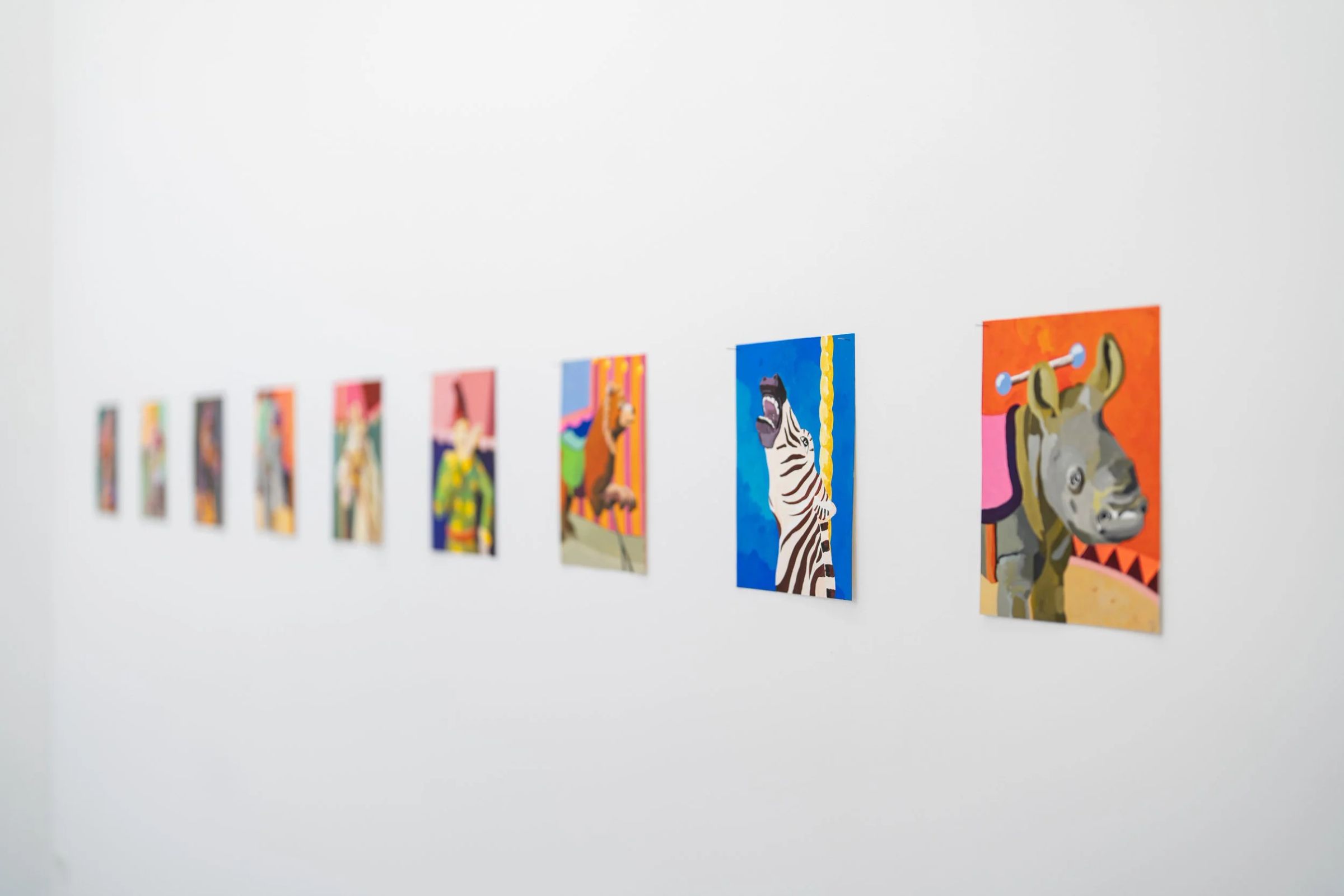
The artist loves merry-go-rounds, both the objects themselves and how people relate to them. As a child, he visited the Efteling theme park, where the exuberant, festive steam carousel stole his heart. He still visits the Efteling with his nephew, and the steam carousel remains a favorite. After a ride on the pig, they watch from a distance as people are drawn to the carousel and change when they sit on it.
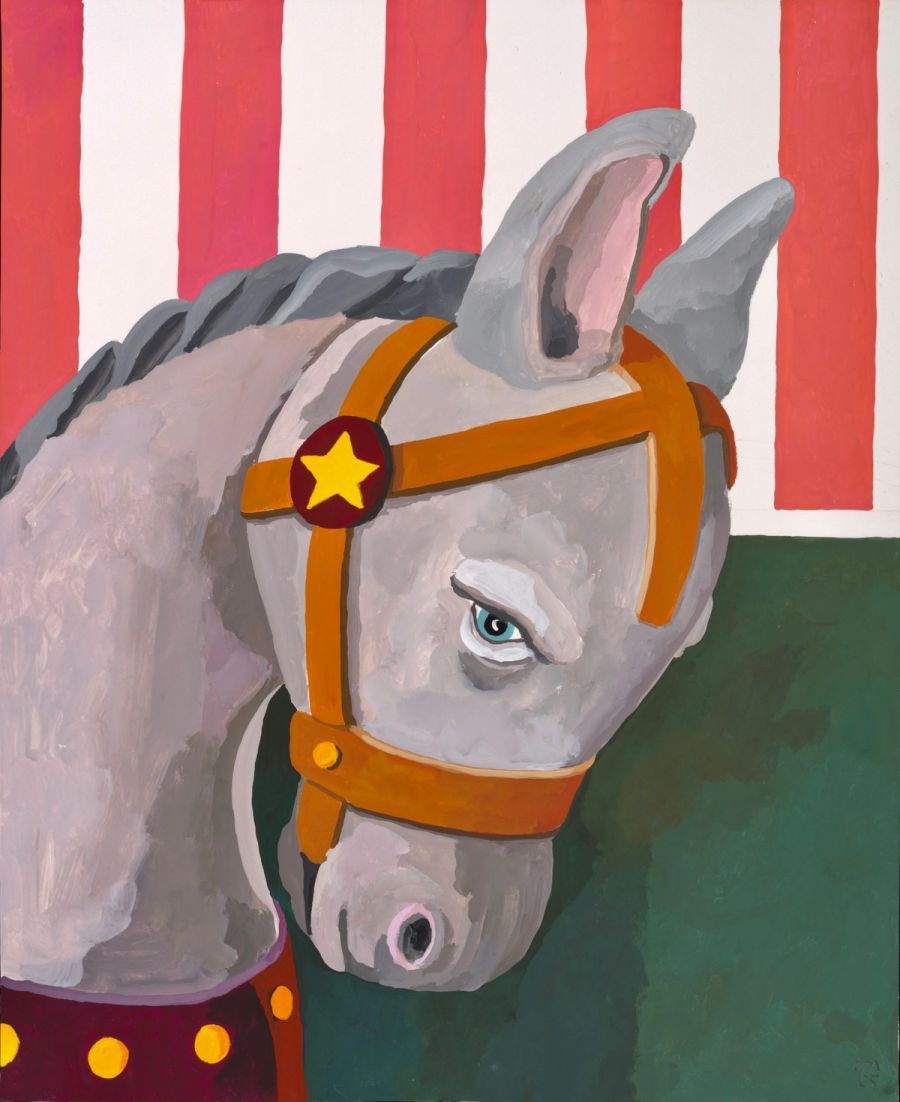
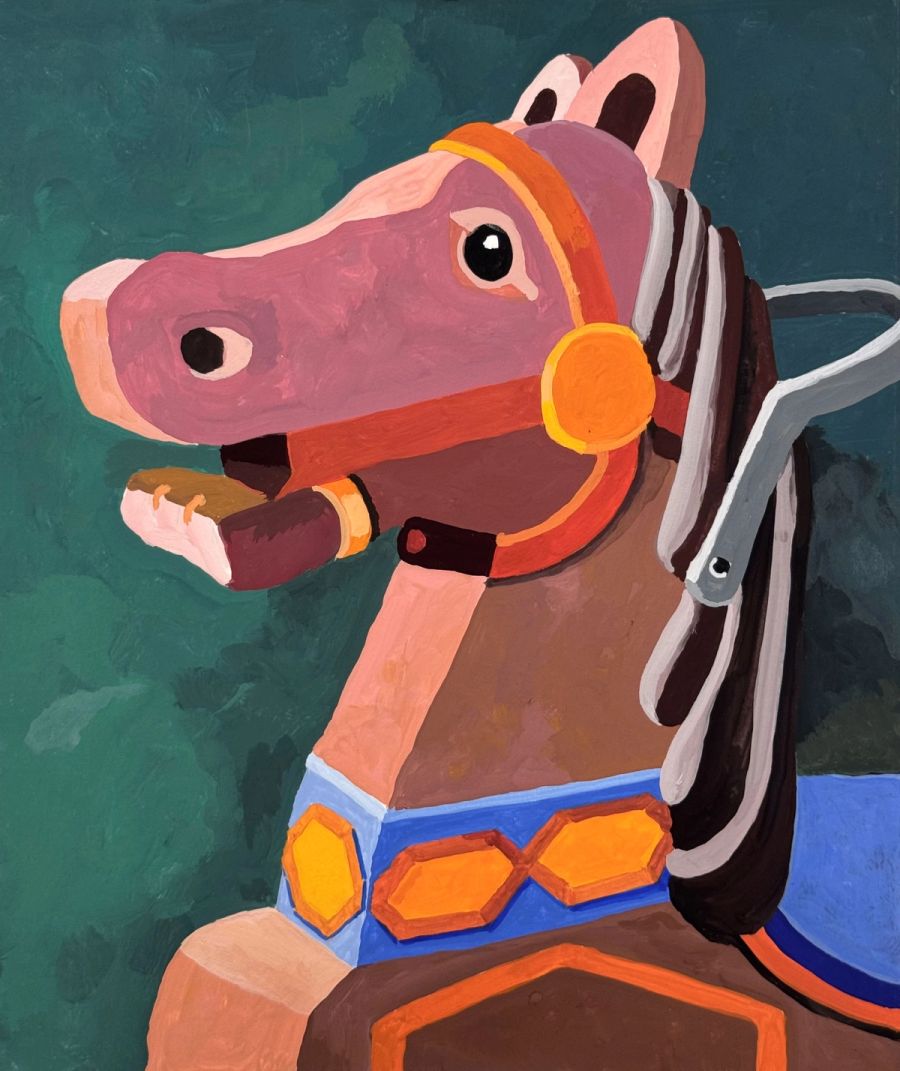
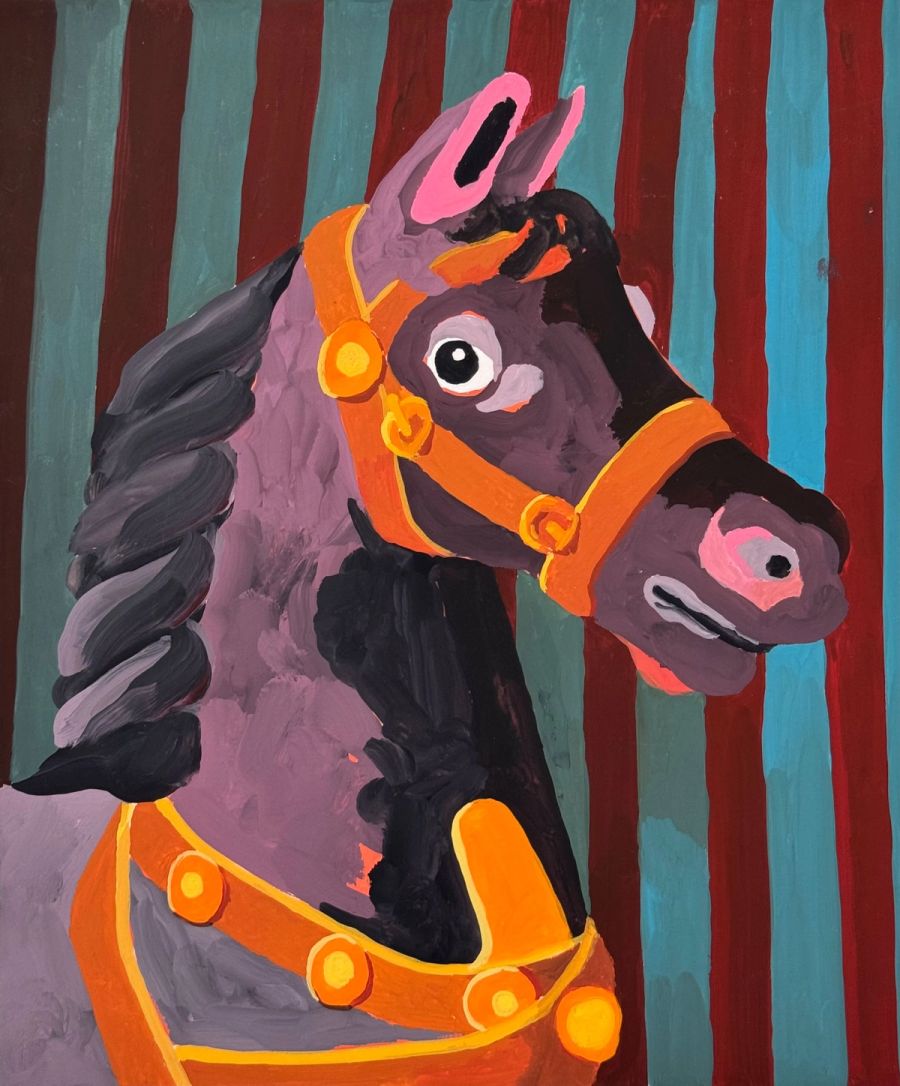
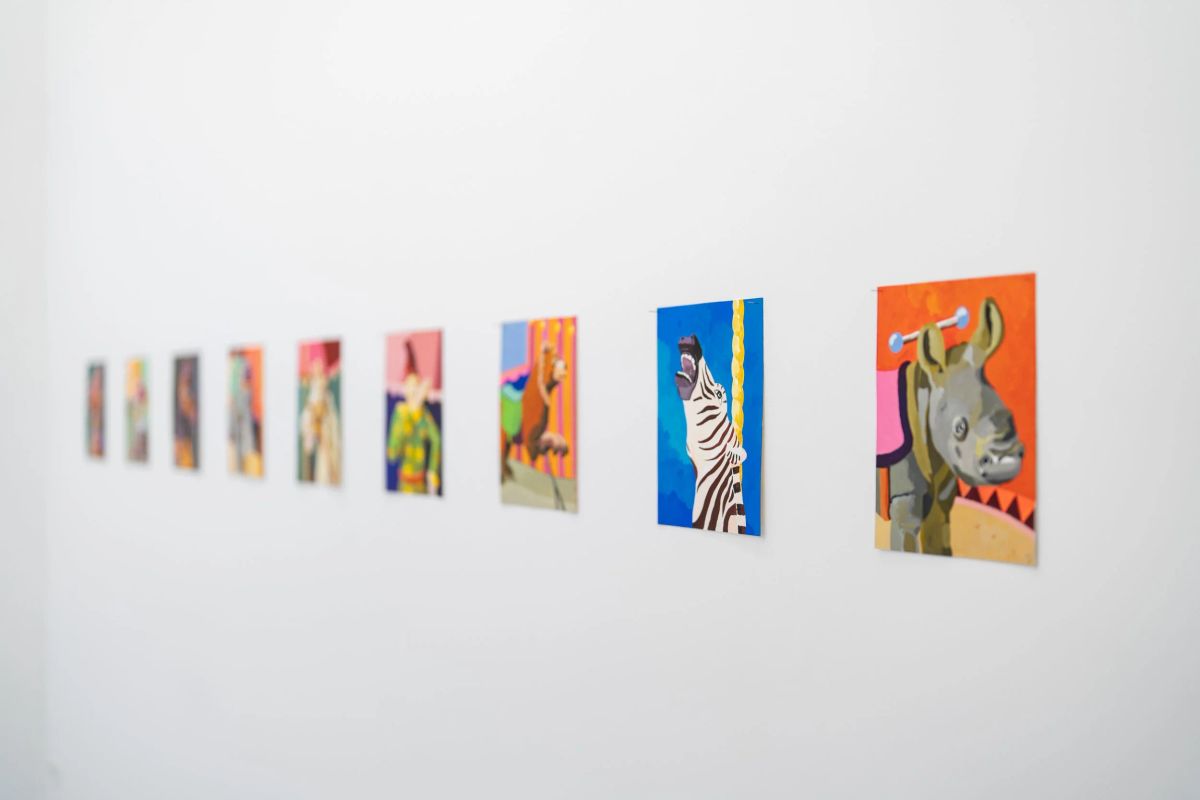
Mattijssen began searching for carousels. In Düsseldorf, he saw one that was closed for the night, covered with striped canvas. This gave rise to the idea of a carousel in winter storage, where the animals rest before they have to make their rounds again. In his work, objects tell the stories of absent people. A closed carousel evokes feelings of nostalgia, childhood memories, or times when happiness was as simple as a ride on a carousel. It is not difficult to see the merry-go-round as a metaphor for the cycle of life.
Mattijssen's personal life coincides with his work, as it does with Breukers, both in terms of interest and working methods. For this exhibition, Mattijssen continued to work on a number of merry-go-round animals. As a prelude to new work, he likes to do what he enjoys most: painting drums, this time. What once began with the Blechtrommel from Berlin, based on the famous book by Günter Grass and the film, has led to a large collection: from marching bands from Ireland to small toy drums for children. Some of the drums are presented next to Winterstalling. Just as Norman Trapman’s vases make Breukers as soft as clay, Mattijssen remains attracted to the oval shape of the drums. We eagerly await what he will create next.
Works






Erik Mattijssen
Installation views
Artists
Erik Mattijssen
Plastic buckets, dolls, tin cans and furniture. They populate the scenes that artist Erik Mattijssen (Veenendaal, NL, 1957) builds in his drawings of pencil, gouache and pastel crayon. Like in a theatre, he tells stories, often set in interiors in which things take the leading role. People are absent. What happened there, the solidified life stories, thoughts and memories, are told in these tableaux vivants with props. The artist fills his scenes - with great attention to detail - with objects, in an intuitive, collage-like manner. He works from an image archive he collected over the years. He owns folders full of images of flowers, toys, patterns and the canned goods his father sold as a salesman. Experiences from the many foreign residences where he stays also end up in his work. The colours of Kolkata, façade advertisements, tin cans with plants in Suriname and a grocery shop in Paris enrich his subjects and style. The work conveys layered, sometimes contradictory feelings to the viewer, supported by his striking use of colour. Sometimes cheerful, sometimes melancholic; for a wooden stool or suitcase can conceal a faltering ambition. Loneliness is also an important theme, reflected in abandoned beds, cuddly toys and dolls that don't get love (anymore). Mattijssen keeps memories alive and taps into layers of our subconscious. Like the smell of madeleines Marcel Proust wrote about, that triggered a flow of memories. Painted and drawn on paper, his objects take you back to a lost time. Mattijssen cradles us back and forth between recognition and alienation. Through abrupt cuts and playful perspective, bold colour combinations and through what we see. For why is that hippo hanging on a string above the mantelpiece? While looking at his work, you are left wondering. According to him, the highest achievement. Erik Mattijssen has had solo exhibitions at museums such as Kunsthal Rotterdam, Stedelijk Museum Schiedam, Jan Cunen Oss and in 2025 at Museum More. His work is included in prestigious international museum, corporate and private collections, including those of the Stedelijk Museum Amsterdam, AkzoNobel, the DELA, the UMC-Utrecht and the VandenBroek Foundation. He made in situ work for public places such as the Antoni van Leeuwenhoek Hospital, Amsterdam and won the NN Art Award. A committed and passionate teacher at the Gerrit Rietveld Academy, Mattijssen trained a generation of young artists.
More about Erik Mattijssen →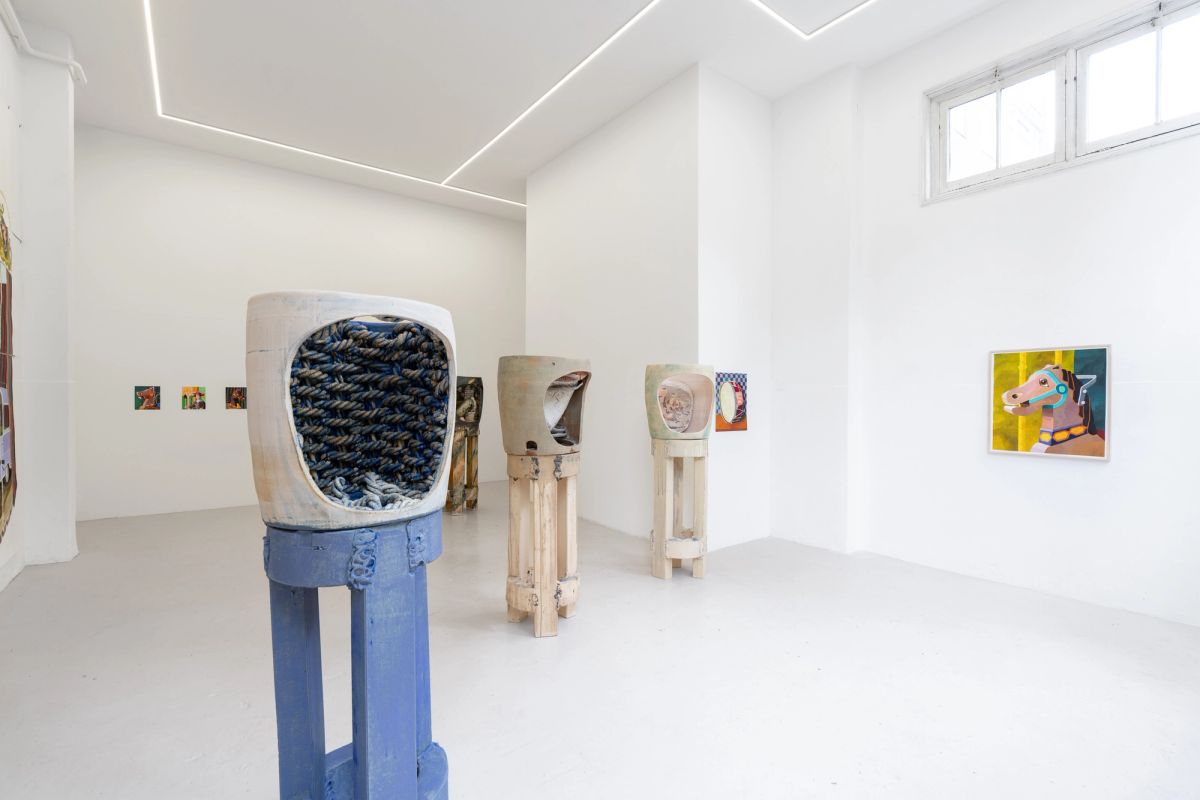
Tim Breukers
Through sculpture, installation and collage, Tim Breukers (Breda, NL, 1985) tries to make new meaningful connections between material, a situation and himself. Important roles are played by scale, humour, narrative and sculptural techniques versus clumsy solutions. He believe that art helps balance our lives and that our lives help the art in becoming human and true. Breukers works a lot with clay, from which he makes gigantic sculptures. It led to his self-chosen nickname Clayminator. In recent years, his practice has become increasingly diverse, including sculptures made from tin cans inspired by a residency in Curaçao. Since the birth of his child, the subject of fatherhood has also been an important theme in his work. This can be seen, for instance, in the work Lui, luier luist: a mini tower of piled-up nappies, which he had cast in aluminium. The artist did numerous residencies in Willemstad, Kolkata, Seoul and the EKWC in Tilburg. Breukers was also a resident at the Rijksakademie van Beeldende kunsten in Amsterdam. His work is included in several museum collections, including Centraal Museum Utrecht, Design Museum ‘s-Hertogenbosch and The Duth Pinball Museum
More about Tim Breukers →