12 September – 8 November 2026
Underwater Aftermath
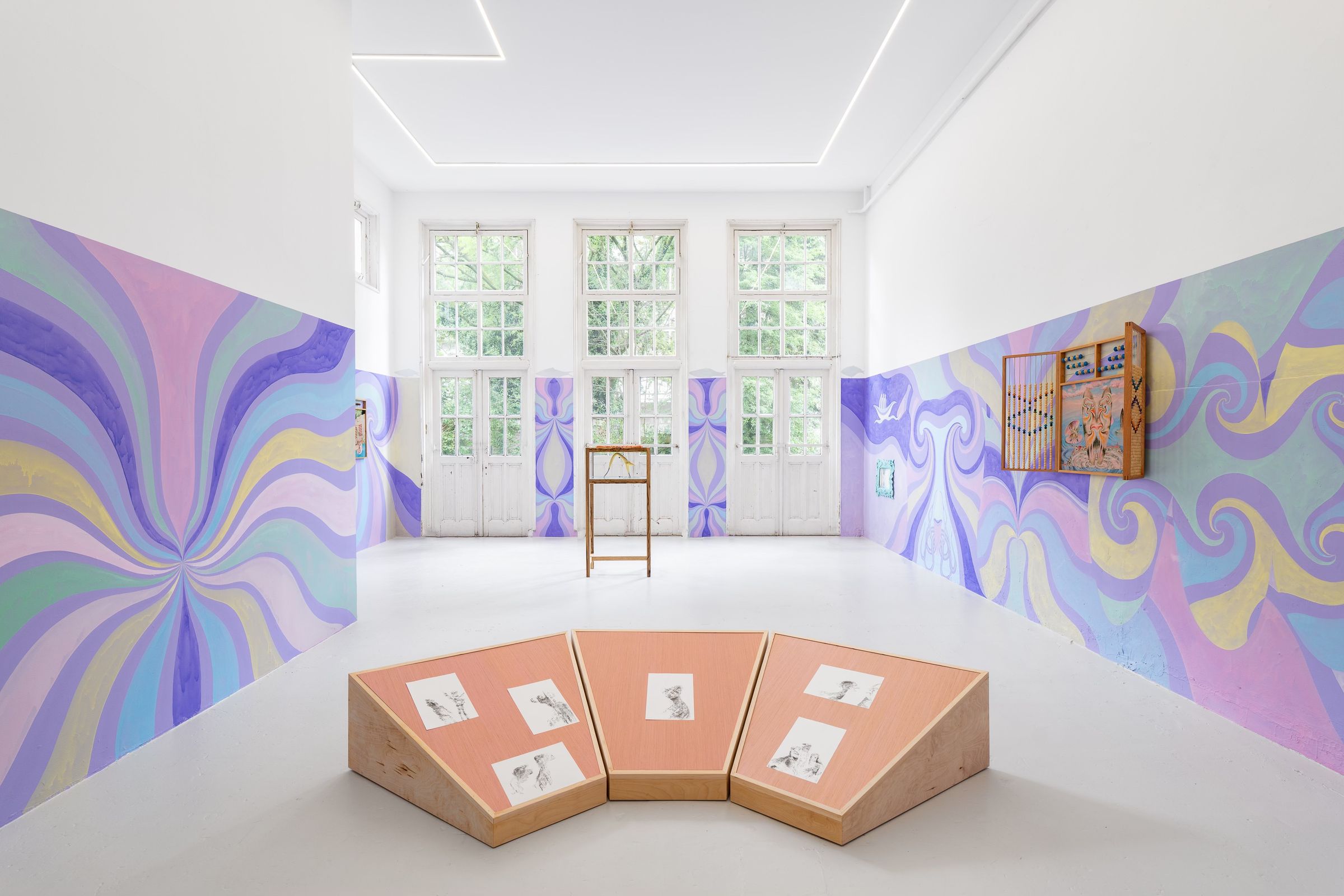
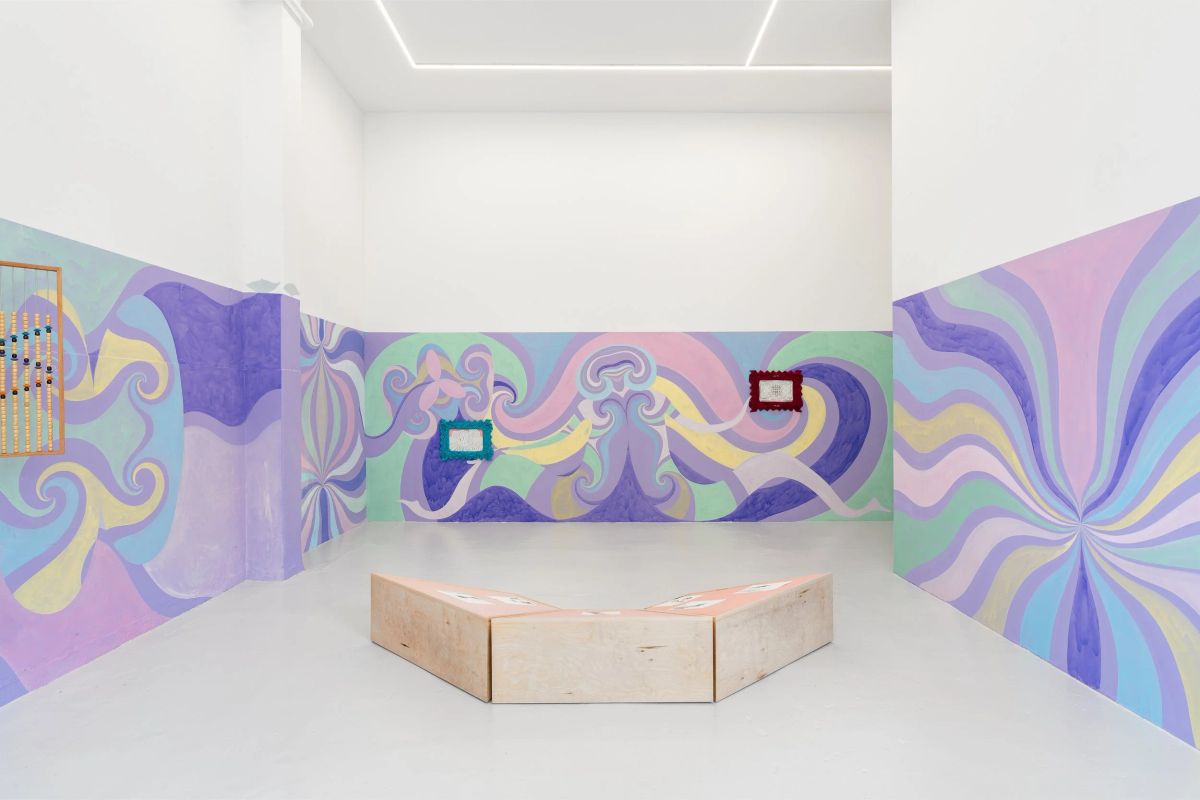
From 12 September, Galerie Fleur & Wouter will be exhibiting the installation Underwater Aftermath by Fiona Lutjenhuis (Zevenaar, NL, 1991). The artist took the myth of Atlantis as her starting point. She depicts a sunken world in which personal stories, Dutch and Flemish folklore, pseudoscience and self-invented mythology converge.
The artist grew up within a sect, where fantastical tales about the creation of the world were presented as truth. She soon learnt that our perception of reality is often shaped by the stories we are told. After leaving this environment, she made these stories the foundation of her artistic practice.
Her family told the story of Atlantis differently from the philosopher Plato (c. 360 BC). According to them, Atlantis was a highly advanced civilisation. Its inhabitants could transform their bodies, live underwater and existed beyond the boundaries of gender. The downfall began when men and women were separated. This separation gave rise to the ego, domination and a sense of incompleteness, until Atlantis eventually sank.
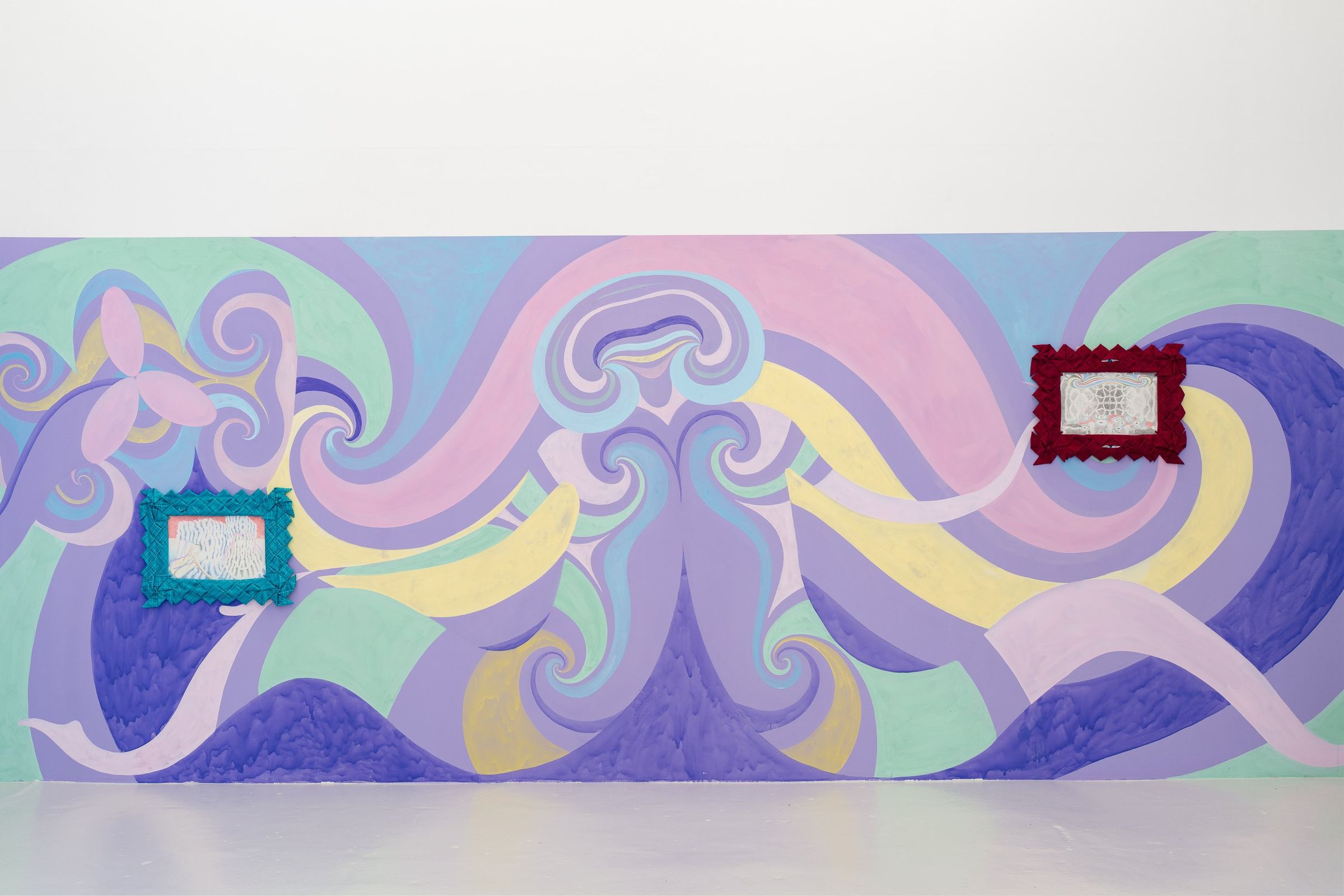
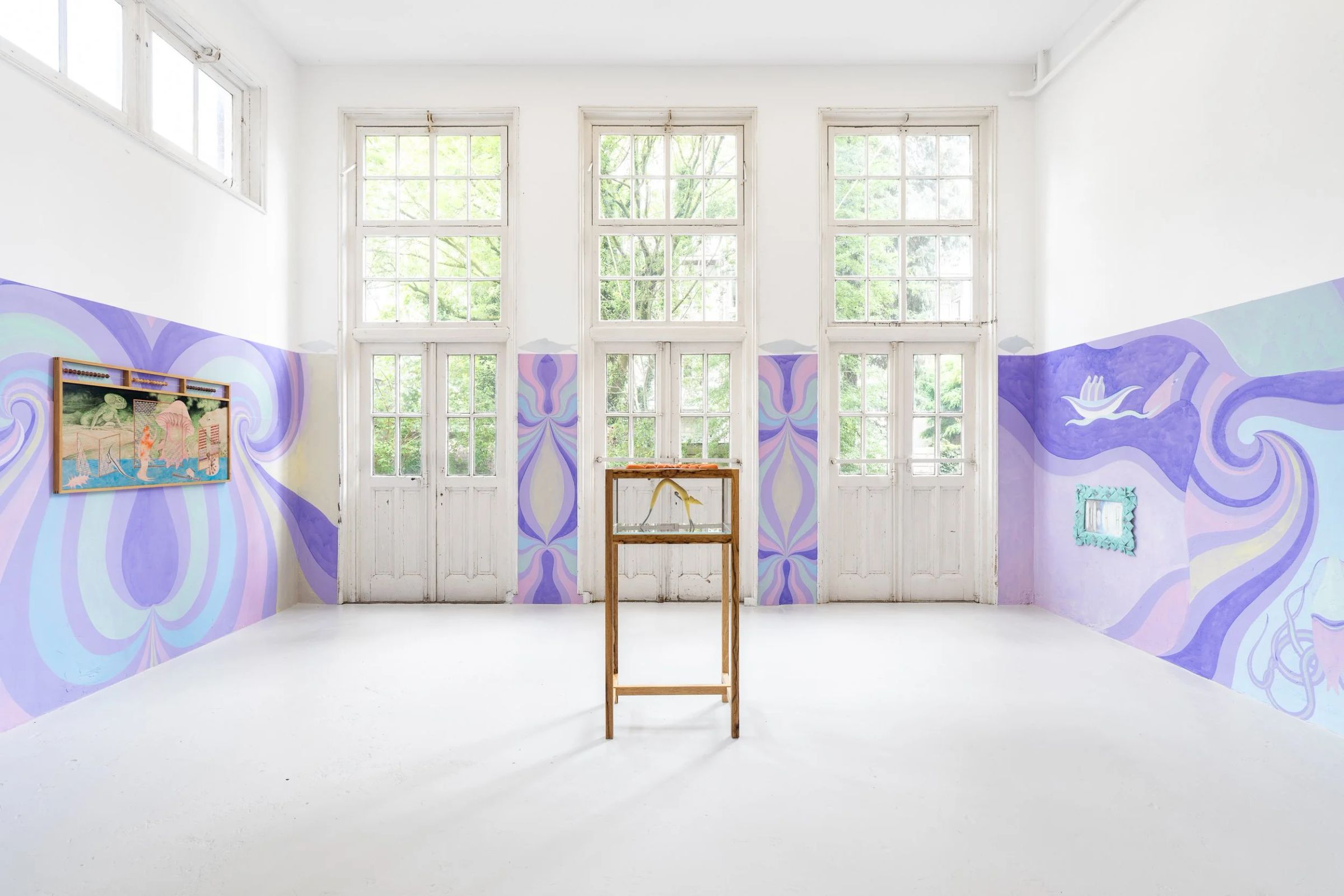
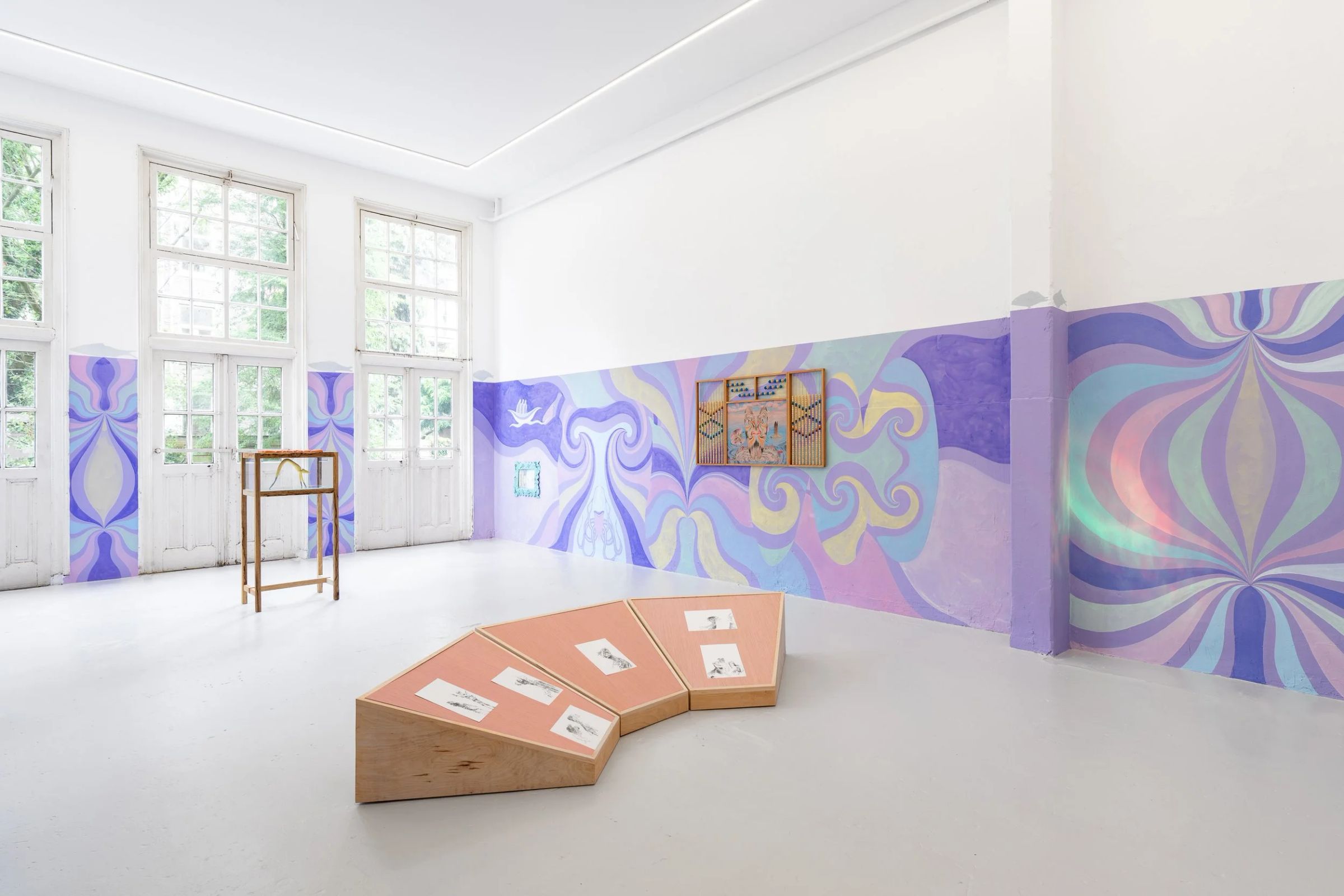
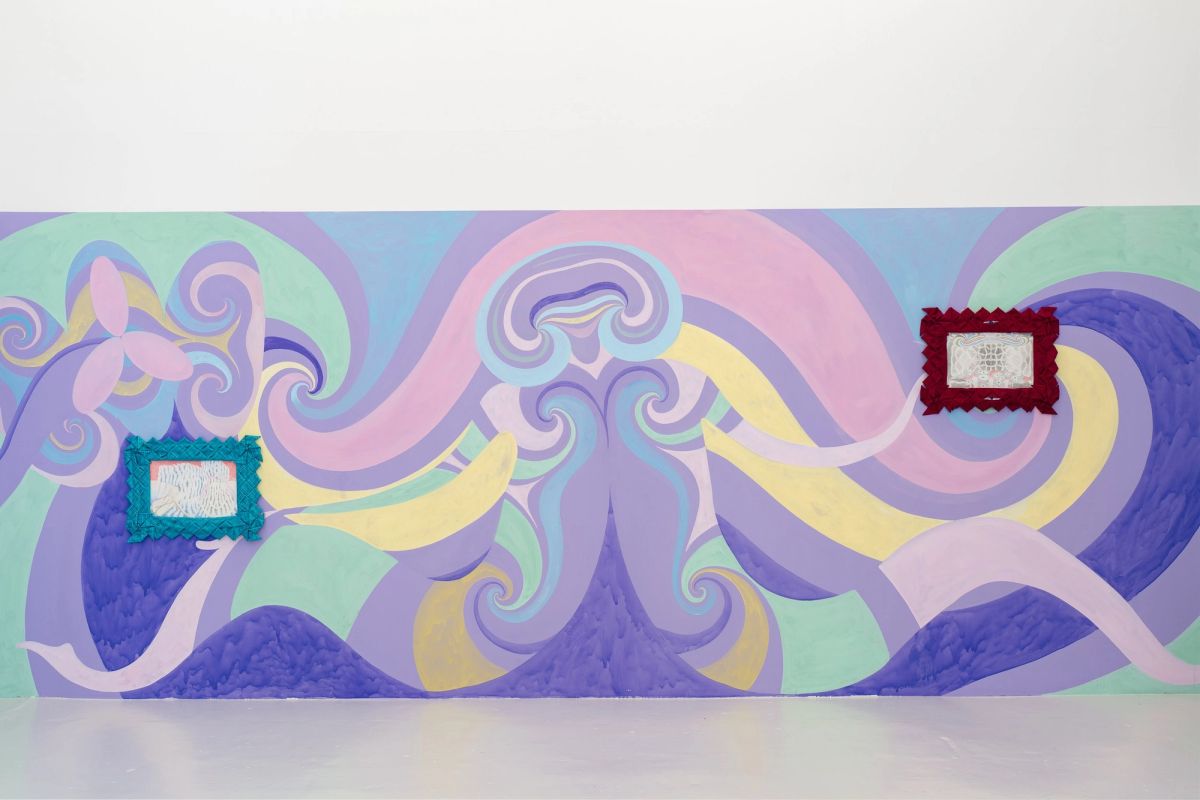
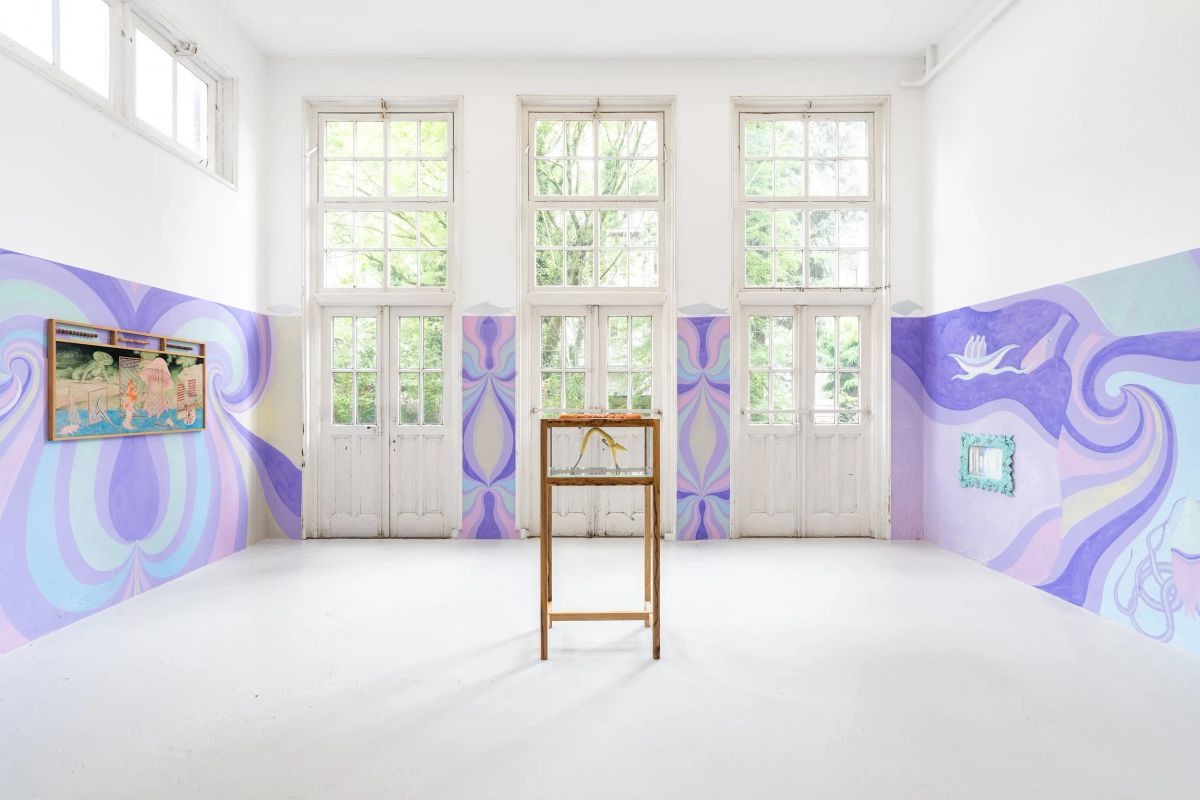
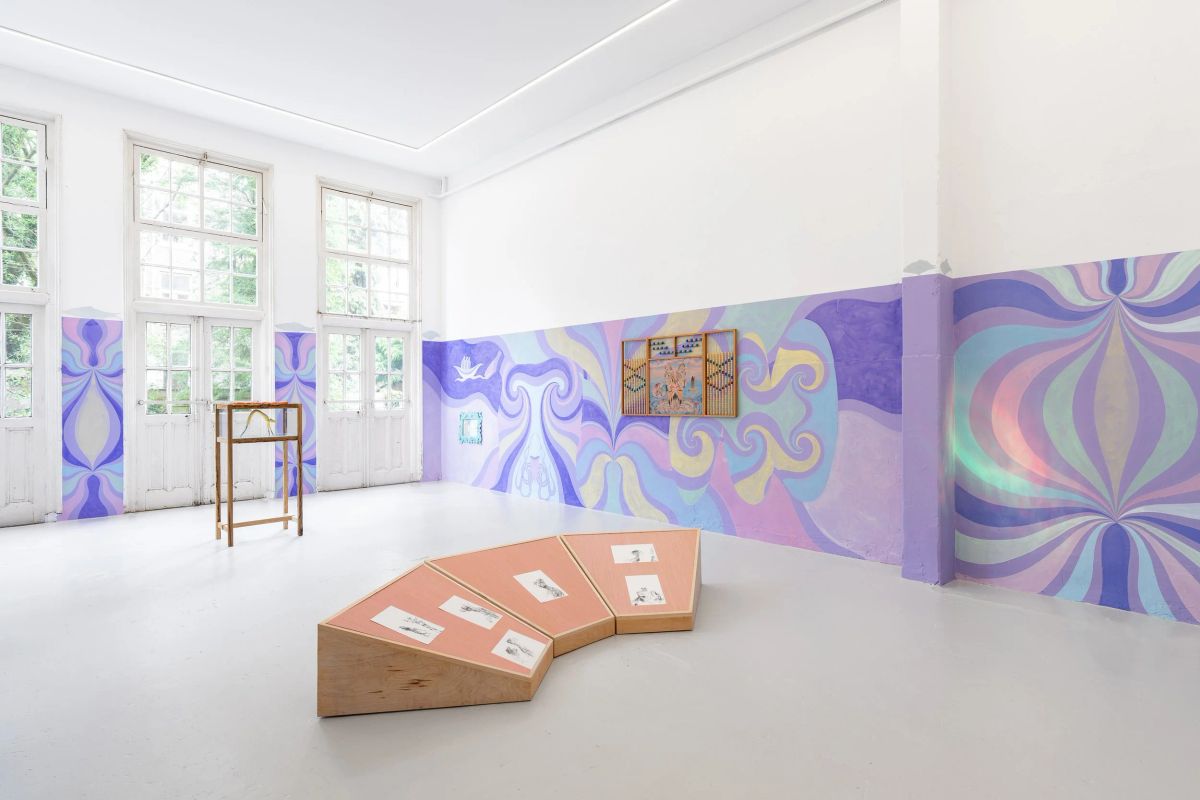
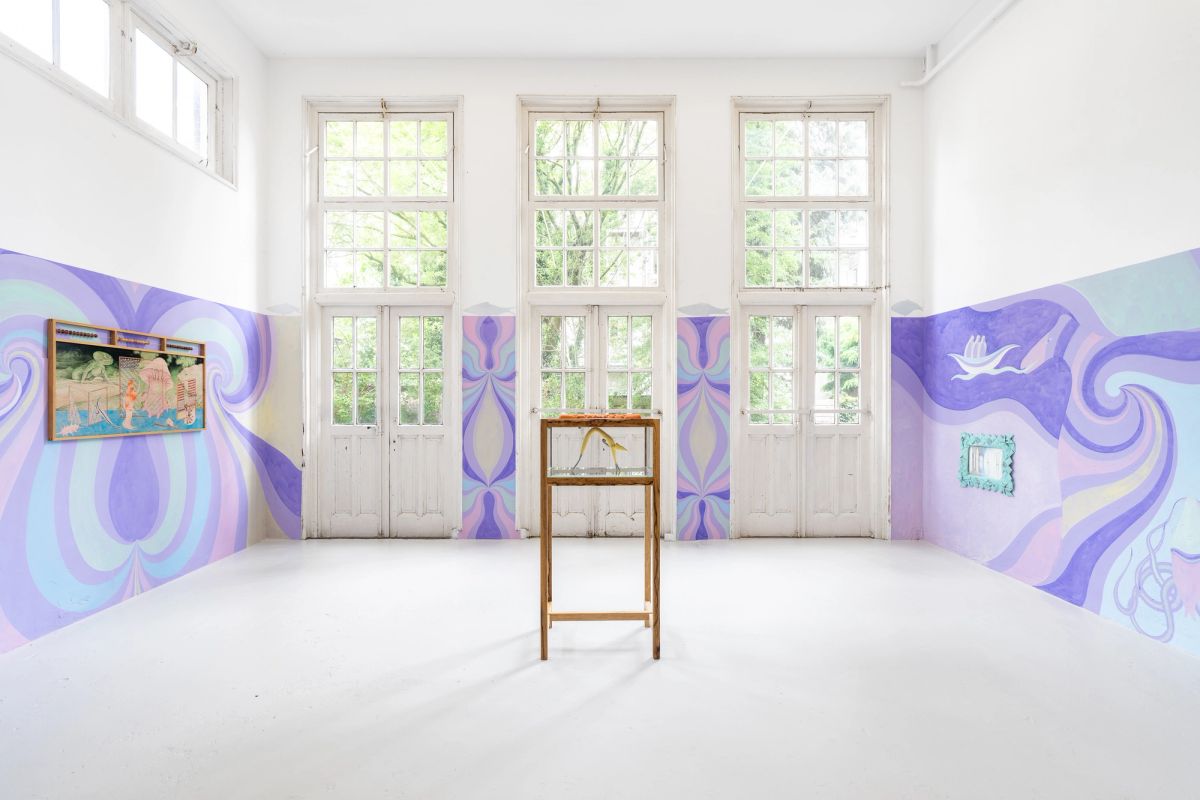
In the gallery, this myth becomes a tangible underwater world. Murals, drawings, textiles, light, aquariums and sculptures create an environment in which fantasy and memory intertwine. Rainbow patterns move through the water like rays of light, whilst imaginary Atlantean creatures float in the water. Painted abacuses refer to the universal language of mathematics and to an imaginary past in which Atlantis, too, was familiar with these objects. Textile frames depict patterns and movements of sound underwater.
Lutjenhuis attaches great importance to collaboration; for this exhibition, she worked closely with Ragna Lutjenhuis on the textile works and with Jerry Celie and Iede Reckman on the wooden sculptures. The installation also features sketches by artists she admires, displayed on a wooden console. To start, the display showcases pieces by Marit van der Gevel alongside Lutjenhuis’s own studies, with further contributions added progressively throughout the exhibition. Here, the sketch is seen as a vision of the future: the very beginning of an idea and a glimpse of a possible alternative world, just like the myth of Atlantis.
The exhibition explores how stories shape our reality and how myths can help us to reimagine the future. In a time of climate crisis and global unrest, connectedness and the capacity for transformation take centre stage: perhaps it is precisely these qualities that are needed for our continued existence.
During the exhibition, the artist will present an installation on the same theme at the Gwangju Biennale in South Korea, at the invitation of art space 1646, and at the Artissima art fair in Turin with Galerie Fleur & Wouter.
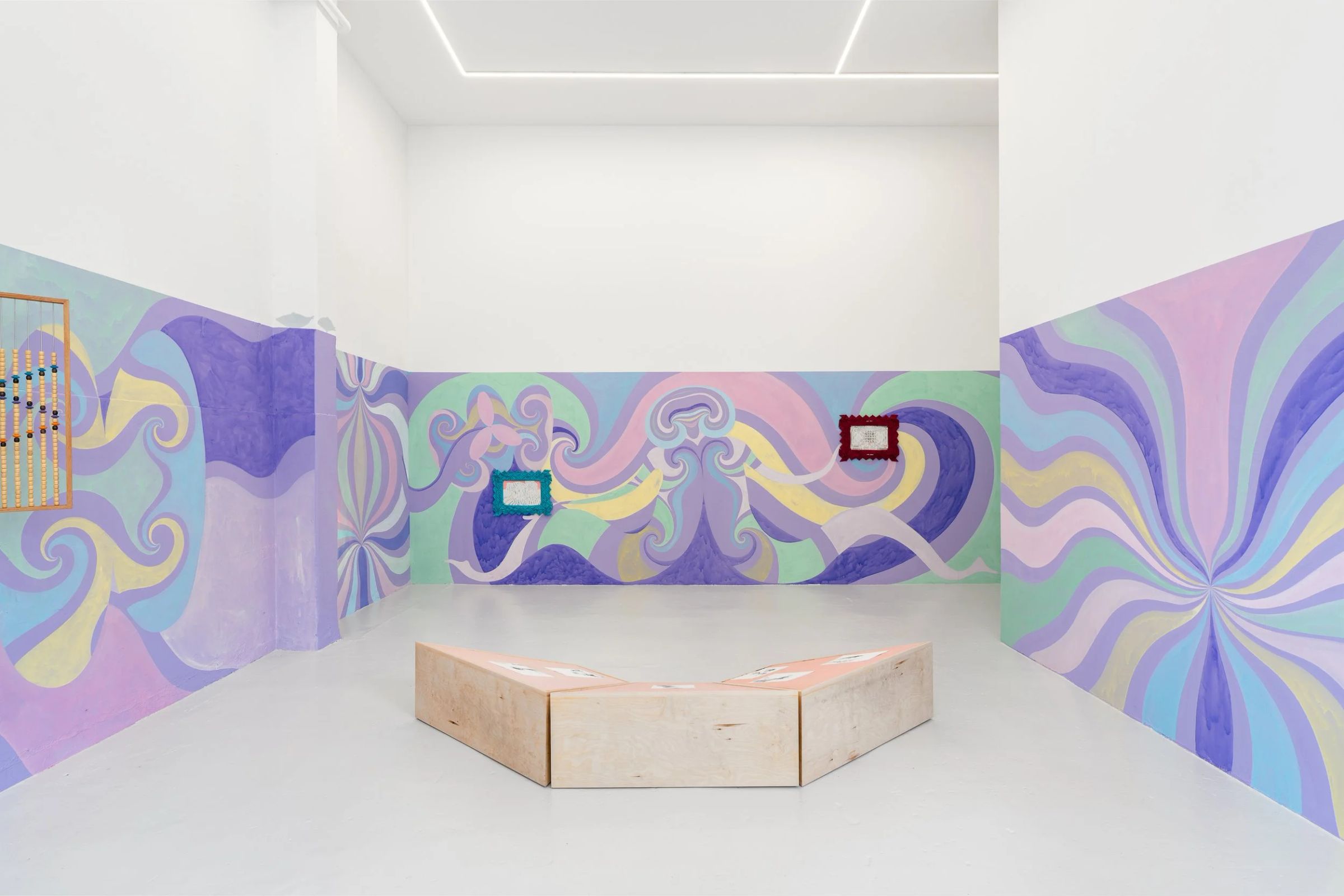
Works
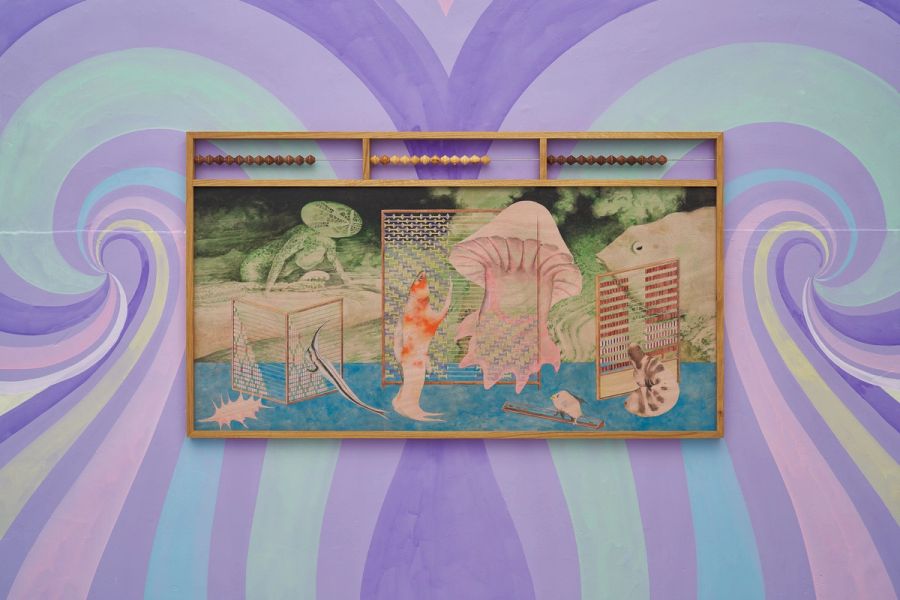
pigmented casein on wood, wooden frames and beads, steel
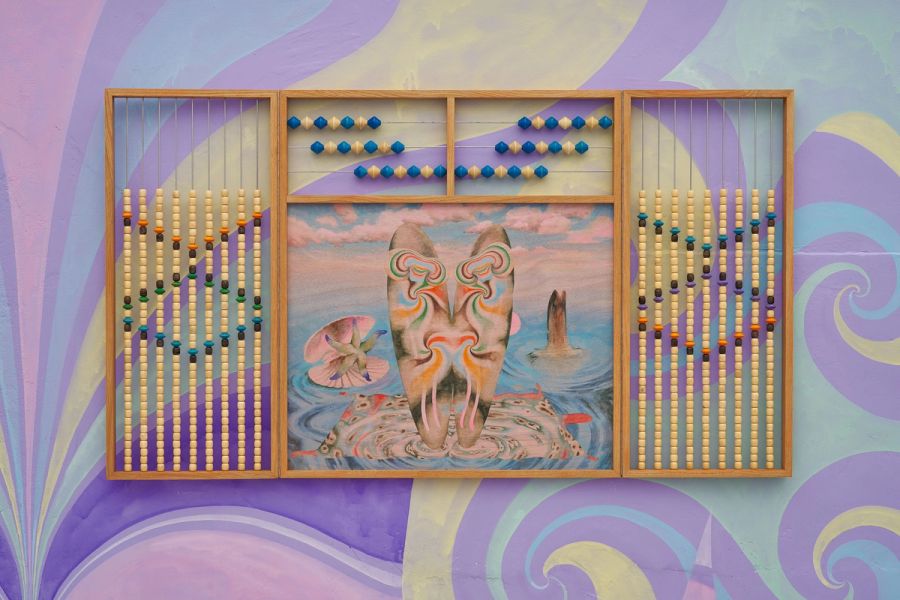

sculpture in wood and glass aquarium

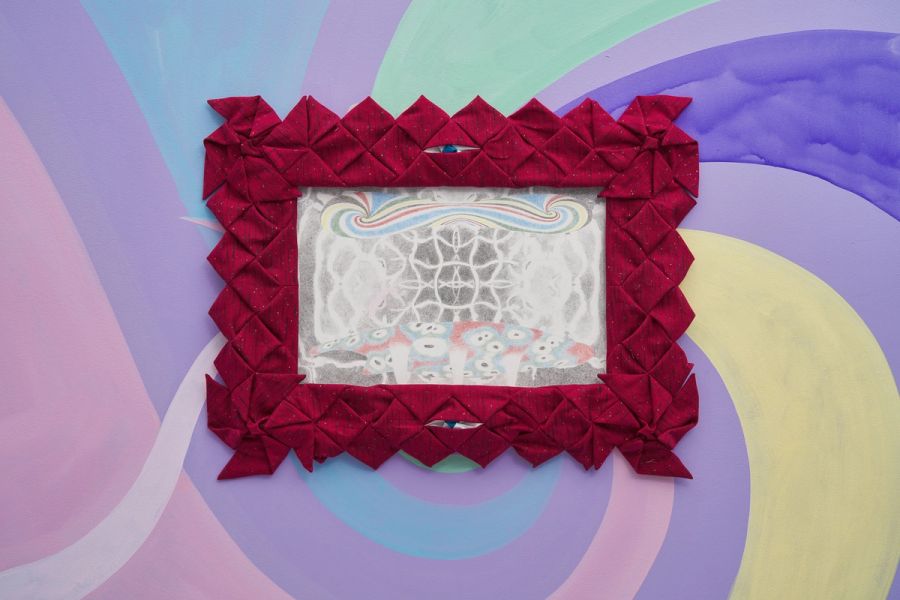
colored pencil on cotton paper, textile frame
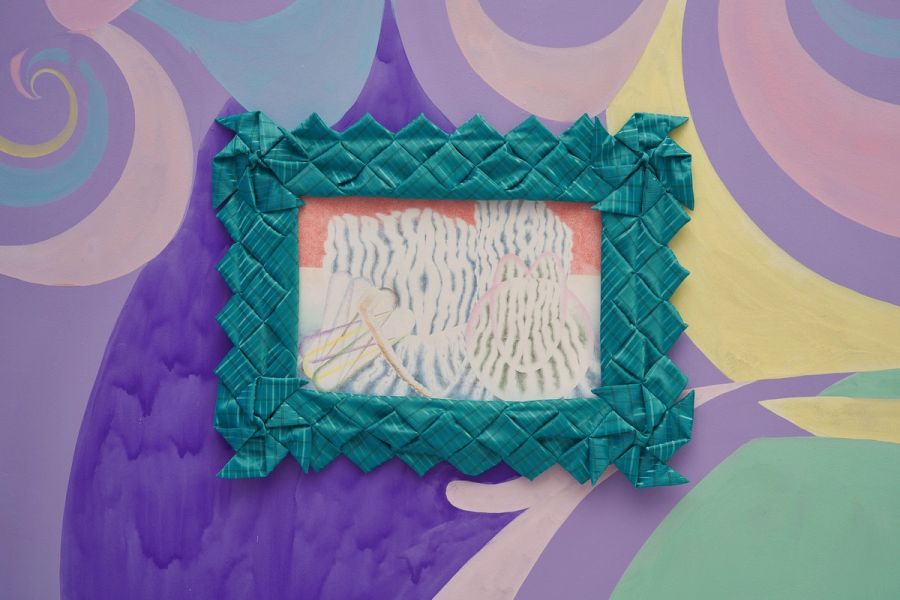
colored pencil on cotton paper, textile frame
Installation views
Artist
Fiona Lutjenhuis
The work of Fiona Lutjenhuis (Zevenaar, NL, 1991) revolves around depicting and reinterpreting the religious ideologies she grew up with. During her childhood, she lived with her family in a village in North Brabant, where her parents joined a sect based on a mixture of theosophical ideas, esoteric cosmologies, stories about extraterrestrial life and the existence of supernatural life forms. Drawing on personal memories and archival material, she explores and transforms the ideological legacy of her childhood. Rather than a literal reconstruction, her work offers a poetic retelling: an attempt to make the unknown tangible, without the intention of judgement. Fascinated by religious art, Lutjenhuis builds and paints folding screens as carriers of stories: mobile, vision-like paintings that function both sculpturally and narratively. She also bakes bread in various shapes, a ritual that makes her feel secure but also has religious connotations: bread is the symbol of life, sacrifice and providence. She also makes dolls that represent the entities that regularly appeared in the sect, whose visual language is borrowed from Eastern cultures. Other recurring elements in her presentations, which often resemble installations, are murals and wind chimes. The stories Lutjenhuis tells are full of references that touch the viewer on different levels. She also uses humour in her work, a component that has helped her to cope with her demagogic upbringing. Lutjenhuis uses her unusual childhood to view contemporary discourse through a theosophical lens. In recent years, she has immersed herself in the archives of the sect she grew up with, as well as in the broader religious movements that have been blended or distorted in that group's ideology. These are far removed from the Western world, which in its pursuit of rationality has distanced itself from nature. The individual reigns supreme: humans have placed themselves above all else, with the inevitable consequence of abusing the life around us. Lutjenhuis makes a plea for opening up our psyche, so that we can allow the magical elements of nature to enter and become part of our human actions. This is by no means in the context of proselytising: it is simply a matter of thinking in a deeper, more empathetic layer of consciousness. Lutjenhuis's starting position is unique: the artist possesses a rare knowledge and lived experience of spiritual and supernatural thinking, framed by a self-taught, balanced, autonomous view of the world around her. Art is a gateway to another reality for her, offering her joy and new perspectives. She wants to offer this to her audience as well. With her art, Lutjenhuis takes the viewer into a world that makes the invisible visible. Fiona Lutjenhuis lives and works in Amsterdam. She studied at ArtEZ University of the Arts, Arnhem (2010-2014) and was a resident at the Rijksakademie in Amsterdam from 2022 to 2024. In 2024, she was nominated for the Scheffer Art Prize, in 2025 for the Prix de Rome and she won the NN Art Award in 2026. She has exhibited in various Biennales, museums and project spaces, such as Stedelijk Museum Amsterdam, Gwangjung Biennale, 1646, H3H Biennale, Drawing Centre Diepenheim, Noordbrabants Museum and Kunsthal Rotterdam.
More about Fiona Lutjenhuis →