22 November – 22 December 2024
When Roots Start Riding Horses
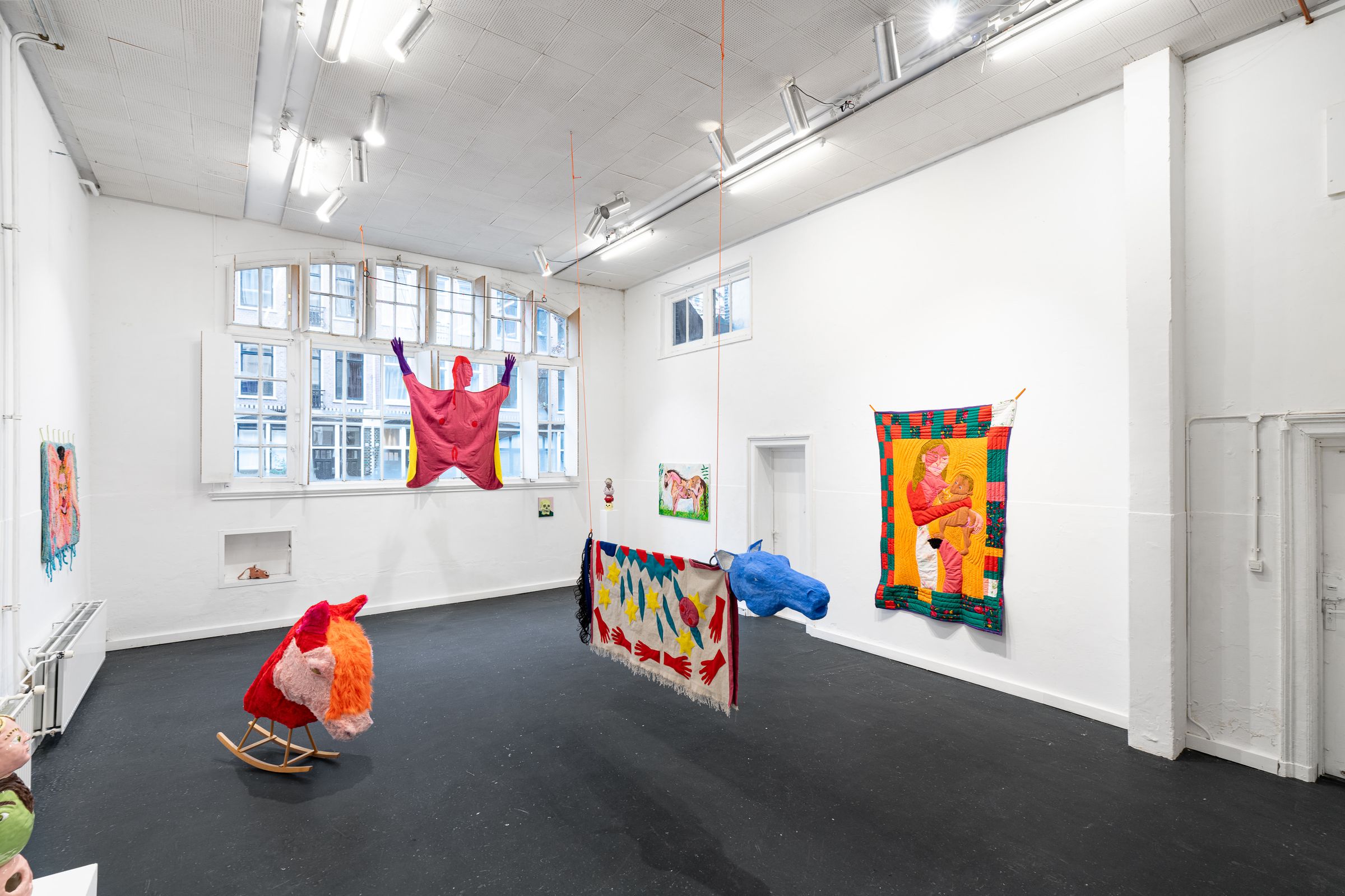
According to artist Carmen Schabracq (Amsterdam 1988) we stand on the shoulders of giants. Our ancestors determine much of our story, knowledge and identity, and we shape the story of our children. In her first solo exhibition at Galerie Fleur & Wouter, Schabracq shows a new series of textile works, sculptures and paintings around this theme.
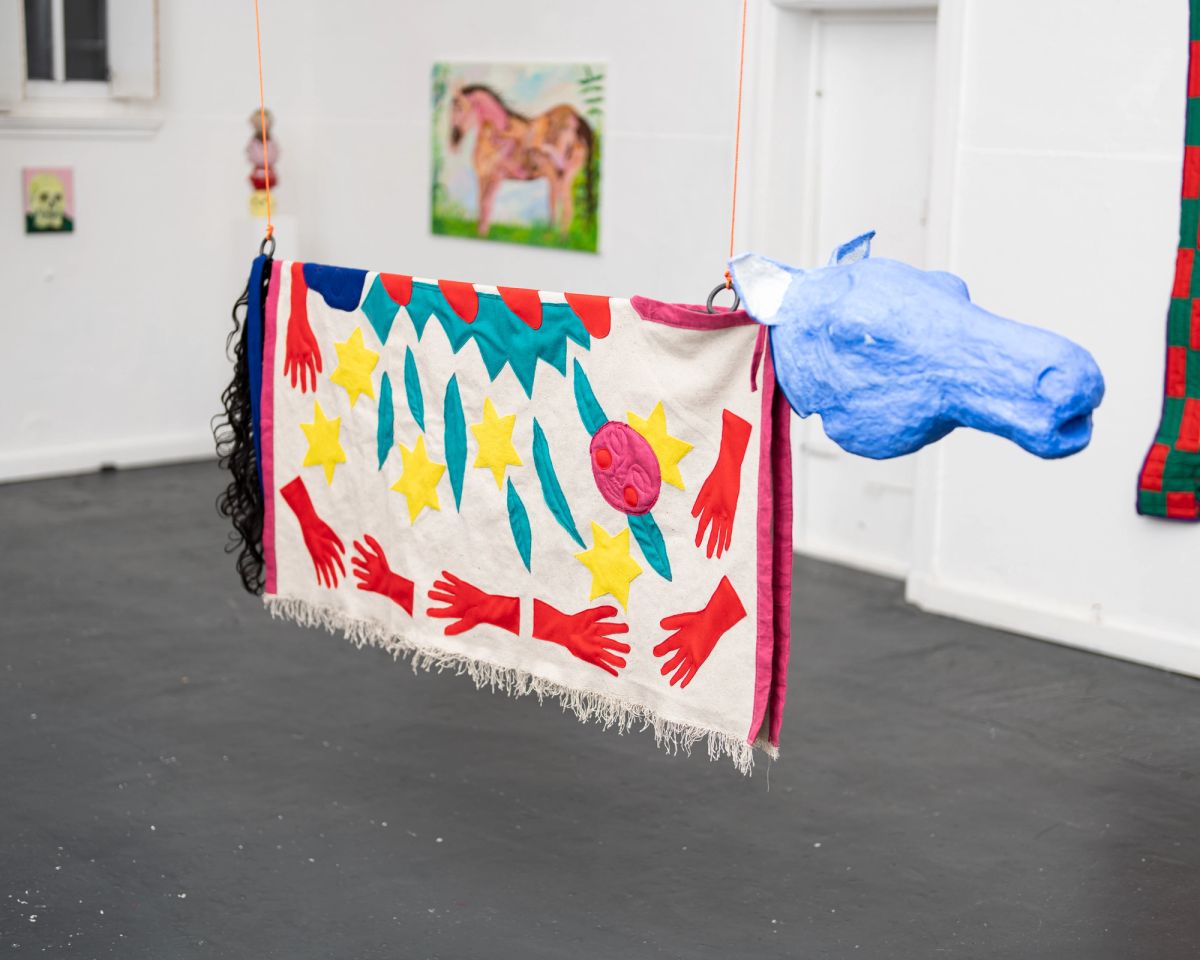
The starting point was an investigation into her own family history. Her father's family came to Amsterdam in the 18th century from the Czech town of Zebrak. Pronounced in Yiddish, Zebrak resembles Schabracq, old Dutch for horse blanket, and thus the family name was born. The horse and horse blanket, still known by the word sjabrak, became the symbol of the carrier of the migrant in her new works.
The artist translated this research into artworks during a residency at Lotto Zero in Prato, Tuscany, Italy. She chose the textile industrial city of Prato because there is a rich tradition of sjabraks in Tuscany associated with the “Palio” horse races in Sienna. Prato traditionally produced the finest textiles that were used worldwide. Inspired by those traditional blankets, she created her own works in the textile lab of Lotto Zero, which tell small family histories, with universal meaning.
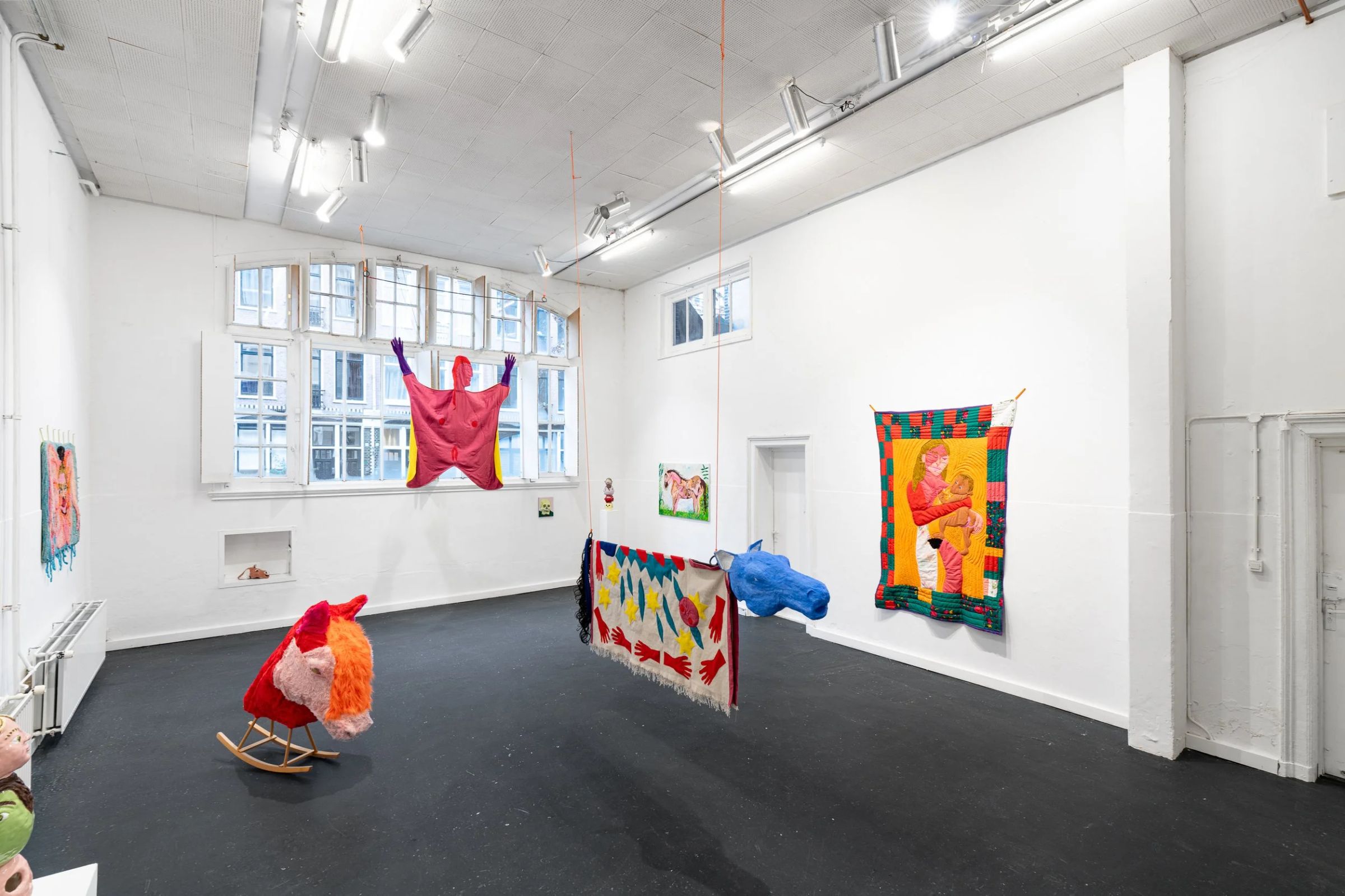
Textiles often play an important role in the transmission of unwritten (family) histories. Working with textiles is therefore a substantive choice, in which Schabracq investigates the power and redefinition of patterns and layering. For example, a sjabrak with a pattern of hands, representing the crafts that were common in the family: diamond cutting, wood and steel working and (textile) trading. The hands also represent the importance of passing on knowledge.
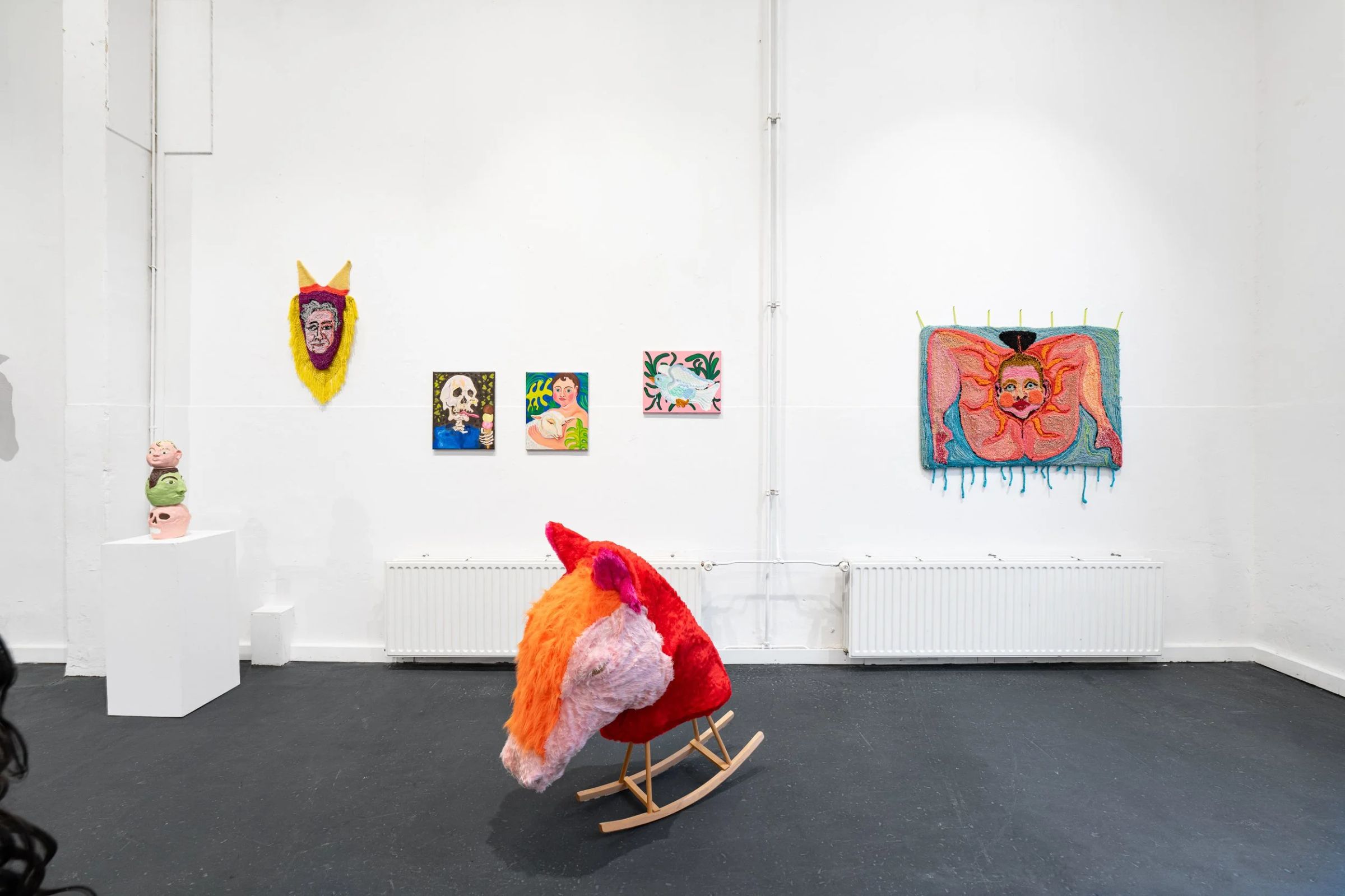
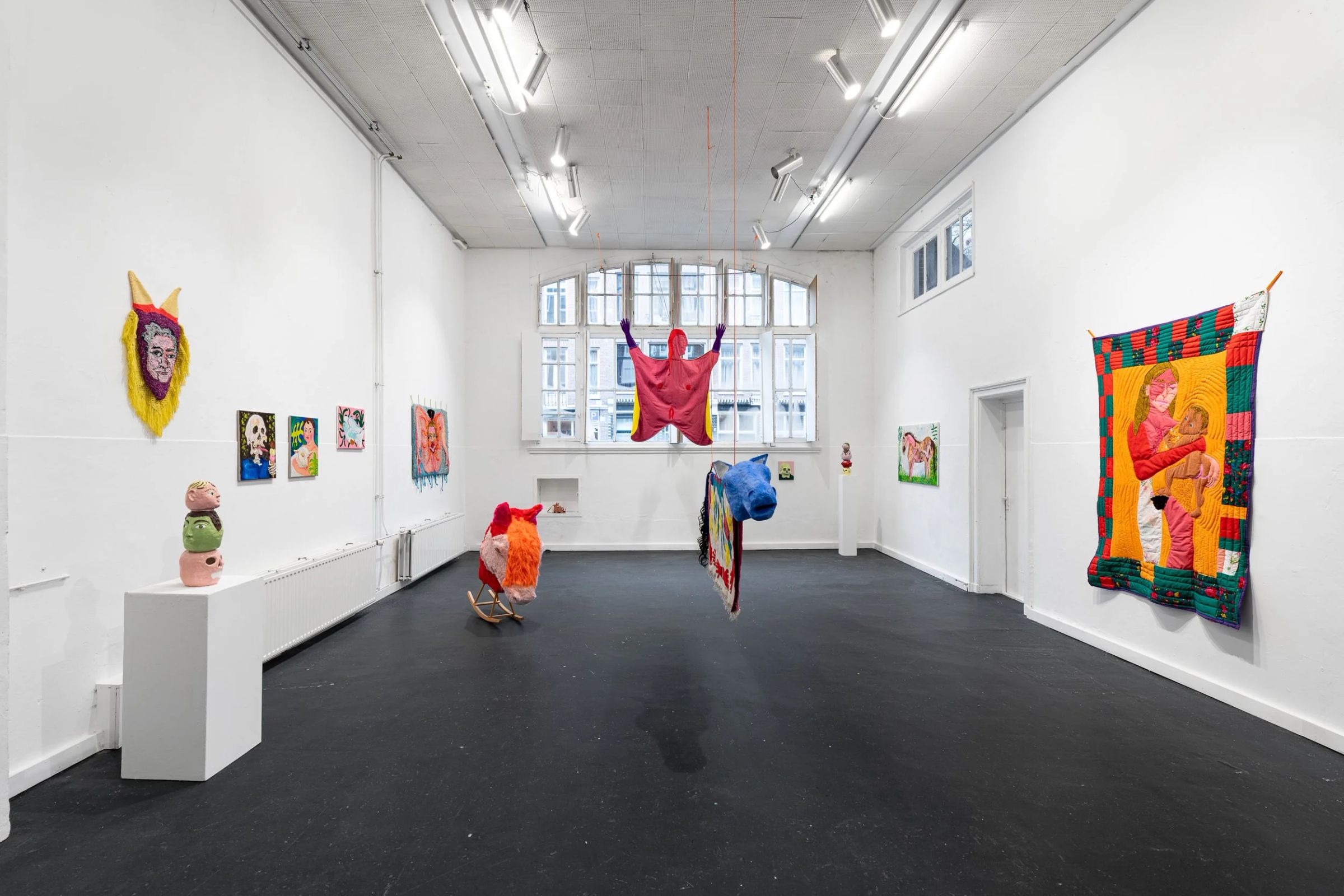
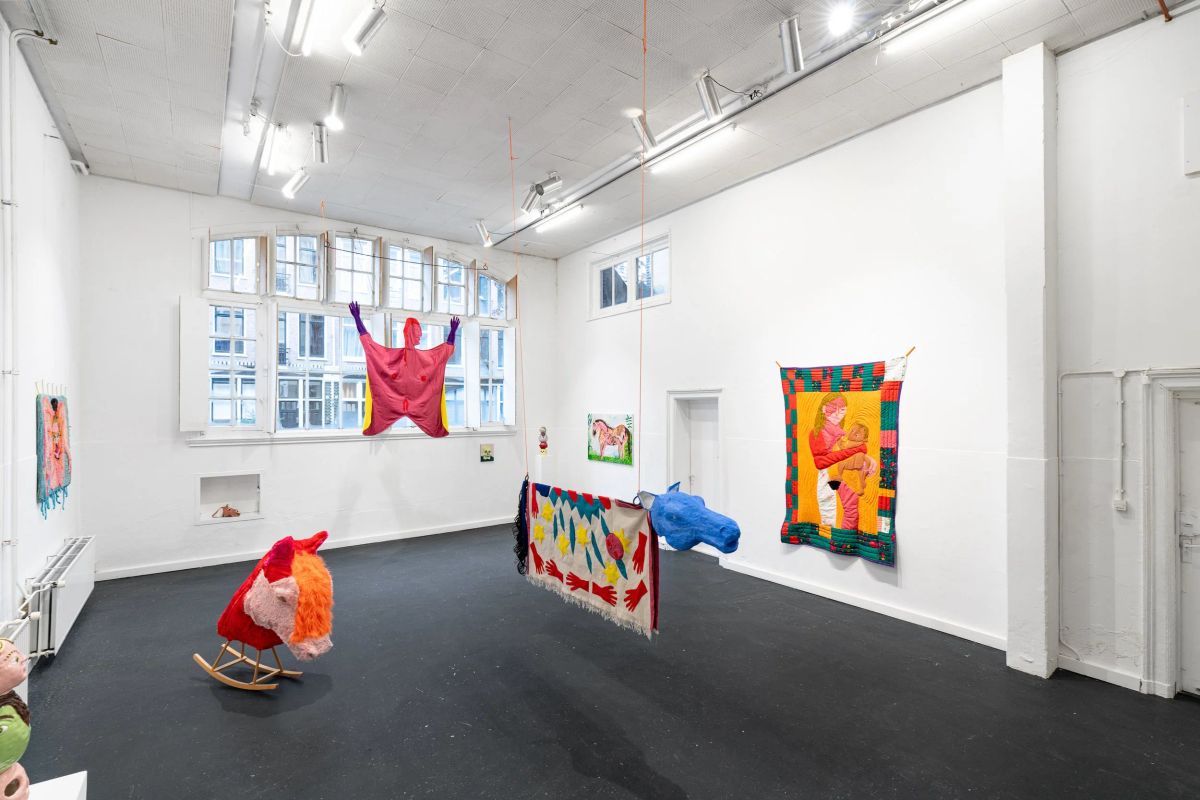
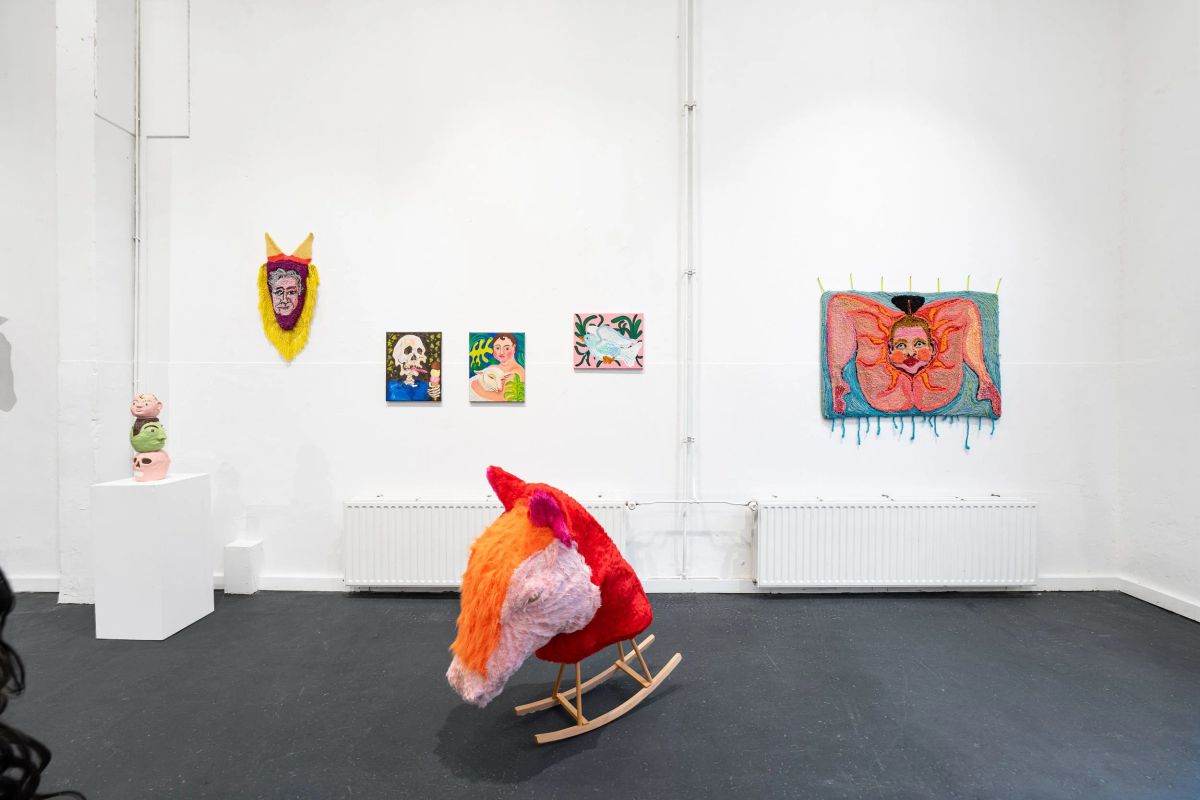
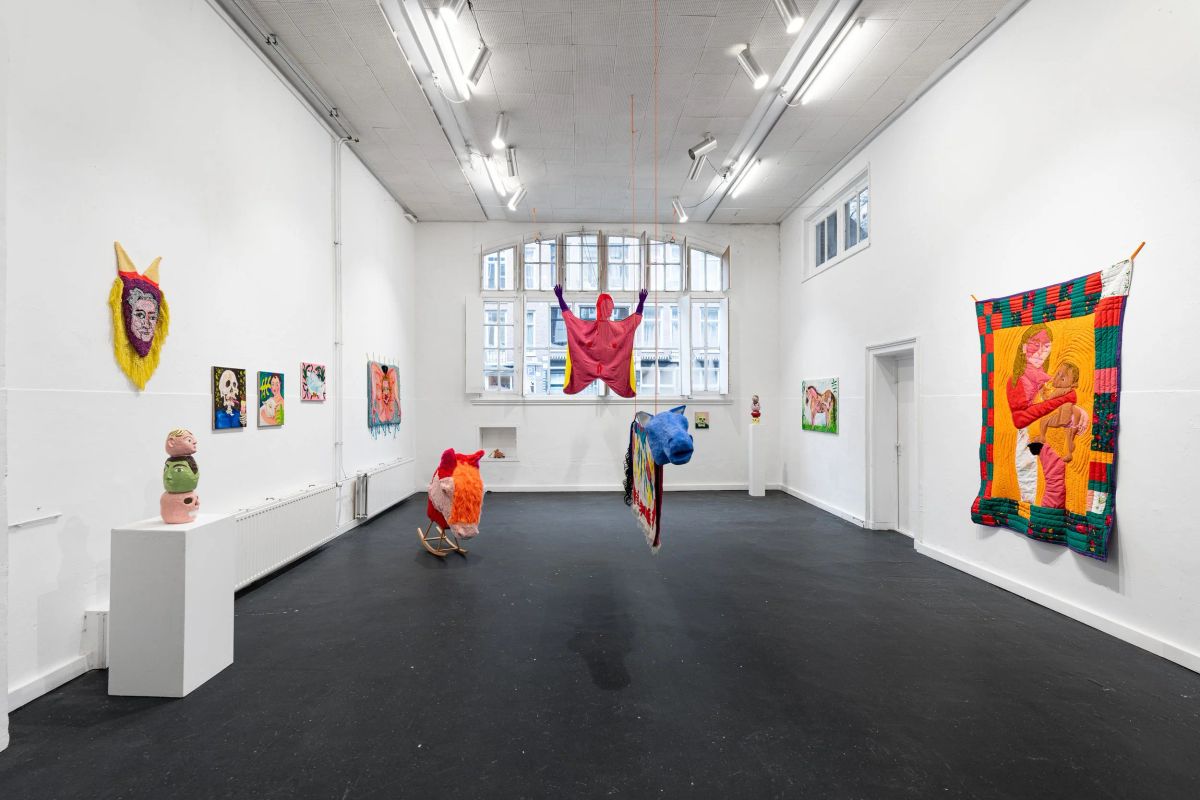
In the gallery, sjabraks are carried by horse sculptures that float through the space and stand on the floor. Fabric and papier-mâché horse masks adorn the walls. These refer to stories from the artist's family history. For example, the textile horse head “Gracia. This was made based on a dramatic newspaper article from 1891, about Gracia, an ancestor of the artist, who, as a young mother of seven children, committed suicide by jumping into a canal. Tears are embroidered and sewn on the head. You see this kind of repetitive pattern in all her work. For example, in the artist's ceramic works, a series of skulls and stacked heads, symbolizing death and the people who were there before you.
Motherhood, the giving of new life, and death, these are recurring themes in Schabracq's oeuvre. Becoming a mother prompted this research into her ancestry. This all comes together in the work “Piece of a Lifetree,” which is the first piece of a tree of life consisting of women giving birth, thus representing life as a cyclical movement.
Carmen Schabracq was born in Amsterdam (1988), where she now lives and works. She did her bachelor of fine arts at the Gerrit Rietveld Academy and the Accademia de Belle Arti in Rome. She obtained her MA in theater costume design at the Royal Academy of Fine Arts Antwerp. In late 2019, Carmen spent two months in an artist in residency in Mexico where she researched local masks and coping with death. In 2020 she worked as a resident at the Van Gogh AiR in Zundert, in 2021 she did a residency in Bulgaria and at Kunsthuis Syb, in 2022 at BijlmAIR and in 2024 at the Lotto Zero textile center in Prato, Italy. Schabracq exhibited in the Netherlands in several museums such as the Amsterdam Museum, Museum tot Zover, Marres and NEST The Hague. Her work is included in the collection of the Amsterdam Museum, Vincent van Gogh Huis, AkzoNobel Art Foundation and VU Amsterdam collection, among others.
Works

Quilted textiles
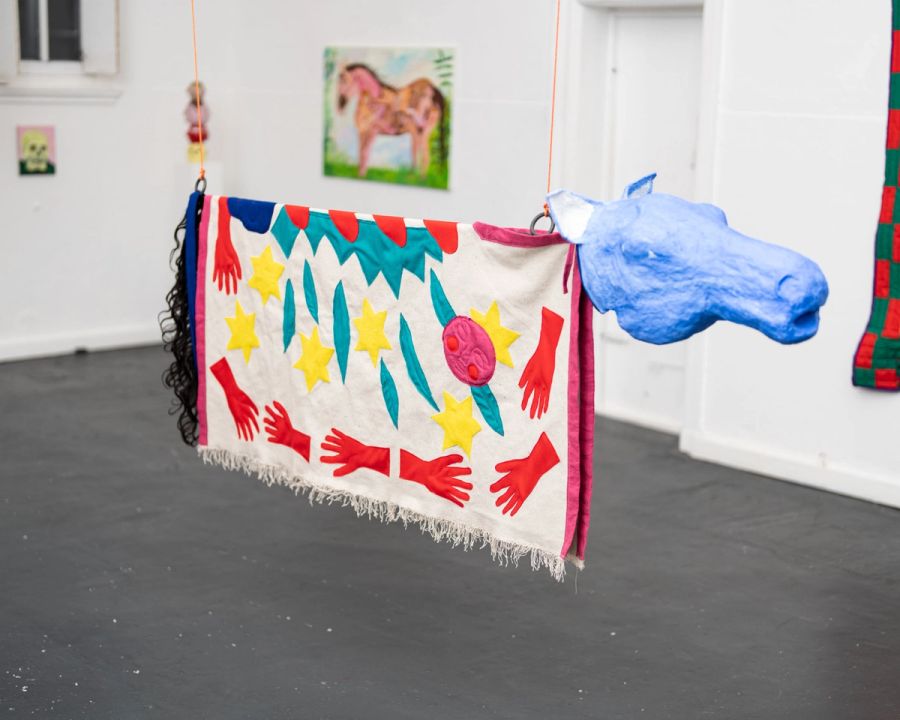
Appliquéd textile, papier-maché, pigment, human hair and textile, steel and rope | 241 x 100 x 37 cm
Sold

2024 Appliquéd linen, wool and velvet | 165 x 180 cm

Tufted wool and acrylics, crochet


Papier-maché, wood, pluche


Oil on linen

Acrylic & oil on linen

Oil on linen

Oil on linen
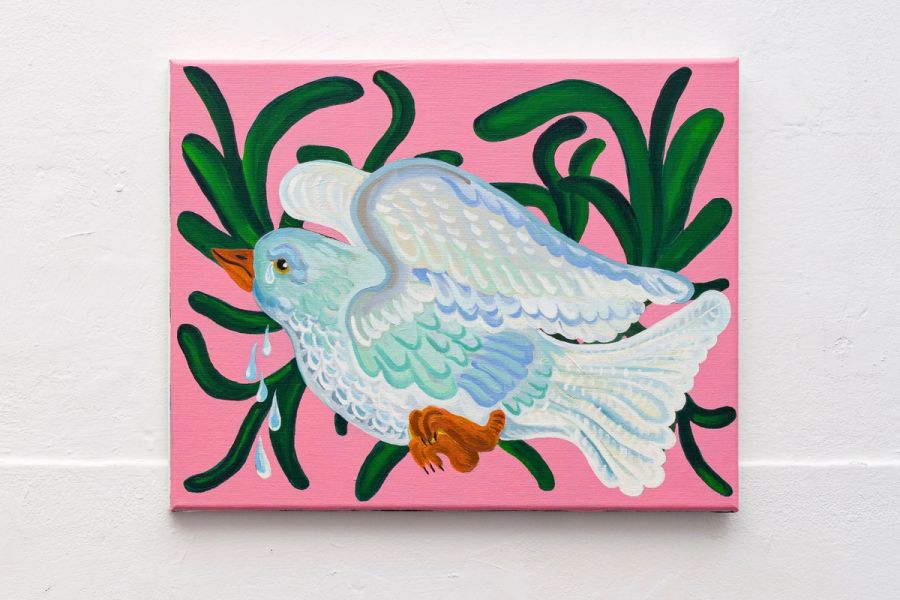
oil & acrylic on linen


Gouache and ink on paper

Aquarel on paper

Aquarel on paper | framed, price upon request


tufted yarn tapestry

acrylic on linen
Installation views
Artist
Carmen Schabracq
Carmen Schabracq (Amsterdam, NL, 1988) creates paintings, sculptural installations, masks and performances in which the theatricality of life plays an important role. She gathers stories from various myths, traditions and her own experiences and uses them to create collage-like visual narratives. The mask is a recurring object and theme in her work, which she uses to explore the complexity of human identity. A mask is a tool within a ritual or performance, to become 'the other' and she plays with this in various ways. Her work is also a form of escapism because of the characters she places in spaces of colour. A way to briefly escape from this world and imagine yourself in another, full of playfulness and humour, to deal with the layered reality of life and death. Just as folkloric rituals and traditions do, for instance in the celebration of the seasons, to propitiate the gods, scare off demons and devils or celebrate fertility. Schabracq's work is a stylised theatre of her own cosmos, with references from art history and folklore such as costumes. Carmen was born in Amsterdam (1988), where she now lives and works. In 2012 she obtained her BA in fine arts from the Gerrit Rietveld Academy, after a year of painting studies at the Academia di Belle Arti in Rome. In 2015 she obtained her MA in theater costume design at the Royal Academy of Fine Arts Antwerp, with a research and body of work she called 'naked masks'. In 2017-2018 she received the ‘new makers subsidy’ from the Performing Arts Fund NL, with which she made two in situ performances in Zeeland. Her work has been shown in several museums, like Stedelijk Museum Breda, Museum Tot Zover, Amsterdam and Nest, The Hague.
More about Carmen Schabracq →