10 – 13 December 2026
Fiona Lutjenhuis, Mirjam Vreeswijk, Natacha Mankowski, Saar Scheerlings, Tom Volkaert
Art Antwerp 2026
We are happy to return to Art Antwerp, with a group presentation of our gallery’s artists. Since its launch in 2021, Art Antwerp is characterised by a cheerful and convivial end-of-year atmosphere. This, together with the invitation-only nature of Art Antwerp for the participating galleries (which are selected by the Invitation Committee), makes Art Antwerp a true boutique fair.
The fair attracts 15,000 visitors for four days and showcases a mix of established and up-and-coming artists from diverse backgrounds, with a focus on galleries presenting special booth projects.
Our participation is supported by the Mondriaan Fund
Preview
Be the first to receive the price list
We share the available works and prices for Art Antwerp 2026 first with a small group of collectors. Leave your details and we will send them to you personally.
Artists
Fiona Lutjenhuis
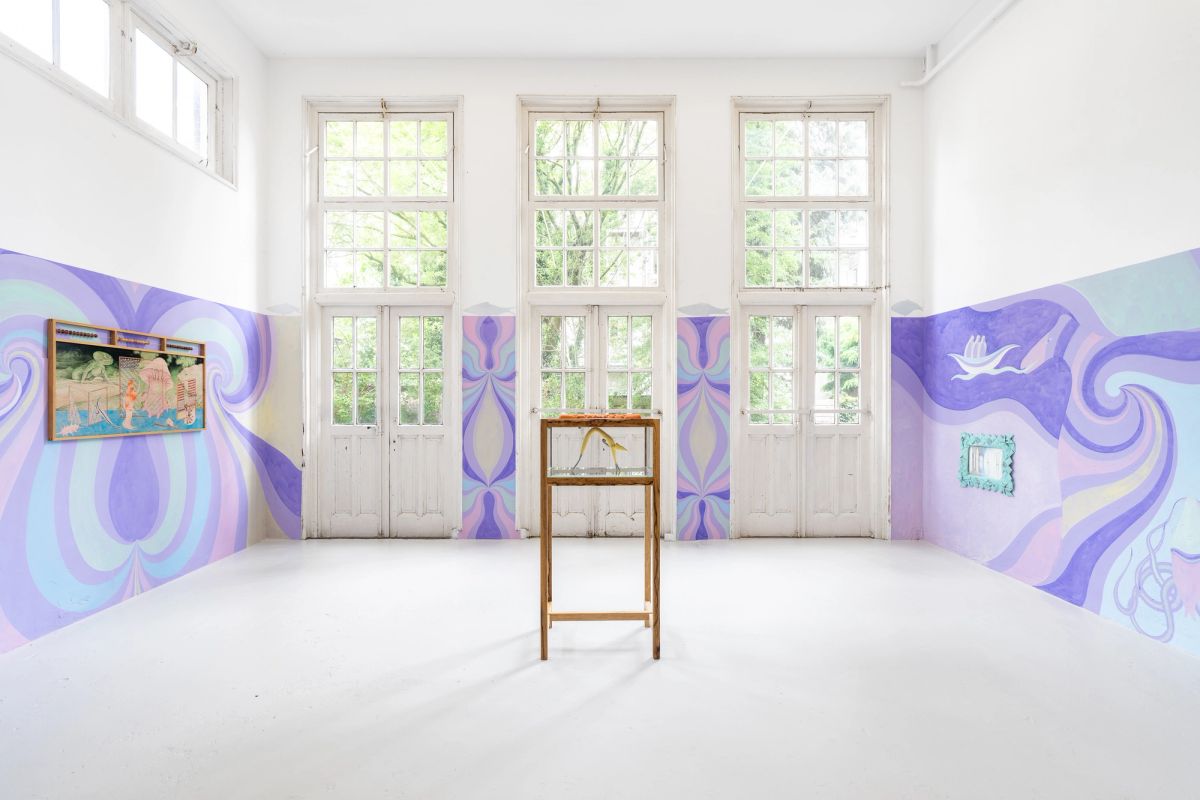
The work of Fiona Lutjenhuis (Zevenaar, NL, 1991) revolves around depicting and reinterpreting the religious ideologies she grew up with. During her childhood, she lived with her family in a village in North Brabant, where her parents joined a sect based on a mixture of theosophical ideas, esoteric cosmologies, stories about extraterrestrial life and the existence of supernatural life forms. Drawing on personal memories and archival material, she explores and transforms the ideological legacy of her childhood. Rather than a literal reconstruction, her work offers a poetic retelling: an attempt to make the unknown tangible, without the intention of judgement. Fascinated by religious art, Lutjenhuis builds and paints folding screens as carriers of stories: mobile, vision-like paintings that function both sculpturally and narratively. She also bakes bread in various shapes, a ritual that makes her feel secure but also has religious connotations: bread is the symbol of life, sacrifice and providence. She also makes dolls that represent the entities that regularly appeared in the sect, whose visual language is borrowed from Eastern cultures. Other recurring elements in her presentations, which often resemble installations, are murals and wind chimes. The stories Lutjenhuis tells are full of references that touch the viewer on different levels. She also uses humour in her work, a component that has helped her to cope with her demagogic upbringing. Lutjenhuis uses her unusual childhood to view contemporary discourse through a theosophical lens. In recent years, she has immersed herself in the archives of the sect she grew up with, as well as in the broader religious movements that have been blended or distorted in that group's ideology. These are far removed from the Western world, which in its pursuit of rationality has distanced itself from nature. The individual reigns supreme: humans have placed themselves above all else, with the inevitable consequence of abusing the life around us. Lutjenhuis makes a plea for opening up our psyche, so that we can allow the magical elements of nature to enter and become part of our human actions. This is by no means in the context of proselytising: it is simply a matter of thinking in a deeper, more empathetic layer of consciousness. Lutjenhuis's starting position is unique: the artist possesses a rare knowledge and lived experience of spiritual and supernatural thinking, framed by a self-taught, balanced, autonomous view of the world around her. Art is a gateway to another reality for her, offering her joy and new perspectives. She wants to offer this to her audience as well. With her art, Lutjenhuis takes the viewer into a world that makes the invisible visible. Fiona Lutjenhuis lives and works in Amsterdam. She studied at ArtEZ University of the Arts, Arnhem (2010-2014) and was a resident at the Rijksakademie in Amsterdam from 2022 to 2024. In 2024, she was nominated for the Scheffer Art Prize, in 2025 for the Prix de Rome and she won the NN Art Award in 2026. She has exhibited in various Biennales, museums and project spaces, such as Stedelijk Museum Amsterdam, Gwangjung Biennale, 1646, H3H Biennale, Drawing Centre Diepenheim, Noordbrabants Museum and Kunsthal Rotterdam.
More about Fiona Lutjenhuis →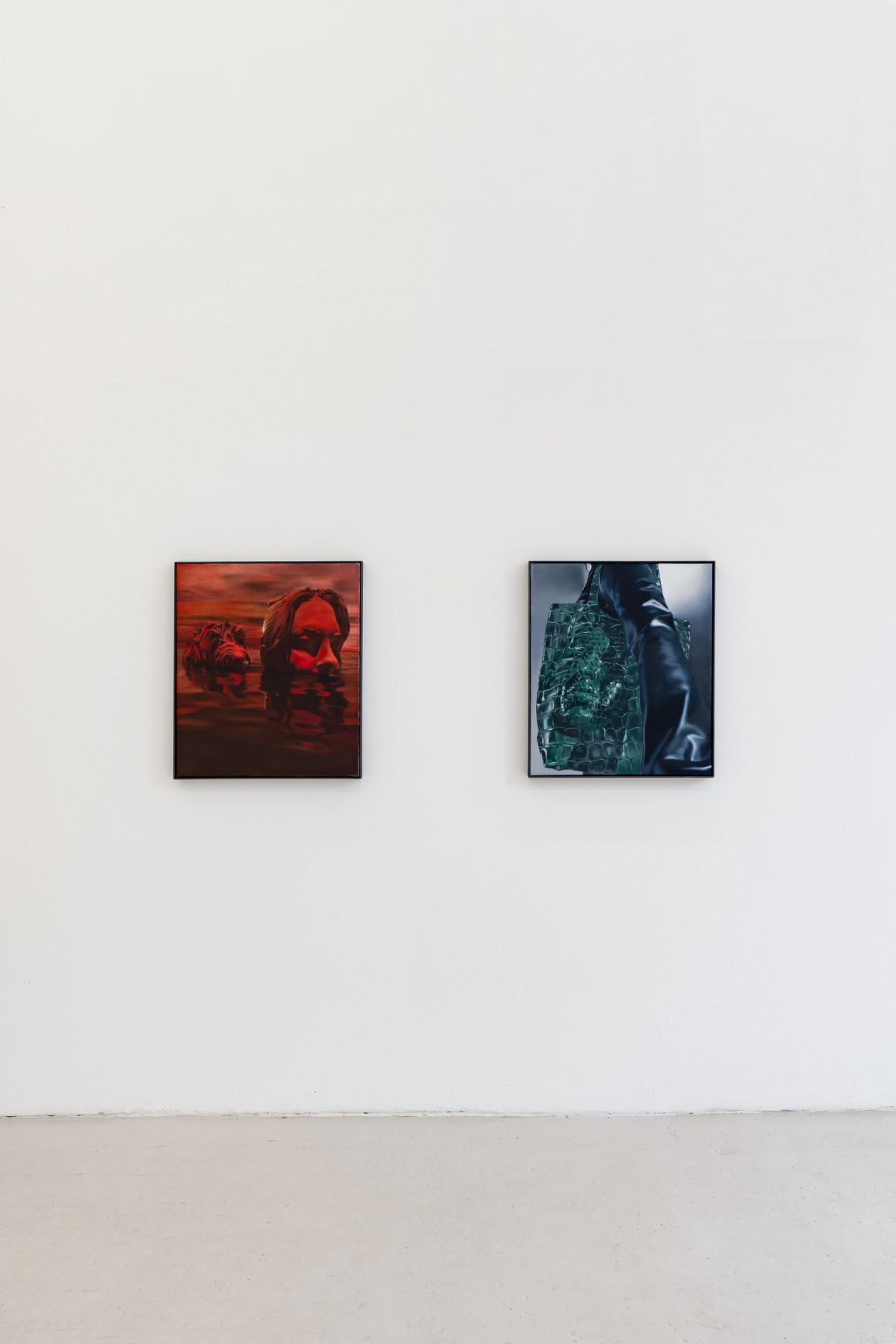
Mirjam Vreeswijk
Mirjam Vreeswijk's (Gorinchem, NL, 1997) paintings explore the convergence of divergent realities produced in a space between mirror and mask, between revealing and hiding the subject. In doing so, she seeks to draw attention to the different layers of consciousness rippling through the painting’s surface and its subject. Narrative and continuity become illusory in this hybrid space, as each work contains new perspectives that combine opposites and defy easy coherency. The work originates from collages of objects or images that appeal to her in one way or another. For example, shiny ribbons, designer shoes and pictures from books on decorative works from the 70s. From this archive of materials, she intuitively builds compositions, first in models, then on canvas. Step by step, Mirjam looks at what the image needs in order to eventually arrive at the perfect composition and perfect structures of paint. This intuitive or subconscious approach gives the paintings a surrealistic feel that touches on elements of product photography, still life and landscape painting. In her latest series the fairy-tale world makes its entrance. This can be seen in ritual objects and in the approach to landscapes that some of the paintings provide a glimpse of. After graduating in 2018 from the HKU Bachelor of Fine Art, Mirjam Vreeswijk was nominated for several awards such as the Buning Brongers Prize and the Kunst aan de dijk Prize, she won the Best of Graduates Ron Mandos Public Prize that year. She then participated in the Master Fine Art at the Frank Mohr Institute. In 2019, she was named Art Talent of the Year by Stichting Kunstweek. She has exhibited in several galleries and at Kunstcollectie Rijnstate.
More about Mirjam Vreeswijk →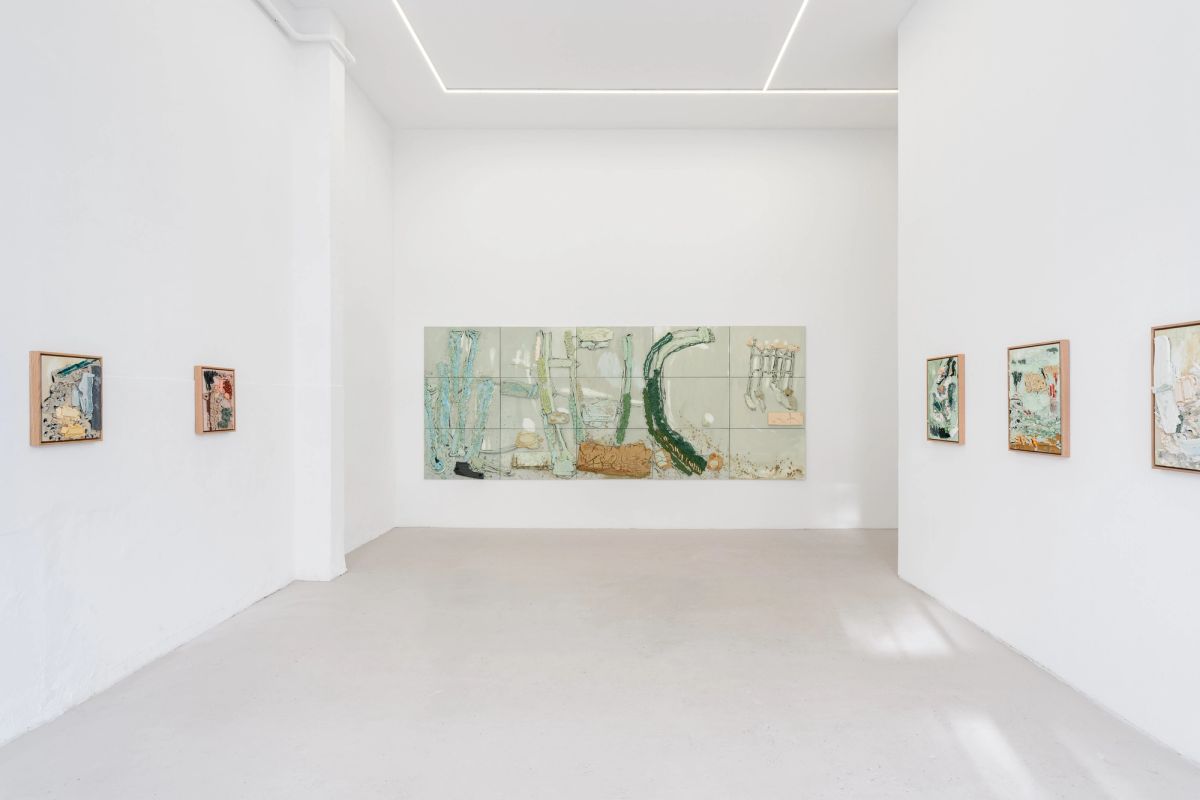
Natacha Mankowski
Trained at the École Spéciale d’Architecture in Paris, Natacha Mankowski (Paris, FR, 1986) worked as an architect alongside Jean Nouvel and Vito Acconci before turning to painting. Her architectural background still resonates strongly in her paintings. Defying the boundaries between different artistic disciplines, Mankowski’s work is characterized by an exuberant use of the impasto technique. The way she employs this technique allows her to create textural and spatial structures in her paintings that moves them into the realm of sculpture. In her new work Natacha Mankowski has intensified this spatial and sculptural effect by working with larger formats. With many of these new paintings weighing 15 to 20 kilograms and more, they acquire a singular sense of gravity and presence; indeed, these paintings are objects that themselves inhabit a space alongside the viewers. To address the question of how humans inhabit space at the intersection of nature and culture, Natacha Mankowski has developed her own visual and compositional language. While her compositions may seem abstract to the casual viewer, they are somewhat reminiscent of blueprints and ground maps widely used in architectural design and urban planning. This is no coincidence: many of her paintings are loosely inspired by the ground maps of the quarries she visited during her years as an architect. Mankowski takes a keen interest in sites such as stone quarries, from which architects and builders collect their raw materials. Midway between nature and the built environment, quarries are transitional sites in which natural resources are excavated and turned into raw commodities to be used in buildings, but also cell phones, computers, and other modern technologies. So as much as we would like to believe we are far removed from nature, through these rough materials we are intrinsically connected to it. And as such, the mines and quarries where these materials are found also raise difficult questions about how humans have turned nature into a site for commodification, a process that has brought us high-tech and the urban environment but has also triggered ecological ruin and collapse. Inspired by these issues, Mankowski has explored and visited many of these quarries, paying close attention to their geographical lay-out and the specific selection of raw materials on site. She then uses samples of these raw materials to create the thick impasto paint that texture her painterly work. Text by Bram Ieven Natacha Mankowski has exhibited in numerous international exhibitions, such as: Moly-Sabata for Biennale de Lyon, Zentrum fur Kunst ind Urbanistik (Berlin, GE) 2014 ; the Watermill Center (NY, USA) 2015, Pole muséal de Lisieux – Ateliers Intermédiaires (Lisieux, FR) 2015, Ceci Foundation (Berlin, GE) 2016, New Day Gallery (Berlin, GE) 2016, Souvenirs (Berlin, GE) 2016, the Epigraphic Museum (Athens, GR) 2018, Deschool and ISO (Amsterdam, NL), 2019, Centre d’Art Contemporain, Grenoble. She had several gallery shows at and is still working together with Everyday Gallery (2019 - 2022), Antwerp and Valerius Gallery (2022), Luxembourg City. She did a number of recidencies around the world and has been invited to teach at prestigious art schools like Sandberg Insitituut, Amsterdam. Mankowski is part of the Taylor Foundation in Paris and was the recipient of the Tony Garnier Prize, for Architecture and Urbanism awarded by the Académie Française d’Architecture in Paris.
More about Natacha Mankowski →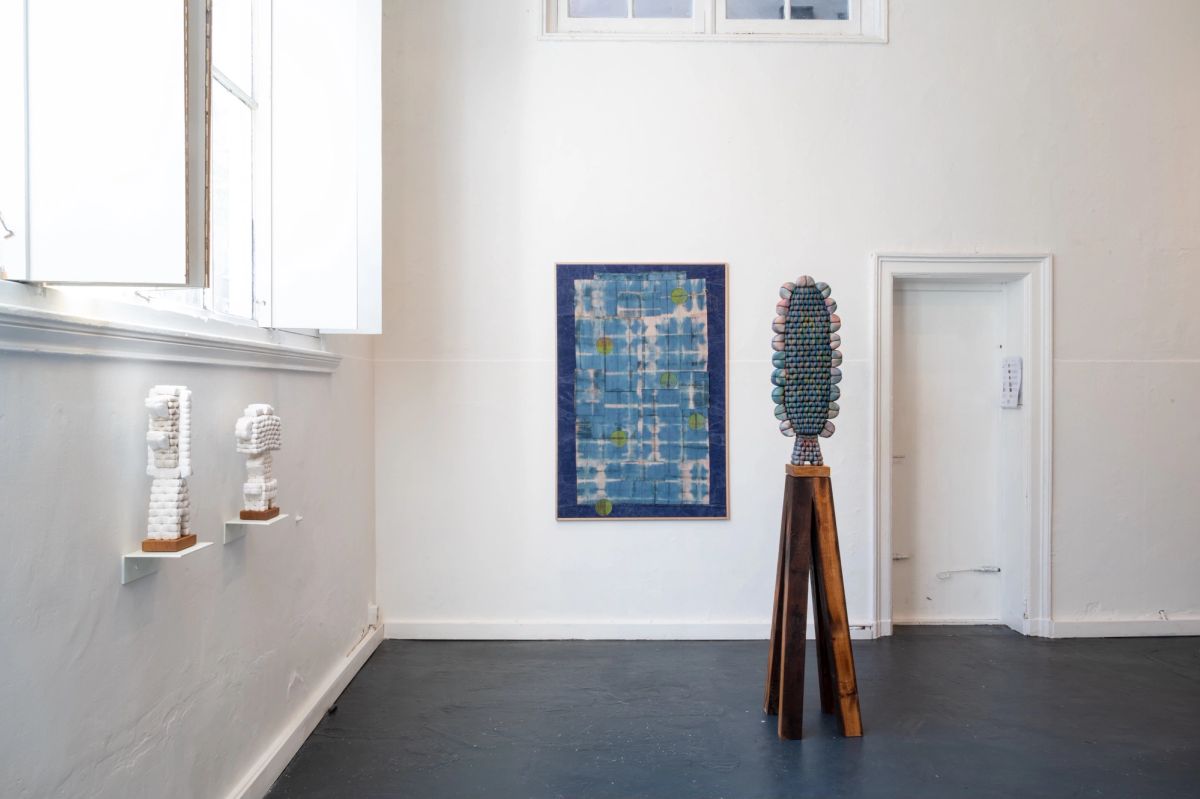
Saar Scheerlings
Born in Eindhoven in 1990, Saar Scheerlings embarked on her artistic journey after studying at the Design Academy Eindhoven and gaining experience as a chef and theater designer. Scheerlings mixes the disciplines of art, design and craft to find processes that give rise to new types and expressions. Her work includes large ceramic vessels that serve as painted maps, decanters that seem unwilling to pour, paintings that resemble fabrics and soft monumental sculptures. For her, a medium is not defined: she prefers to create her own playing field and associated rules. A great interest in daily life probably comes from her education in design, but she is not very interested in the way products are industrially designed, made and used. She prefers to see forms as intermediate phases of a creative process, a game, a tradition, a ritual, a culinary dish. It is the commitment to this process that gives objects meaning. Saars work is often triggered by the beauty and dedication of old materials like the antique linens she finds at garage sales in the French countryside where she lives. With a laborious process of sculpting, cutting, sewing and weaving she breathes new life into these materials, transforming them into her monumental talisman sculptures. Weaving is not only a technique for Saar, it is a metaphor for her entire work. She sees her oeuvre as an expanding structure. She not only creates work, she works on her own culture. The work of Saar Scheerlings has been shown in various international galleries and museums including CoBrA Museum, Design Museum Gent, Hanwha Galleria Seoul, Tripostal Lille, Galerie Fleur & Wouter, Valerius Gallery, HAGD Contemporary, De Nederlandsche Bank, Garage Rotterdam and at Palais de Tokyo, Paris, as a finalist for the prestigious Loewe Foundation Craft Prize.
More about Saar Scheerlings →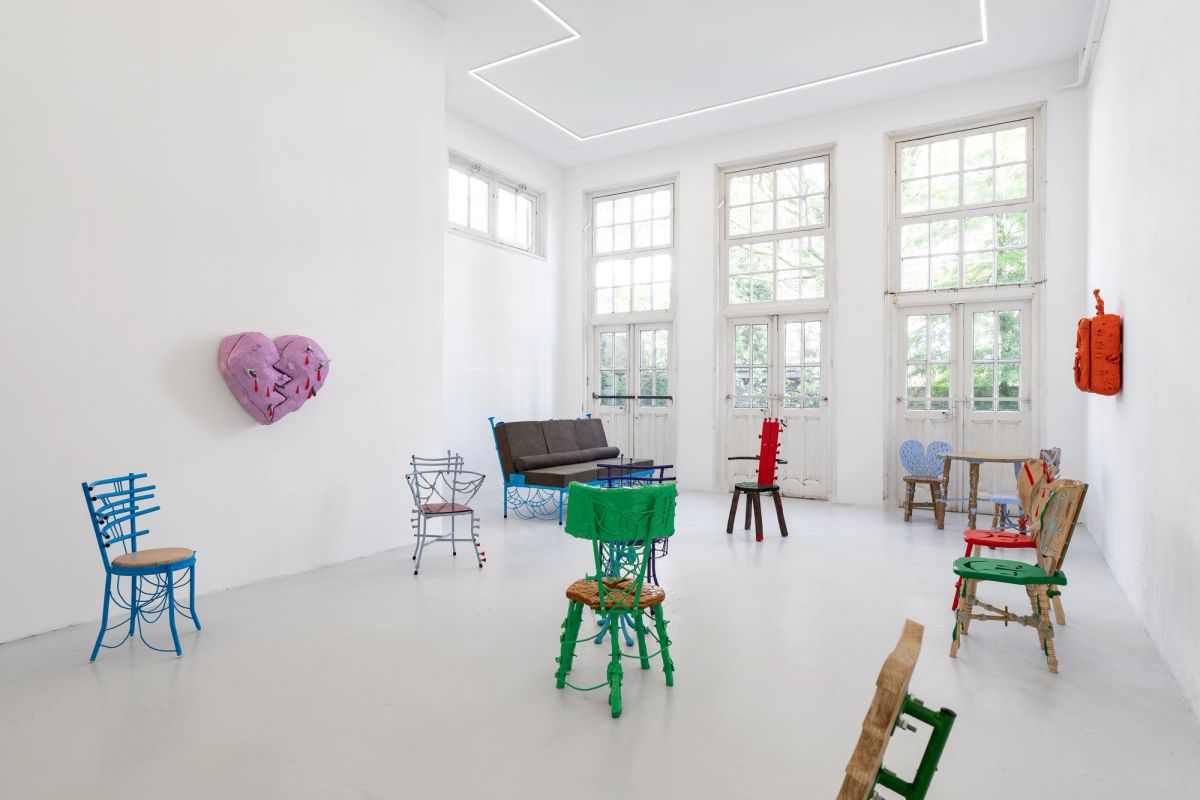
Tom Volkaert
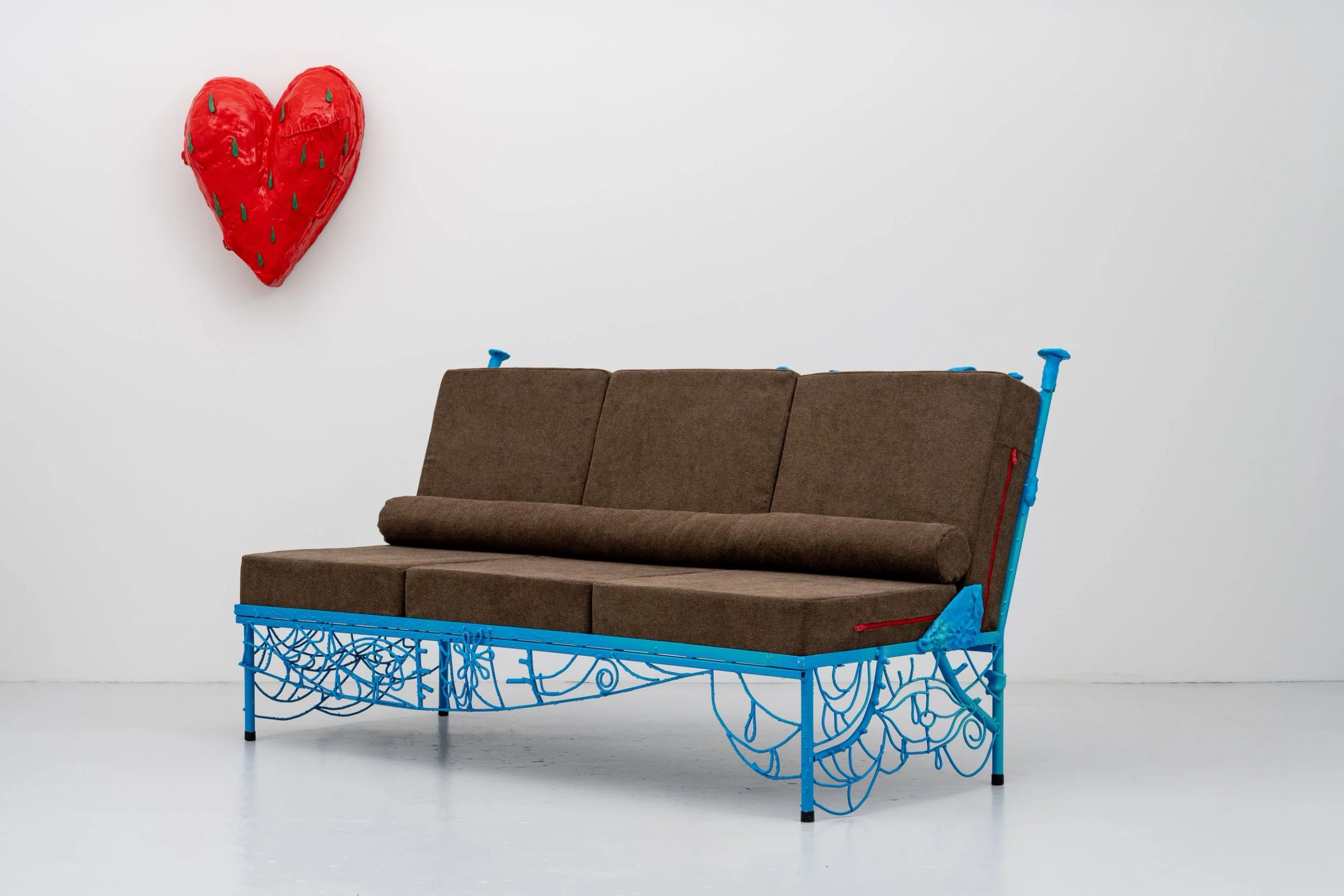
Tom Volkaert’s sculptural work is a testimony to the materiality of memory as much as it is an ongoing tribute to the spiritual and shamanic force of art. Born in Antwerp in 1989, Volkaert’s sculptural work is a carefully balanced combination of refined artistic craftsmanship and the strategic use of unpredictability that comes into play when working with enameled ceramics, epoxy, or oxidized metal. Many of his works consist of circles on legs, which the artist likes to call steering-wheels. These works are like totems: symbolic and organic artifacts that make present the otherworldly alien life in the cosmos and that put us in touch with something radically different from us. On the edges and inside these circles, contorted arachnoid limbs, intestines, and sickly satanic tongues are carefully arranged and held in suspended animation. It is as if these circles are portals to another cosmic dimension and something wholly other than human life is trying to get through, a lumpy otherworldly and alienated organic gesturing at us in a way that feels both familiar and estranging. But Volkaert’s so-called steering wheels are also a totem for his own life and memories, a way of navigating and coming to terms with his own life. For Volkaert, colors embody memory. Personal memories first of all. And thus, the lived memory of the cinereous cigarette stains on the caput morteem colored carpet in his parent’s living room is reenacted and relived through the use of these colors in his work. But universal memories too. The usage of umbilical greyish pink and placenta-colored red appeal to a birthing process all of us have gone through; engaging with these colors, Volkaert’s sculptures establish a connection to the matrixial mother in which all creativity is situated, making the viewer receptive to the most intimate and estranging experience of being alive. Conjuring up these contradictory feelings and holding them together is, ultimately, at the core of Volkaert’s artistic practice. Holding together contradictory sensations, his art opens a space where feelings of joy, surprise, wonder, and disgust are enclosed in the same ceramic totem or metal cut-out or epoxy statues. Text : Bram Leven
More about Tom Volkaert →