9 – 12 February 2023
Art Rotterdam 2023
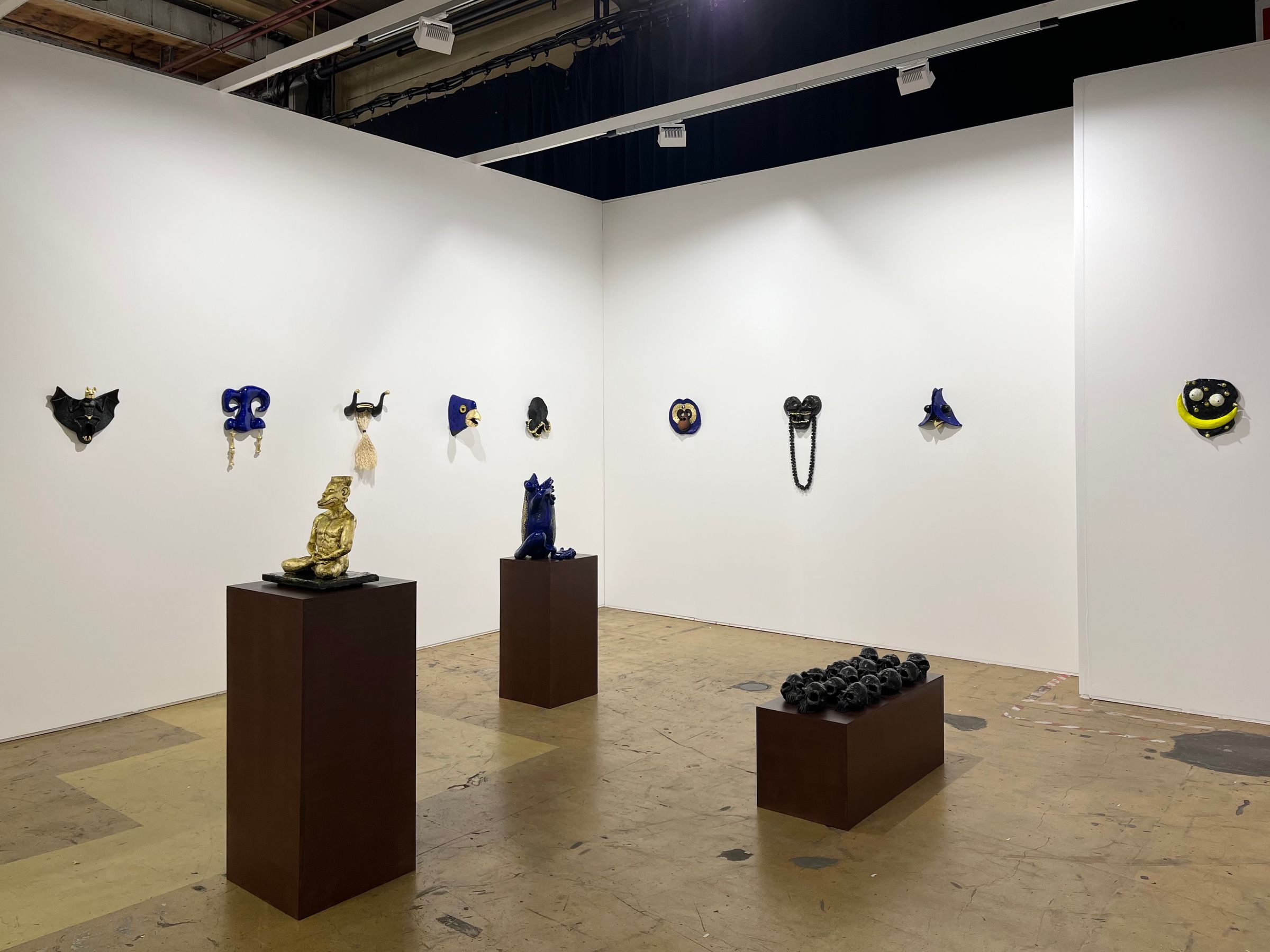
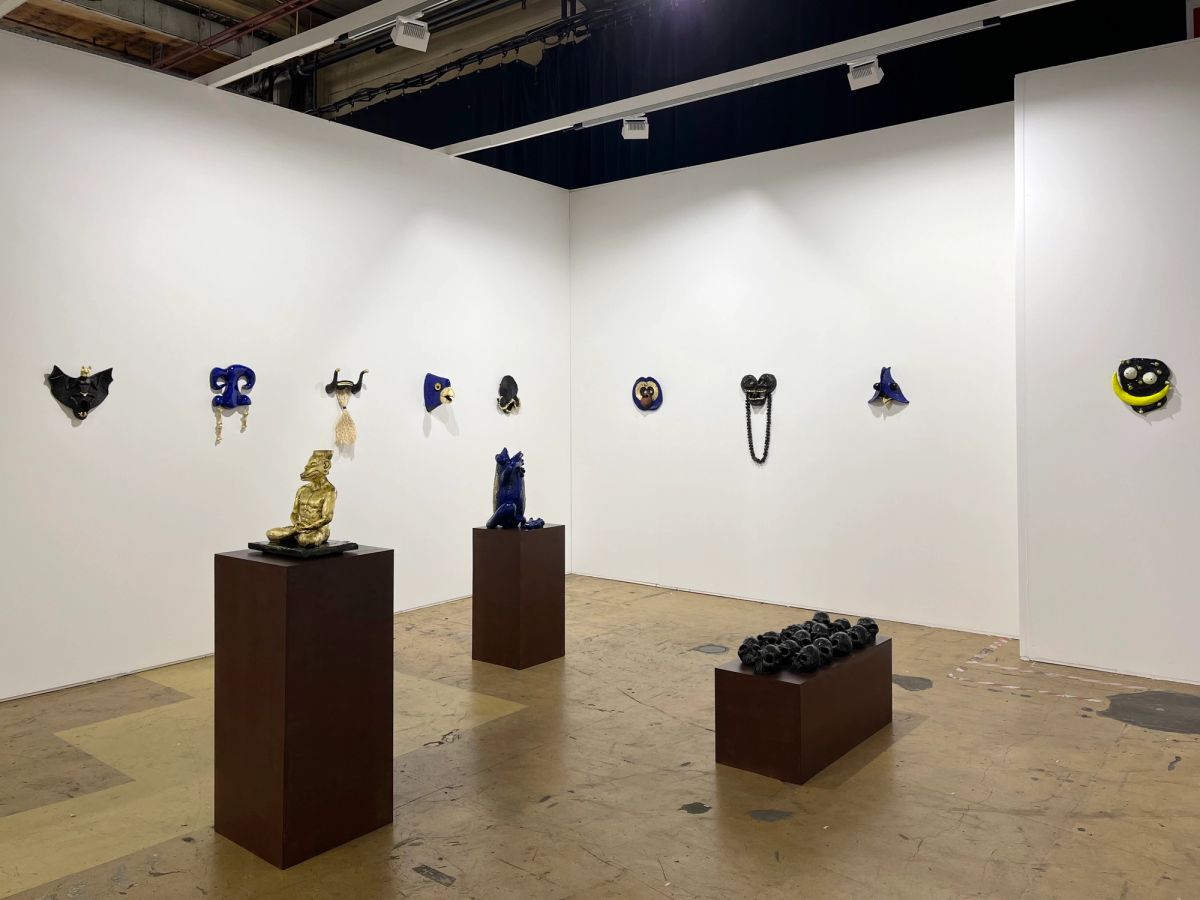
During Art Rotterdam we present a solo booth with works by Dodi Espinosa (Mexico City, 1985). Statues Also Die, a French film from 1953 is the reference for Espinosa's new show. The audiovisual essay reflects on how it’s possible for art to die and be rendered meaningless over time and space in the context of historical African art. The black and white movie begins with the quote:
"When men die, they enter into history. When statues die, they enter into art. This botany of death is what we call culture."
Statues Also Die is the inspiration for a new series of ritualistic ceramic masks to be presented by the artist during Art Rotterdam. Espinosa embraces his pre-Hispanic roots, art and mythology through the pieces, tracing a parallel narrative to the African story told in the film. The artist's ritual objects refer to altered states of mind, life and dead, and the capacity to embody sacred animal entities, creating a visionary world between ancestral American indigenous knowledge and contemporary art. He plays with conceptions of what is art and what is utilitarian; what happens when a statue loses its original significance and becomes a museum object?
Espinosa has a deep relation with archeology, he was born in Mexico city and grew up next to the pyramids of Teotihuacan. Growing up surrounded by archeological items marked his relation to arts and plasticity. Espinosa is now based in Antwerp. He often reflects on his position as an artist with a Latin American background based in Europe. His hybrid and unexpected path shows in his eclectic language which has become a signature of his creations. Cultural exchanges and paradoxes are at the core of his work.
The masks are executed in red or black clay, sometimes incorporating other materials and finished with a mix of paint, varnish, ultramarine pigment or gold leaf. The scenography and display of the artworks in the booth contain subtle references to codes used in ethnographic museography, for example by using walnut wood pedestals with glass covers.
Installation views
Artist
Dodi Espinosa
Dodi Espinosa (MX, 1985) is an interdisciplinary artist originating from the vibrant heart of Mexico City, where the colourful tapestry of archeology, shamanism and syncretism shaped his worldview and artistic sensibility. Now a Belgian citizen he calls Antwerp his home. His creations encompass performance, installation, objects, painting, workshops, among others. Each infused with inspirations from archaeology, sacral art, pop and indigenous cultures, and his characteristic tongue in cheek. His works have earned places in institutional and museum collections in both Belgium and the Netherlands. This acknowledgment not only underscores his reputation but also amplifies the cross-cultural dialogues he aims to cultivate. The artworks of Espinosa are more than just visual expressions; they are profound messages and calls to societal awakening. He reflects on a myriad of societal challenges, from mental health and identity to race and sexuality. His art acts as a bridge, linking the past with the present, the deeply personal with the universal. As a queer voice with a postcolonial lens, he offers a unique and confessional perspective, pushing boundaries and prompting deeper introspection on issues that touch us all. While his initial work gravitated towards object-based art, his recent endeavours over the last years reflect a conceptual shift towards social experimentation, installation, performance and a more collective paradigm. Dodi Espinosa had a solo exhibition at Beautiful Distress, Amsterdam (2022). He also took part in group exhibitions in M HKA (in collaboration with. NICC), Antwerp (2019), the Fries Museum, Leeuwarden (NL, 2020), W139, Amsterdam (2020) and Mu.Zee, Ostend (2019 and 2022). His work is incorporated in the collections of Fries Museum, Mu.Zee, Museum van de Geest and the AkzoNobel art collection.
More about Dodi Espinosa →