17 – 19 April 2026
miart 2026
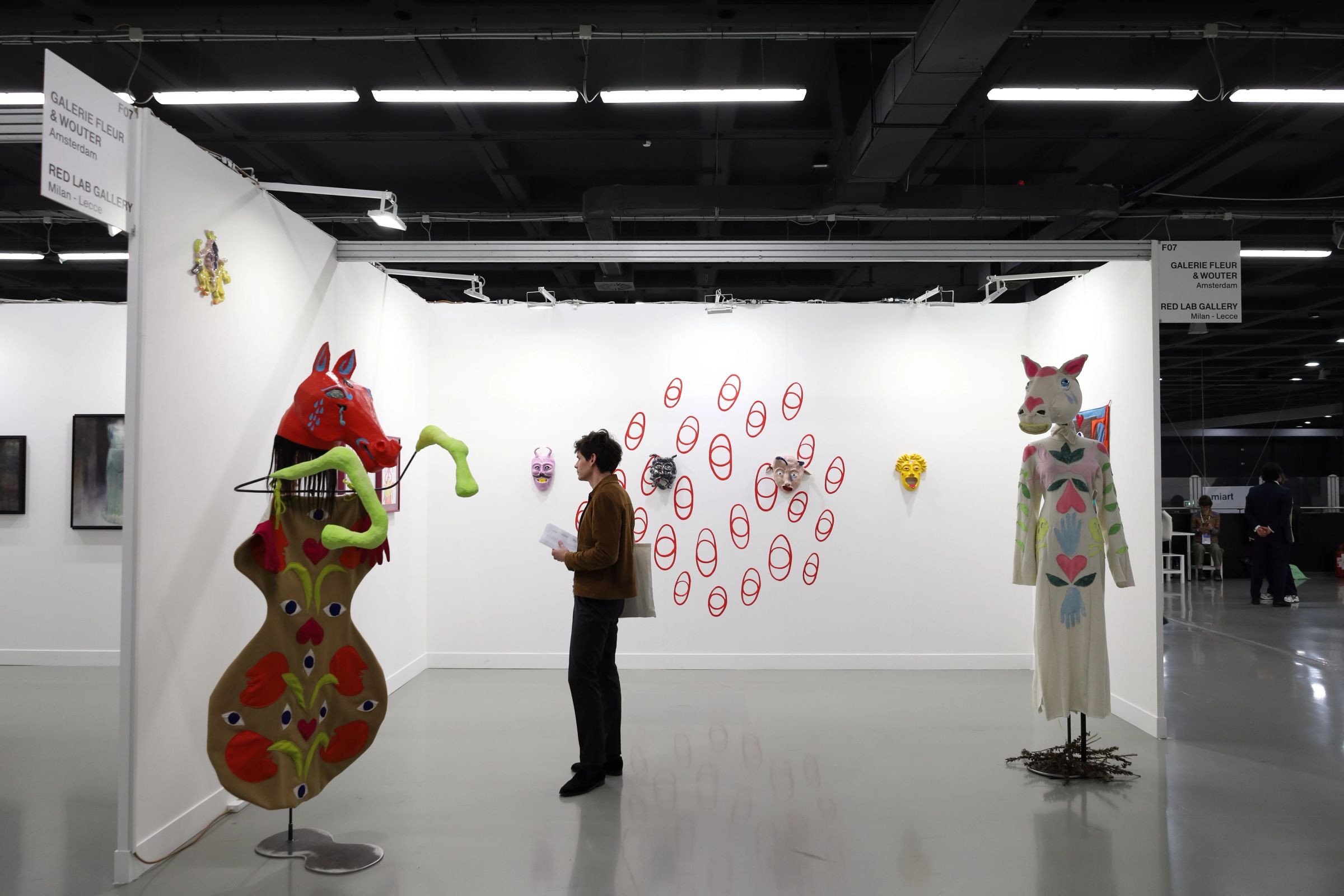
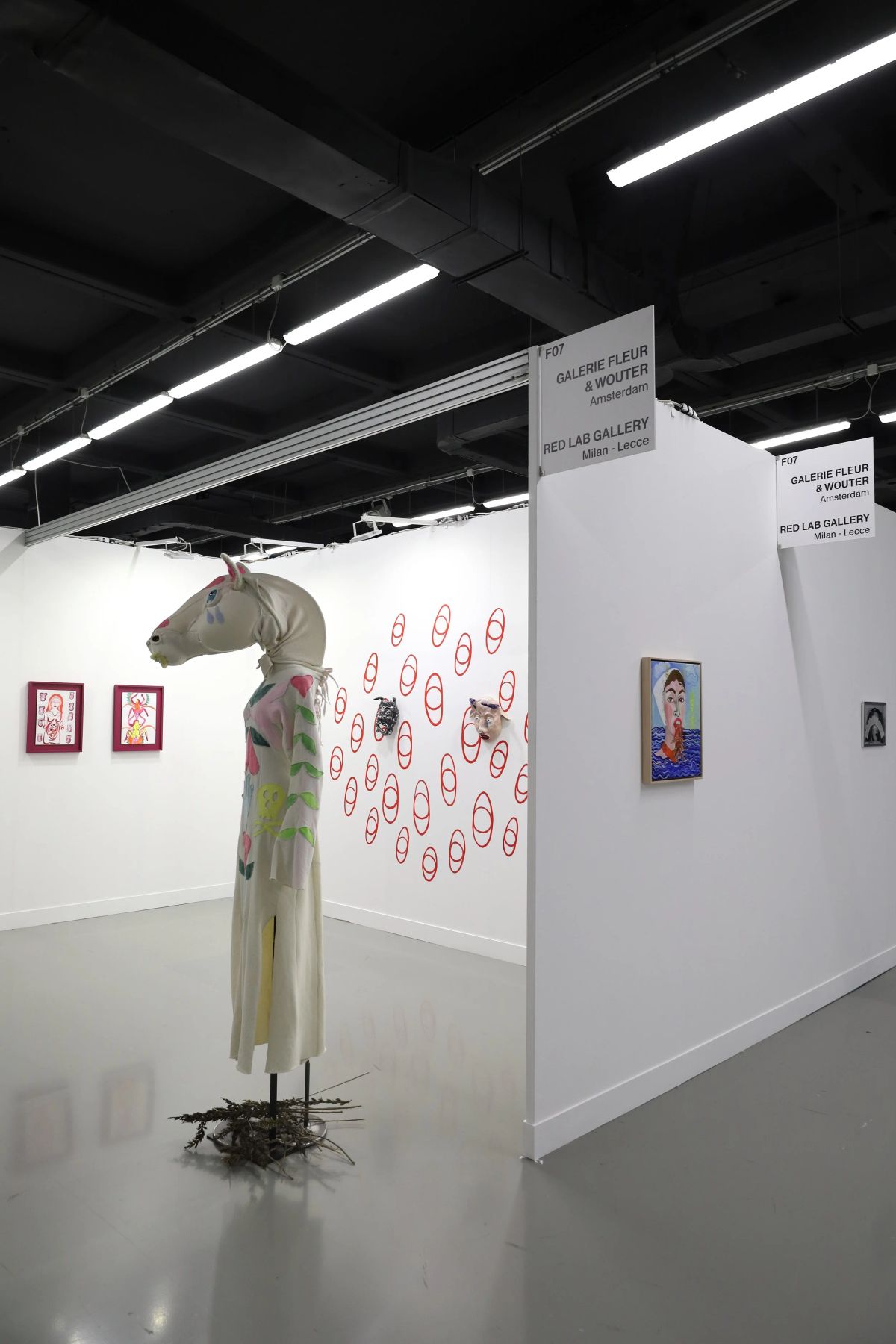
For miart 2026 we present a shared booth, together with Red Lab Gallery Milano, where we will show the work of Dutch artist Carmen Schabracq (1988). The artist collects elements from mythology, folklore, cultural traditions, art history and her personal experiences and uses them to create her own visual narratives.
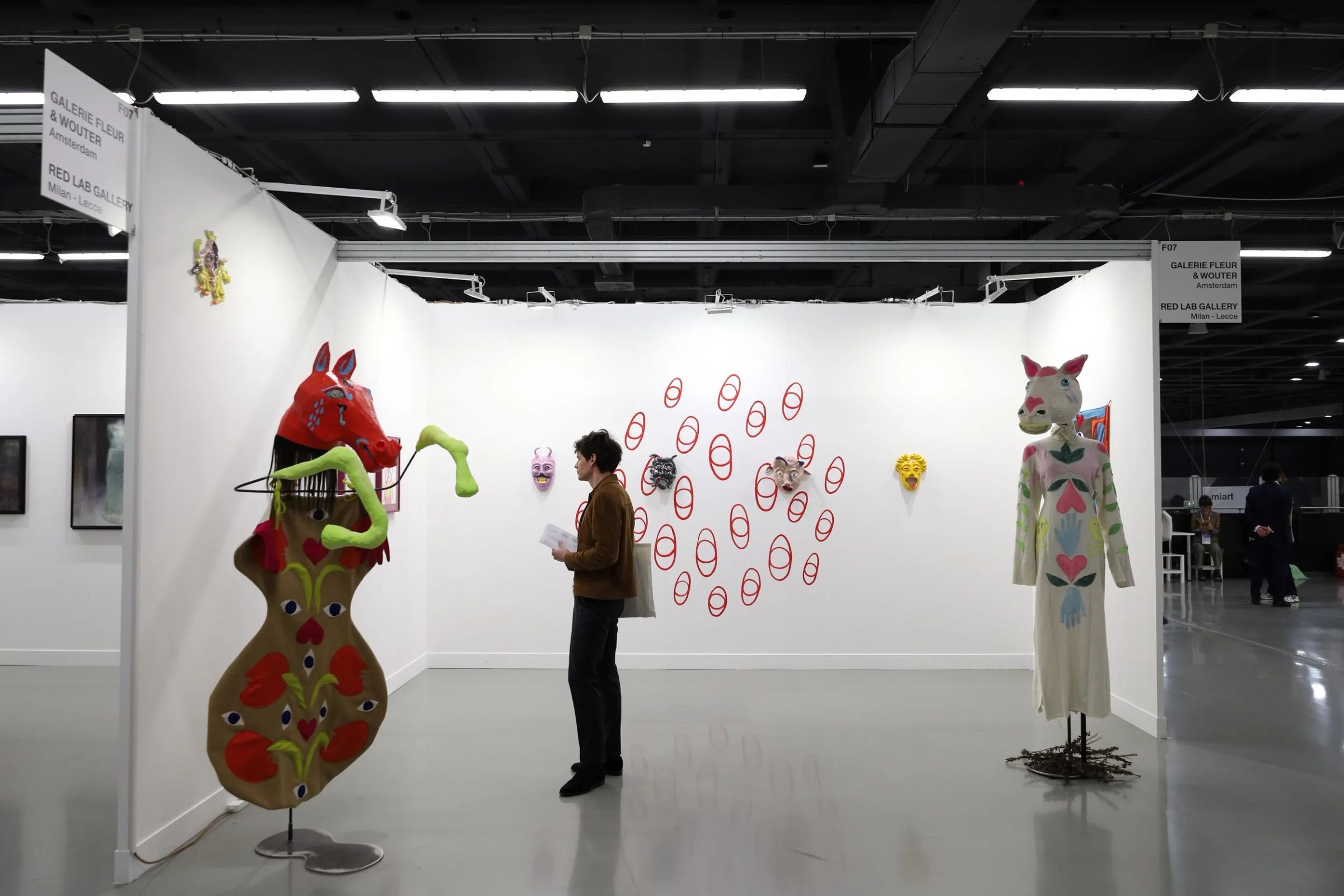
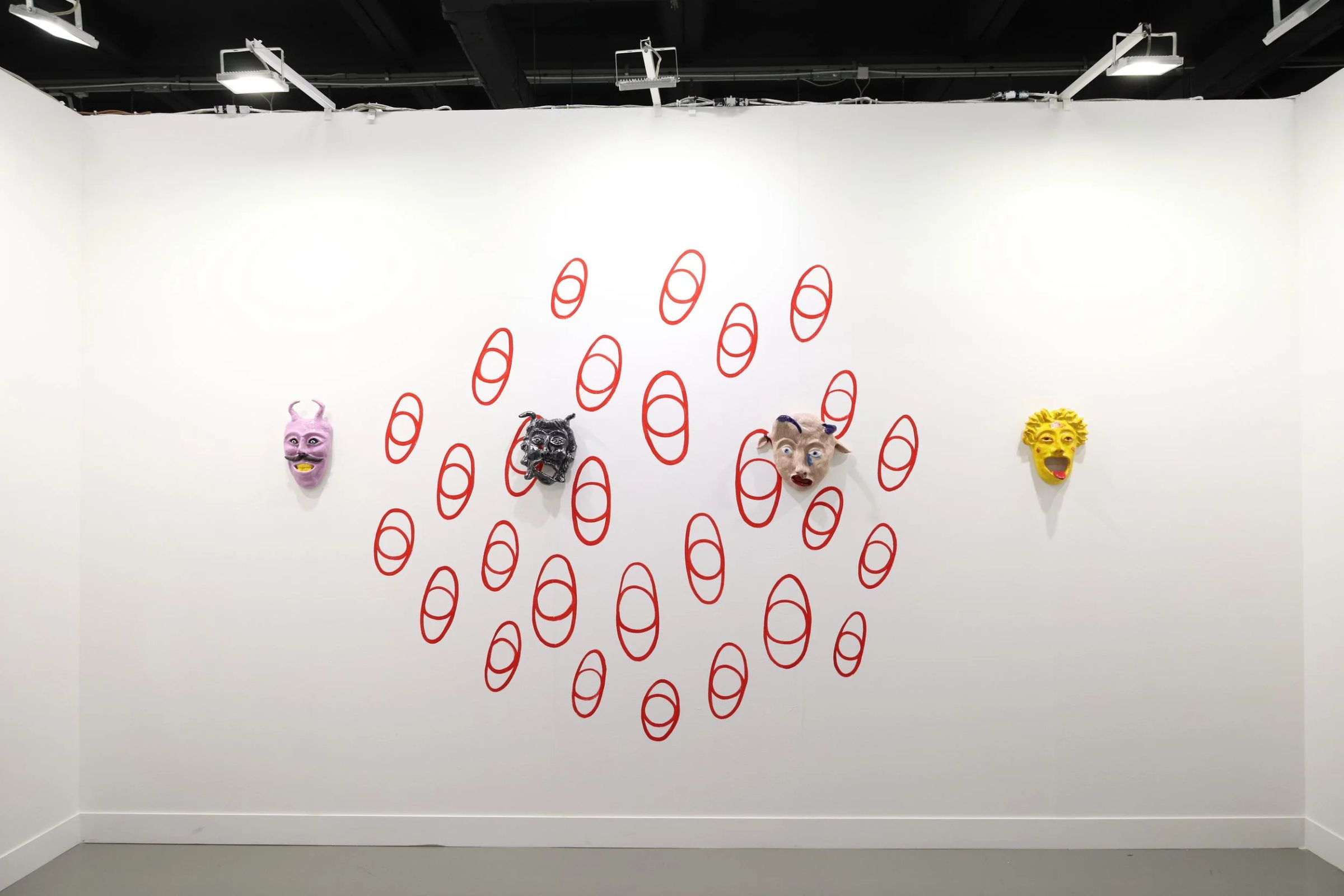
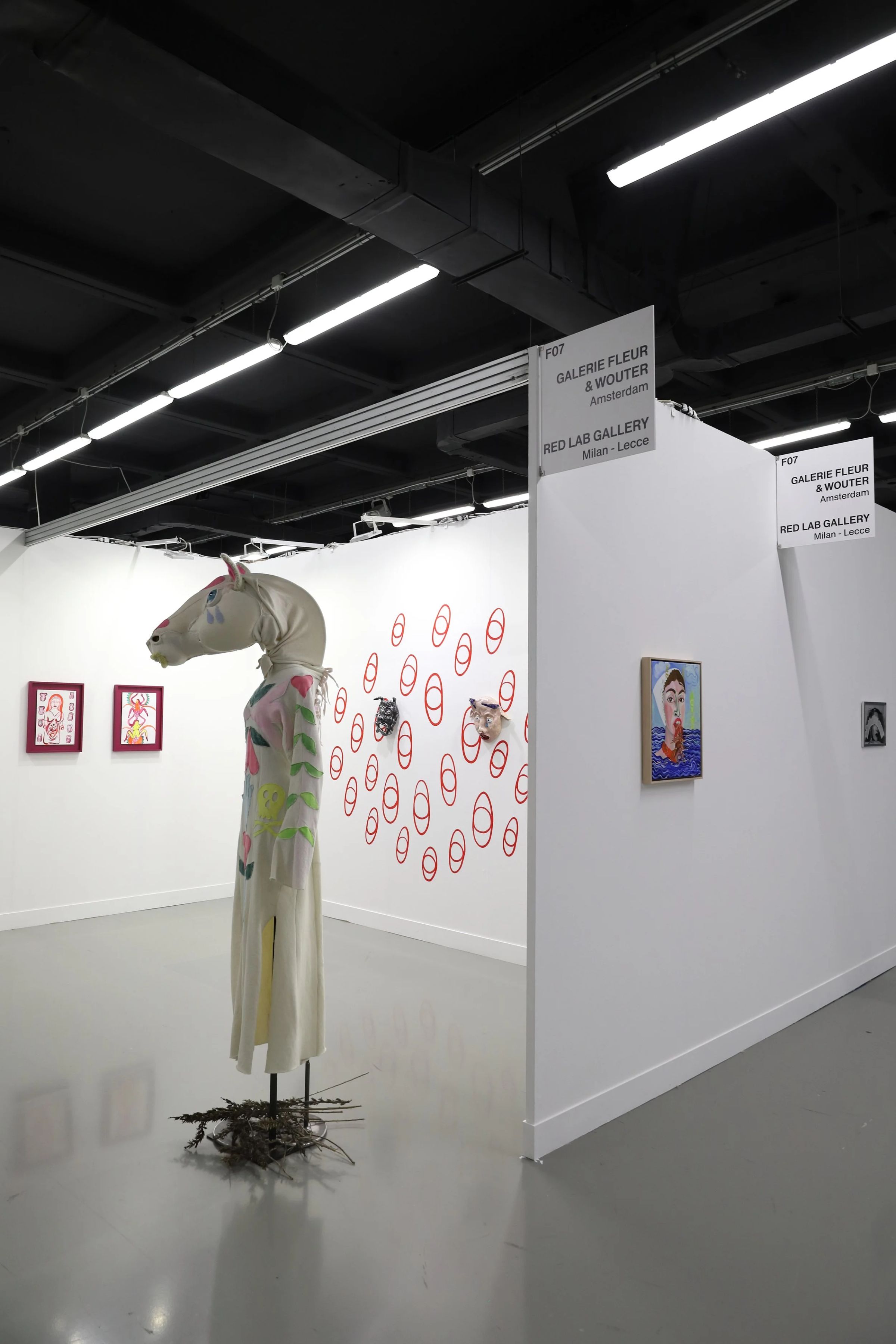
In our booth we will show works on paper, ceramic and textile masks and tapestries presented in combination with a mural. The artist's masks build on traditions of evil-defying sculpture and ornamentation found in architecture worldwide, such as gargoyles or antefixes. They often depict devilish figures, because evil is deterred by its own reflection. These sculptural masks are intended to protect a space and the people within. The artist's masks show her interpretations of devils and other apotropaic creatures she encountered during her research travels and residencies in Italy, Eastern Europe, the Netherlands and Mexico.
The shape of the vulva is also recognizable in several of her works. The vulva, representing birth, fertility and the female sex, stands in opposition to evil; This is related to the ancient Greek term “Anasyrma”, which is the gesture of lifting one's skirt and a deliberately provocative exposure of the naked genitals to ward off a supernatural enemy. These vulva-masks will be presented on a mural made out of a repetitive pattern of shapes representing the vulva, or the all-seeing eye.
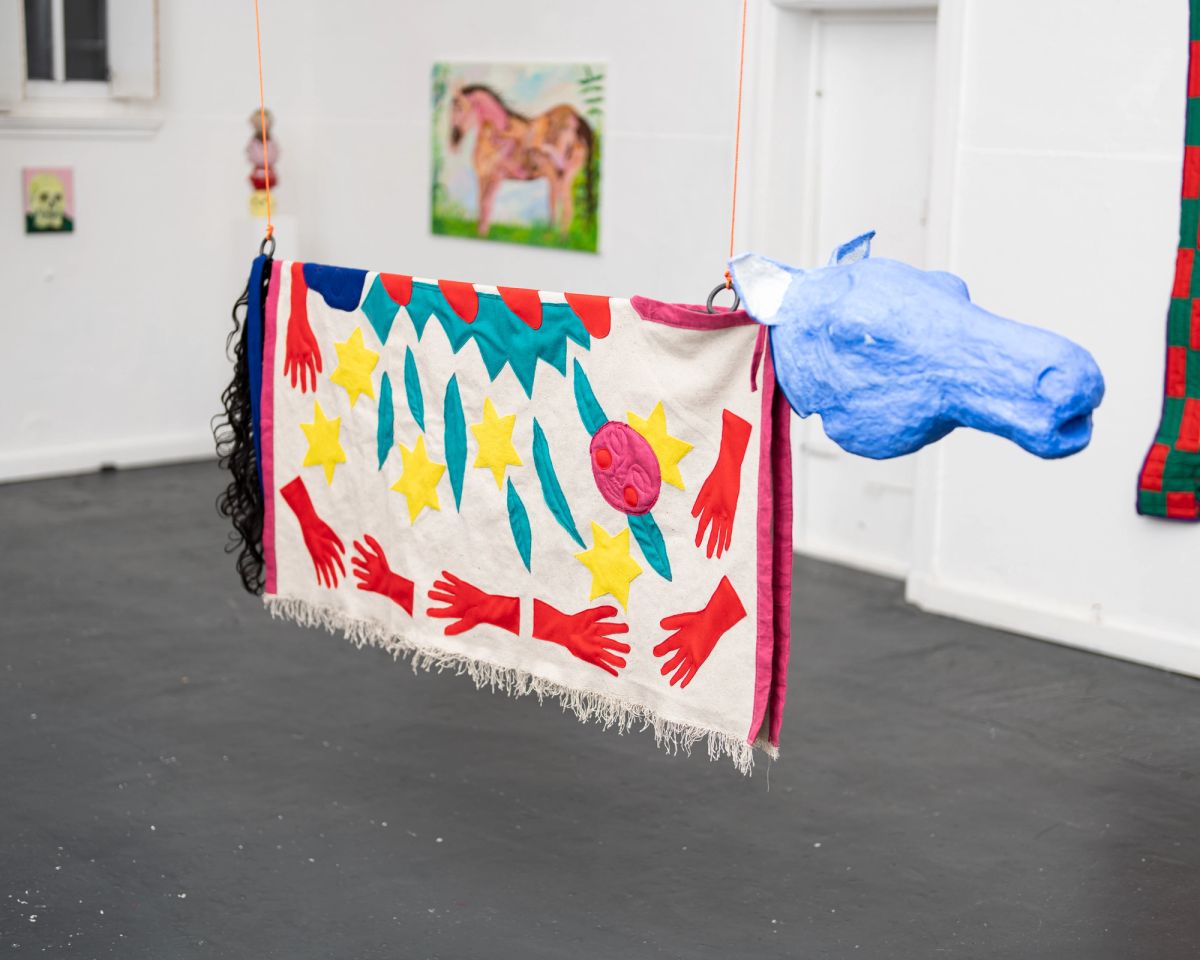
The tapestries in the booth are contemporary interpretations of family crests and contain the symbolism of life-trees, in which the artist has made her personal family history collective. What do you take with you and pass on from your ancestors, and what, do you leave behind? Imagery such as vulvas on horseback depict literal and symbolic modes of migration through generations. The tapestries are a combination of patchwork, quilting and embroidery.
The artist's work emanates from feminine power and demonstrates this in the iconography of art history and in personal intergenerational storytelling. The work is a feminist statement, highlighting the symbol of the female sex to ward of evil, the humour of this fact and the positiveness of this strenght against the current conservative patriarchical and intolerant tendencies. It is not to be confused with the glorification of motherhood, which has become popular in conservative circles. Rather, the artist demonstrates that society flourishes when gender roles are broken and if there is more attention for the loving feminine powers in this world.
During the fair the artist will do a performance as part of ‘Corpi nel paRco’, an official Milano Art Week 2026 event. Saturday 18 april, 15:00 —18:00, at Teatro Continuo di Alberto Burri in Parco Sempione. Curated by Andrea Contin & Gabi Scardi.
Our participation is supported by the Mondriaan Fund
Works
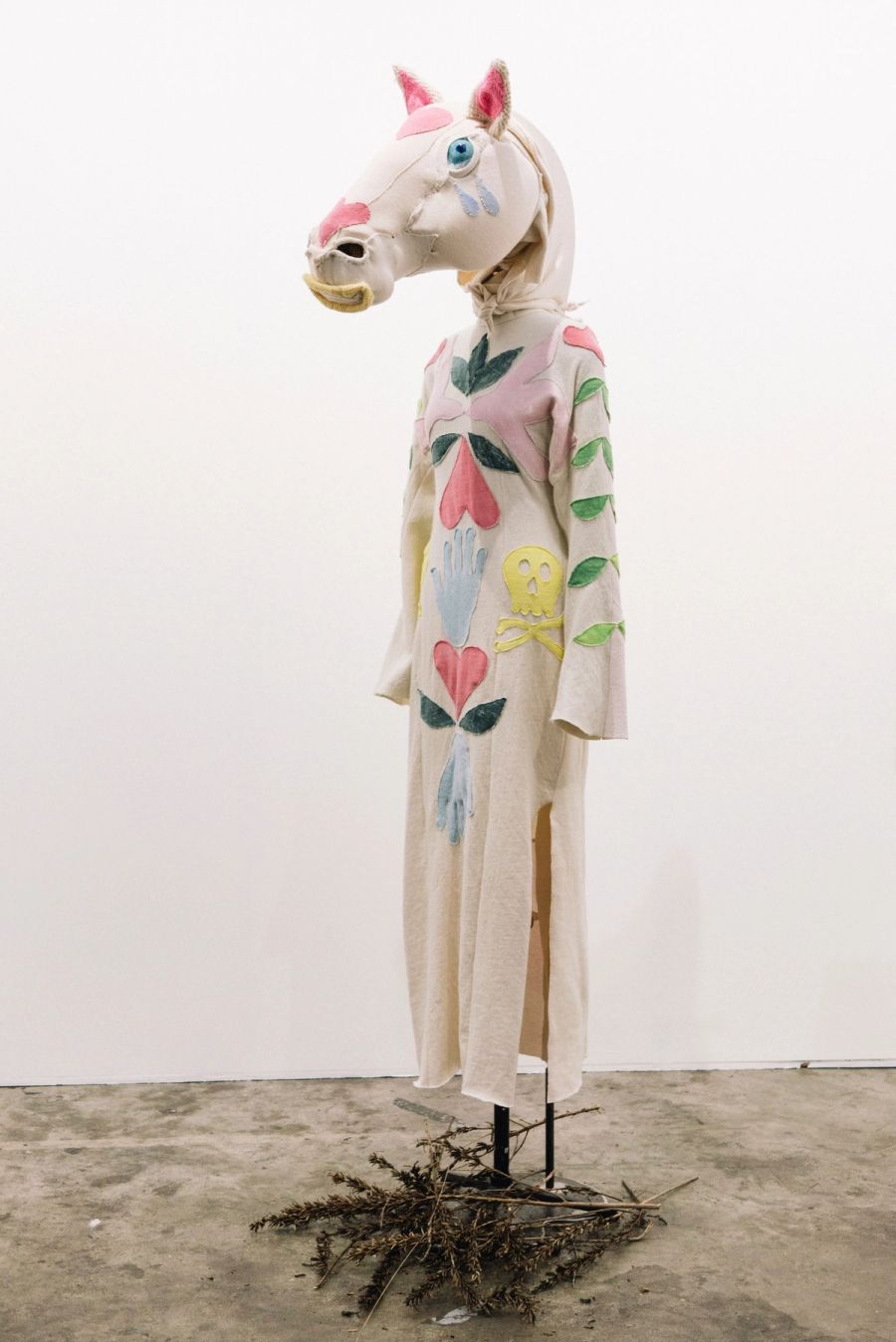
in collaboration with PECORA NERA studio, appliqué wool on wool, aquarel, glazed ceramics, iron stand
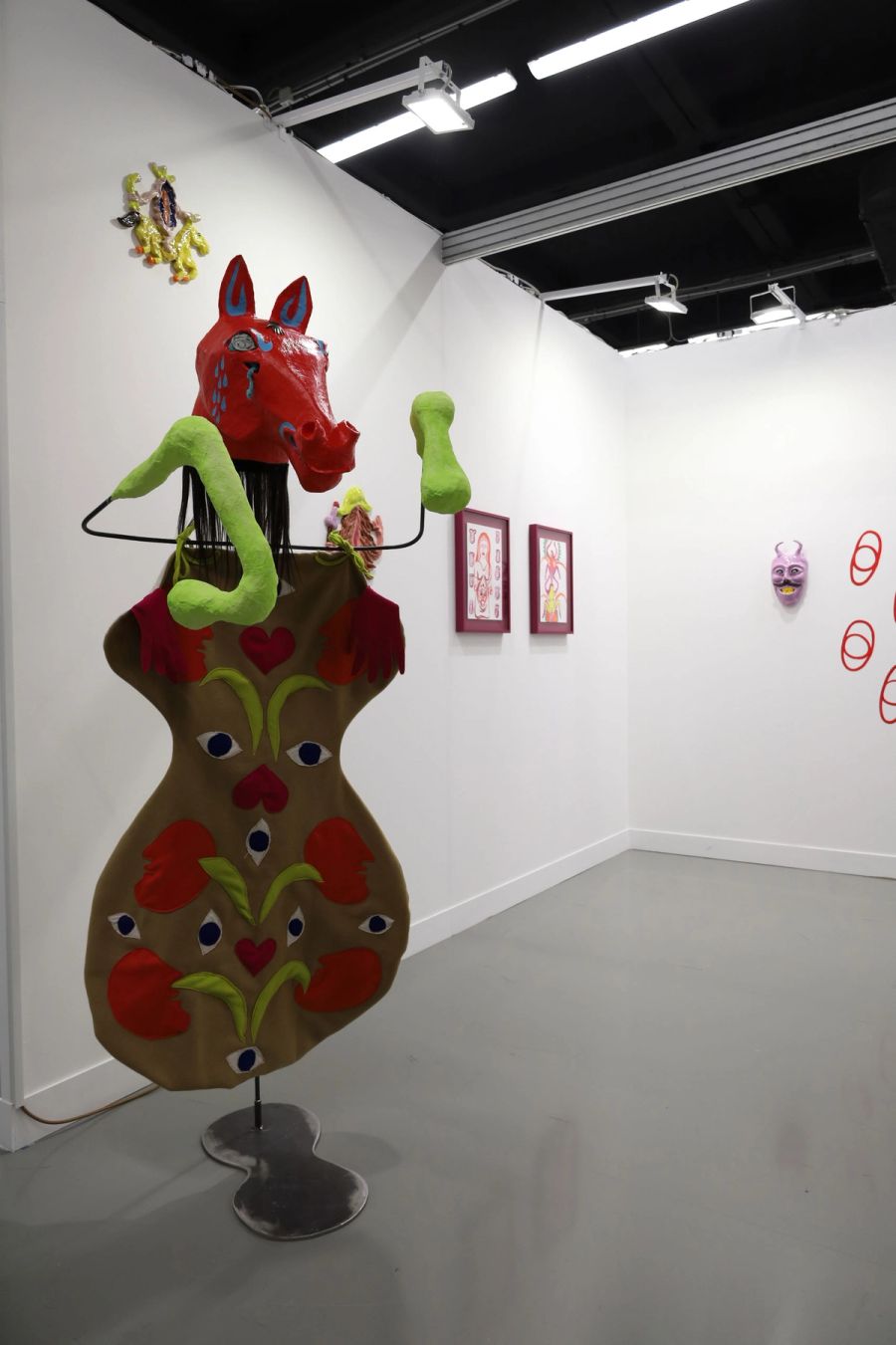
papier-maché, steel, human hair, wool, aluminium, aquarel, acrylic
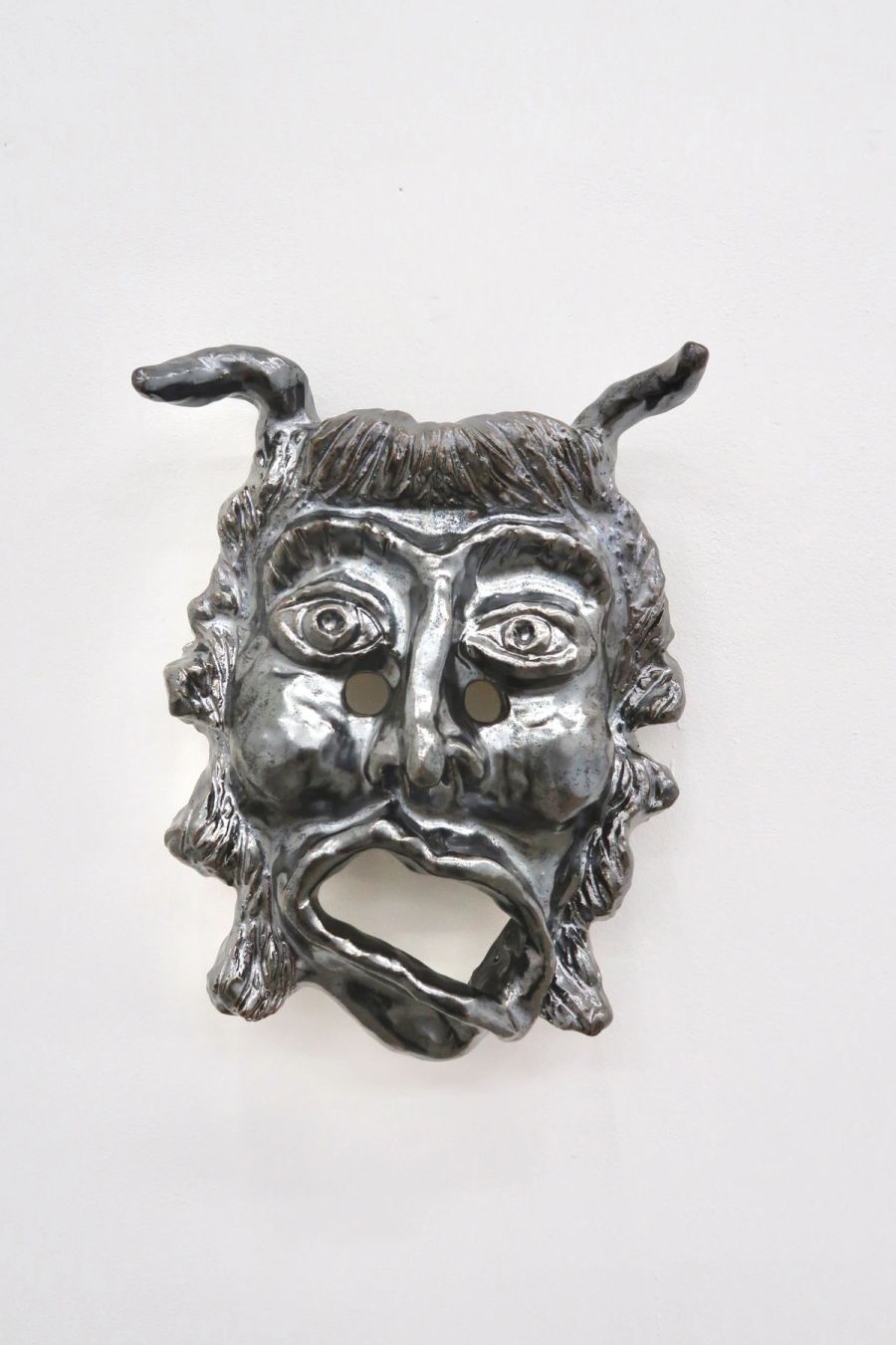
ceramics
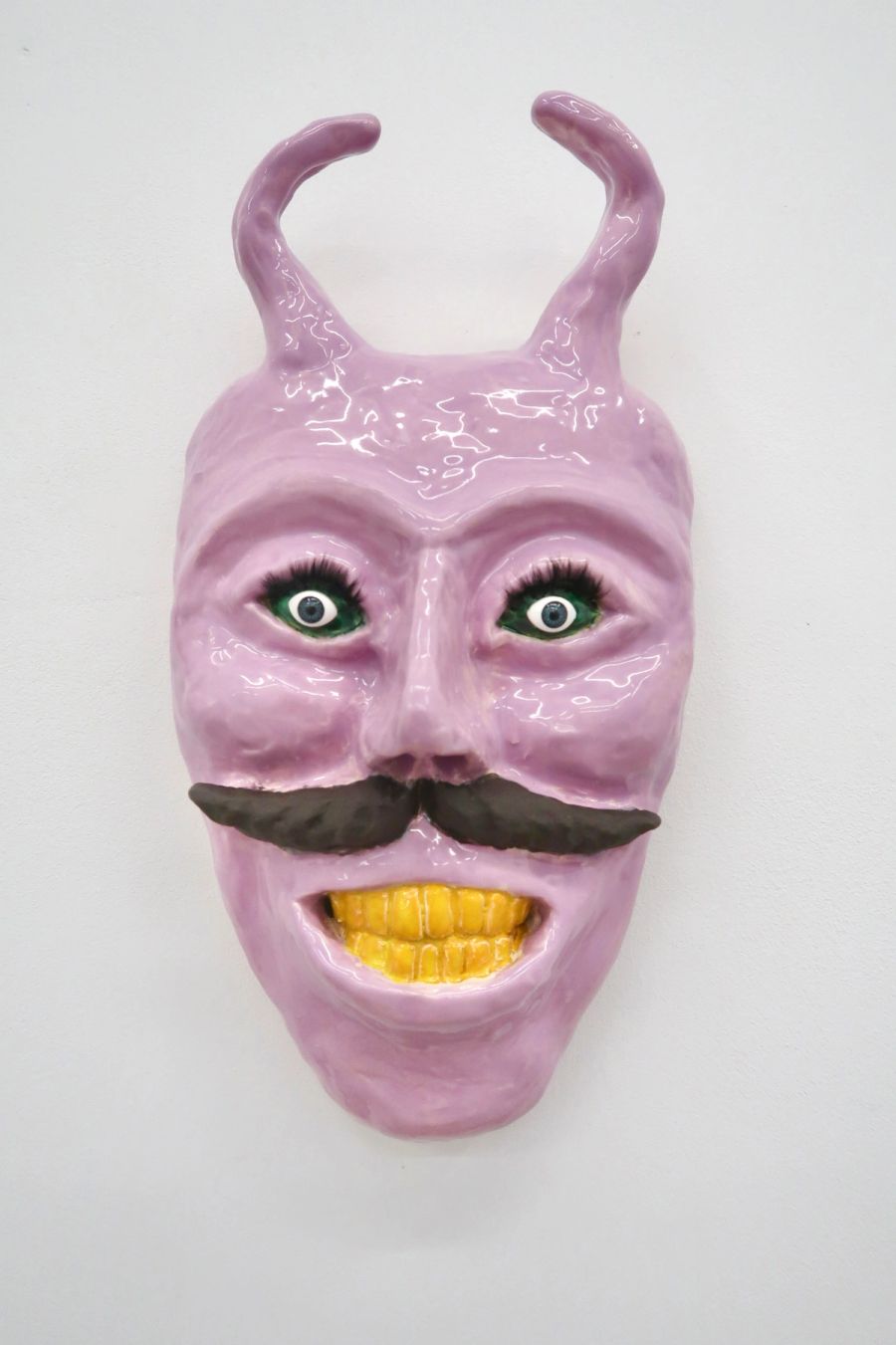
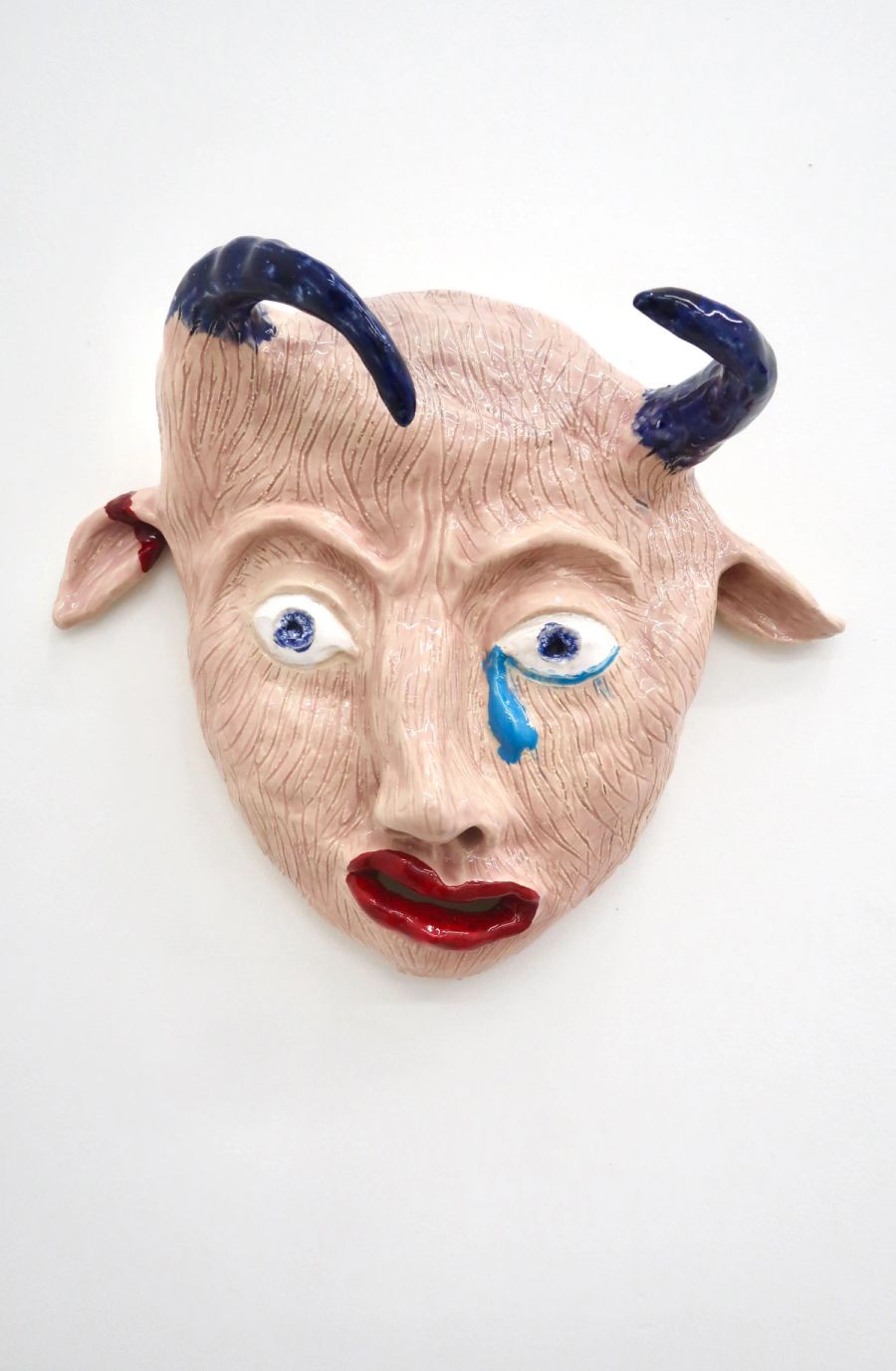
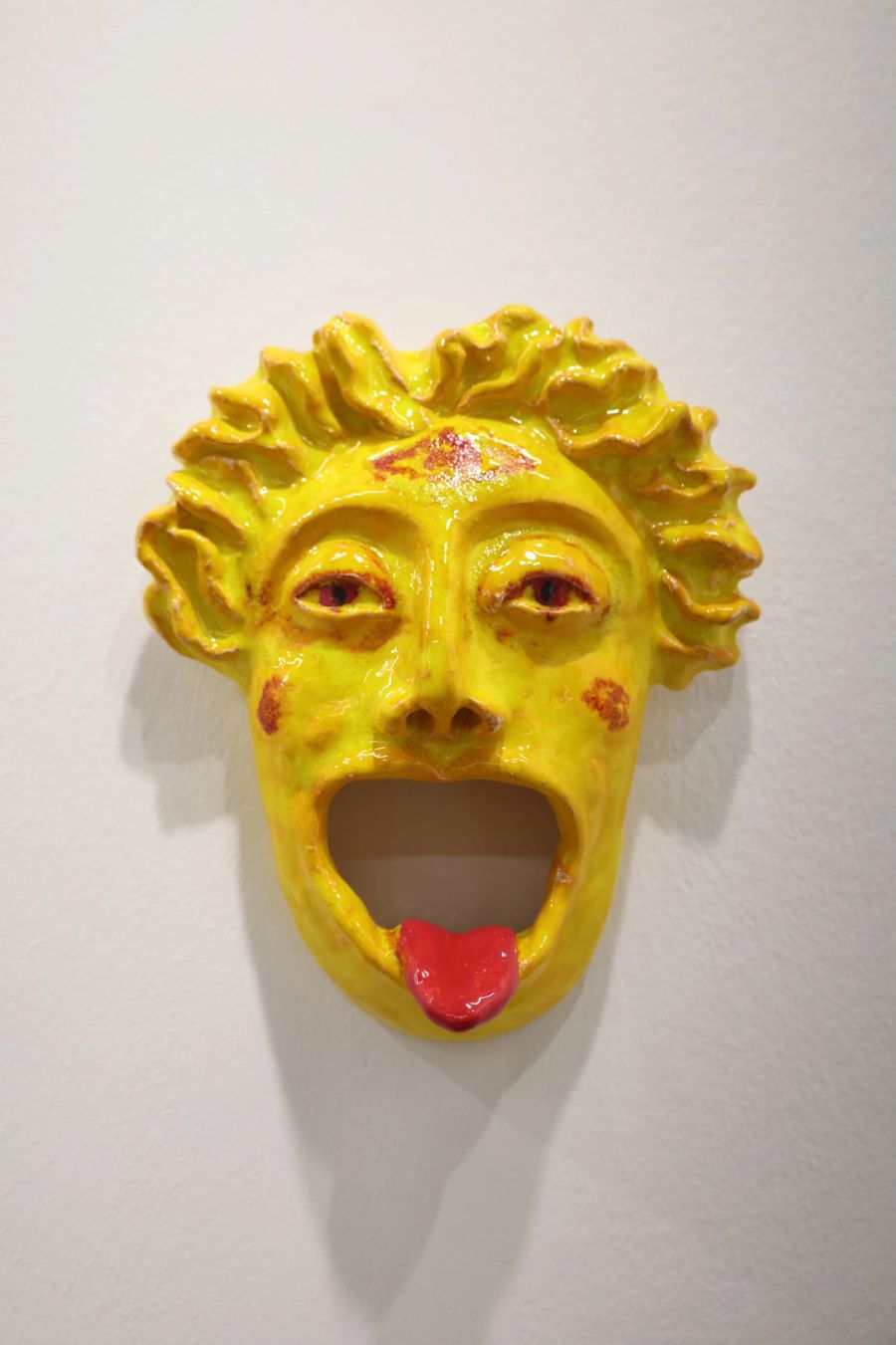
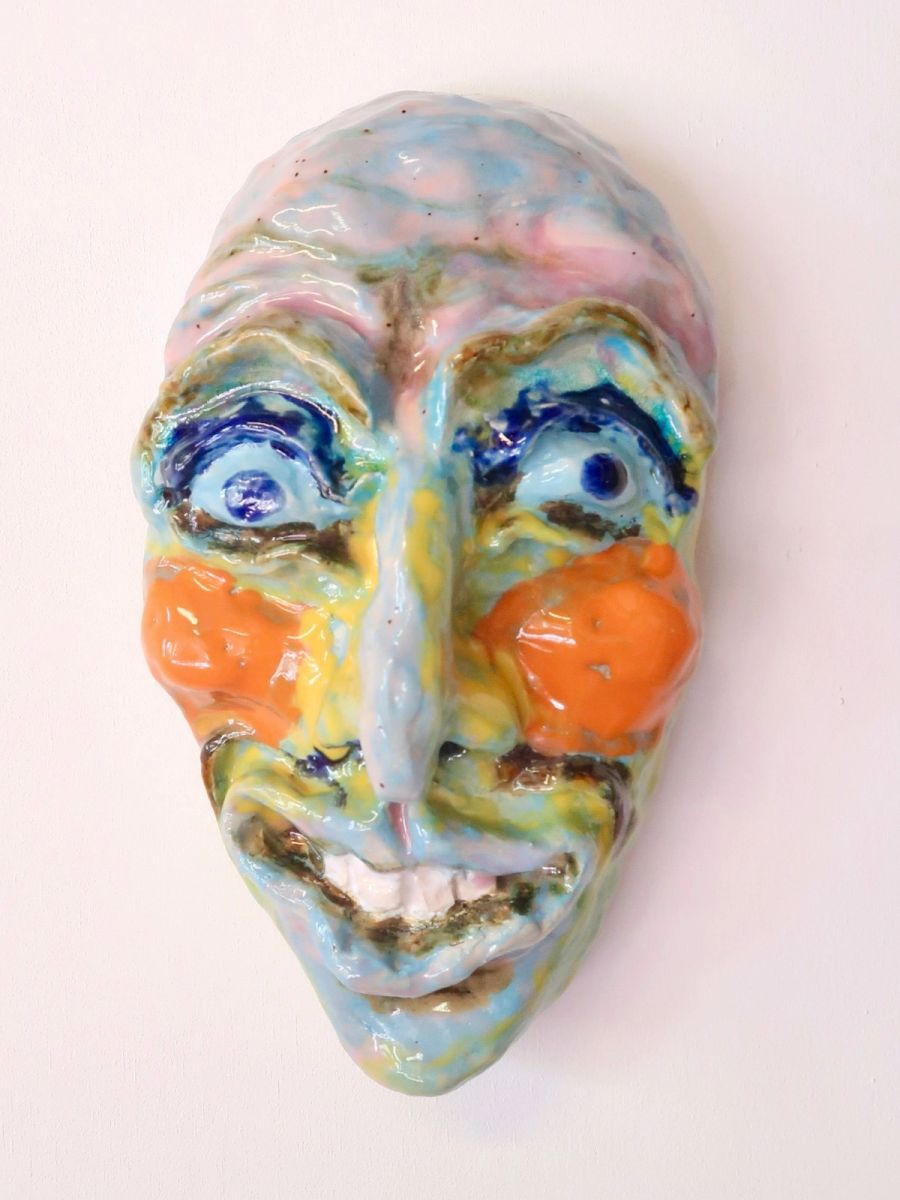
glazed ceramics
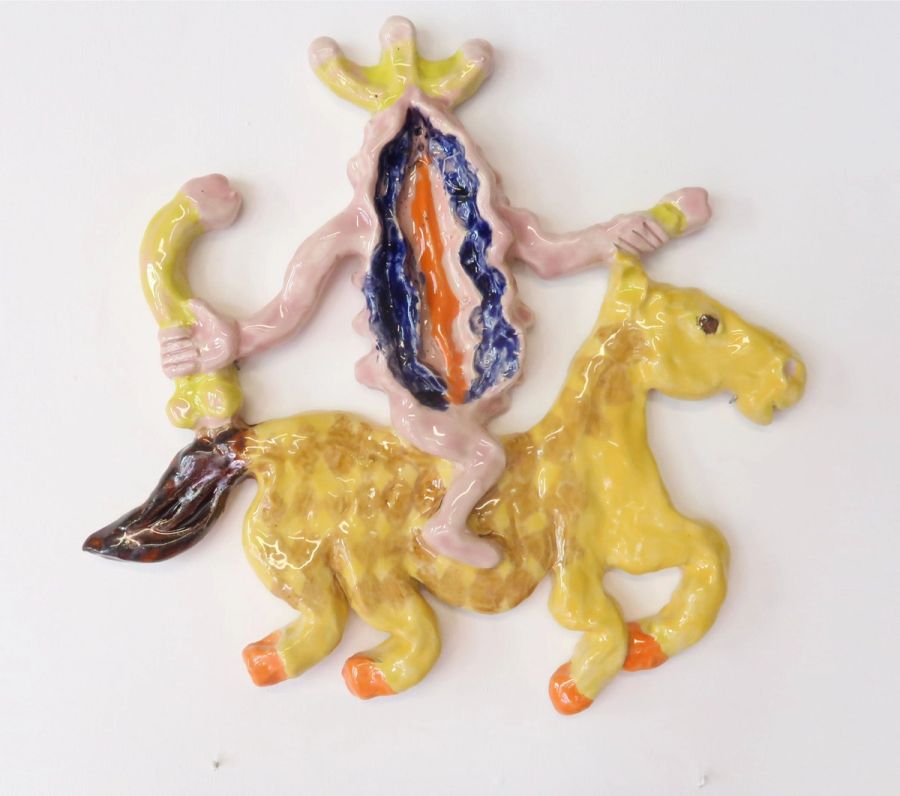
glazed ceramics
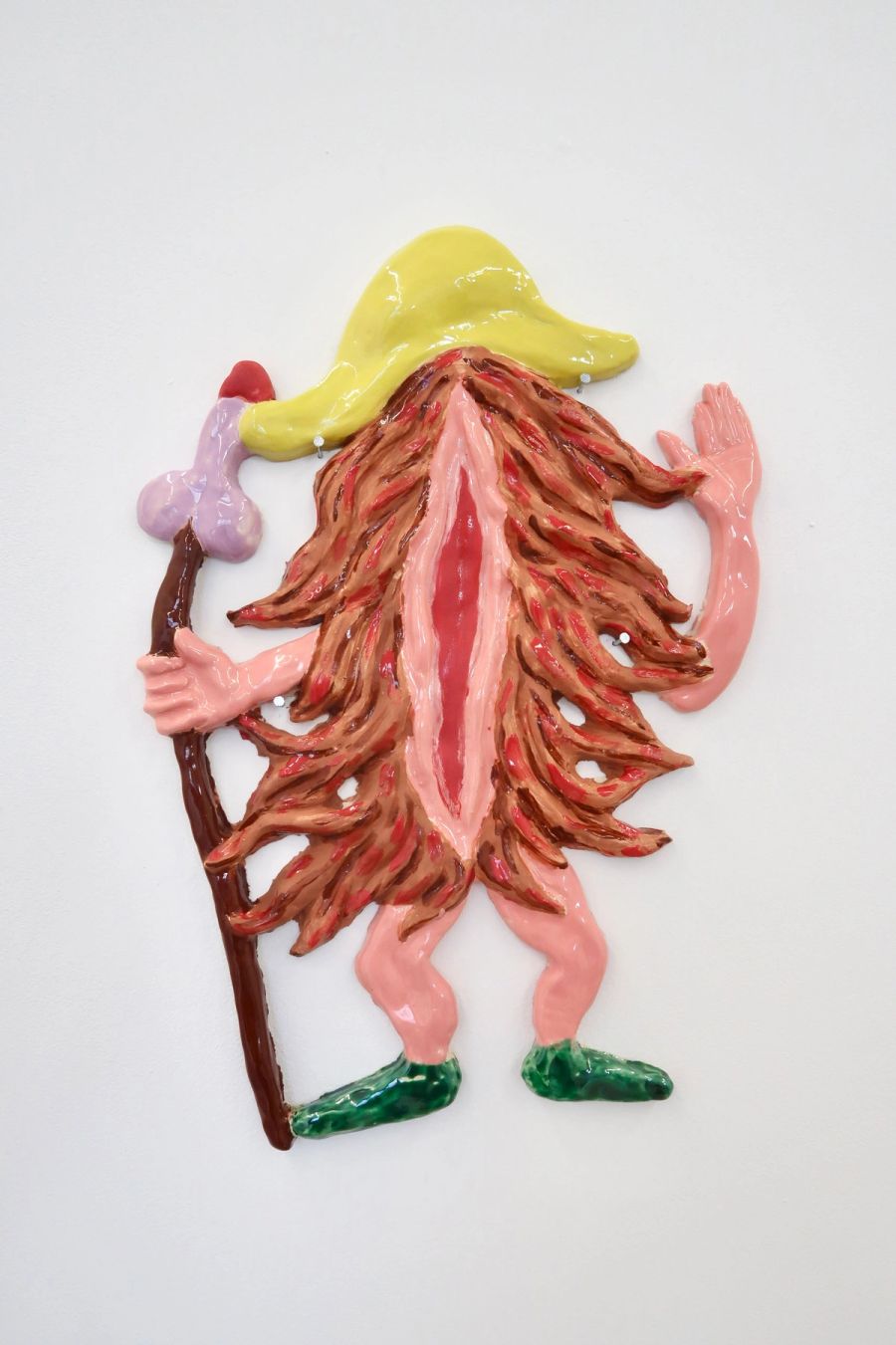
Glazed ceramics
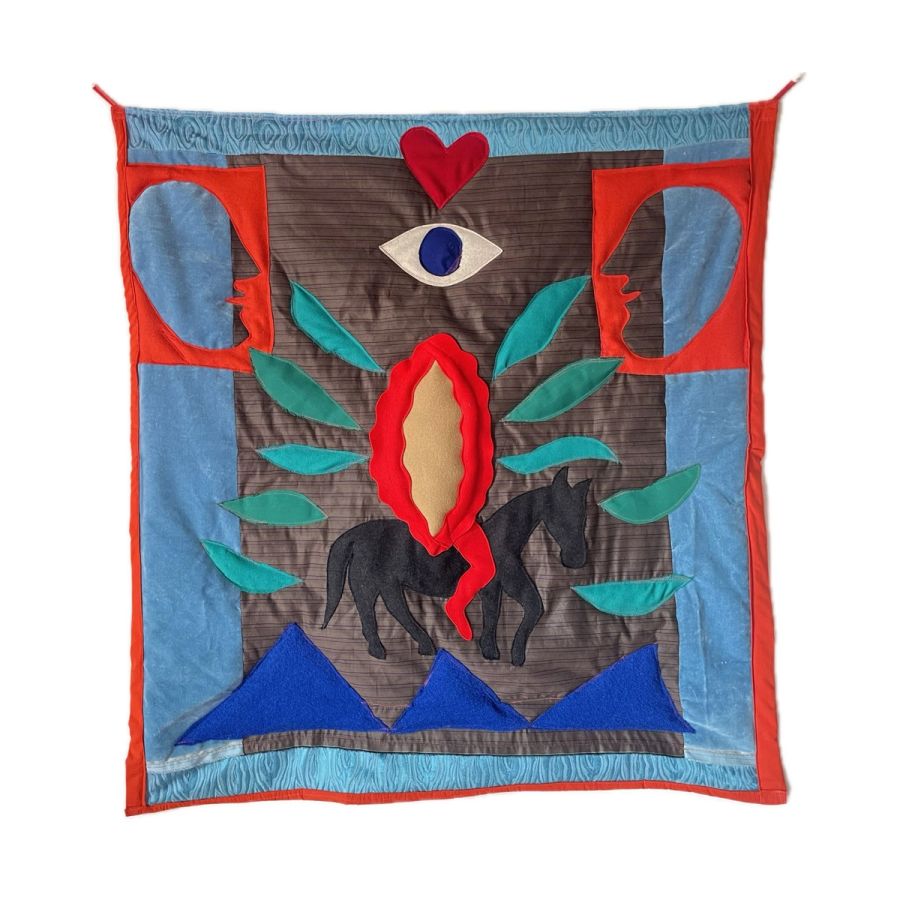
quilted & appliqué textiles
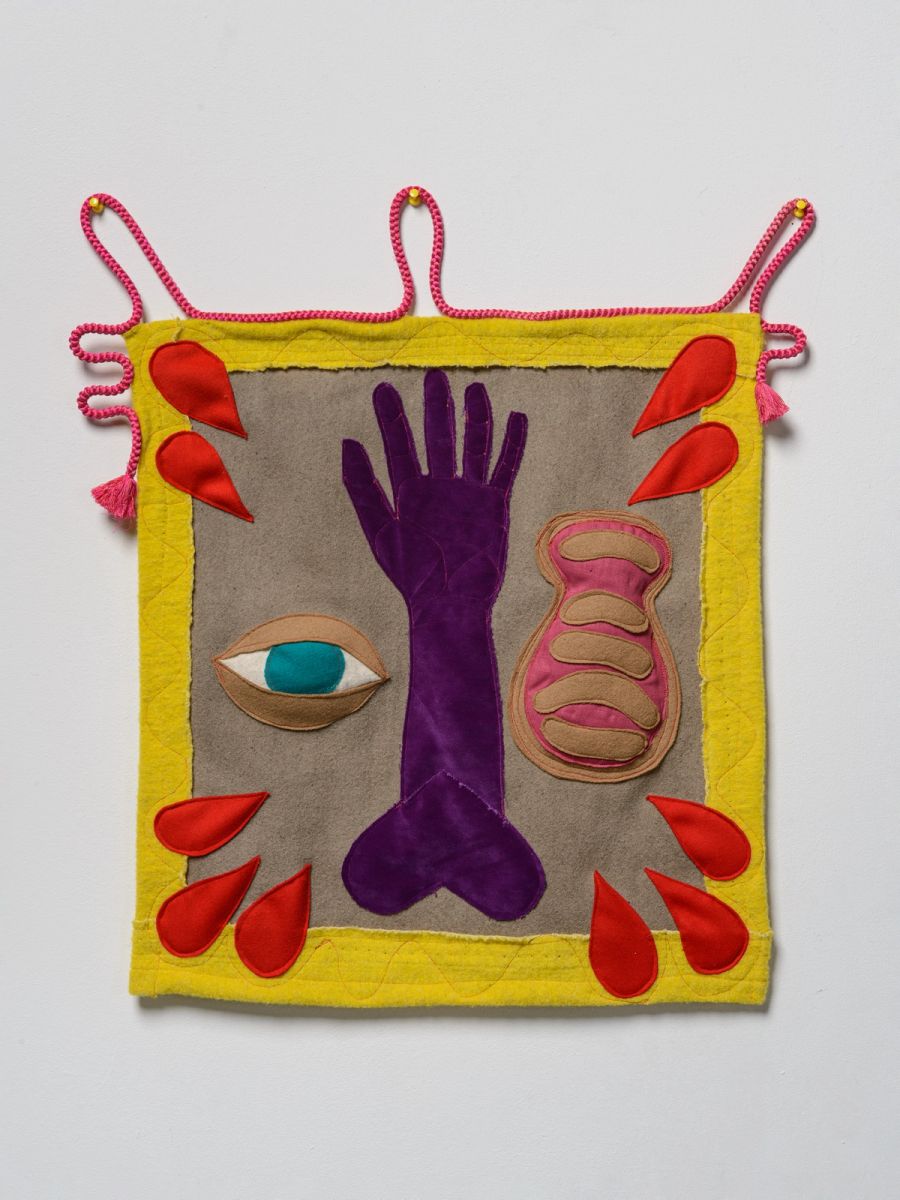
wool velvet linen and silk
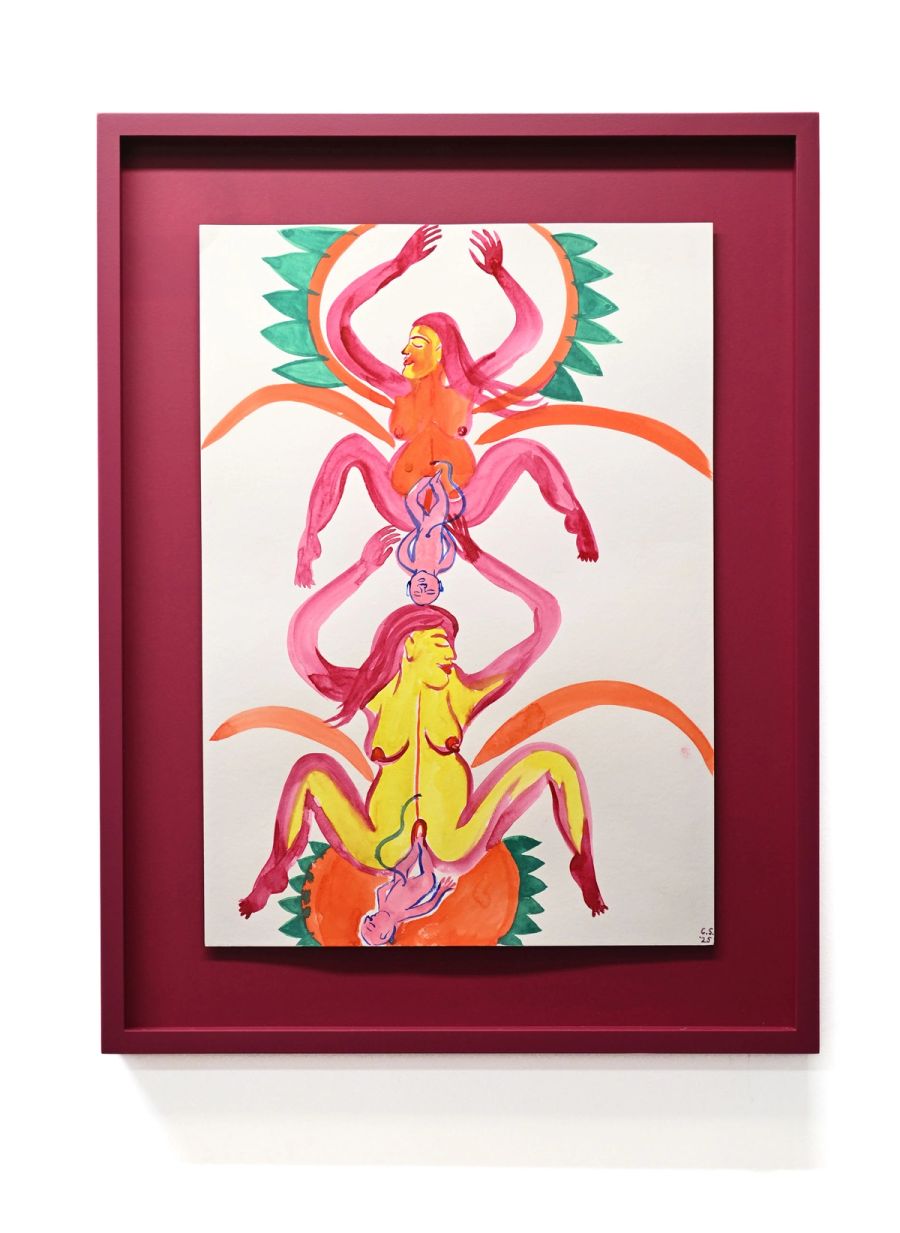
aquarel on paper
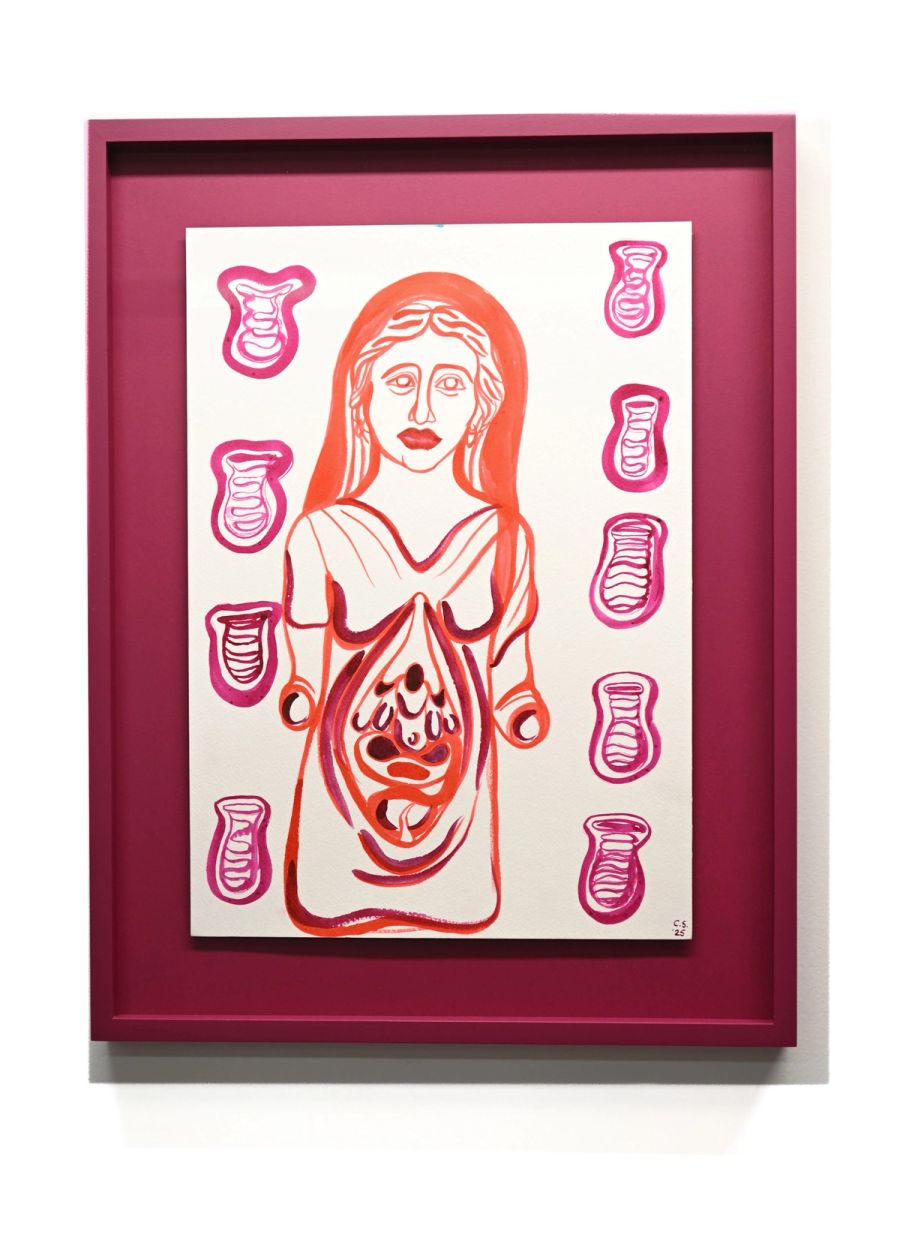
aquarel on paper
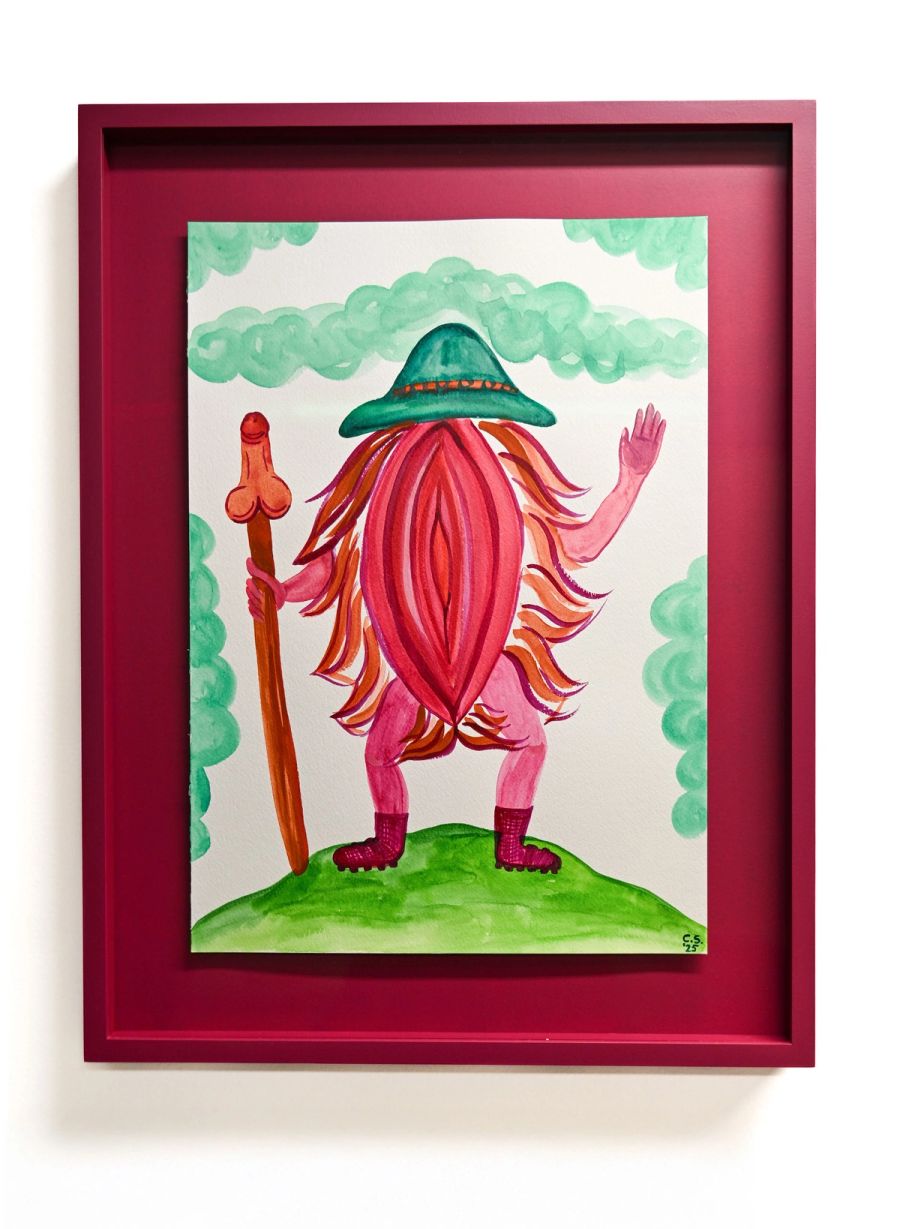
aquarel on paper
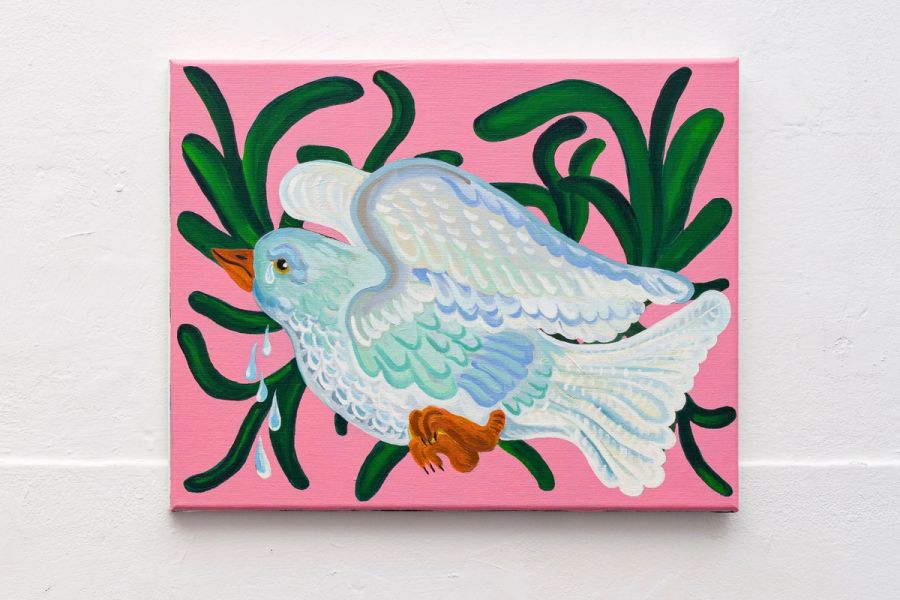
oil & acrylic on linen
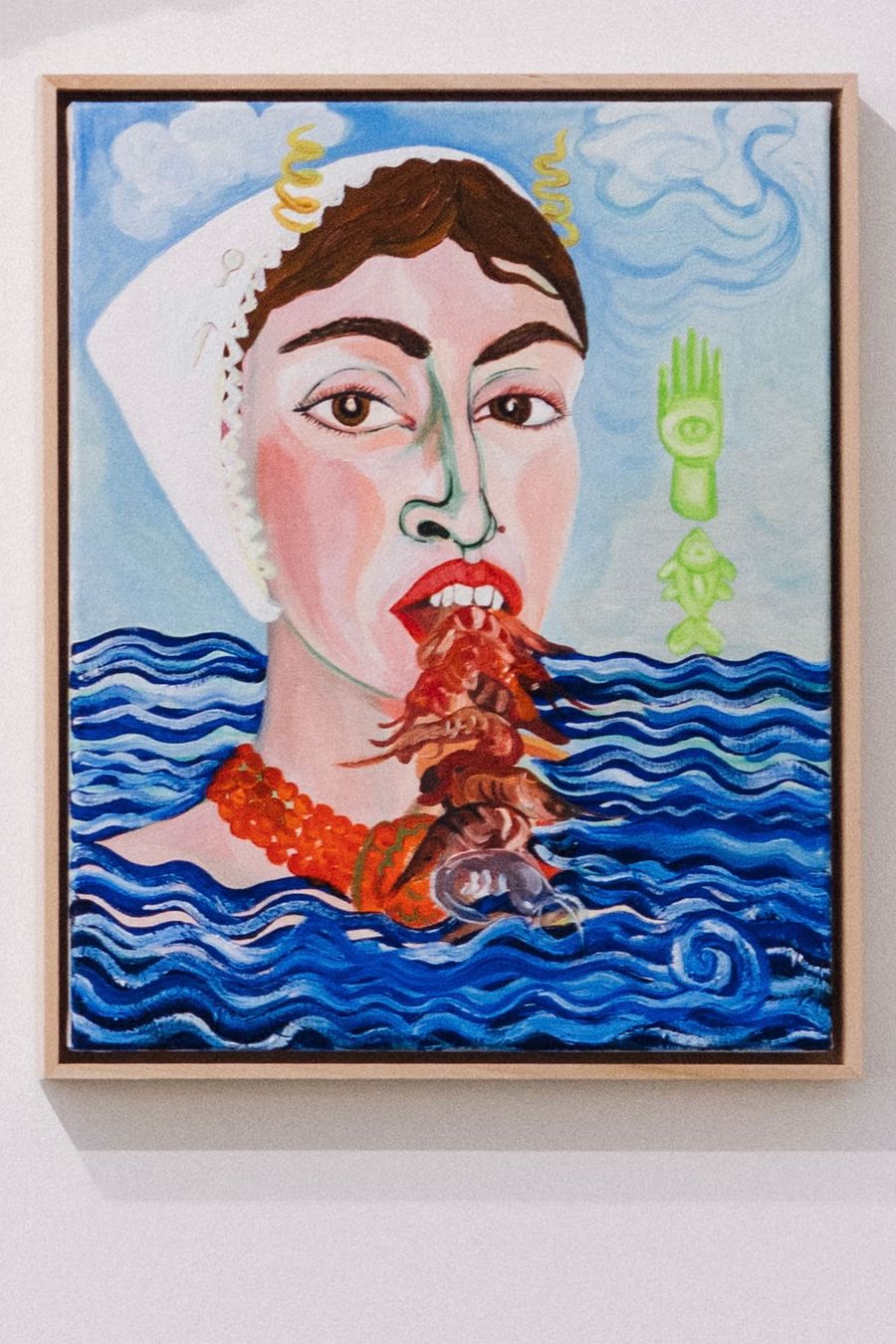
oil on linen
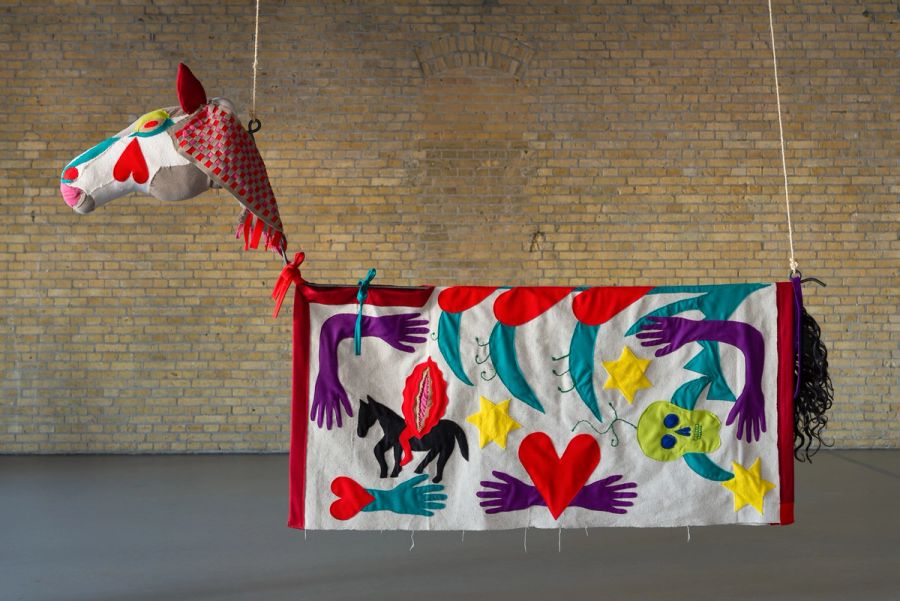
appliqué cotton wool silk embroidery yarn human hair steel and rope
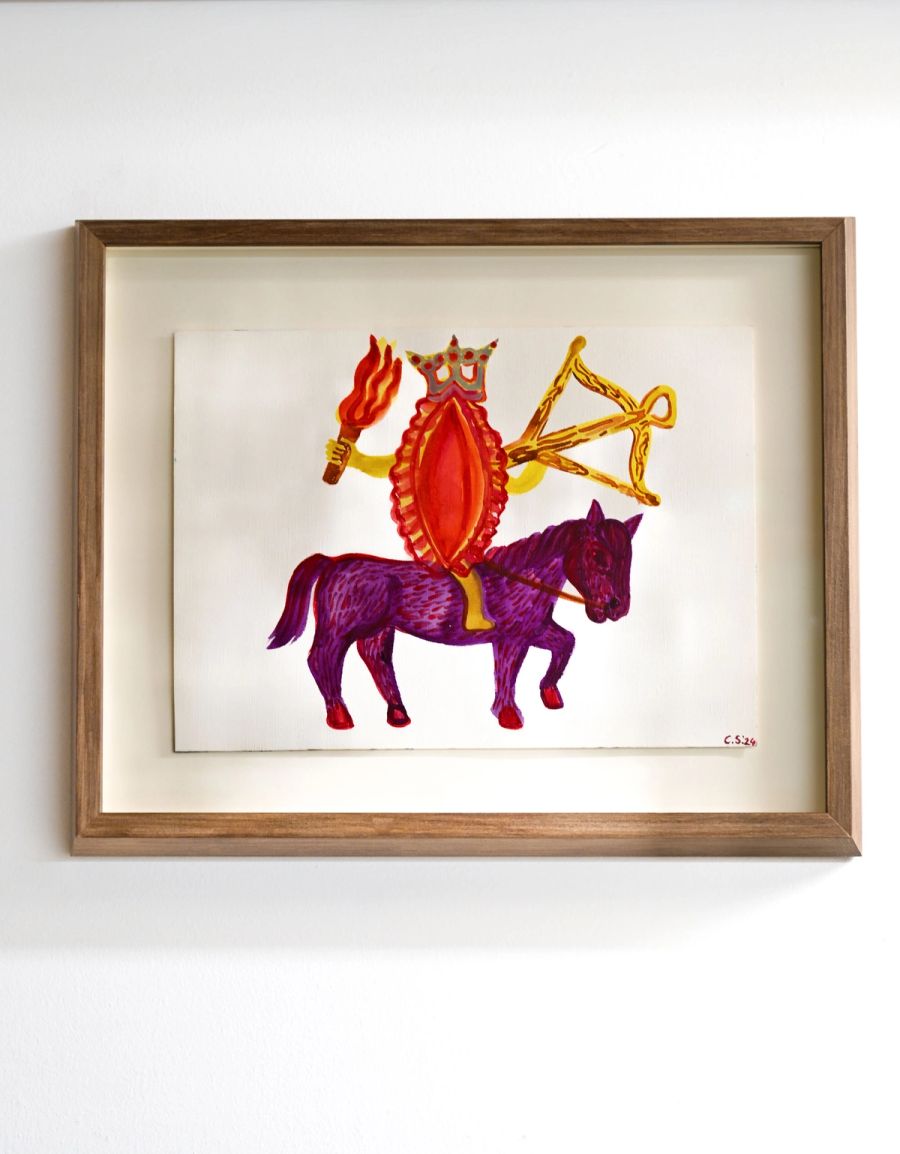
aquarel on paper
Installation views
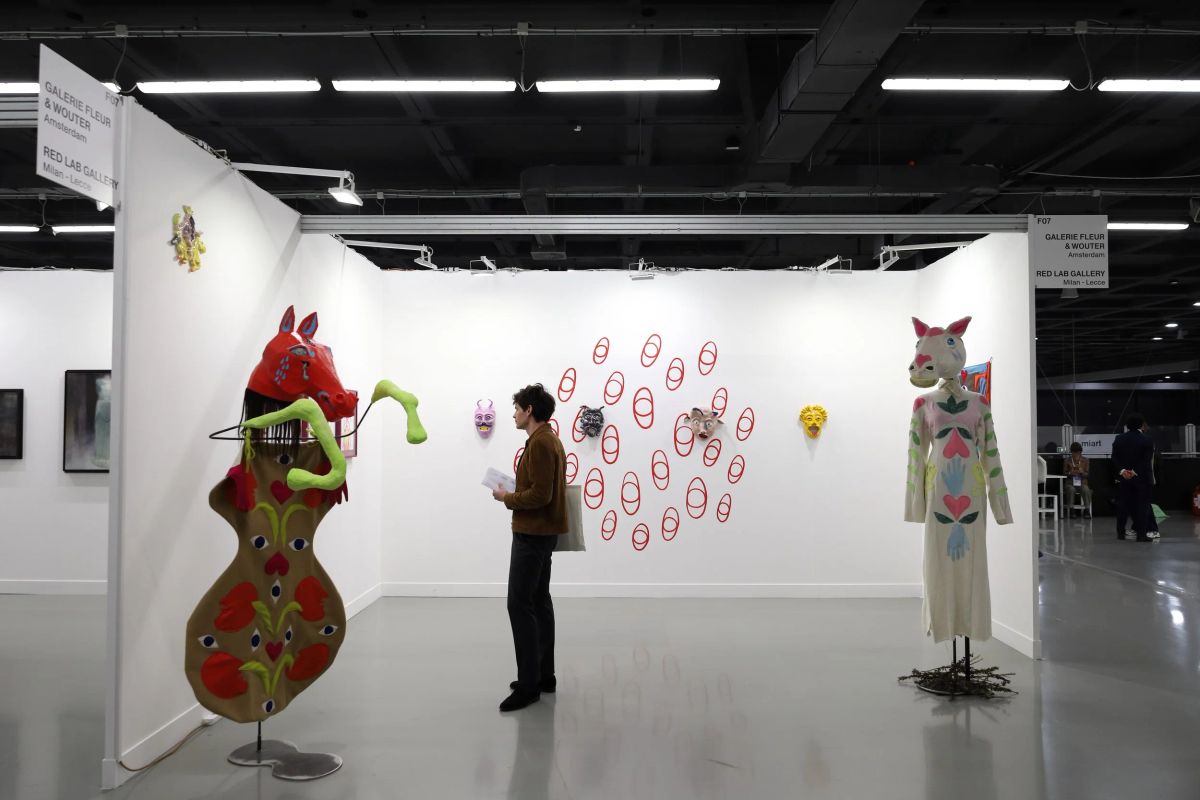
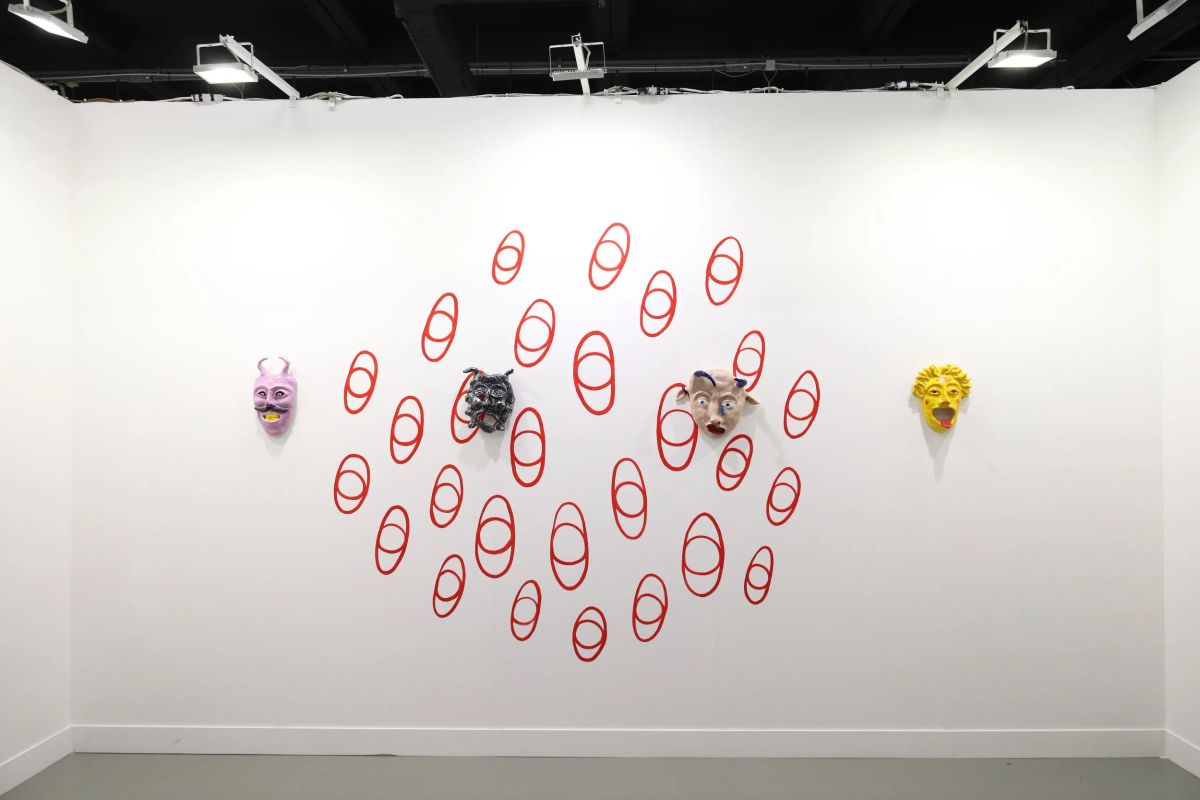
Artist
Carmen Schabracq
Carmen Schabracq (Amsterdam, NL, 1988) creates paintings, sculptural installations, masks and performances in which the theatricality of life plays an important role. She gathers stories from various myths, traditions and her own experiences and uses them to create collage-like visual narratives. The mask is a recurring object and theme in her work, which she uses to explore the complexity of human identity. A mask is a tool within a ritual or performance, to become 'the other' and she plays with this in various ways. Her work is also a form of escapism because of the characters she places in spaces of colour. A way to briefly escape from this world and imagine yourself in another, full of playfulness and humour, to deal with the layered reality of life and death. Just as folkloric rituals and traditions do, for instance in the celebration of the seasons, to propitiate the gods, scare off demons and devils or celebrate fertility. Schabracq's work is a stylised theatre of her own cosmos, with references from art history and folklore such as costumes. Carmen was born in Amsterdam (1988), where she now lives and works. In 2012 she obtained her BA in fine arts from the Gerrit Rietveld Academy, after a year of painting studies at the Academia di Belle Arti in Rome. In 2015 she obtained her MA in theater costume design at the Royal Academy of Fine Arts Antwerp, with a research and body of work she called 'naked masks'. In 2017-2018 she received the ‘new makers subsidy’ from the Performing Arts Fund NL, with which she made two in situ performances in Zeeland. Her work has been shown in several museums, like Stedelijk Museum Breda, Museum Tot Zover, Amsterdam and Nest, The Hague.
More about Carmen Schabracq →