8 – 11 October 2026
Mirjam Vreeswijk, Natalia Jordanova
Sofia Art Fair 2026
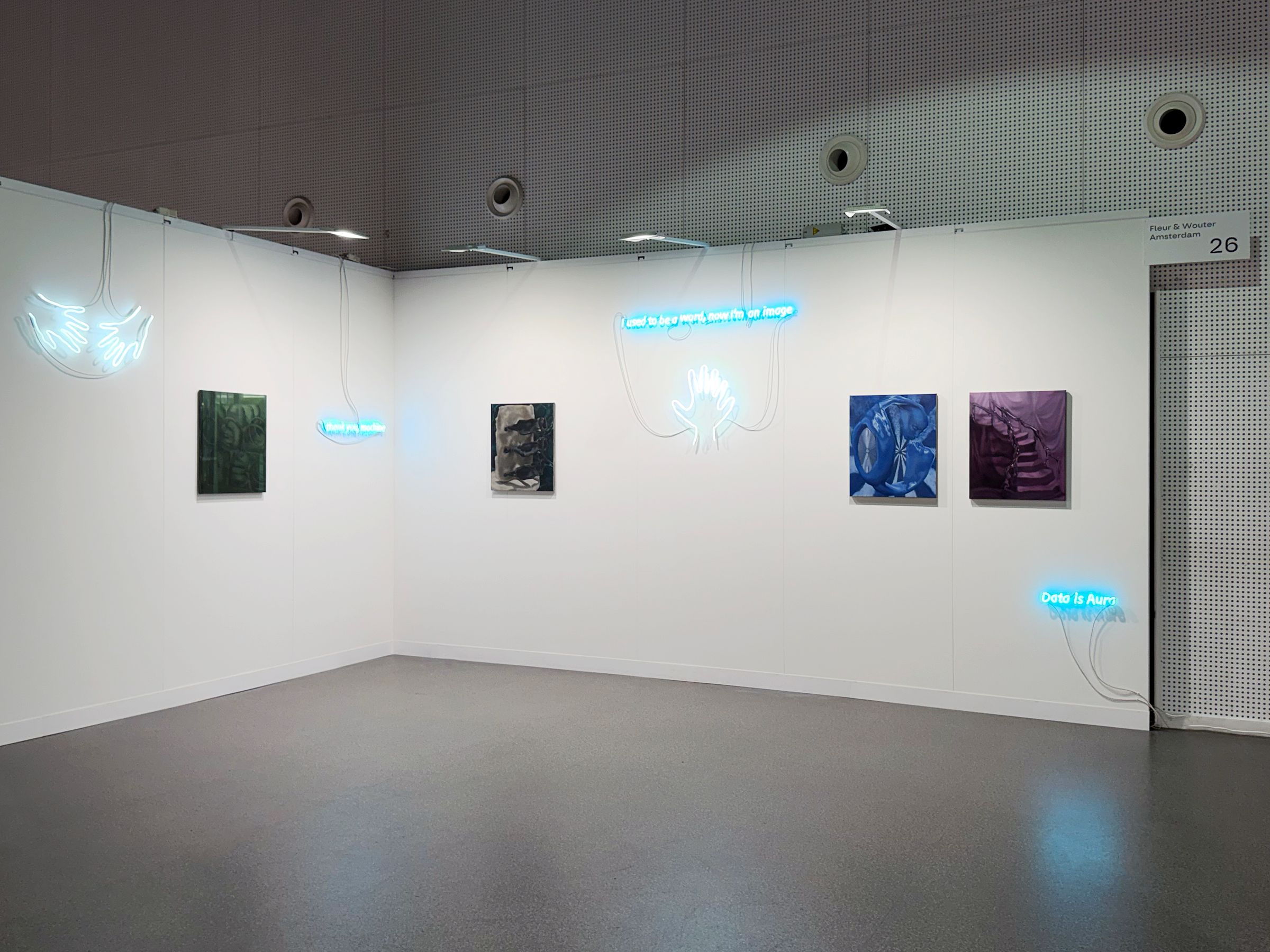
Sofia Art Fair is the first international exhibition of its kind for contemporary visual art in Bulgaria, which creates an organized market environment for works of art. It brings together over 80 artists and 27 galleries from 14 countries.
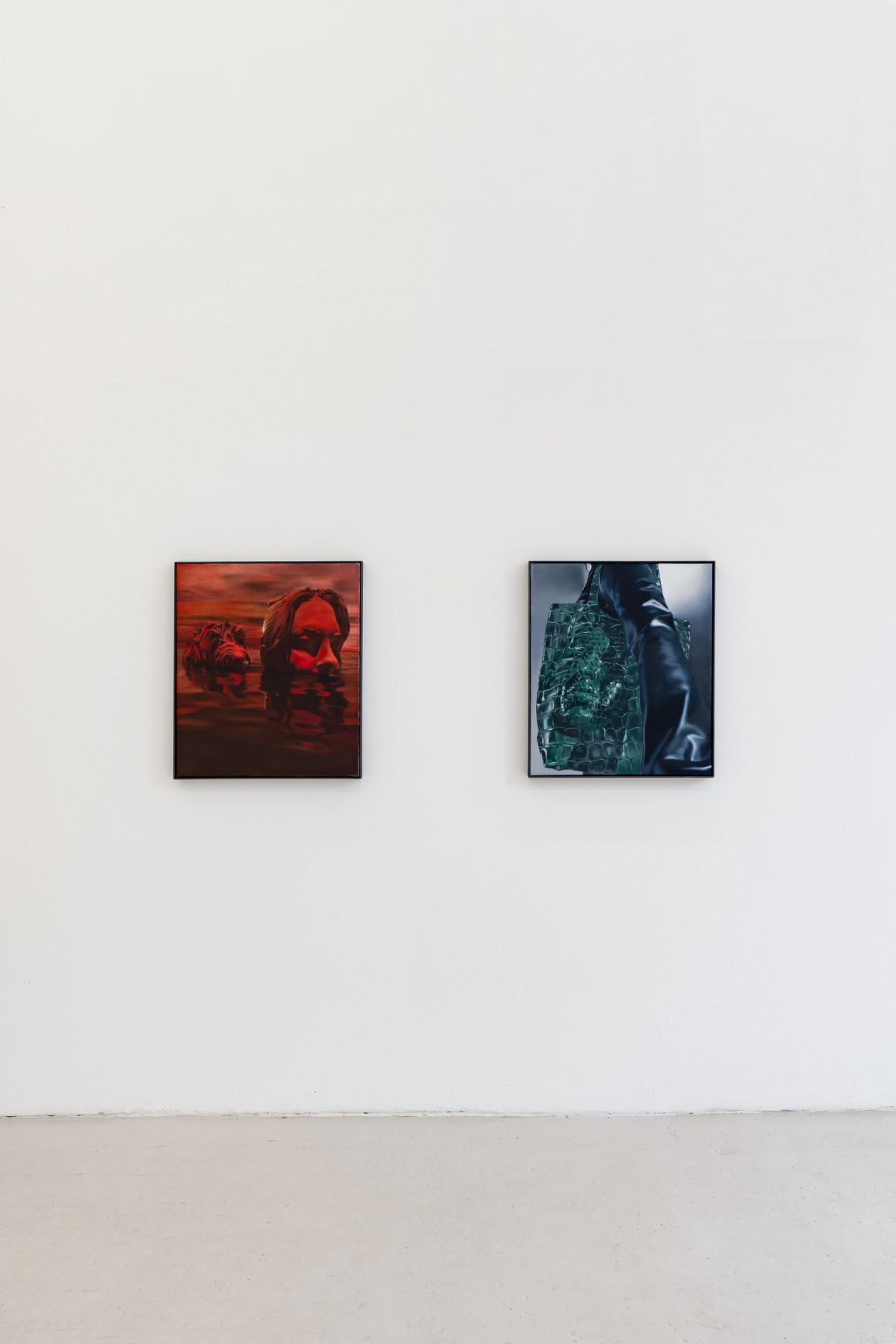
At the fair we will be showing new works by Natalia Jordanova and Mirjam Vreeswijk.
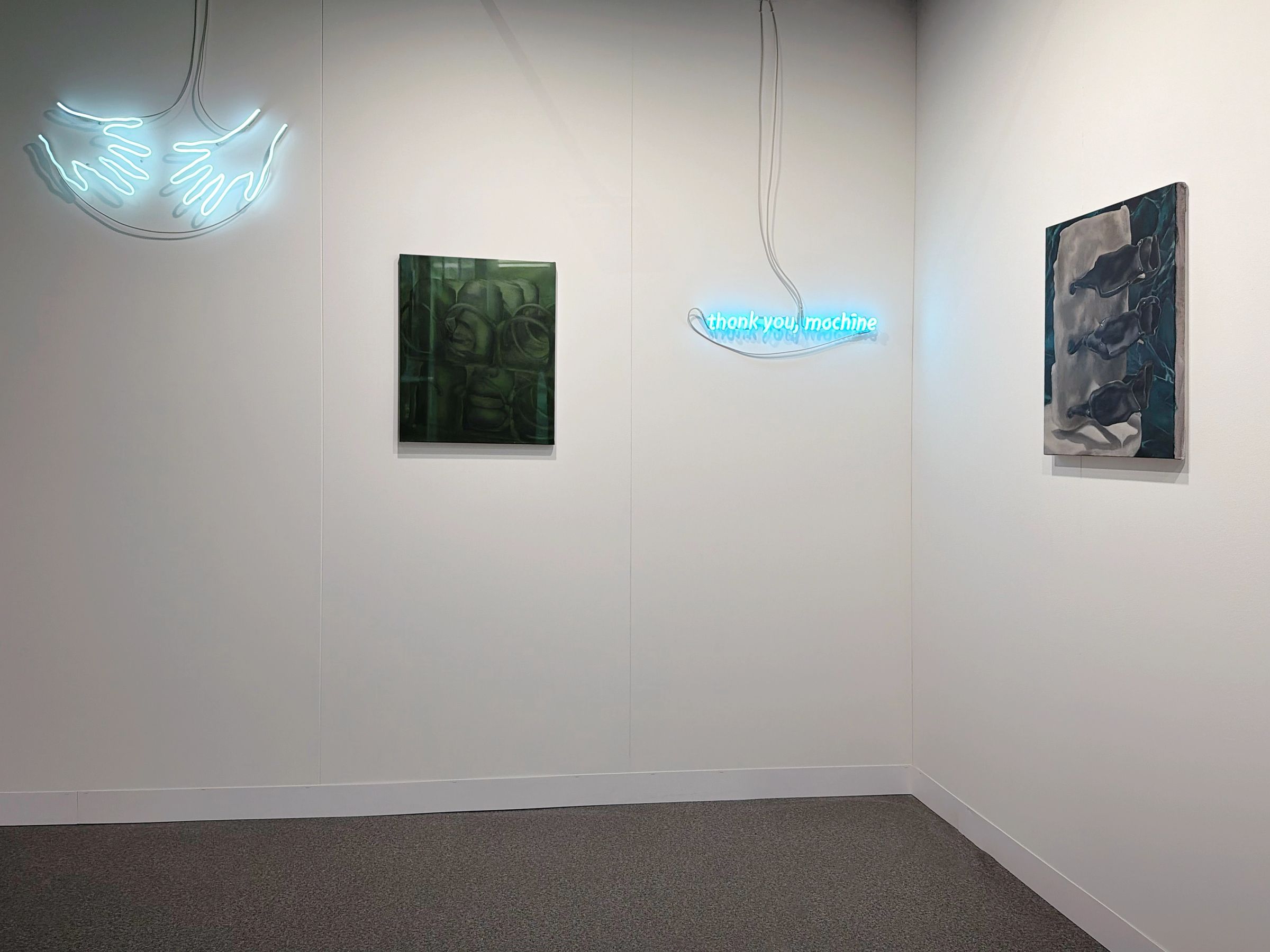
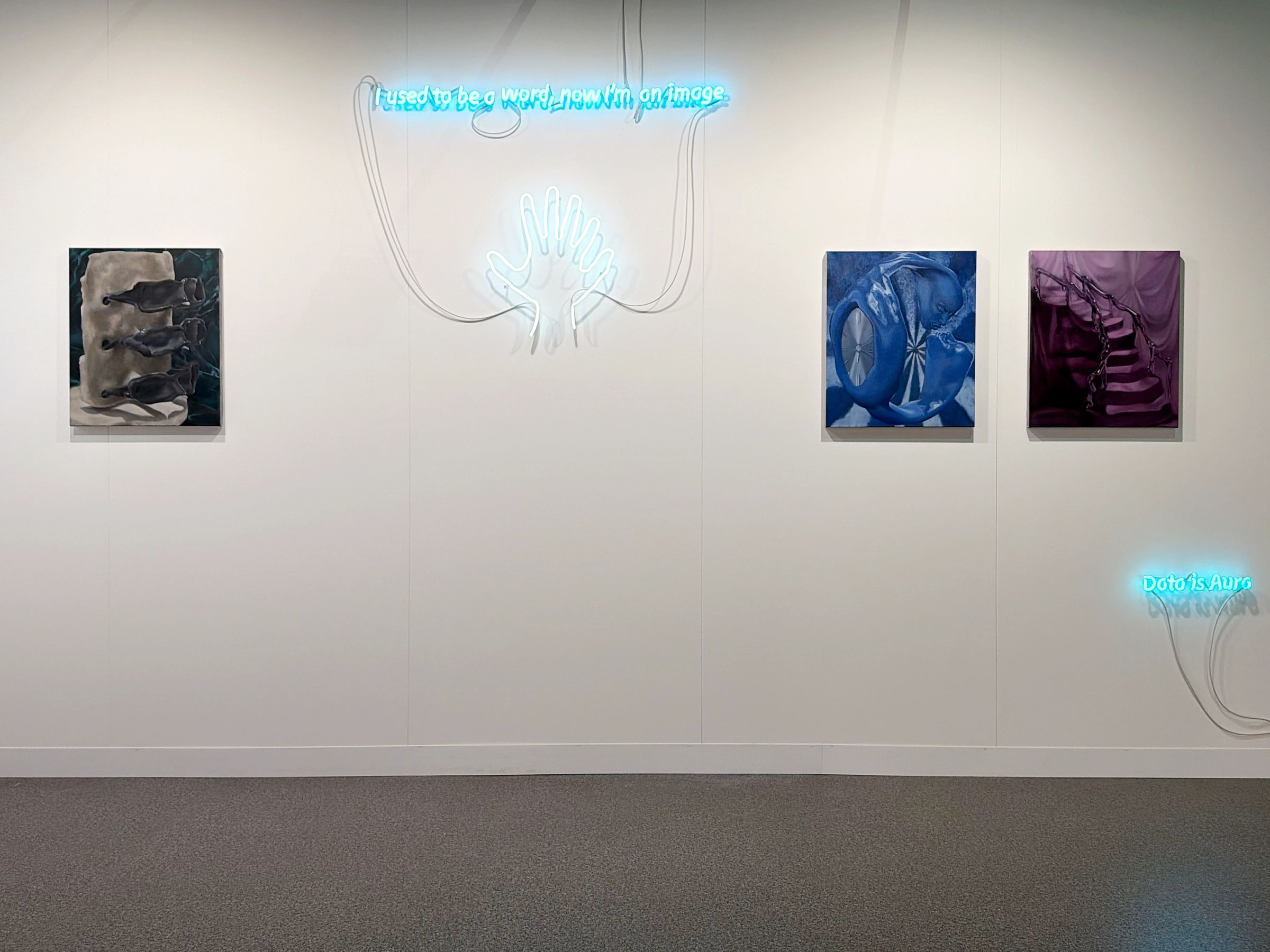
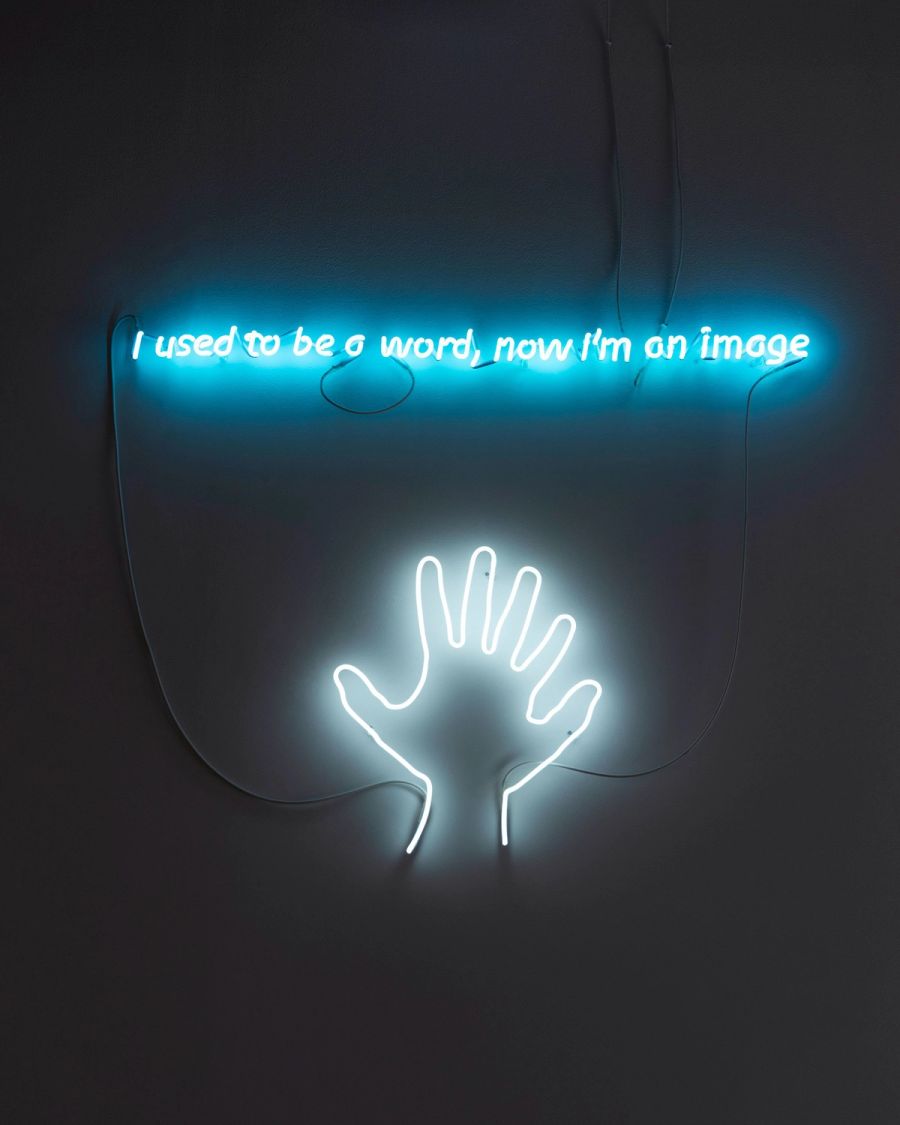
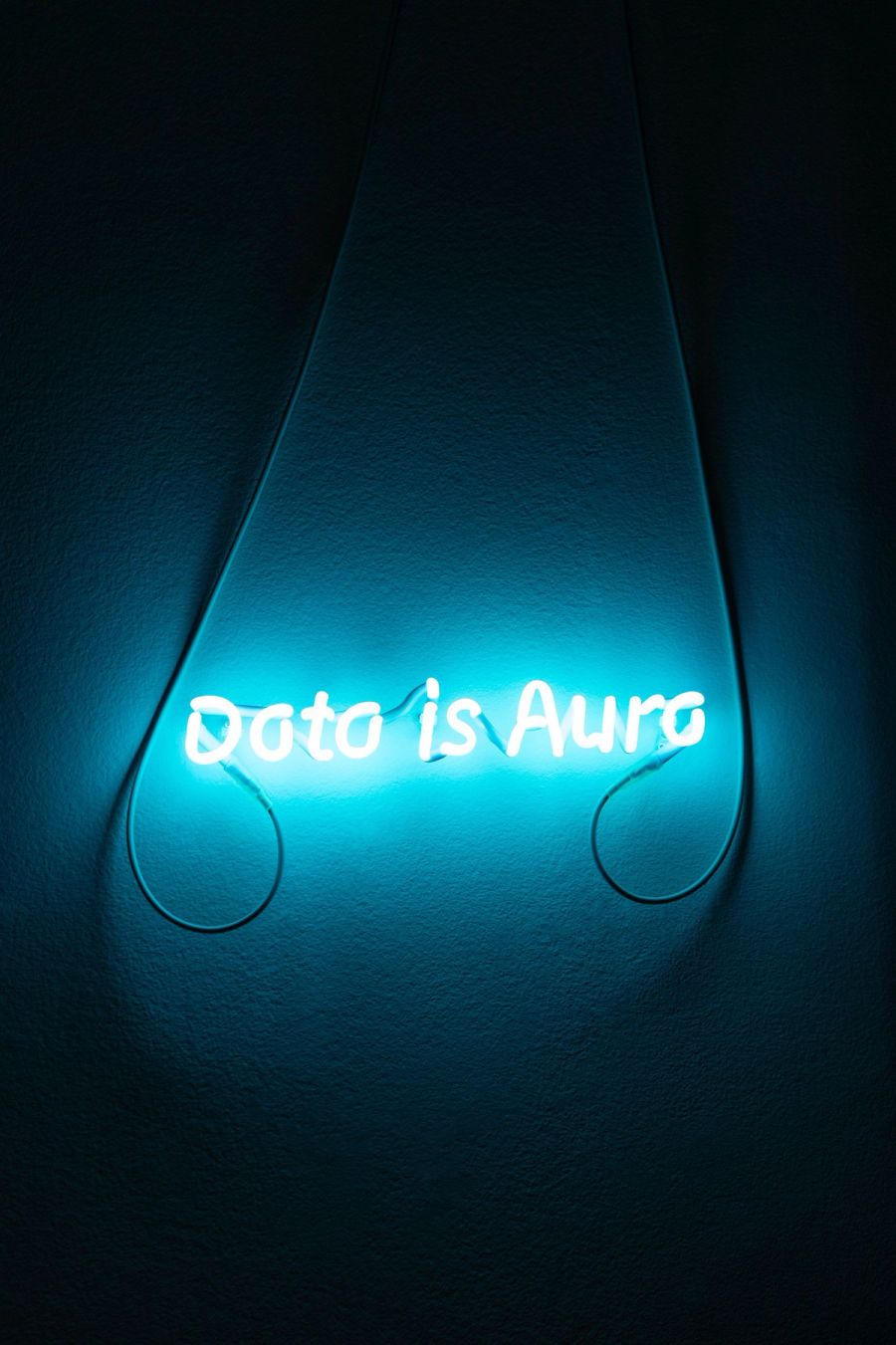
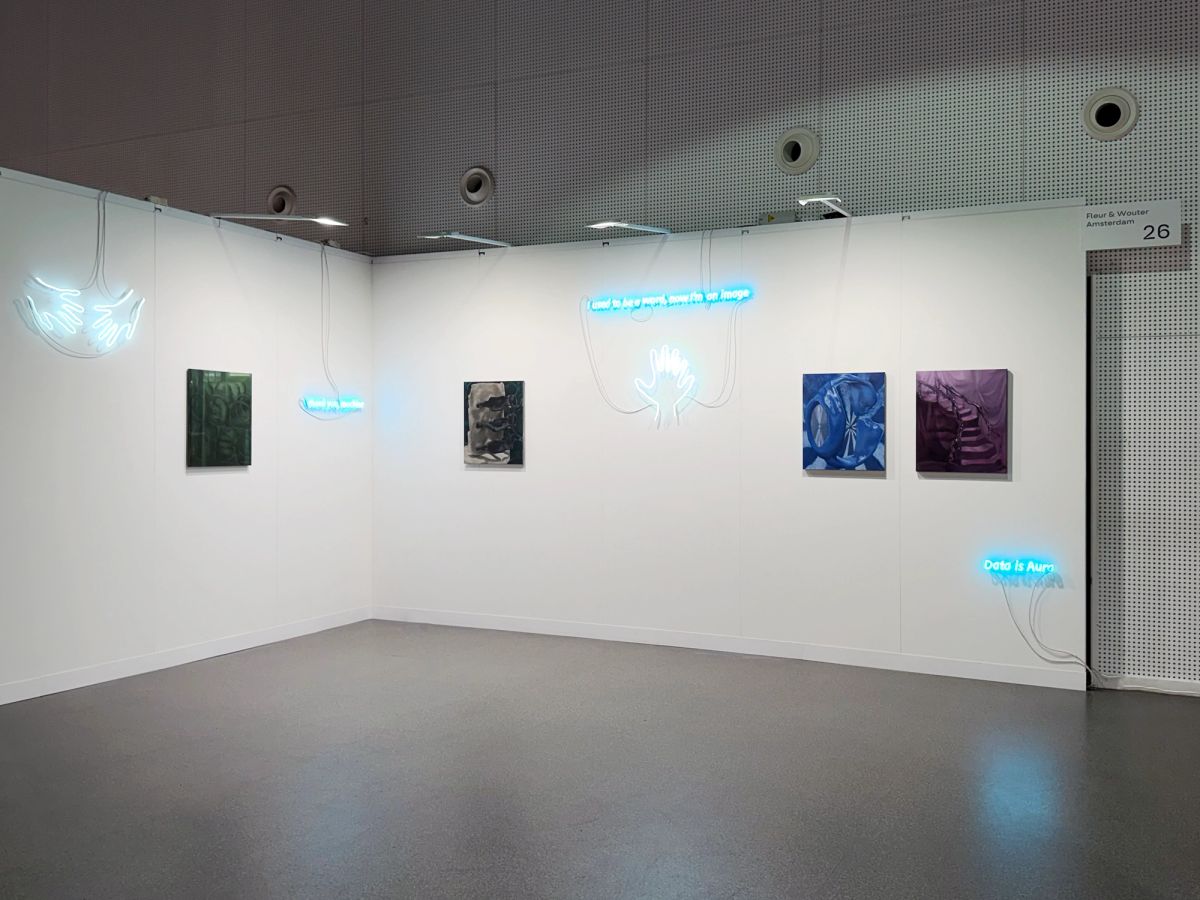
Natalia Jordanova (1991, Sofia, Bulgaria) will present neon works that originate from an earlier project presented during her 2020 BAZA nomination, which marked the beginning of her engagement with artificial intelligence. At a time when people knew little about what was to come, the work combined 3,500 AI-generated images with an essayistic wall text reflecting on the meaning and transformation of images in the age of artificial intelligence. Five years later fragments of that text were reactivated into a series of autonomous neon works, with the name The Cave is not a Clock (2025).
In Jordanova’s idea-driven installation practice, where the specificity of media dissolves, the choice of neon came from the need to draw on the history of conceptual art in which language itself became material, image and object. The phrases move between statement as message, image as artefact and inscription. Reappearing as luminous forms, they function like contemporary petroglyphs, marks that carry language across different temporal layers and suggest a speculative archaeology in which timelines collapse.
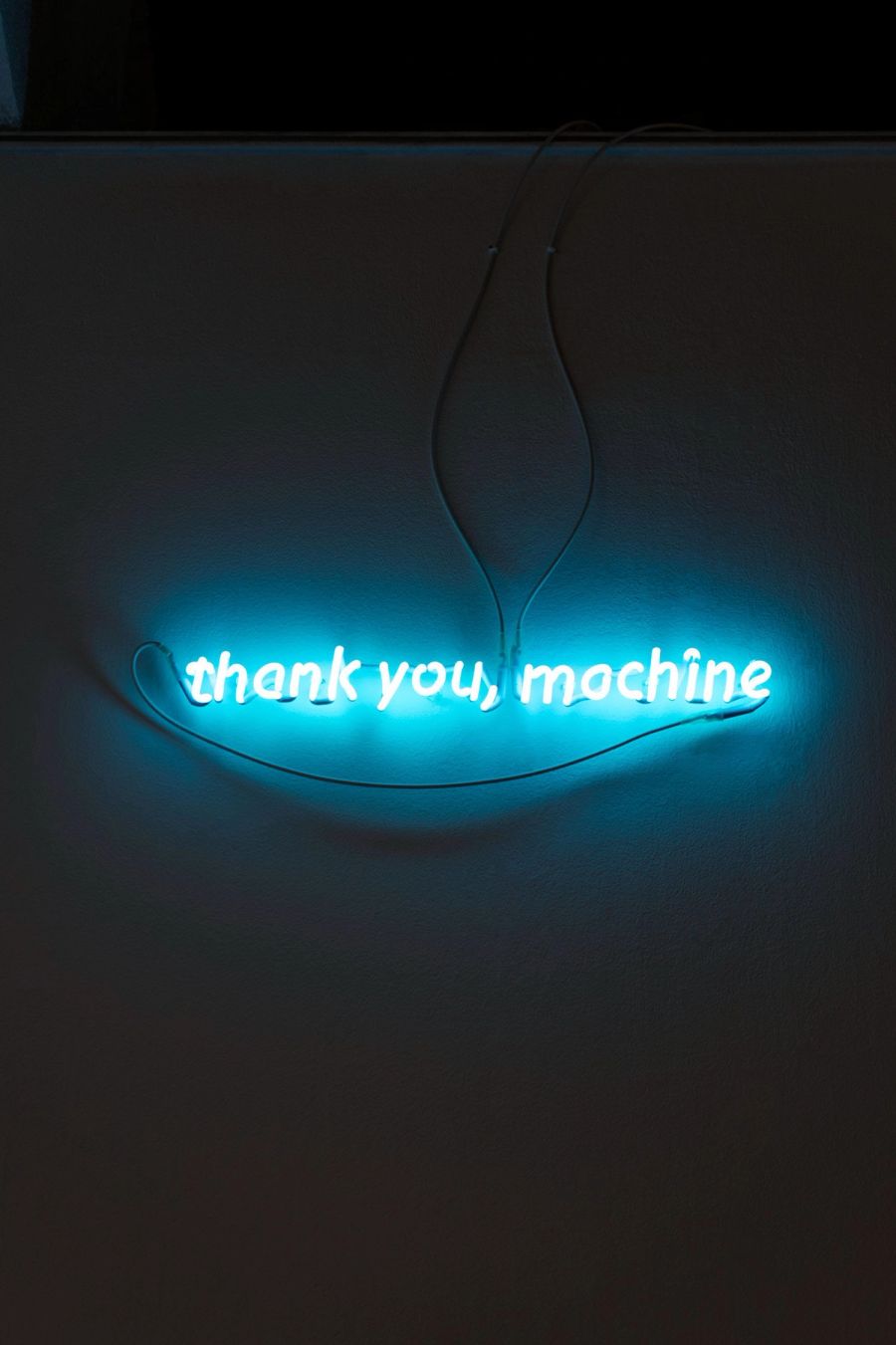
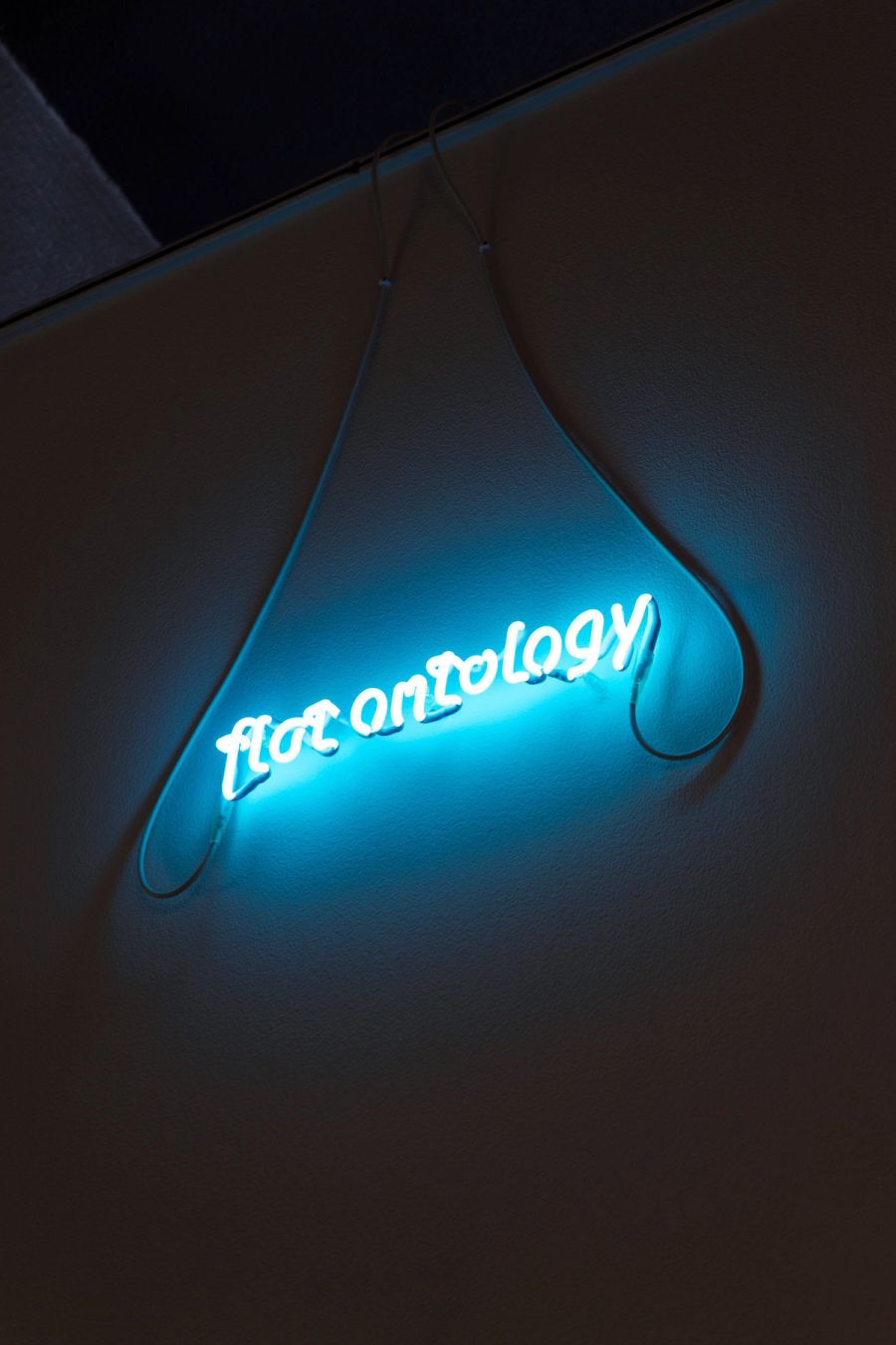
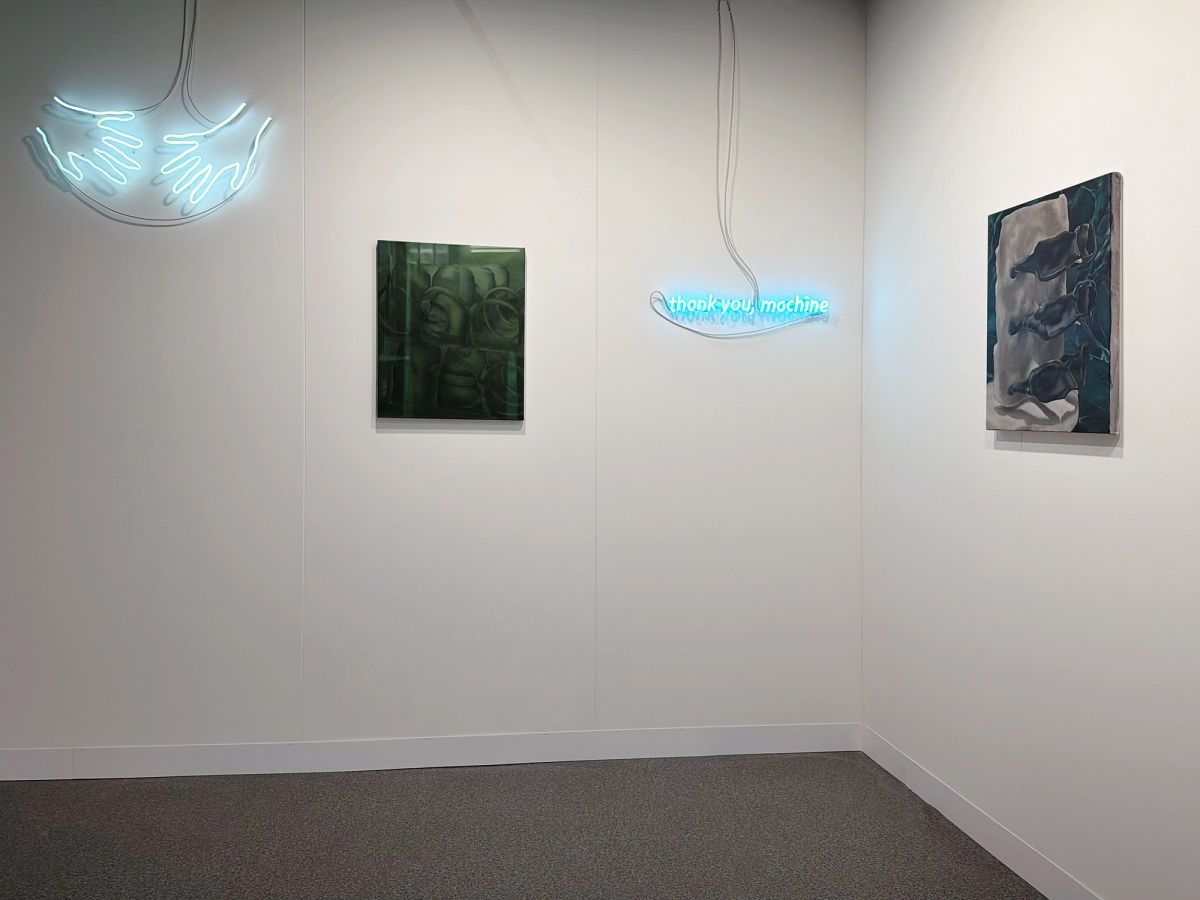
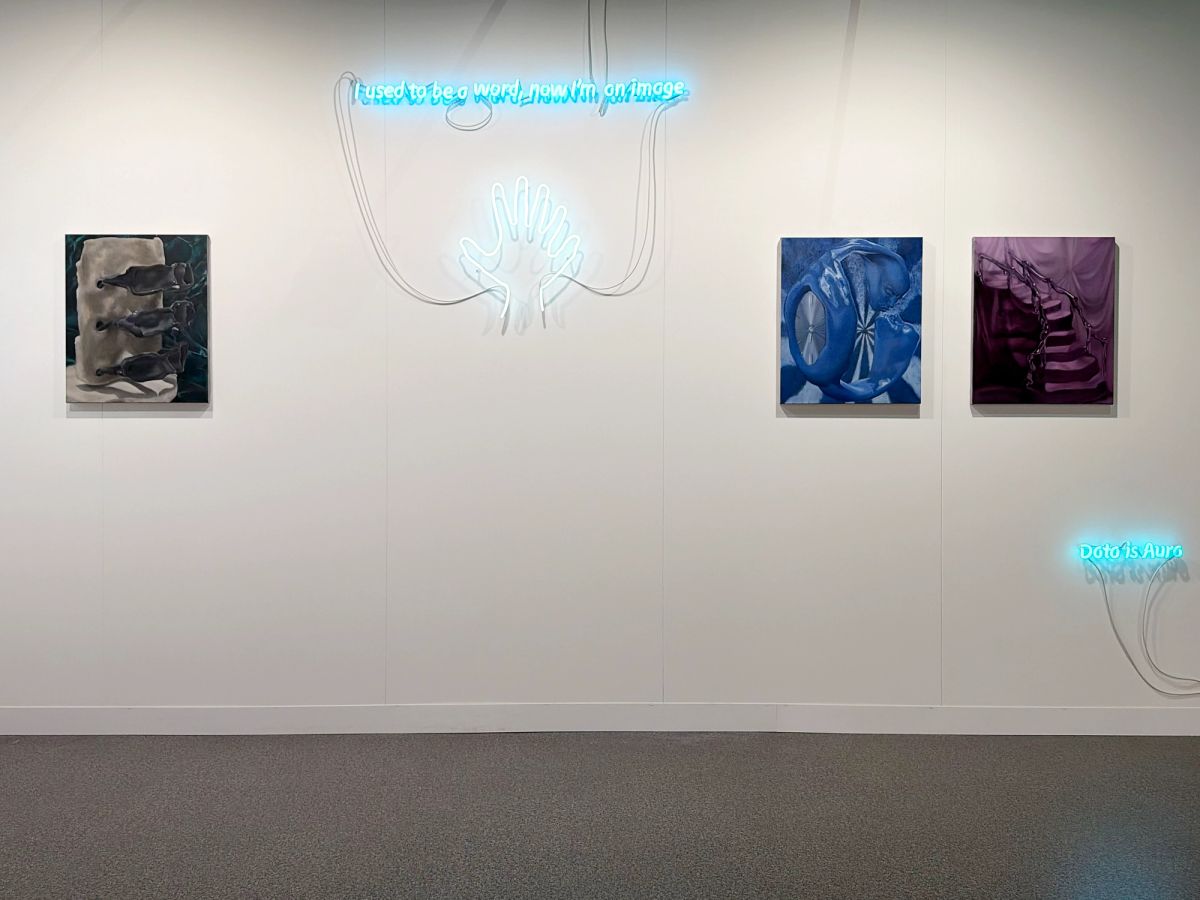
A flat ontology underpins the constellation of works, where text, image, object, technological process and bodily gesture exist on equal footing. The phrases I used to be a word, now I’m an image, thank you, machine, flat ontology and Data is Aura reflect on the shifting relationships between language, images and algorithmic systems without resolving them into a single narrative.
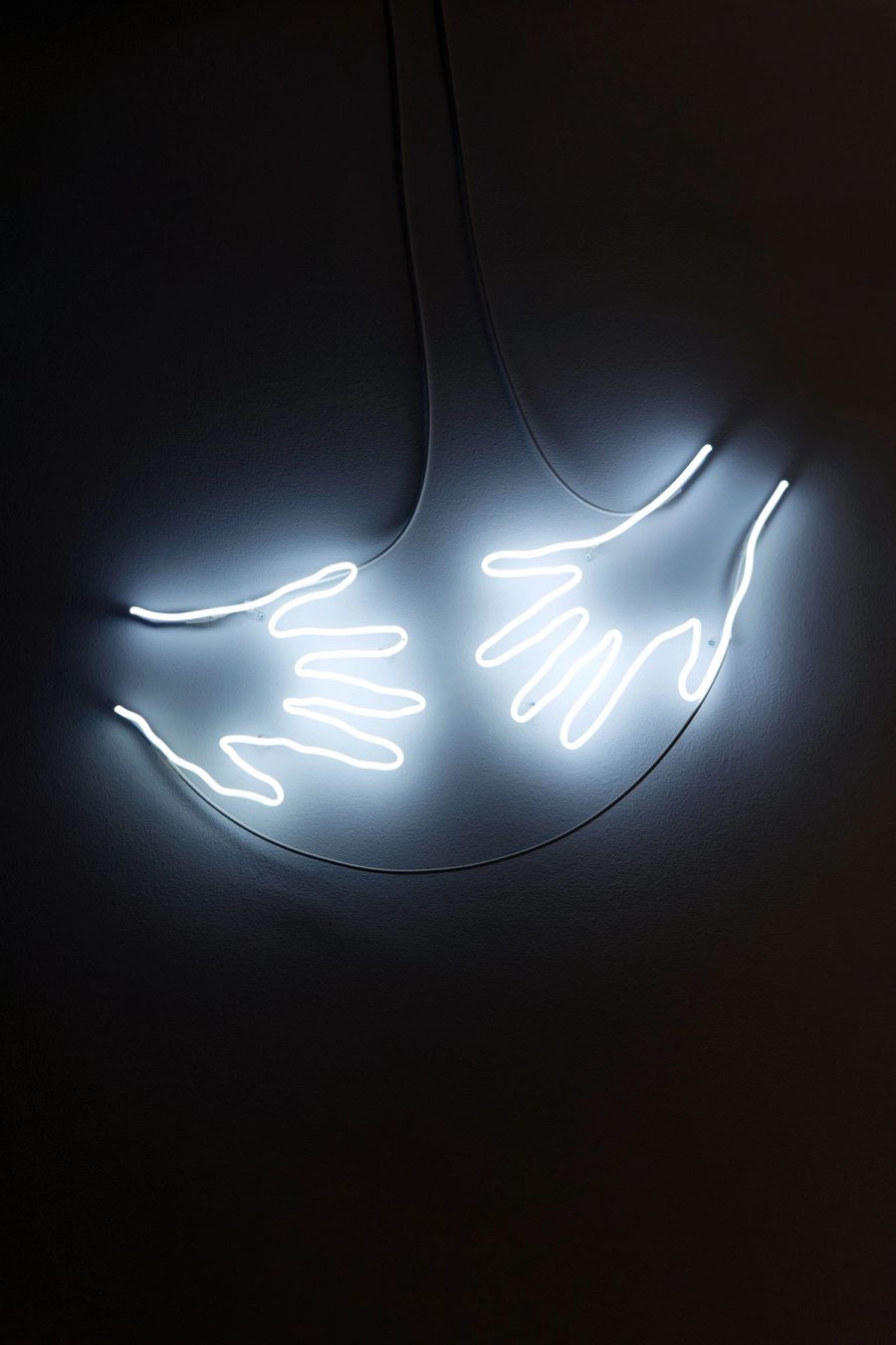
The hands introduce another temporal layer. The outline of a six-fingered hand incorporates a familiar error of AI-generated imagery, bridging prehistoric cave markings with algorithmic glitch. In Mutual Signal, two hands derived from cave imagery appear as a gesture of contact, communication or recognition. Together the works trace layered and cyclical histories of image-making, in which the ancient handprint, the written word and the computational image become substitute, translation or continuation of the other.
Mirjam Vreeswijk
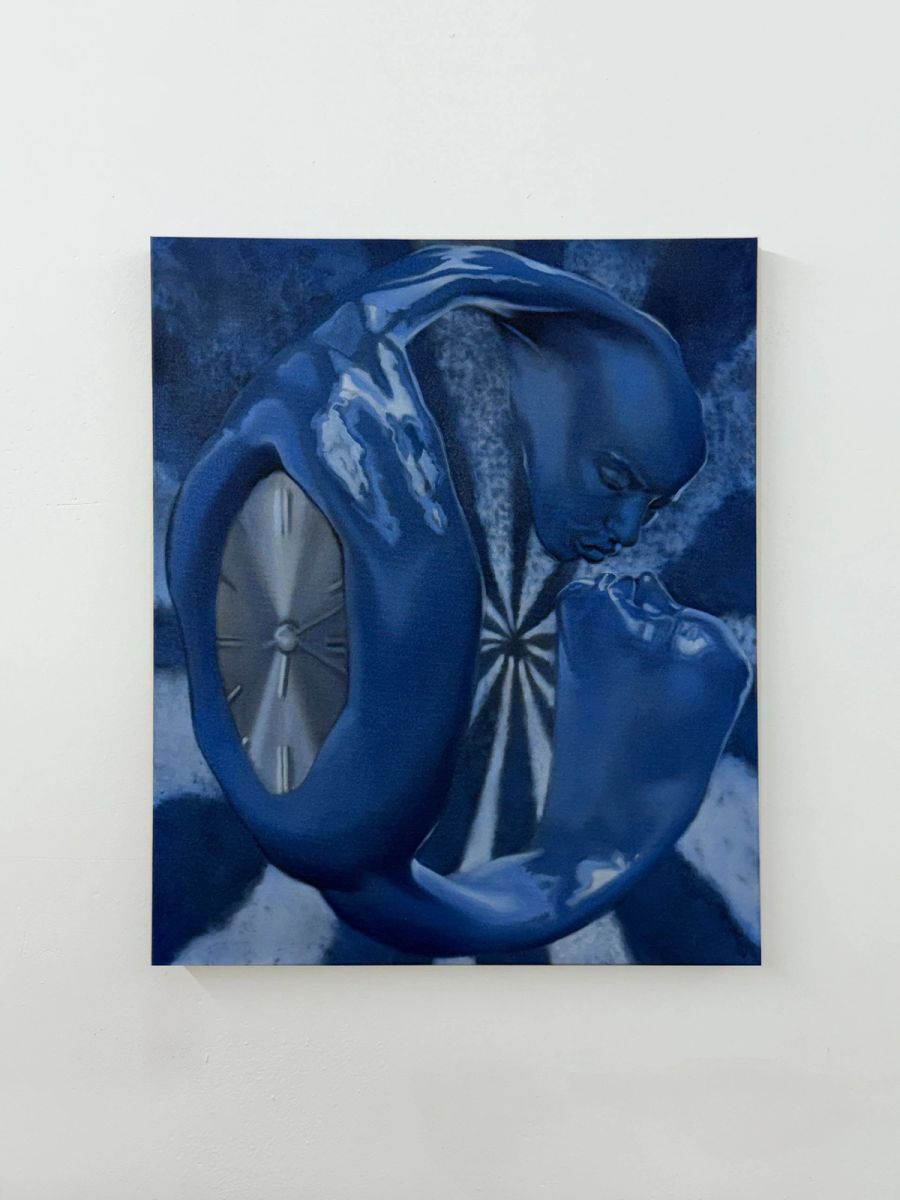
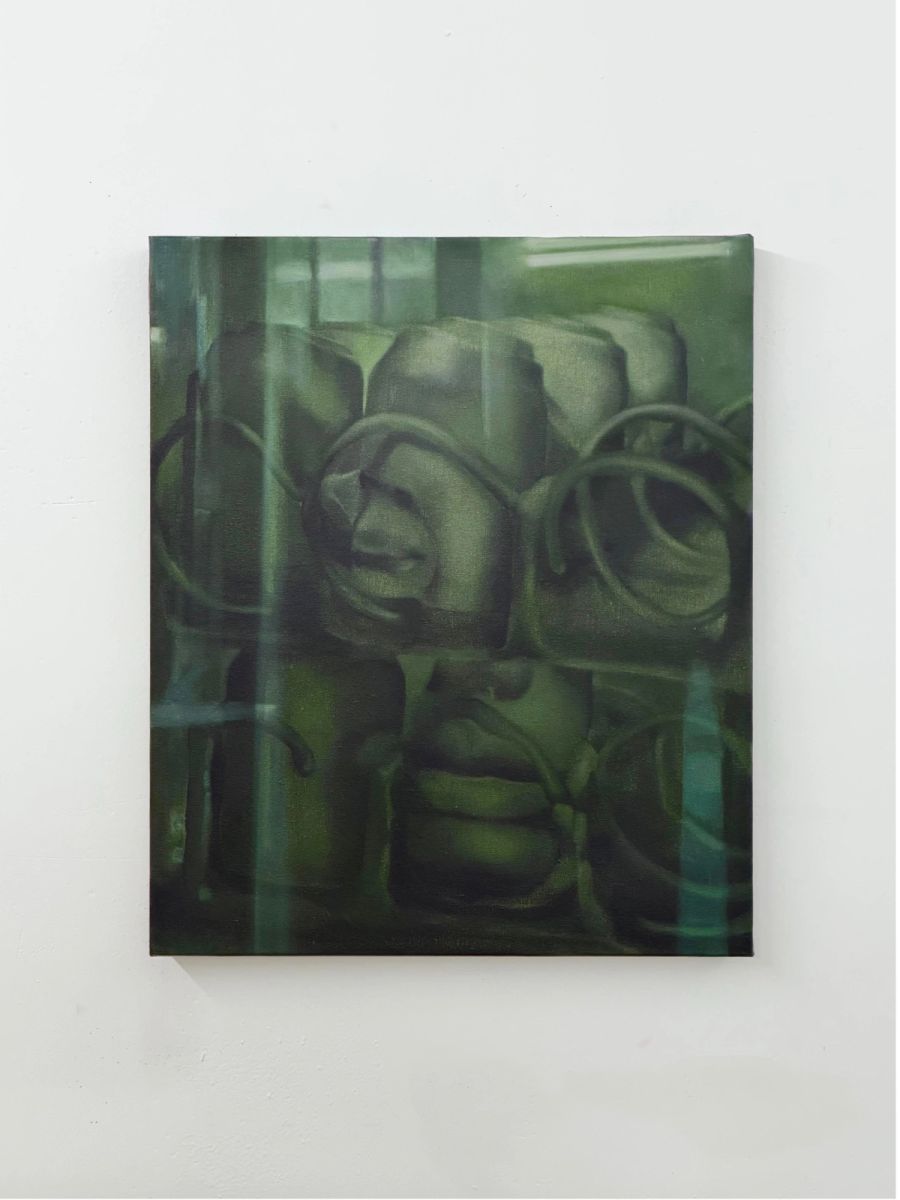
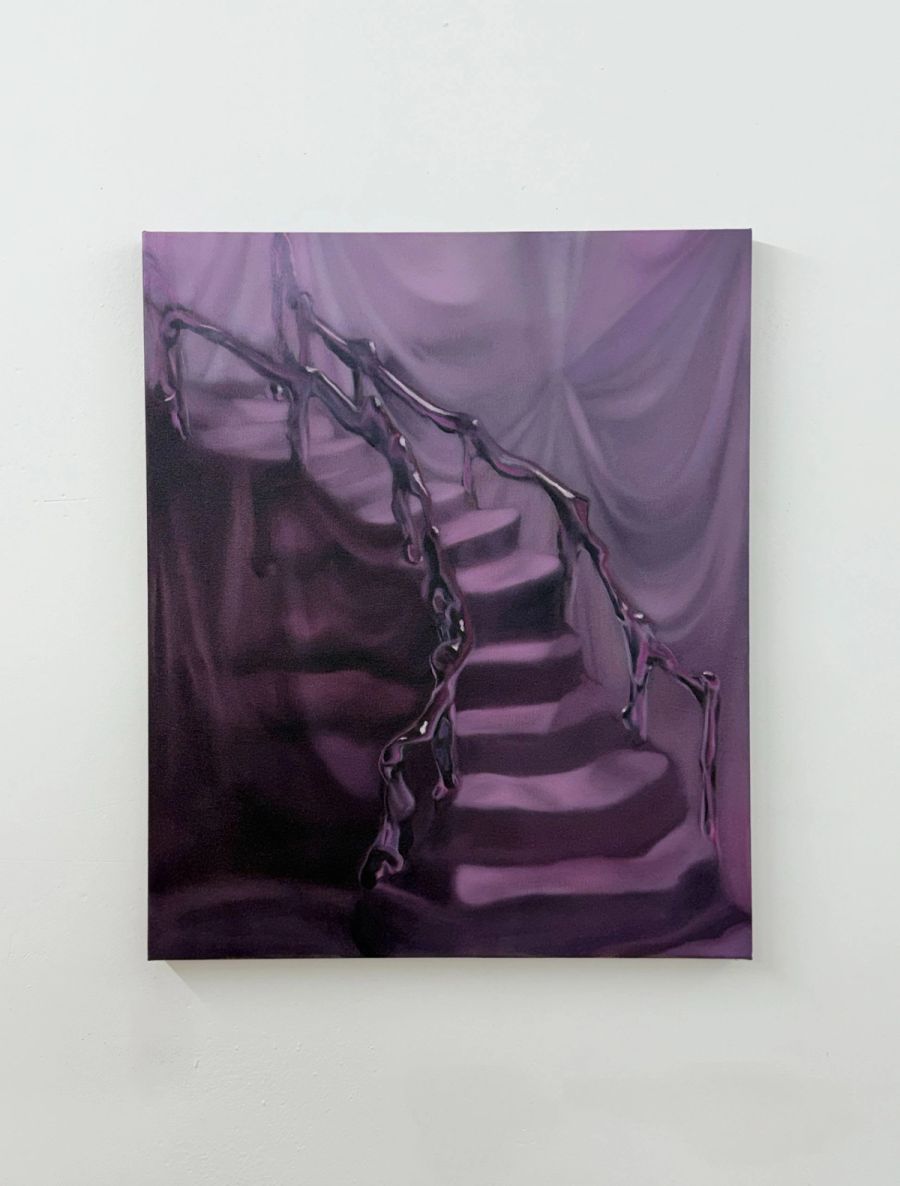
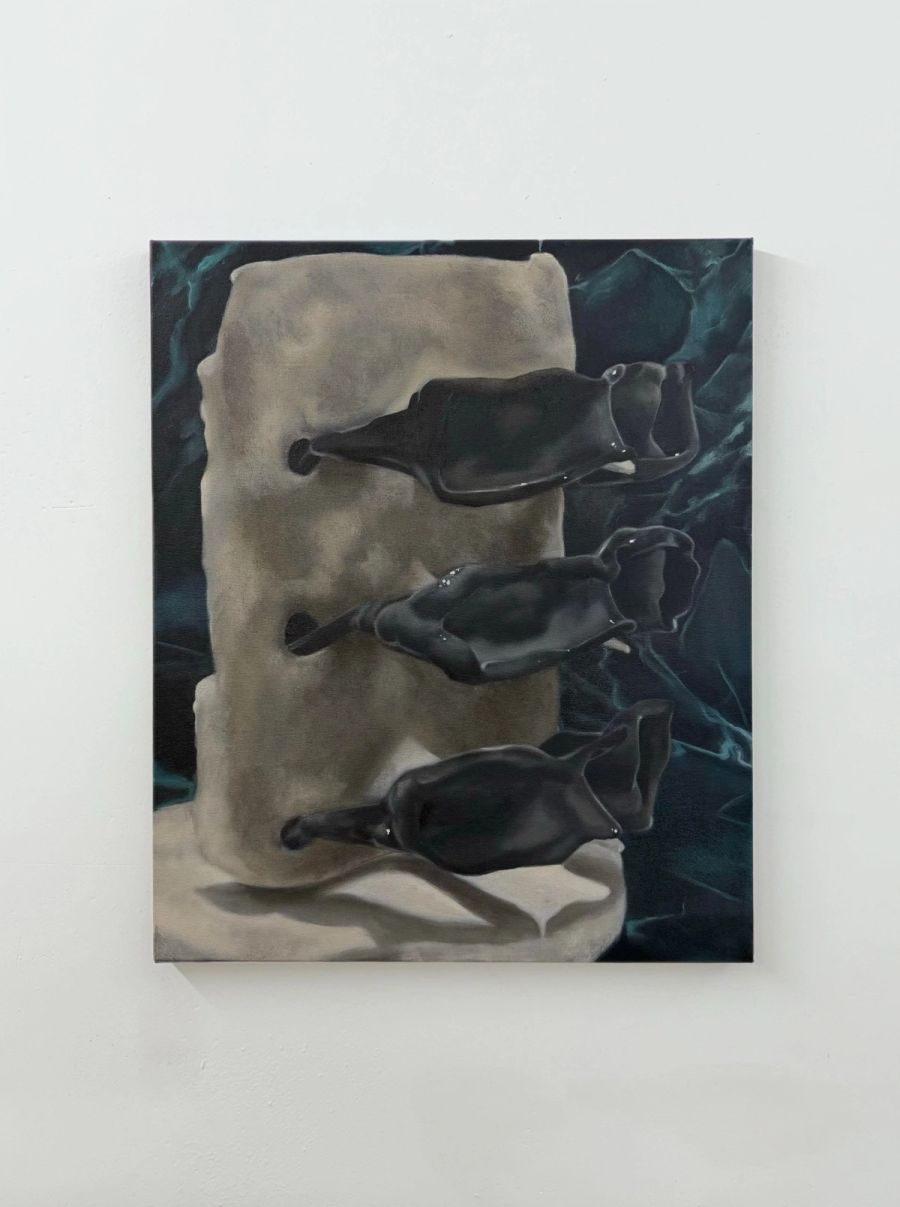
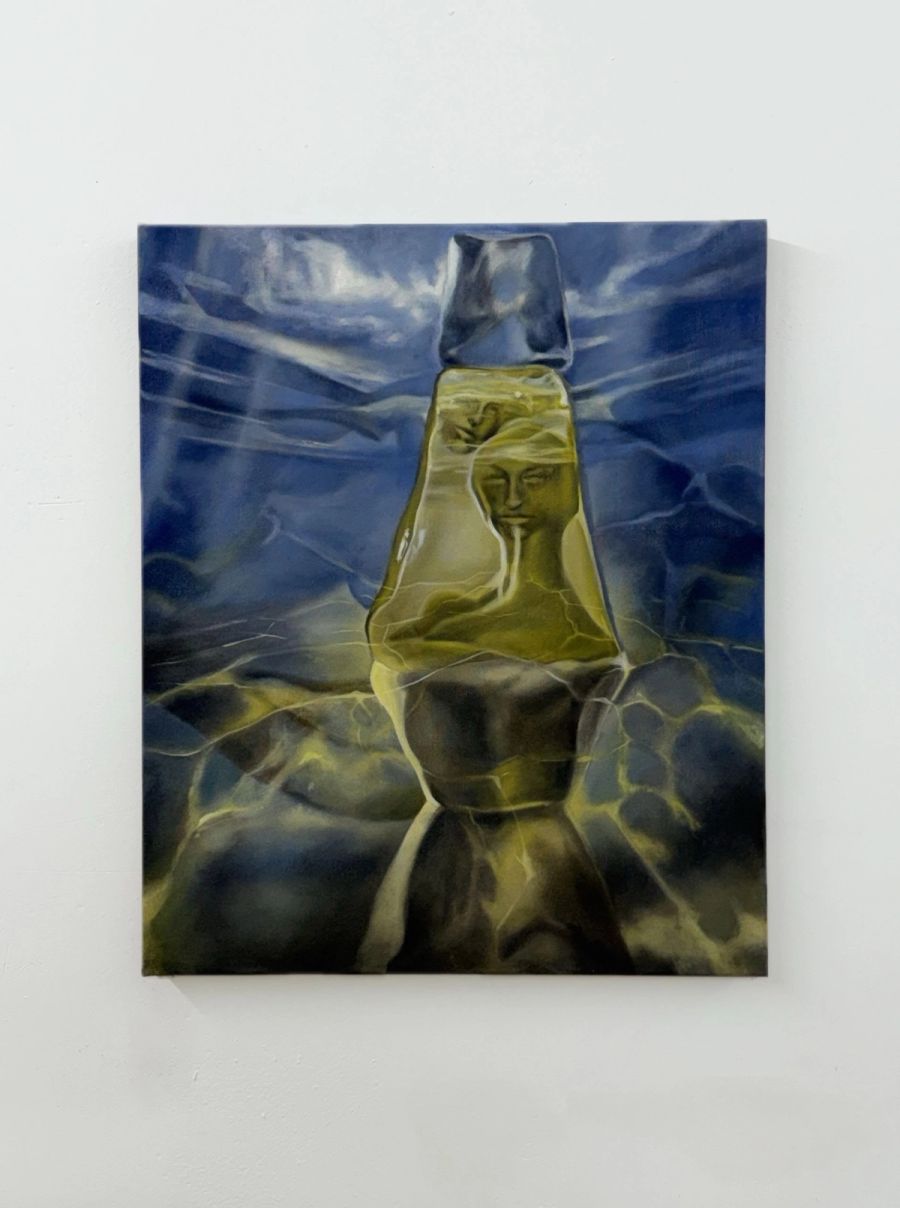
In her paintings, Mirjam Vreeswijk (Gorinchem, NL, 1997) seeks the ultimate paradox: capturing the intangible. Where she previously sought to capture elusive natural phenomena such as mist, fire and water for eternity, in her latest series she defies time through the act of painting itself.
Here, the emphasis lies less on the subject and all the more on the act itself. Capturing and controlling transience is interwoven with the creative process. In creating her compositions, she crafts her own reality, based on models or sets she builds herself. Within this, she determines the world, the time and the light. Everything obeys her rules.
This process treads a fine line between absolute control and surrender. Whilst the composition demands direction, the act of painting itself compels her to let go of control. By applying transparent layers on top of one another, a dialogue with the canvas emerges. Objects lose their original function and merge together.
A recurring motif in this visual language is her own face. Not as a traditional self-portrait, but as a form that is always at hand. It offers her the autonomy and freedom to experiment to her heart’s content. Her face functions purely as a mould — an anonymous material with which she dictates the laws of the world she has created.
Our presentation at Sofia Art Fair was generously supported by the Dutch Embassy in Bulgaria.
Works
Natalia Jordanova
neon, glass tubing | 115 × 7 cm + 43 × 50 × 5 cm
Installation views
Artists
Mirjam Vreeswijk
Mirjam Vreeswijk's (Gorinchem, NL, 1997) paintings explore the convergence of divergent realities produced in a space between mirror and mask, between revealing and hiding the subject. In doing so, she seeks to draw attention to the different layers of consciousness rippling through the painting’s surface and its subject. Narrative and continuity become illusory in this hybrid space, as each work contains new perspectives that combine opposites and defy easy coherency. The work originates from collages of objects or images that appeal to her in one way or another. For example, shiny ribbons, designer shoes and pictures from books on decorative works from the 70s. From this archive of materials, she intuitively builds compositions, first in models, then on canvas. Step by step, Mirjam looks at what the image needs in order to eventually arrive at the perfect composition and perfect structures of paint. This intuitive or subconscious approach gives the paintings a surrealistic feel that touches on elements of product photography, still life and landscape painting. In her latest series the fairy-tale world makes its entrance. This can be seen in ritual objects and in the approach to landscapes that some of the paintings provide a glimpse of. After graduating in 2018 from the HKU Bachelor of Fine Art, Mirjam Vreeswijk was nominated for several awards such as the Buning Brongers Prize and the Kunst aan de dijk Prize, she won the Best of Graduates Ron Mandos Public Prize that year. She then participated in the Master Fine Art at the Frank Mohr Institute. In 2019, she was named Art Talent of the Year by Stichting Kunstweek. She has exhibited in several galleries and at Kunstcollectie Rijnstate.
More about Mirjam Vreeswijk →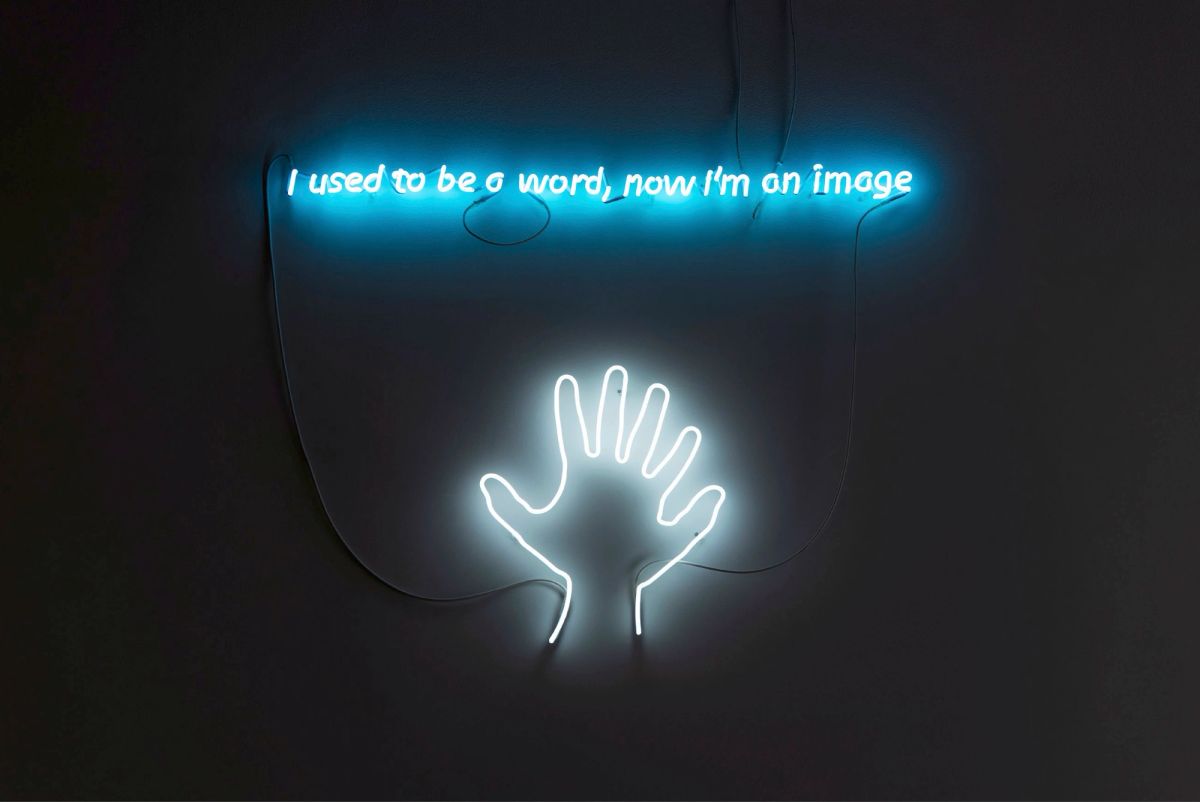
Natalia Jordanova
As part of her ever-developing quest for possible worlds, the artistic practice of Natalia Jordanova (1991, Sofia, Bulgaria) is a subjective synthesis and material proposition of what defines the present moment. Through speculative fiction her work is a projection of the future, fabulating the unknown unknowns. Jordanova builds context-aware installations through the deployment of various practices. They translate materialities and study the sculptural possibilities in the exchange between the digital and physical, the flat and three-dimensional. Her work engages with the shift of these realms, weaving together narratives of past accumulations and future speculations. Through the frameworks of science and history, she explore what it means to be human today in the interplay of natural and artificial beings, as well as human and non-human agents. She focuses on the condition defined by our relationship with technology, image, and language mediation, as well as the new understanding of materiality in a network-dominated age. The artist examines how recent technological and tool progress alters emotionality and will affect human-to-human and human-to-machine communication in the foreseeable future. Her most recent work utilizes generative artificial intelligence to explore its conceptual possibilities at the intersection of poetry and criticality. She investigates its fast-developing implications for human life and how it changes our understanding of reality. Her interests lie in its conceptual potential to contribute to historical continuity, care for silenced feminist histories, and question the role of AI in evolution.
More about Natalia Jordanova →